Welcome to Our Travel Agency!




Travel Guide
On May 17, 2026, the Ministry of Culture and Tourism officially completed the direct-connection upgrade of overseas payment licenses for China's first inbound self-service consumption platform. Since the platform went online on December 31, 2025, it has connected more than 1,200 A-level scenic spots, intangible cultural heritage workshops, and cultural and creative retail terminals nationwide, and supports real-time settlement in 23 foreign currencies. Relevant industries such as cross-border payment services, cultural tourism retail channels, and overseas distribution systems should pay close attention to the structural changes it brings to settlement efficiency, data collaboration, and terminal coverage capabilities.
Event Overview
China's first inbound self-service consumption platform officially went online on December 31, 2025; on May 17, 2026, it completed a key upgrade, achieving direct connection of payment licenses with three overseas payment institutions: Visa, Mastercard, and Alipay+, and supporting real-time settlement in 23 foreign currencies. The platform currently covers 1,200+ A-level scenic spots, intangible cultural heritage workshops, and cultural and creative retail terminals nationwide, and has opened 'cultural tourism consumption data interfaces' and B2B settlement channels to overseas distributors.
Which Sub-sectors Are Affected
Cross-border Cultural Tourism Retail Enterprises
Because the platform directly connects scenic spots and cultural and creative retail terminals, and provides B2B settlement channels, cross-border cultural tourism retail enterprises can reduce intermediate settlement links. The impact is mainly reflected in substantial changes in areas such as overseas distributors' account period management for domestic terminals, the timeliness of multi-currency payment collection, and the granularity of sales data access (such as by scenic spot/time period/product category).
Overseas Cultural Tourism Distribution Service Providers
The platform's opening of 'cultural tourism consumption data interfaces' means that traditional distribution models relying on manual reconciliation or third-party aggregation tools are facing adaptation pressure. The impact is mainly reflected in increased requirements for API integration costs, compatibility of data fields (such as currency identifiers and transaction status definitions), and consistency between settlement cycles and platform rules.
Operators Taking Intangible Cultural Heritage and Cultural Creative Products Overseas
The platform covers intangible cultural heritage workshops and cultural and creative retail terminals, providing standardized consumption touchpoints for non-standard cultural products. The impact is mainly reflected in the need to recalibrate operational links such as product listing review processes, settlement and revenue-sharing logic (such as three-party profit sharing among workshops—channels—platforms), and mechanisms for foreign currency pricing and exchange rate fluctuation responses.
Cross-border Payment Technology Service Providers
The platform has completed direct license connection with Visa, Mastercard, and Alipay+, indicating that regulators already have a clear practical model for the access path of overseas payment institutions. The impact is mainly reflected in higher requirements for the technical compliance path when similar platforms apply for direct payment license connection, cross-border clearing message standards (such as ISO 20022 adaptation), and redundant design requirements for foreign currency settlement and clearing systems.
What Key Points Should Relevant Enterprises or Practitioners Pay Attention To, and How Should They Respond at Present
Pay Attention to Subsequent Official Statements or Policy Changes
At present, it is only confirmed that Visa, Mastercard, and Alipay+ have completed direct connection, but it has not been announced whether other overseas payment institutions will be allowed to connect, nor has it been clarified whether direct payment license connection constitutes a normalized access mechanism. Relevant enterprises should continue to track release developments from the Ministry of Culture and Tourism or the central bank regarding supporting documents such as the Guidelines for Cross-border Cultural Tourism Payment Services.
Pay Attention to Changes in Key Business Links
The platform has clearly provided B2B settlement channels and consumption data interfaces. It is recommended that enterprises prioritize evaluating their own system compatibility in the three links of 'scenic-spot-end settlement', 'distributor reconciliation', and 'foreign currency sales report generation', especially checking whether existing ERP or POS systems support real-time multi-currency bookkeeping and original transaction traceability.
Distinguish Between Policy Signals and Actual Business Implementation
This upgrade is a platform function iteration and is not equivalent to forcibly replacing existing payment methods. Enterprises should avoid interpreting 'supporting settlement in 23 foreign currencies' as overseas tourists automatically switching their payment habits, and instead need to combine supporting actions such as terminal training, multilingual prompts, and currency marking on receipts in order to improve actual conversion rates.
Prepare in Advance for API Integration and Settlement Contingency Plans
For scenic spots or retail terminals that have already connected to this platform, it is recommended that their partners complete API joint debugging tests within 6 months, focusing on verifying abnormal scenarios such as refund reversals, retrying failed revenue splits, and exchange rate fluctuation threshold alerts; at the same time, reserve at least 2 alternative foreign currency settlement paths (such as local bank direct connection + platform channel parallel operation) to respond to single-point technical failures.
Editorial Viewpoint / Industry Observation
Observably, this upgrade is less a completed infrastructure rollout and more a calibrated pilot — it validates technical feasibility of cross-border payment direct linkage in the cultural tourism sector, but does not yet indicate broad regulatory endorsement for similar models outside designated platforms. Analysis shows the emphasis remains on data standardization (via the open API) and settlement reliability (via licensed acquirers), rather than on expanding consumer-facing payment options. From an industry perspective, the current value lies not in immediate scale, but in establishing a reference architecture for how cultural tourism consumption data flows, capital flows, and goods flows can achieve limited coupling within a regulated framework.
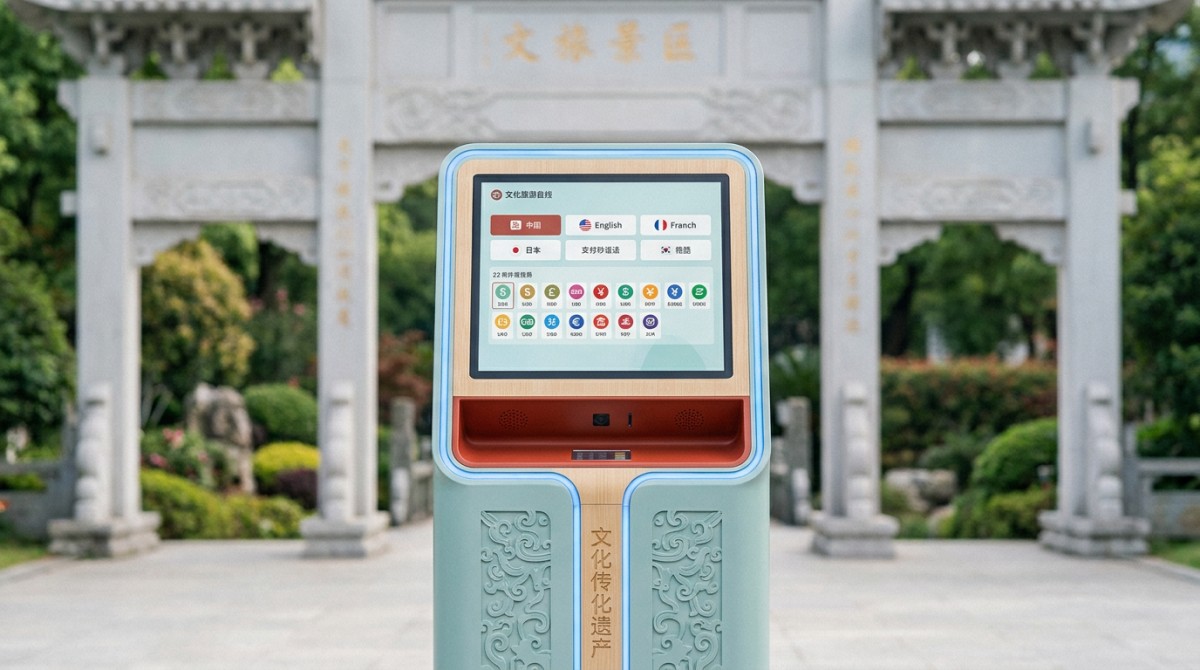
Conclusion: This platform upgrade marks a practical step forward for China's cultural tourism consumption sector at the level of cross-border payment infrastructure, but it still remains local pilot in nature. At present, it is more appropriate to understand it as a 'capability validation in a controlled environment' rather than the starting point of an industry-wide shift in payment models. The industry should view its phased positioning rationally, and while strengthening its own system adaptation capabilities, maintain dynamic tracking of regulatory guidance and implementation pace.
Source note:
Main source: Public information bulletin from the Ministry of Culture and Tourism (May 17, 2026);
Areas for continued observation: whether the access scope of overseas payment institutions will be further expanded, whether supporting technical specifications for data interfaces will be introduced, and the progress of extended deployment of B2B settlement channels on provincial-level cultural tourism platforms.
Your 1:1 travel consultant will respond within 1 business day
How to plan your trip
- Hebei Launches Five “Trendy Hebei” Premium Tourism Routes for Inbound Travelers, Moving Toward Standardized Offerings
- The 12th Qionghai Tanmen Coastal Foraging Festival Opens on August 16
- Guangxi’s Digital Silk Road Accelerates: Orah Mandarin Juice Secures an Italian Order, Drawing Attention to Export Standards for Souvenirs
- New Inquiry Triggered by Coastal Cultural Tourism Space Standards
- Zhuanghe’s agro-cultural tourism model draws ASEAN attention, highlighting the compliance requirements for the internationalization of camping and intangible cultural heritage handicrafts
Monthly travel guide
- Typhoon “White Dolphin” Forces Henan Scenic Areas to Close, Putting Summer Ground-Handling Services Under Pressure
- RCEP Implementing Rules for Indonesia Take Effect: Zero Tariffs for Cultural and Tourism Services Alongside Strict Customer Service Requirements
- Saudi Arabia’s New SASO Regulations Take Effect: Taqat Certification Required Before Chinese-Language Cultural Tourism Services Can Access Visit Saudi
- Zhengzhou Launches a Dedicated LCL Shipping Route for Cultural and Tourism Materials, Cutting Freight Costs by 18%
- Luoyang Cold Chain Intensification: Cultural and Creative Exports Delivered in 9 Days
- Expedited Pre-Approval for Group Visas to Three Southeast Asian Countries
- Tightening air freight capacity at Zhengzhou Airport delays the delivery of cultural and tourism materials
- Vietnam's New Regulations on Bus Monitoring Requirements for Group Tours
- Saudi SAMA New Regulations on Travel Liability Insurance Compliance Preparation
- Japanese tourists' new regulations for entering Henan local transport vehicles
- Wai Gao Qiao Wen Travel customs bonded warehouse summer group equipment fast lane
- JTB Warning: Risks in Henan’s September Red Leaf Family Tour Purchases
Popular destinations
- The China-Europe Railway Express (Zhengzhou) Launches a Dedicated Train for Culture and Tourism Equipment, Cutting Customs Clearance Time to 48 Hours
- RCEP Cultural and Tourism Services Commitment Upgrade: Faster Market Access for Chinese Outbound Tourism Service Providers in Vietnam and Malaysia
- Tourism Authority of Thailand Launches “China Ready” Certification Program, with Henan Inbound Travel Service Providers Included in the First Batch of Recommended Providers
- Thailand Tourism Authority Promotes “China Ready” Certification, with a Henan Local Tour Operator Included in the First Recommended List
- Overseas Chinese Fair Opens in Shenzhen: Smart Culture and Tourism Equipment and Culinary Tourism Services Go Global on Two Fronts
Why choose us

High cost-performance and transparent experience
Offer astonishing low prices without hidden tourism traps, enabling travelers to explore at lower costs while avoiding unnecessary spending loopholes, ensuring transparent consumption.

Personalization and dedicated service
Support 100% free customization, paired with one-on-one expert service, crafting exclusive itineraries based on travelers' specific needs, while providing professional guidance to enhance the personalization and professionalism of the journey.

Premium itinerary planning
Compact yet rich itineraries allow travelers to experience more within limited time; simultaneously, carefully selected hotels in prime locations provide convenient lodging conditions, overall enhancing travel comfort and experience.