Welcome to Our Travel Agency!




Travel Guide
On May 18, 2026, Trip.com Group officially announced the launch of the 'Go China' inbound tourism special initiative. This measure is a key industry coordination action under the guidance of the Ministry of Culture and Tourism, aiming to systematically improve the convenience and experience of overseas tourists traveling to China, marking that China's inbound tourism market recovery has entered a new stage of mechanism-based and scenario-based implementation.
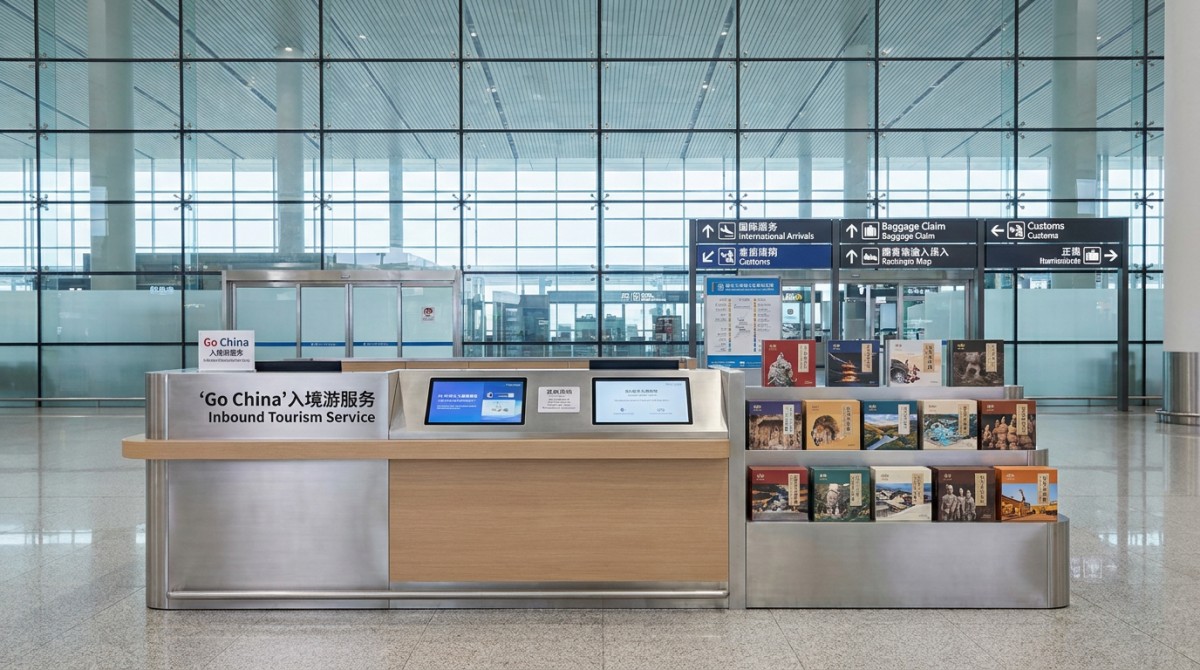
Event Overview
On May 18, 2026, Trip.com announced the launch of the 'Go China' inbound tourism initiative, setting up dedicated service counters for inbound tourists at six major hub airports: Beijing Capital, Shanghai Pudong, Guangzhou Baiyun, Chengdu Tianfu, Xi'an Xianyang, and Hangzhou Xiaoshan, and issuing free half-day tour benefit vouchers for 12 local reception routes such as 'Luoyang Longmen Grottoes—Laojun Mountain' to overseas tourists holding valid visas. The service covers 12 local reception hub cities including Luoyang, Xi'an, Chengdu, Hangzhou, Guangzhou, and Kunming. The first batch of the program has mobilized 372 domestic Chinese destination management companies, including regional leading institutions such as Henan Lelv, Shaanxi Huaxia International, and Sichuan CYTS Western Company.
Which Sub-sectors Are Affected
Direct trade enterprises: mainly refers to companies that provide retail sales of cultural and tourism products to overseas tourists, such as creative souvenirs, intangible cultural heritage handicrafts, and local specialties. This program significantly improves first-stop consumption conversion rates by reaching high-net-worth overseas customer groups in advance through airport service counters; the impact is reflected in optimized order structures (with a rising share of foreign currency settlements) and shortened SKU localization response cycles (requiring rapid adaptation of multilingual packaging and payment interfaces), while also placing higher demands on cross-border foreign exchange settlement compliance capabilities.
Raw material procurement enterprises: specifically refers to upstream suppliers that provide regionally distinctive raw materials for manufacturers of cultural and tourism products, such as Tang Tri-color pottery clay from Luoyang, Lantian jade material from Xi'an, and raw silk from Suzhou. As the 12 local reception routes drive up regional cultural and tourism popularity, structural growth is expected in order volumes for related cultural and creative products; the impact is reflected in increased procurement frequency and a higher proportion of small-batch, multi-order purchases, but large-scale demand transmission has not yet formed, and it remains in a mild stimulus stage at present.
Processing and manufacturing enterprises: covers producers of cultural and tourism equipment, such as smart tour guide terminals and multilingual audio guide devices, as well as customized travel souvenirs such as wearable AR cultural tourism badges and laser-engraved passport holders. The embedding of digital service nodes into airport service counters and half-day tour routes will accelerate their B2B integrated solution procurement pace; the impact is reflected in a significant increase from Q3 onward in the weighting of technical indicators such as IoT compatibility and offline multilingual support in tenders from scenic areas and destination management companies.
Supply chain service enterprises: including cross-border logistics service providers (focusing on air transport of small cultural and tourism goods), multilingual localization service providers (menu/guidebook translation and POS interface adaptation), and overseas payment channel providers (supporting direct connection to Visa/Mastercard/Alipay+). The program clearly requires 'redeem upon presentation of a valid visa', forcing service response times to be compressed from T+3 to T+0.5; the impact is reflected in the fact that the density of localized service networks within a 3-kilometer radius around airport counters becomes a core competitive indicator, rather than simply price competition.
Key Points of Attention and Response Measures for Relevant Enterprises or Practitioners
Focus on building response units within a 3-kilometer service radius of hub airports
The service counters at the six major airports, such as Beijing Capital and Shanghai Pudong, are not isolated nodes, but central hubs for regional cultural and tourism service dispatch. Enterprises need to assess whether their own resources such as warehousing, translation, and payment integration can complete physical deployment or API-level connection within a 3-kilometer radius of the airport, so as to avoid losing eligibility for the first batch of cooperation due to delayed response.
Prioritize adaptation to localized elements corresponding to the destinations of the 12 local reception routes
Routes such as 'Luoyang Longmen Grottoes—Laojun Mountain' have already anchored a combination model of cultural IP and natural landscapes. When developing products, relevant enterprises should simultaneously obtain the local white paper issued by the local culture and tourism bureau, White Paper on Inbound Tourist Preferences (2026 Trial Edition), with a focus on strengthening practical details such as visualization of historical narratives (for example, AR restoration of murals) and accessible route signage (including Braille tactile modules), rather than broadly emphasizing 'Chinese culture'.
Establish a collaborative mechanism for visa validity verification
The issuance of free half-day tour benefit vouchers is rigidly premised on 'holding a valid visa'. If enterprises participate in the benefit verification and write-off process, such as scenic area turnstiles or souvenir shop POS systems, they must complete integration testing with the trusted data interface of the National Immigration Administration, and cannot rely only on tourists presenting paper visa pages——this requirement will accelerate the upgrading of identity authentication infrastructure in the cultural and tourism industry.
Editorial Viewpoint / Industry Observation
显然,'Go China' initiative is not merely a marketing campaign but a policy-enabled service infrastructure test. Its airport-first deployment model deliberately bypasses traditional OTA acquisition funnels, instead treating immigration checkpoints as primary conversion gates — a structural shift that redefines where 'customer journey' begins for inbound tourism. Analysis shows that the 12 designated routes prioritize UNESCO sites paired with emerging nature-based attractions (e.g., Laojun Mountain), suggesting a deliberate move away from over-reliance on mega-cities toward balanced regional value capture. This better reflects long-term destination resilience strategy rather than short-term visitor volume chasing.
Conclusion
The implementation of the 'Go China' initiative essentially translates policy language into measurable service granularity: from micro indicators such as counter space occupancy area, benefit voucher verification timeliness, and multilingual service response delay, it in turn drives capability upgrades across all links of the industry chain. What deserves more attention at present is whether this kind of 'policy-scenario-data' closed loop can continue to precipitate into industry-standard interfaces, such as visa verification APIs and multilingual service SLA agreements, rather than one-off project-based execution. Only when service certainty becomes a replicable underlying capability can the recovery of inbound tourism truly have sustainable momentum.
Information Source Notes
This article is compiled based on the transcript of Trip.com Group's press conference on May 18, 2026, and Appendix III of Several Measures on Supporting the High-quality Development of Inbound Tourism on the official website of the Ministry of Culture and Tourism (Wenlv Fa [2026] No. 12). The list of 372 destination management companies, the specific itineraries of the 12 routes, and the issuance rules for benefit vouchers mentioned in the article are subject to update and confirmation after the official launch of Trip.com's 'Go China' special page (https://www.ctrip.com/go-china) on June 1, 2026; the detailed operating rules for airport counters and the technical specifications for visa verification need continuous follow-up on the release of subsequent supporting guidelines by the National Immigration Administration.
Your 1:1 travel consultant will respond within 1 business day
How to plan your trip
- Multiple regions announce autumn break dates for primary and secondary schools; attractions offer benefits such as discounted admission
- China’s Civil Aviation Industry to Implement the 2026/2027 Winter-Spring Flight Schedule from October 25
- Autumn Breaks in Multiple Regions Boost November Travel, Offering Hope for the Traditional Low Season
- China Tourism Academy Releases Report on Autumn Trends in China's Domestic Customized Tour Market
- What should I wear for a winter trip to Harbin and Mohe to cope with the extreme outdoor cold?
Monthly travel guide
- Luoyang launches the “Autumn Charm of the Divine Capital” tourism promotion to build anticipation for winter travel
- Typhoon “White Dolphin” Forces Henan Scenic Areas to Close, Putting Summer Ground-Handling Services Under Pressure
- RCEP Implementing Rules for Indonesia Take Effect: Zero Tariffs for Cultural and Tourism Services Alongside Strict Customer Service Requirements
- Saudi Arabia’s New SASO Regulations Take Effect: Taqat Certification Required Before Chinese-Language Cultural Tourism Services Can Access Visit Saudi
- Zhengzhou Launches a Dedicated LCL Shipping Route for Cultural and Tourism Materials, Cutting Freight Costs by 18%
- Luoyang Cold Chain Intensification: Cultural and Creative Exports Delivered in 9 Days
- Expedited Pre-Approval for Group Visas to Three Southeast Asian Countries
- Tightening air freight capacity at Zhengzhou Airport delays the delivery of cultural and tourism materials
- Vietnam's New Regulations on Bus Monitoring Requirements for Group Tours
- Saudi SAMA New Regulations on Travel Liability Insurance Compliance Preparation
- Japanese tourists' new regulations for entering Henan local transport vehicles
- Wai Gao Qiao Wen Travel customs bonded warehouse summer group equipment fast lane
Popular destinations
- China Southern Airlines launches the Guangzhou—Zhengzhou—Luoyang cultural tourism charter flight route
- DiDi Global launches cross-border ride-hailing services, covering 12 cultural and tourism areas in Luoyang
- Guangdong has launched cultural and tourism subsidies exceeding 1 billion yuan to benefit the public, and overseas travel agencies can apply for inbound tour operator service subsidies
- Alipay’s ‘link international cards to domestic accounts + use international e-wallets in China’ covers cultural and tourism destinations nationwide
- Ctrip launches the ‘Go China’ inbound tourism special initiative
Why choose us

High cost-performance and transparent experience
Offer astonishing low prices without hidden tourism traps, enabling travelers to explore at lower costs while avoiding unnecessary spending loopholes, ensuring transparent consumption.

Personalization and dedicated service
Support 100% free customization, paired with one-on-one expert service, crafting exclusive itineraries based on travelers' specific needs, while providing professional guidance to enhance the personalization and professionalism of the journey.

Premium itinerary planning
Compact yet rich itineraries allow travelers to experience more within limited time; simultaneously, carefully selected hotels in prime locations provide convenient lodging conditions, overall enhancing travel comfort and experience.