Welcome to Our Travel Agency!




On May 18, 2026, Alipay announced that its services of ‘linking foreign cards to domestic wallets’ (binding overseas bank cards for domestic use) and ‘using foreign wallets domestically’ (accepting overseas e-wallets within China) had achieved large-scale deployment across the country's A-level tourist attractions, cultural and museum venues, and hotel front desks. This move marks a critical step forward in the cross-border facilitation of cultural and tourism payment infrastructure in China, directly affecting the efficiency of inbound tourism services, the compliance adaptability of digital payments, and the internationalization level of the cultural and tourism consumption chain.
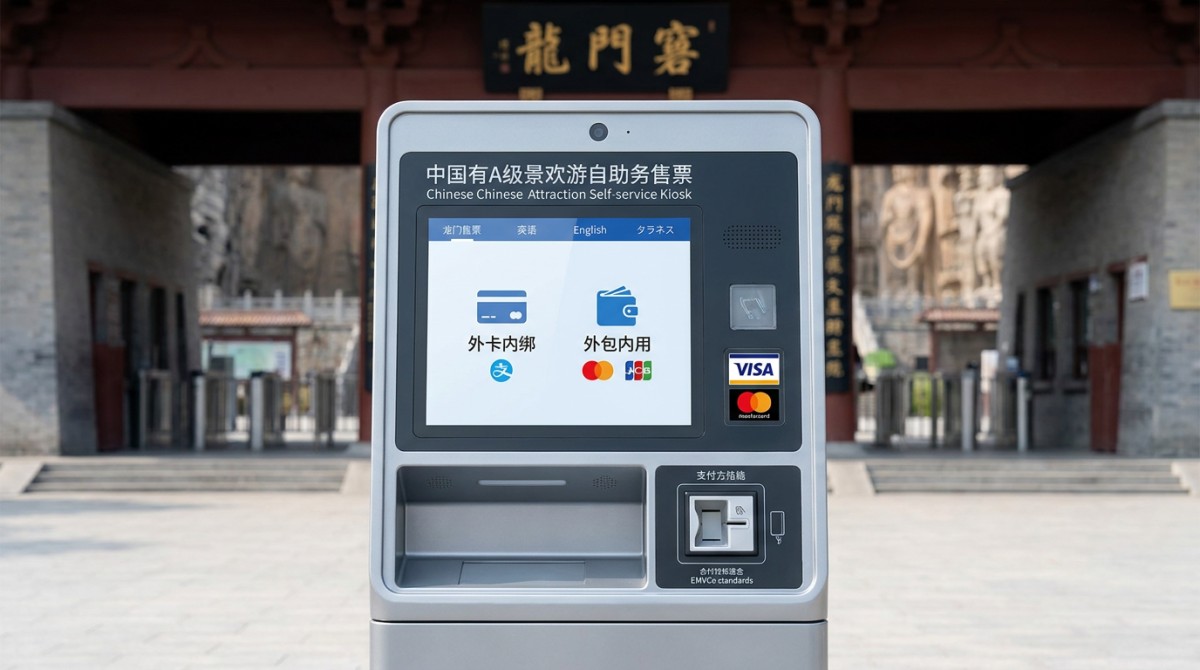
Event Overview
On May 18, 2026, Alipay announced that its services of ‘linking foreign cards to domestic wallets’ (binding overseas bank cards) and ‘using foreign wallets domestically’ (using overseas e-wallets within China) now fully cover the country's A-level tourist attractions, cultural and museum venues, and hotel front desks. At core attractions such as the Longmen Grottoes and White Horse Temple in Luoyang, self-service ticketing machines have completed multilingual interface upgrades and Visa/Mastercard direct payment integration, with a transaction success rate exceeding 99.2%.
Which sub-sectors are affected
Direct trade enterprises: this mainly refers to business entities that provide instant-delivery cultural and tourism products such as tickets, cultural and creative merchandise, and guide services to overseas tourists. This policy reduces payment friction for overseas visitors and improves on-site conversion rates; however, it also raises the compliance threshold for merchant acquiring——POS/self-service terminals must meet the domestic extension requirements of PCI DSS 4.0 and support EMVCo-certified multi-currency settlement pathways. The impact is reflected in both improved transaction timeliness and increased back-end clearing complexity.
Raw material procurement enterprises: this specifically refers to suppliers that provide localized components or customized modules for scenic-area smart terminals, multilingual interactive systems, bilingual signage hardware, and similar products. The policy accelerates the domestic substitution process for terminals used in cultural and tourism scenarios, particularly benefiting small and medium-sized module manufacturers with EMV chip integration capabilities and rapid multilingual UI adaptation interfaces; however, the pace of demand release is constrained by the execution progress of local fiscal budgets, resulting in relatively low short-term order concentration.
Processing and manufacturing enterprises: this includes manufacturers of cultural and tourism IoT devices such as self-service ticketing machines, access gates, and smart guide screens. In this Luoyang pilot, the completion of Visa/Mastercard direct integration means that devices must be preinstalled with encryption SDKs certified by international card schemes and dynamic token generation modules, imposing rigid requirements on firmware security levels and support for both SM4 and AES-256 algorithms. The impact is reflected in a phased increase in production-line certification costs, but it is beneficial to long-term technological standard upgrades.
Supply chain service enterprises: this includes cross-border payment channel service providers, multilingual content localization service providers, and operators of SaaS platforms for cultural and tourism scenarios. The policy expands the granularity of their services——they must not only provide language translation, but also coordinate the compliance mapping of payment processes (for example, foreign card transactions must match domestic merchant category codes MCC and anti-money laundering address verification logic). The impact is reflected in service packages shifting from “interface Sinicization” to “full-stack payment chain adaptation”, with higher average order value but longer delivery cycles.
Key points to watch and response measures for relevant enterprises or practitioners
Confirm whether terminal payment modules have passed EMVCo Level 1 & Level 2 certification
The Luoyang pilot explicitly requires Visa/Mastercard direct integration, and uncertified devices will be unable to access issuer authorization channels. Enterprises must verify the SDK versions and certification validity periods of their existing devices to avoid transaction interception caused by expired certificates.
Review the consistency of payment terminology localization in multilingual interfaces
“外卡内绑” should be accurately expressed in English interfaces as “Link foreign card to domestic e-wallet”, rather than the literal translation “Bind foreign card inside”. Terminology ambiguity may cause operational misunderstanding among overseas users, so it is recommended to work with localization service providers to conduct UX usability testing.
Assess the impact of changes in the merchant acquiring revenue-sharing structure on gross margin
Domestic transactions using foreign cards involve cross-border clearing fees, currency conversion fees, and additional risk-control costs, with average rates 1.2–1.8 percentage points higher than domestic UnionPay cards. Enterprises need to recalculate the break-even points for ticketing/product categories, and adjust pricing strategies or apply for special cultural and tourism subsidies when necessary.
Establish a response mechanism for foreign card transaction exceptions
A 99.2% success rate still corresponds to about 8 failed transactions per 1,000, with common causes including CVC verification failure, issuer regional restrictions, or 3DS authentication timeout. It is recommended to embed real-time error code prompts in self-service terminals (such as “ERR-317: Issuer declined – try alternate card”), and coordinate with staffed counters to activate emergency fallback procedures.
Editorial Viewpoint / Industry Observation
Observably, this rollout is less about payment convenience and more about infrastructure sovereignty: it shifts cross-border tourism settlement from offshore gateways (e.g., international acquirers routing via Singapore/Hong Kong) to onshore licensed entities under PBOC supervision. Analysis shows that the real bottleneck now lies not in technical integration—but in the alignment of local finance departments’ budget cycles with national digital tourism timelines. From an industry perspective, the ‘dual binding’ model better serves as a regulatory sandbox for future CBDC cross-border interoperability trials than a standalone commercial upgrade.
Conclusion
This coverage is not merely a technical iteration, but a systematic test of payment sovereignty, service standards, and regulatory coordination capabilities in the cultural and tourism industry. It is more appropriately understood as: China is using high-frequency, essential inbound consumption scenarios as an entry point to build a digital payment governance model that balances openness and controllability. From a rational observation perspective, subsequent progress will depend more on the depth of joint operations between local cultural and tourism departments and financial institutions, rather than the achievement of any single technical indicator alone.
Information source notes
The information comes from Alipay’s official press release (published on May 18, 2026), the People’s Bank of China’s Guiding Opinions on Optimizing Payment Services for Overseas Visitors to China (Yin Fa [2025] No. 178), and the China Tourism Academy’s 2026 Q1 Monitoring Report on Inbound Tourism Payment Behavior. Ongoing points for observation include: quarterly disclosure data on the completion rate of terminal upgrades at A-level scenic spots across regions, the month-on-month growth rate of Visa/Mastercard domestic transaction volume, and the actual implementation of foreign card merchant acquiring rates for cultural and tourism merchants.
Your 1:1 travel consultant will respond within 1 business day
How to plan your trip
- Multiple regions announce autumn break dates for primary and secondary schools; attractions offer benefits such as discounted admission
- China’s Civil Aviation Industry to Implement the 2026/2027 Winter-Spring Flight Schedule from October 25
- Autumn Breaks in Multiple Regions Boost November Travel, Offering Hope for the Traditional Low Season
- China Tourism Academy Releases Report on Autumn Trends in China's Domestic Customized Tour Market
- What should I wear for a winter trip to Harbin and Mohe to cope with the extreme outdoor cold?
Monthly travel guide
- Luoyang launches the “Autumn Charm of the Divine Capital” tourism promotion to build anticipation for winter travel
- Typhoon “White Dolphin” Forces Henan Scenic Areas to Close, Putting Summer Ground-Handling Services Under Pressure
- RCEP Implementing Rules for Indonesia Take Effect: Zero Tariffs for Cultural and Tourism Services Alongside Strict Customer Service Requirements
- Saudi Arabia’s New SASO Regulations Take Effect: Taqat Certification Required Before Chinese-Language Cultural Tourism Services Can Access Visit Saudi
- Zhengzhou Launches a Dedicated LCL Shipping Route for Cultural and Tourism Materials, Cutting Freight Costs by 18%
- Luoyang Cold Chain Intensification: Cultural and Creative Exports Delivered in 9 Days
- Expedited Pre-Approval for Group Visas to Three Southeast Asian Countries
- Tightening air freight capacity at Zhengzhou Airport delays the delivery of cultural and tourism materials
- Vietnam's New Regulations on Bus Monitoring Requirements for Group Tours
- Saudi SAMA New Regulations on Travel Liability Insurance Compliance Preparation
- Japanese tourists' new regulations for entering Henan local transport vehicles
- Wai Gao Qiao Wen Travel customs bonded warehouse summer group equipment fast lane
Popular destinations
- China Southern Airlines launches the Guangzhou—Zhengzhou—Luoyang cultural tourism charter flight route
- DiDi Global launches cross-border ride-hailing services, covering 12 cultural and tourism areas in Luoyang
- Guangdong has launched cultural and tourism subsidies exceeding 1 billion yuan to benefit the public, and overseas travel agencies can apply for inbound tour operator service subsidies
- Alipay’s ‘link international cards to domestic accounts + use international e-wallets in China’ covers cultural and tourism destinations nationwide
- Ctrip launches the ‘Go China’ inbound tourism special initiative
Why choose us

High cost-performance and transparent experience
Offer astonishing low prices without hidden tourism traps, enabling travelers to explore at lower costs while avoiding unnecessary spending loopholes, ensuring transparent consumption.

Personalization and dedicated service
Support 100% free customization, paired with one-on-one expert service, crafting exclusive itineraries based on travelers' specific needs, while providing professional guidance to enhance the personalization and professionalism of the journey.

Premium itinerary planning
Compact yet rich itineraries allow travelers to experience more within limited time; simultaneously, carefully selected hotels in prime locations provide convenient lodging conditions, overall enhancing travel comfort and experience.