Welcome to Our Travel Agency!




Travel Guide
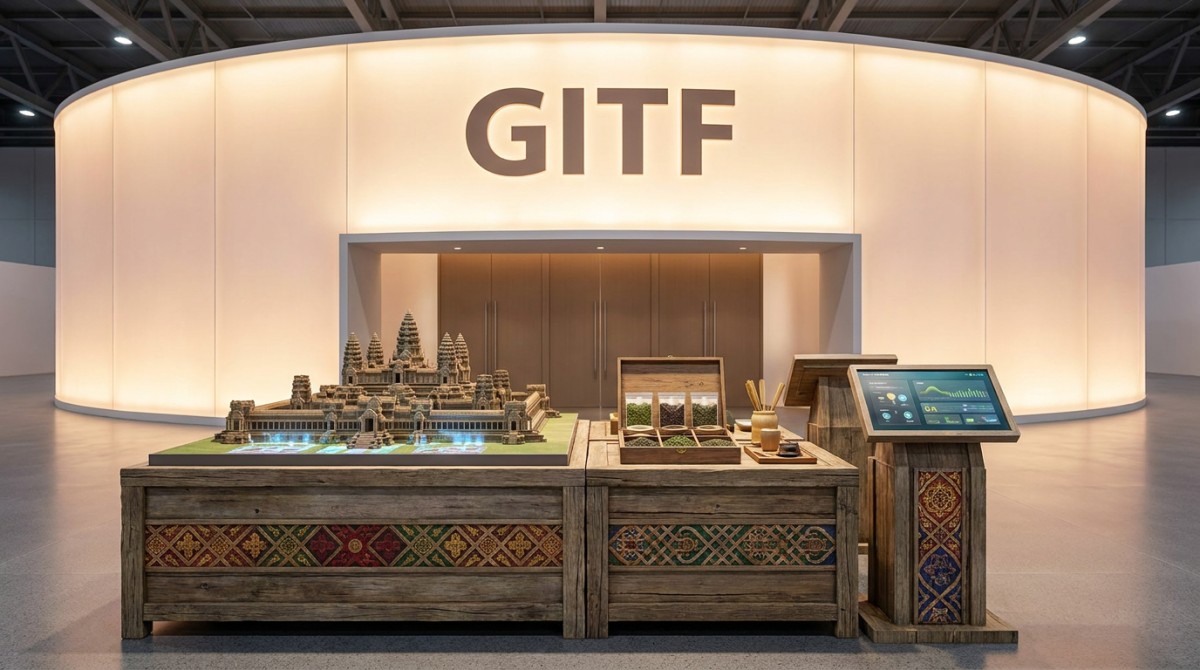
On May 21, 2026, the Organizing Committee of the 34th China International Travel Fair (GITF) officially confirmed that the cultural and tourism exhibition delegations of Sri Lanka and Cambodia have participated continuously for more than 20 years, becoming the overseas destination exhibition delegations with the longest continuous participation in GITF history. This event marks that the long-term strategic investment of South Asian and Southeast Asian countries in China’s cultural and tourism market has entered a deeper stage, and its impact will not only be limited to the field of cross-border tourism services, but will also extend to multiple industrial chain links such as digital infrastructure, cultural and tourism content development, smart scenic area operations, and cross-border supply chain collaboration.
Event Overview
The 34th GITF confirmed that Sri Lanka and Cambodia have participated continuously for more than 20 years, becoming the overseas destination exhibition delegations with the longest history in the fair. The cultural and tourism authorities of both countries stated that they will continue to expand the procurement scale of China’s study tours, wellness, and eco-tourism products, and promote their domestic scenic areas to establish ‘digital twin co-construction partnerships’ with China’s A-level scenic areas, accelerating the interconnection of cultural and tourism infrastructure.
Which market segments will be affected
Direct trade enterprises
Enterprises that directly provide tourism product packaging services, B2B route distribution, and customized reception solutions to overseas cultural and tourism buyers (such as the Sri Lanka Tourism Bureau and procurement platforms under the Cambodian Ministry of Tourism) will benefit directly. The impact is reflected in: longer procurement order cycles, a product mix shifting toward high-value-added segments (such as study tour course packages and traditional Chinese medicine wellness stay modules), while at the same time imposing higher requirements on compliance qualifications (such as continuity of outbound tourism qualifications and ISO 21101 cultural and tourism service quality certification).
Raw material procurement enterprises
Enterprises that provide physical support carriers for cultural and tourism projects—including eco-camp equipment manufacturers, traditional Chinese medicinal material suppliers (for supporting wellness tourism), and study tour teaching aid R&D enterprises—will face the transmission of new demand. The impact is reflected in: procurement standards needing to adapt to the actual local implementation conditions of overseas destinations (such as tropical climate durability and multilingual signage compatibility), and some categories may also need to simultaneously meet the dual regulatory requirements of China and importing countries (such as updates to quarantine access lists for plant-based wellness materials).
Processing and manufacturing enterprises
Enterprises focused on the development and integration of smart cultural and tourism hardware (such as AR guide terminals, low-power environmental monitoring sensors, and scenic area digital twin modeling workstations) will gain new channels for technology export. The impact is reflected in: order scenarios shifting from single-point equipment sales to integrated delivery of ‘system + service + localized adaptation’, requiring stronger understanding of and response capabilities for South Asian/Southeast Asian communication standards (such as Cambodia’s 4G frequency band compatibility) and data sovereignty policies (such as Article 12 of Sri Lanka’s Personal Data Protection Act).
Supply chain service enterprises
Service providers offering cross-border cultural and tourism logistics, multilingual content localization, international payment settlement, and compliance consulting will see a significant increase in business complexity. The impact is reflected in: the need to build one-stop capabilities covering ‘visa coordination—minor language content review—multi-currency settlement—ESG disclosure support’, especially when digital twin co-construction involves cross-border transmission of 3D geographic information, where the applicable scenarios for data export security assessment (DSA) must be evaluated in advance.
Key points of attention and response measures for relevant enterprises or practitioners
Focus on structural changes in procurement categories and dynamically recalibrate the product matrix
Sri Lanka and Cambodia have clearly expanded their procurement of China’s study tours, wellness, and eco-tourism products. Enterprises should avoid generalized understandings of ‘cultural and tourism products’, and instead identify high-frequency demand units based on the White Paper on Segmented Profiles of Chinese Tourists (2025 Edition) released by the two countries in recent years. For example: Sri Lanka focuses on immersive study tour route design centered on Buddhist cultural immersion, while Cambodia focuses on low-carbon hiking supporting equipment in Angkor heritage areas. What is currently more noteworthy is that buyers are shifting from ‘resource procurement’ to ‘capability-building procurement’, that is, purchasing reusable methodologies, training systems, and digital toolkits.
Plan ahead for the technical interface standards of ‘digital twin co-construction partnerships’
The two countries’ promotion of domestic scenic areas establishing ‘digital twin co-construction partnerships’ with China’s A-level scenic areas is not simply data sharing, but requires interoperability in underlying model formats (such as CityGML 3.0), spatial reference systems (WGS84 vs. local datum), and real-time IoT protocols (such as MQTT over TLS 1.3). Enterprises should give priority to participating in the Guide for Interoperability of Cultural and Tourism Digital Twin Systems (draft for comments) currently being drafted by the National Information Technology Standardization Technical Committee TC28/SC37, so as to avoid the risk of technological path lock-in.
Strengthen cross-border service compliance response capabilities
As procurement scales expand and cooperation levels rise, the weight of clauses in foreign-related contracts regarding intellectual property ownership, cross-border data flows, and force majeure determination is increasing. It is recommended that enterprises work with professional law firms to establish a ‘South Asia and Southeast Asia cultural and tourism compliance quick-reference checklist’, focusing on coverage of content such as the amendment to Sri Lanka’s E-Commerce Act (2025) and Chapter 7 of Cambodia’s Detailed Rules for the Implementation of the Tourism Law regarding the definition of responsibilities of third-party service platforms.
Editorial Viewpoint / Industry Observation
Observably, the 20-year continuity reflects not just habitual participation but a calibrated institutional commitment — both countries treat GITF as a strategic procurement gateway rather than a promotional platform. Analysis shows that their shift toward ‘digital twin co-construction’ signals a move from tourism marketing to infrastructure-level alignment; this is less about virtual tourism and more about synchronizing physical-digital governance layers across borders. From an industry perspective, it suggests that China’s A-level scenic area standards (GB/T 17775) are increasingly functioning as de facto regional benchmarks — a development requiring careful calibration between standardization leadership and localized adaptability.
Conclusion
The continuous participation of Sri Lanka and Cambodia in GITF for more than 20 years essentially represents the sustained recognition by cultural and tourism governance entities in South Asia and Southeast Asia of the institutionalized opening-up achievements of the Chinese market. This long-term behavior is more appropriately understood as an anchoring event in the restructuring of the regional cultural and tourism value chain: it not only expands the export dimension, but also forces domestic enterprises to leap from ‘product deliverers’ to ‘system collaborators’. A rational observation is that over the next three years, the focus of industry competition will accelerate from ‘who sells more’ to ‘who can jointly build more stable underlying rules’.
Description of information sources
Official sources: announcement by the Organizing Committee of the China International Travel Fair (2026-05-21), statement on the official website of the Sri Lanka Tourism Development Authority (SLTDA) (2026-05-18), and the Cambodia Ministry of Tourism’s Roadmap for Cooperation with the China Market from 2026 to 2030 (Cambodia Tourism Development [2026] No. 12). Matters requiring continued observation: whether the two countries will subsequently introduce detailed special fiscal subsidy rules for ‘digital twin co-construction partnerships’; and whether China’s Ministry of Culture and Tourism will launch pilot international cooperation rating evaluations for A-level scenic areas accordingly.
Your 1:1 travel consultant will respond within 1 business day
How to plan your trip
- Multiple regions announce autumn break dates for primary and secondary schools; attractions offer benefits such as discounted admission
- China’s Civil Aviation Industry to Implement the 2026/2027 Winter-Spring Flight Schedule from October 25
- Autumn Breaks in Multiple Regions Boost November Travel, Offering Hope for the Traditional Low Season
- China Tourism Academy Releases Report on Autumn Trends in China's Domestic Customized Tour Market
- What should I wear for a winter trip to Harbin and Mohe to cope with the extreme outdoor cold?
Monthly travel guide
- Luoyang launches the “Autumn Charm of the Divine Capital” tourism promotion to build anticipation for winter travel
- Typhoon “White Dolphin” Forces Henan Scenic Areas to Close, Putting Summer Ground-Handling Services Under Pressure
- RCEP Implementing Rules for Indonesia Take Effect: Zero Tariffs for Cultural and Tourism Services Alongside Strict Customer Service Requirements
- Saudi Arabia’s New SASO Regulations Take Effect: Taqat Certification Required Before Chinese-Language Cultural Tourism Services Can Access Visit Saudi
- Zhengzhou Launches a Dedicated LCL Shipping Route for Cultural and Tourism Materials, Cutting Freight Costs by 18%
- Luoyang Cold Chain Intensification: Cultural and Creative Exports Delivered in 9 Days
- Expedited Pre-Approval for Group Visas to Three Southeast Asian Countries
- Tightening air freight capacity at Zhengzhou Airport delays the delivery of cultural and tourism materials
- Vietnam's New Regulations on Bus Monitoring Requirements for Group Tours
- Saudi SAMA New Regulations on Travel Liability Insurance Compliance Preparation
- Japanese tourists' new regulations for entering Henan local transport vehicles
- Wai Gao Qiao Wen Travel customs bonded warehouse summer group equipment fast lane
Popular destinations
- The 17th China Yangtze Three Gorges International Tourism Festival Sees 17 Cultural and Tourism Projects Signed
- Henan Cultural Tourism Explores the Shift from Traffic to Immersive Experiences
- Liaoning Launches Inbound Tourism Promotion Event for Global Travel Trade, Releases Service Guide
- Shandong Hosts Cultural and Creative Industry Networking Event, Releases Annual Plan for Province-Wide Renewal
- Hong Kong Travel Industry Council Visits Henan, Aiming to Jointly Develop Distinctive Tourism Products
Why choose us

High cost-performance and transparent experience
Offer astonishing low prices without hidden tourism traps, enabling travelers to explore at lower costs while avoiding unnecessary spending loopholes, ensuring transparent consumption.

Personalization and dedicated service
Support 100% free customization, paired with one-on-one expert service, crafting exclusive itineraries based on travelers' specific needs, while providing professional guidance to enhance the personalization and professionalism of the journey.

Premium itinerary planning
Compact yet rich itineraries allow travelers to experience more within limited time; simultaneously, carefully selected hotels in prime locations provide convenient lodging conditions, overall enhancing travel comfort and experience.