Welcome to Our Travel Agency!




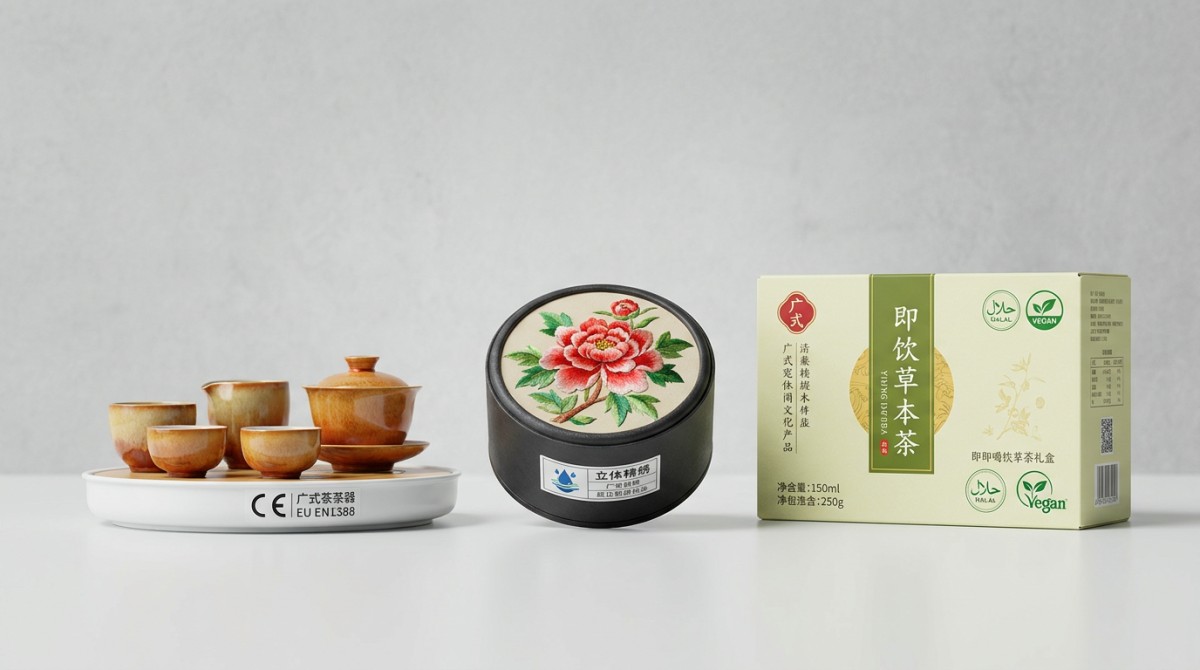
On May 10, 2026, the Guangdong Provincial Department of Culture and Tourism, together with the provincial Administration for Market Regulation, officially launched the drafting of the General Technical Specification for Export Packaging of Cantonese Leisure Cultural and Tourism Products. This move marks the shift of exports of Cantonese特色 leisure cultural and tourism products from “experience-driven” to “standards-led”, and will directly affect the efficiency of international circulation and compliant market access capabilities of highly recognizable categories such as ceramic tea sets, Guang embroidery handicrafts, and ready-to-drink herbal tea.
Event Overview
On May 10, the Guangdong Provincial Department of Culture and Tourism, together with the provincial Administration for Market Regulation, launched the drafting of the General Technical Specification for Export Packaging of Cantonese Leisure Cultural and Tourism Products, with the first batch focusing on high-frequency export categories: ceramic tea sets (required to comply with the EU EN1388 migration limits), Guang embroidery craft ornaments (moisture-proof and compression-resistant transport markings), and ready-to-drink herbal tea gift boxes (Halal/vegetarian/allergen original labeling). The standard is planned to be released in the fourth quarter of 2026 and will serve as an important basis for overseas distributors’ goods inspection and importers’ customs clearance.
Which Sub-sectors Will Be Affected
Direct trading enterprises: As the standard is clearly set to serve as the basis for overseas distributors’ goods inspection and importers’ customs clearance, export order fulfillment cycles, return shipment risks, and compliance costs will be directly affected; especially for markets such as the EU, the Middle East, and Southeast Asia, where requirements for labels, migrants, and religious attributes are stringent, companies need to adjust their documentation systems and contract terms in advance.
Raw material procurement enterprises: Upstream suppliers such as ceramic body glazes, Guang embroidery silk thread dyes, and herbal tea concentrate auxiliaries must cooperate in providing material declarations and test reports that meet EN1388 or Halal certification requirements; some non-standard dyes and food-contact-grade adhesives may face replacement pressure.
Processing and manufacturing enterprises: Tea set glaze firing processes, sealing methods for hard bases of Guang embroidery, and multilayer composite structural designs for herbal tea gift boxes all need to adapt to the specific parameters in the new standard regarding physical protection, chemical migration, and information traceability; small and medium-sized OEM factories may face minor production line adjustments and increased third-party testing frequency.
Supply chain service enterprises: Including export packaging design companies, cross-border logistics service providers, and compliance consulting firms, their service content will need to incorporate new modules such as standard pre-review, multilingual label compliance verification, and transport environment simulation testing; service providers with certification resources such as EU REACH, HALAL, and SGS food-contact certifications are expected to gain stronger pricing power.
Key Points and Response Measures for Relevant Enterprises or Practitioners
Closely track the public consultation milestones for the draft standard
The drafting work has been launched, but the official text has not yet been released; enterprises should pay attention to the subsequent draft publication schedule on the official website of the Guangdong Provincial Administration for Market Regulation and the “Yueshangtong” platform (expected in Q3 2025), and promptly submit practical feedback on the three product categories, especially striving for reasonable flexibility in details such as the threshold values for Guang embroidery compression-resistant markings and the minimum font size for allergen ingredients on herbal tea gift boxes.
Conduct a compliance gap assessment of existing export product packaging
Against the three major technical directions already clarified in the standard (migration limits, transport protection markings, and special attribute labeling), commission CNAS-qualified laboratories to conduct sampling tests and label audits, and prioritize identifying high-risk items—for example, the lead and cadmium leaching levels of white porcelain tea sets exported to the EU, and whether the placement of the Arabic Halal statement on herbal tea gift boxes sold to Saudi Arabia complies with GSO 2053:2019.
Promote the establishment of a cross-link collaborative verification mechanism
It is recommended that leading foreign trade enterprises take the lead and join with raw material suppliers, packaging manufacturers, and testing institutions to form a “Cantonese Export Packaging Compliance Collaboration Group” to jointly verify measured parameters such as the water vapor transmission rate (WVTR) of moisture-proof films and the stacking load critical values of Guang embroidery ornaments, so as to avoid the failure of full-chain adaptation caused by single-point improvements.
Editorial Viewpoint / Industry Observation
Observably, this standard initiative is not merely a packaging regulation—it functions as a de facto “market access gatekeeper” for Guangdong’s cultural light-industrial exports. Analysis shows that by anchoring requirements to existing international frameworks (e.g., EN1388, GSO, Codex), the standard lowers information asymmetry for overseas buyers but simultaneously raises the technical entry bar for SME exporters lacking in-house compliance capacity. From an industry perspective, it signals a structural shift: regional cultural IP is increasingly being codified into export-ready technical infrastructure—where authenticity must now coexist with auditable traceability.
Conclusion
The drafting of this standard is, in essence, a process of transforming the expressive power of the Cantonese lifestyle into measurable, verifiable, and enforceable technical language. What deserves more attention at present is whether it can, while safeguarding cultural recognizability, avoid excessive standardization that weakens the differentiated value of handicrafts; it is more appropriately understood as a key institutional groundwork for the “industrialized export of cultural products”, rather than simply a technical escalation.
Information Source Notes
Official information comes from the announcement on the official website of the Guangdong Provincial Department of Culture and Tourism (2026-05-10) and the press release of the Guangdong Provincial Administration for Market Regulation (released on the same day). The progress of the standard drafting, the draft release timeline, and the level of the final mandatory applicability remain subject to continued observation of follow-up supporting documents and local standard filing information.
Your 1:1 travel consultant will respond within 1 business day
How to plan your trip
- Hebei Launches Five “Trendy Hebei” Premium Tourism Routes for Inbound Travelers, Moving Toward Standardized Offerings
- The 12th Qionghai Tanmen Coastal Foraging Festival Opens on August 16
- Guangxi’s Digital Silk Road Accelerates: Orah Mandarin Juice Secures an Italian Order, Drawing Attention to Export Standards for Souvenirs
- New Inquiry Triggered by Coastal Cultural Tourism Space Standards
- Zhuanghe’s agro-cultural tourism model draws ASEAN attention, highlighting the compliance requirements for the internationalization of camping and intangible cultural heritage handicrafts
Monthly travel guide
- Typhoon “White Dolphin” Forces Henan Scenic Areas to Close, Putting Summer Ground-Handling Services Under Pressure
- RCEP Implementing Rules for Indonesia Take Effect: Zero Tariffs for Cultural and Tourism Services Alongside Strict Customer Service Requirements
- Saudi Arabia’s New SASO Regulations Take Effect: Taqat Certification Required Before Chinese-Language Cultural Tourism Services Can Access Visit Saudi
- Zhengzhou Launches a Dedicated LCL Shipping Route for Cultural and Tourism Materials, Cutting Freight Costs by 18%
- Luoyang Cold Chain Intensification: Cultural and Creative Exports Delivered in 9 Days
- Expedited Pre-Approval for Group Visas to Three Southeast Asian Countries
- Tightening air freight capacity at Zhengzhou Airport delays the delivery of cultural and tourism materials
- Vietnam's New Regulations on Bus Monitoring Requirements for Group Tours
- Saudi SAMA New Regulations on Travel Liability Insurance Compliance Preparation
- Japanese tourists' new regulations for entering Henan local transport vehicles
- Wai Gao Qiao Wen Travel customs bonded warehouse summer group equipment fast lane
- JTB Warning: Risks in Henan’s September Red Leaf Family Tour Purchases
Popular destinations
- China Southern Airlines launches the Guangzhou—Zhengzhou—Luoyang cultural tourism charter flight route
- DiDi Global launches cross-border ride-hailing services, covering 12 cultural and tourism areas in Luoyang
- Guangdong has launched cultural and tourism subsidies exceeding 1 billion yuan to benefit the public, and overseas travel agencies can apply for inbound tour operator service subsidies
- Alipay’s ‘link international cards to domestic accounts + use international e-wallets in China’ covers cultural and tourism destinations nationwide
- Ctrip launches the ‘Go China’ inbound tourism special initiative
Why choose us

High cost-performance and transparent experience
Offer astonishing low prices without hidden tourism traps, enabling travelers to explore at lower costs while avoiding unnecessary spending loopholes, ensuring transparent consumption.

Personalization and dedicated service
Support 100% free customization, paired with one-on-one expert service, crafting exclusive itineraries based on travelers' specific needs, while providing professional guidance to enhance the personalization and professionalism of the journey.

Premium itinerary planning
Compact yet rich itineraries allow travelers to experience more within limited time; simultaneously, carefully selected hotels in prime locations provide convenient lodging conditions, overall enhancing travel comfort and experience.