Welcome to Our Travel Agency!




Travel Guide
On May 20, 2026, the 2026 Guangzhou International Travel Fair (GITF) officially closed. This exhibition has become an important barometer for China’s cultural and tourism equipment going global, particularly highlighting the strong growth in demand from the Southeast Asian market for cultural and tourism products with educational attributes, directly propelling segments such as study tour equipment and bilingual guided tour systems into a fast track for exports.
Event Overview
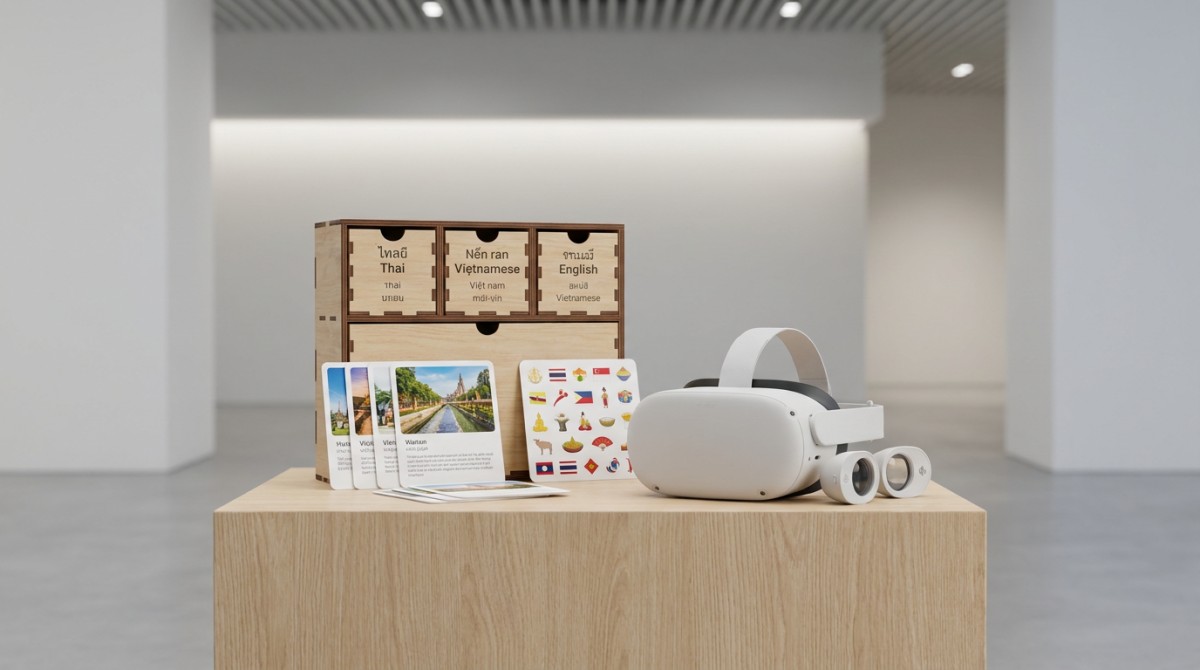
The 2026 Guangzhou International Travel Fair (GITF) concluded on May 20. Data shows that the contract value signed by buyers from Indonesia, Malaysia, and the Philippines increased by 67% year-on-year, with key procurement categories including customizable bilingual (English/Thai/Vietnamese) study tour teaching kits, portable VR immersive teaching terminals, and smart guided tour back-end systems that support LMS system integration. Multiple Chinese suppliers reported that Southeast Asian clients generally require proof of ISO 21001 certification for educational service management systems.
Which Market Segments Are Affected
Direct Trading Enterprises
They are the most directly affected. The year-on-year +67% increase in signed orders reflects a significant improvement in order acquisition efficiency, but buyers’ concentrated demand for ISO 21001 certification means companies need to simultaneously provide system documentation, audit records, and third-party certification certificates during the contract negotiation stage, resulting in longer compliance response cycles and higher business costs. Some small and medium-sized foreign trade companies, due to a lack of experience with educational service certifications, have experienced delayed quotations or abandoned orders.
Raw Material Procurement Enterprises
Bilingual study tour teaching kits and VR teaching terminals have created new demand for upstream components such as multilingual UI chips, lightweight optical modules, and multilingual speech synthesis modules. For example, recent procurement volume for TTS engines supporting real-time Thai/Vietnamese voice broadcasting has increased by about 40% month-on-month, but domestic suppliers of embedded voice solutions adapted to less commonly used languages remain relatively scarce, creating short-term supply bottlenecks.
Processing and Manufacturing Enterprises
They are facing the dual pressure of flexible production and rapid certification. Study tour teaching kits need country-specific customization of language packs, culturally adapted icons, and safety labels (for example, the Philippines requires compliance with PSA standards), leading to a lower minimum order quantity per batch and more frequent line changeovers; VR terminals, meanwhile, need to simultaneously obtain telecom network access permits in target countries (such as Indonesia’s SDPPI and Malaysia’s SIRIM) as well as safety certification for educational equipment, adding an average of 5–7 working days to production line testing.
Supply Chain Service Enterprises
Demand for international logistics, cross-border payment, and localized compliance consulting is rising structurally. Southeast Asian buyers tend to adopt a “small batch, multiple shipments, fast delivery” model, imposing higher requirements on the stability of door-to-door delivery timelines (especially in customs clearance); at the same time, value-added services such as ISO 21001 certification consulting, LMS system API integration testing support, and localization of multilingual manuals are shifting from optional items to mandatory requirements in tenders.
Key Focus Areas and Response Measures for Relevant Enterprises or Practitioners
Prioritize ISO 21001 System Alignment and Certification
This certification is no longer a bonus item, but a substantive market entry threshold for educational cultural and tourism procurement in Southeast Asia. Companies are advised to work with certification bodies to conduct gap analyses, focusing on core clauses such as “learner-centered” process design, educational service quality monitoring mechanisms, and multilingual service delivery capabilities, rather than merely piling up documentation systems.
Establish a Regionalized Product Configuration Matrix
In response to differences among Indonesia, Malaysia, and the Philippines, companies should sort out language combinations (English + Indonesian/Malay/Tagalog), content review red lines (religion, historical narratives), and hardware interface standards (for example, public schools in the Philippines commonly use Google Workspace, so G Suite compatibility needs to be strengthened), forming a reusable modular configuration checklist to shorten customization response times.
Strengthen LMS System Integration Capabilities
Buyers have explicitly required smart guided tour back-end systems to support direct API connections with mainstream LMS platforms such as Moodle and Google Classroom. Companies need to assess the openness of their own back-end architecture, prioritize validation of foundational capabilities such as OAuth 2.0 authorization, SCORM/xAPI content packaging, and learning data feedback, and provide standardized integration documentation and sandbox environments.
Editor’s Viewpoint / Industry Observation
显然, this surge is not merely cyclical demand but reflects a structural shift: Southeast Asian education authorities are formalizing tourism as experiential learning infrastructure, thereby elevating procurement standards from ‘hardware supply’ to ‘pedagogical service integration’. Analysis shows that the +67% growth is concentrated in B2G and B2B2C deals—not retail—indicating institutional adoption, not consumer fad. Currently, more critical than volume growth is the emerging requirement for cross-border service continuity: post-sale teacher training, multilingual LMS admin support, and curriculum-aligned content updates are increasingly weighted in tender evaluations.
Conclusion
The key signal released by this Guangzhou cultural and tourism fair is that China’s cultural and tourism equipment exports are shifting from “product export” to “educational service solution export”. Whether companies can transform hardware capabilities into service capabilities that are certifiable, integrable, and sustainably deliverable will become the core watershed determining whether they can deeply embed themselves in Southeast Asia’s educational cultural and tourism ecosystem. Rationally speaking, the short-term benefit lies in order conversion, while the medium- to long-term test is cross-system coordination capability and the resilience of localized operations.
Information Source Notes
Data sources: official closing bulletin of the Guangzhou International Travel Fair Organizing Committee (released on May 20, 2026); exhibitor interview summary (covering 12 suppliers in the study tour equipment and smart guided tour sectors, sample period: May 18–20, 2026). Items for continued observation: the progress of making ISO 21001 mandatory in educational procurement catalogs across Southeast Asian countries; whether Vietnam and Thailand will subsequently follow up with similar procurement policies; and whether technical standards for LMS system integration will form a regional mutual recognition mechanism.
Your 1:1 travel consultant will respond within 1 business day
How to plan your trip
- Multiple regions announce autumn break dates for primary and secondary schools; attractions offer benefits such as discounted admission
- China’s Civil Aviation Industry to Implement the 2026/2027 Winter-Spring Flight Schedule from October 25
- Autumn Breaks in Multiple Regions Boost November Travel, Offering Hope for the Traditional Low Season
- China Tourism Academy Releases Report on Autumn Trends in China's Domestic Customized Tour Market
- What should I wear for a winter trip to Harbin and Mohe to cope with the extreme outdoor cold?
Monthly travel guide
- Luoyang launches the “Autumn Charm of the Divine Capital” tourism promotion to build anticipation for winter travel
- Typhoon “White Dolphin” Forces Henan Scenic Areas to Close, Putting Summer Ground-Handling Services Under Pressure
- RCEP Implementing Rules for Indonesia Take Effect: Zero Tariffs for Cultural and Tourism Services Alongside Strict Customer Service Requirements
- Saudi Arabia’s New SASO Regulations Take Effect: Taqat Certification Required Before Chinese-Language Cultural Tourism Services Can Access Visit Saudi
- Zhengzhou Launches a Dedicated LCL Shipping Route for Cultural and Tourism Materials, Cutting Freight Costs by 18%
- Luoyang Cold Chain Intensification: Cultural and Creative Exports Delivered in 9 Days
- Expedited Pre-Approval for Group Visas to Three Southeast Asian Countries
- Tightening air freight capacity at Zhengzhou Airport delays the delivery of cultural and tourism materials
- Vietnam's New Regulations on Bus Monitoring Requirements for Group Tours
- Saudi SAMA New Regulations on Travel Liability Insurance Compliance Preparation
- Japanese tourists' new regulations for entering Henan local transport vehicles
- Wai Gao Qiao Wen Travel customs bonded warehouse summer group equipment fast lane
Popular destinations
- The 17th China Yangtze Three Gorges International Tourism Festival Sees 17 Cultural and Tourism Projects Signed
- Henan Cultural Tourism Explores the Shift from Traffic to Immersive Experiences
- Liaoning Launches Inbound Tourism Promotion Event for Global Travel Trade, Releases Service Guide
- Shandong Hosts Cultural and Creative Industry Networking Event, Releases Annual Plan for Province-Wide Renewal
- Hong Kong Travel Industry Council Visits Henan, Aiming to Jointly Develop Distinctive Tourism Products
Why choose us

High cost-performance and transparent experience
Offer astonishing low prices without hidden tourism traps, enabling travelers to explore at lower costs while avoiding unnecessary spending loopholes, ensuring transparent consumption.

Personalization and dedicated service
Support 100% free customization, paired with one-on-one expert service, crafting exclusive itineraries based on travelers' specific needs, while providing professional guidance to enhance the personalization and professionalism of the journey.

Premium itinerary planning
Compact yet rich itineraries allow travelers to experience more within limited time; simultaneously, carefully selected hotels in prime locations provide convenient lodging conditions, overall enhancing travel comfort and experience.