Welcome to Our Travel Agency!




Travel Guide
In early May 2026, the logistics costs for China's cultural and tourism equipment exports experienced a temporary decline. Shipping prices at major ports in South China decreased by 12% month-on-month, and the increased frequency of China-Europe freight trains dedicated to cultural and tourism products extended the delivery cycle for mainstream products by 5-7 days. This change directly impacted the order fulfillment schedules of companies exporting cultural and tourism equipment, their peak season inventory preparation strategies, and the efficiency of supply chain coordination, reflecting the initial success of the coordinated optimization of the international logistics environment and industrial policies.
Event Overview
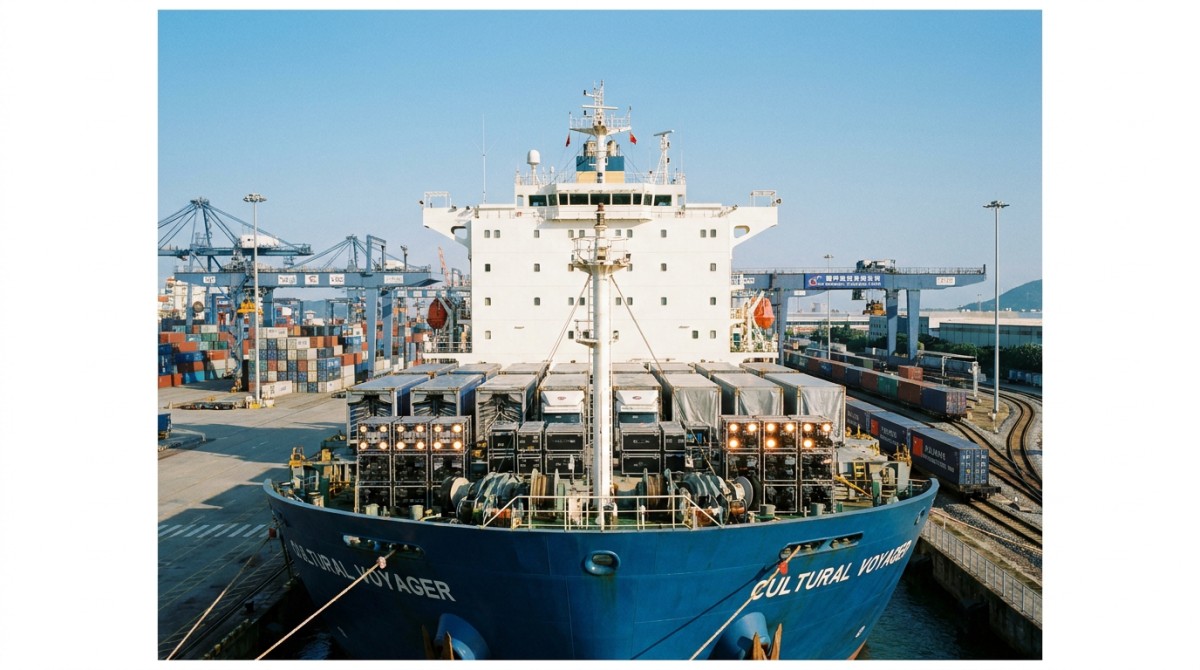
According to the "Weekly Report on Export Logistics of Cultural and Tourism Equipment" released by the China Federation of Logistics and Purchasing on May 21, 2026, the sea freight rate for 40HQ containers shipped from Shenzhen Yantian Port and Guangzhou Nansha Port to the Middle East, Southeast Asia, and South America decreased by 12% month-on-month in early May. During the same period, the frequency of China-Europe freight trains specializing in cultural and tourism equipment increased by 18% compared to April, covering hub nodes such as Malaszewicze, Poland, and Budapest, Hungary. The average delivery cycle for mainstream cultural and tourism equipment exports, such as mobile stage vehicles and modular nighttime lighting sets, extended from 38 days in April to 43-45 days.
Which sub-sectors will be affected?
Direct trading companies : As the main parties to export contracts, their pricing flexibility and payment terms are directly affected by changes in ocean freight costs. A 12% decrease in freight rates reduces the overall logistics cost per container by approximately RMB 18,000–23,000 (based on Middle East routes). Coupled with an extended delivery window, companies can more flexibly match the peak season warehousing schedules of overseas buyers, reducing the risk of default or expedited warehousing fees caused by shipping delays.
Raw material sourcing companies are mainly upstream suppliers of cultural and tourism equipment, including LED light source modules, special steel, and intelligent control systems. The extended delivery cycle means that downstream OEMs are stabilizing their order placement pace, easing the pressure on raw material inventory, and the inventory turnover days are expected to be shortened by 3-5 days. However, it should be noted that if logistics improvements continue, some buyers may shift to a "small batch, multiple shipments" model, placing new demands on the speed of raw material supply response.
Manufacturing enterprises include mobile stage truck assembly plants and nighttime lighting system integrators. Extending the delivery window by 5-7 days effectively reduces the rigidity of production scheduling, which helps balance capacity utilization during peak and off-peak seasons and reduces quality fluctuations and labor cost overruns caused by last-minute rush orders. However, it is necessary to simultaneously optimize internal quality inspection and packaging processes to prevent the benefits of the extended delivery window from being offset by internal inefficiencies.
Supply chain service companies include customs brokers, international freight forwarders, and cross-border credit insurance providers. Lower ocean freight rates coupled with increased train frequency have driven up inquiries about combined sea-rail transport and localized customs clearance solutions. Simultaneously, longer delivery cycles have broadened the operational window for individual shipments, facilitating deeper service delivery (such as embedding compliance guidance and destination country access certification support), but also placing higher demands on multimodal transport data collaboration capabilities.
Key areas of focus and corresponding countermeasures for relevant enterprises or practitioners
Dynamically assess the rebalancing point between logistics costs and delivery cycles.
The current situation presents a non-linear relationship between declining ocean freight rates and extended delivery times. Companies need to calculate the optimal shipping schedule by considering their product volume/weight ratio, destination customs clearance complexity, and customer payment terms. For example, for high-value mobile stage trucks in the Middle East market, freight train services can be prioritized to ensure timeliness and stability; for low-priced lighting sets in Southeast Asia, the proportion of LCL (Less than Container Load) shipping can be appropriately increased to further reduce costs.
Adapt to the peak season rhythm overseas and restructure the order response mechanism.
Extending the delivery window by 5-7 days essentially shifts some of the pressure from the logistics环节 to the production and planning环节. It is recommended that manufacturers collaborate with trading companies to develop production plans based on major overseas cultural and tourism festivals (such as events related to the Dubai Expo and the lighting upgrades for the Rio Carnival in Brazil), transforming the "delivery period" into a "guaranteed service commitment" to enhance customer loyalty.
Strengthen the data connectivity capabilities of multimodal transport
The increased frequency of China-Europe freight trains dedicated to cultural and tourism services complements the decline in port shipping rates, but information gaps still exist in the sea-rail connection (such as the status of cargo space allocation and monitoring of temperature and humidity during train journeys). Supply chain service companies should accelerate their access to the special interface for cultural and tourism equipment on the National Logistics Information Platform to achieve full-chain visualization from booking to loading, customs clearance, transit, and delivery, supporting accurate fulfillment of contractual commitments.
Editor's Viewpoint / Industry Observation
Observably, this logistics relief is not merely cyclical price fluctuation—it reflects structural progress in infrastructure connectivity (eg, upgraded port-rail intermodal terminals in Nansha) and policy-targeted capacity allocation (eg, dedicated train slots for cultural equipment under the Belt and Road Initiative). However, Analysis shows that the 12% freight decline remains concentrated in non-peak routes; volatility persists on trans-Pacific and West Africa lanes. From an industry perspective, the extended delivery window is understood better as a temporary operational buffer—not a long-term lead-time reduction. What matters more now is whether enterprises convert this breathing room into supply chain resilience, rather than reverting to old inventory or scheduling habits.
Conclusion
The decline in logistics costs and the expansion of delivery windows have alleviated the contract fulfillment pressure on cultural and tourism equipment companies exporting overseas in the short term, but in the long term, they will test the industry chain's ability to systematically build "certain delivery." Currently, the more pressing issue is how to translate improvements in transportation into localized adaptation in design, flexible response in manufacturing, and full controllability in service. Rationally speaking, this is not an industry turning point, but rather a crucial stage in the evolution of China's cultural and tourism equipment industry from "being able to export" to "stable delivery and reliability" against the backdrop of deepening globalization.
Information source explanation
- China Federation of Logistics and Purchasing, "Weekly Report on Export Logistics of Cultural and Tourism Equipment" (Published on May 21, 2026)
- Summary of the Ministry of Transport's "Monitoring Report on the Development of Multimodal Transport in the First Quarter of 2026" (to be released)
- Further observation is needed regarding the strength of the rebound in logistics demand during Ramadan in June, the actual impact of the South American rainy season on port operational efficiency, and the EU's newly issued transitional implementation details for energy efficiency labeling of cultural and tourism equipment.
Your 1:1 travel consultant will respond within 1 business day
How to plan your trip
- Multiple regions announce autumn break dates for primary and secondary schools; attractions offer benefits such as discounted admission
- China’s Civil Aviation Industry to Implement the 2026/2027 Winter-Spring Flight Schedule from October 25
- Autumn Breaks in Multiple Regions Boost November Travel, Offering Hope for the Traditional Low Season
- China Tourism Academy Releases Report on Autumn Trends in China's Domestic Customized Tour Market
- What should I wear for a winter trip to Harbin and Mohe to cope with the extreme outdoor cold?
Monthly travel guide
- Luoyang launches the “Autumn Charm of the Divine Capital” tourism promotion to build anticipation for winter travel
- Typhoon “White Dolphin” Forces Henan Scenic Areas to Close, Putting Summer Ground-Handling Services Under Pressure
- RCEP Implementing Rules for Indonesia Take Effect: Zero Tariffs for Cultural and Tourism Services Alongside Strict Customer Service Requirements
- Saudi Arabia’s New SASO Regulations Take Effect: Taqat Certification Required Before Chinese-Language Cultural Tourism Services Can Access Visit Saudi
- Zhengzhou Launches a Dedicated LCL Shipping Route for Cultural and Tourism Materials, Cutting Freight Costs by 18%
- Luoyang Cold Chain Intensification: Cultural and Creative Exports Delivered in 9 Days
- Expedited Pre-Approval for Group Visas to Three Southeast Asian Countries
- Tightening air freight capacity at Zhengzhou Airport delays the delivery of cultural and tourism materials
- Vietnam's New Regulations on Bus Monitoring Requirements for Group Tours
- Saudi SAMA New Regulations on Travel Liability Insurance Compliance Preparation
- Japanese tourists' new regulations for entering Henan local transport vehicles
- Wai Gao Qiao Wen Travel customs bonded warehouse summer group equipment fast lane
Popular destinations
- The 17th China Yangtze Three Gorges International Tourism Festival Sees 17 Cultural and Tourism Projects Signed
- Henan Cultural Tourism Explores the Shift from Traffic to Immersive Experiences
- Liaoning Launches Inbound Tourism Promotion Event for Global Travel Trade, Releases Service Guide
- Shandong Hosts Cultural and Creative Industry Networking Event, Releases Annual Plan for Province-Wide Renewal
- Hong Kong Travel Industry Council Visits Henan, Aiming to Jointly Develop Distinctive Tourism Products
Why choose us

High cost-performance and transparent experience
Offer astonishing low prices without hidden tourism traps, enabling travelers to explore at lower costs while avoiding unnecessary spending loopholes, ensuring transparent consumption.

Personalization and dedicated service
Support 100% free customization, paired with one-on-one expert service, crafting exclusive itineraries based on travelers' specific needs, while providing professional guidance to enhance the personalization and professionalism of the journey.

Premium itinerary planning
Compact yet rich itineraries allow travelers to experience more within limited time; simultaneously, carefully selected hotels in prime locations provide convenient lodging conditions, overall enhancing travel comfort and experience.