Welcome to Our Travel Agency!




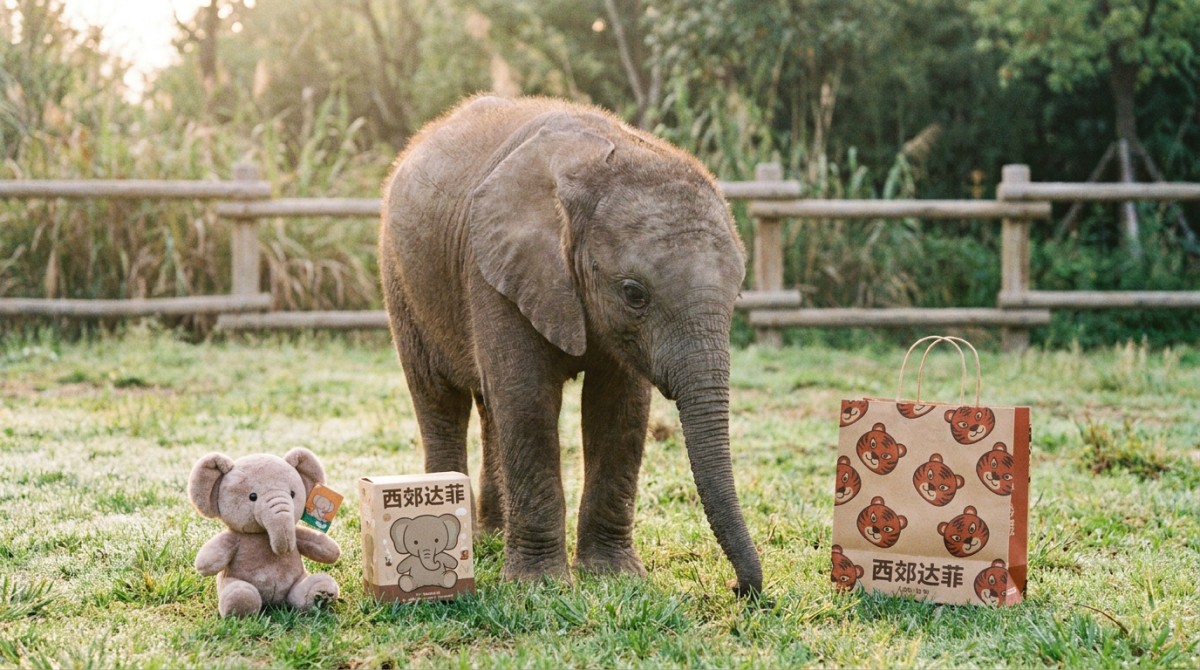
Recently, Shanghai Wild Animal Park in 2025 has centrally welcomed more than 40 newborn animals from over 10 species including African elephants and black capuchins, while simultaneously advancing the rapid commercialization of animal IPs represented by ‘Xijiao Dafei’ and ‘Brown Sugar Tiger’. Sales of related cultural and creative products have increased significantly, and channels for cross-border IP licensing are being accelerated. Although the event has not explicitly announced a specific launch timeline, its coordinated breakthrough across the three dimensions of content production, conservation practice, and commercial conversion is triggering a systematic reassessment in multiple niche sectors such as culture and tourism, cultural creativity, licensing services, and cross-border trade regarding the industrialization path of zoo IP.
Event Overview
In 2025, Shanghai Wild Animal Park added more than 40 young animals from over 10 species, including African elephants and black capuchins; based on the newborn animals, the park created highly recognizable animal IPs such as ‘Xijiao Dafei’ (baby African elephant) and ‘Brown Sugar Tiger’ (South China tiger cub); it has already formed a series of cultural and creative product lines covering plush toys, blind boxes, digital collectibles, and co-branded foods; the related IPs have already initiated licensing negotiations with some theme parks and zoos in Southeast Asia and Europe, and some co-branded products have entered the sample testing stage.
Which Niche Industries Are Affected
From an industry perspective, this ‘cute economy’ practice is not a single scenic area marketing event, but rather China’s first complete closed-loop validation of the full chain of ‘conservation—content—IP—licensing’ in zoos, and its spillover effects are being transmitted to multiple industrial links:
Direct Trading Enterprises
Export enterprises of animal IP derivative products benefit directly. Because overseas zoo procurement demand is clearly directed toward original IP products that possess ‘conservation background + local cultural adaptability + compliant licensing qualifications’, traditional OEM-type foreign trade enterprises will face the risk of order diversion if they lack IP operation capability or content collaboration mechanisms; the impact is reflected in: the proportion of qualification requirements such as ‘IP licensing certificate’ and ‘endorsement of animal conservation cooperation’ in customer inquiries has increased significantly, and the proportion of customized small-batch quick-response orders has risen.
Raw Material Procurement Enterprises
Suppliers of specific categories such as environmentally friendly biodegradable plush filling, food-grade silicone (used for molds of child-oriented IP co-branded snacks), and FSC-certified paper materials (for cultural and creative packaging) are receiving more attention. The reason is: the newborn animal IPs are positioned as ‘family-friendly’ and ‘nature education’, and downstream customers are putting forward upfront screening requirements for material safety standards and sustainability attributes; the impact is reflected in: purchasers are beginning to include ESG compliance documents in supplier entry evaluations, rather than only focusing on quotations and delivery schedules.
Processing and Manufacturing Enterprises
Cultural and creative ODM manufacturers with flexible production capabilities are more likely to take on orders for IP derivative products. Since animal IP images require frequent iteration (such as quarterly updates to reflect the growth stages of young animals), and overseas markets prefer regional customization (for example, Europe tends toward realistic styles, while Southeast Asia prefers Q-style designs), traditional large-scale standardized production lines respond too slowly; the impact is reflected in: customers have lower tolerance for one-time minimum order quantities (MOQ), and factories that can shorten sampling cycles to within 7 working days and support small-batch mixed-color production are given priority ratings.
Supply Chain Service Enterprises
Demand is rising for IP management service providers focused on taking culture overseas, cross-border copyright registration agencies, and multilingual localization service providers. The reason is: overseas licensing involves copyright registration in different jurisdictions, customs classification (for example, ‘animal-image plush toys’ in the EU must additionally comply with the EN71-1 mechanical and physical performance standard), and culturally adaptive translation (for example, the name ‘Brown Sugar Tiger’ in a Japanese-language context needs to avoid the potential association between ‘brown sugar’ and ‘blood color’); the impact is reflected in: professional demands such as ‘design of exclusive clauses for licensing territories’ and ‘IP infringement monitoring services in target countries’ are clearly increasing in customer consultations.
Key Focus Areas and Response Measures for Relevant Enterprises or Practitioners
Strengthen the Two-Way Binding Capability Between Conservation Storytelling and Commercial Licensing
Avoid reducing animal IP to mere visual symbols. Enterprises need to jointly build a verifiable content asset library with conservation institutions (such as growth video logs of young animals and summaries of veterinary care records), so that licensed products carry labels of real conservation stories, thereby enhancing the foundation of overseas buyers’ recognition of socially responsible procurement (SRP).
Plan Regional IP Compliance Adaptation Solutions in Advance
For key export markets, pre-study local cultural taboos regarding the use of animal images, child product safety regulations, and copyright registration procedures. For example, the Middle East market needs to avoid the religious sensitivity of certain fierce animal images, while the EU requires simultaneous preparation of CE certification and REACH testing reports, and compliance procedures should not wait until orders are finalized before being initiated.
Establish a Lightweight Tiered Management System for IP Licensing
Differentiate among the three types of licensing rights: ‘image use’, ‘story adaptation’, and ‘co-branded development’, and set corresponding fee structures and risk-control clauses. In current overseas negotiations, some theme parks tend to prefer combined licensing of ‘non-exclusive + limited categories + divided regions’, and enterprises need to have modular contract response capabilities rather than merely providing standard master agreements.
Editor’s Viewpoint / Industry Observation
显然,这一案例标志着一种结构性转变:中国动物园正从被动的‘展示场馆’转向主动的‘具备保育公信力的IP孵化器’。关键差异化因素不仅在于角色设计,更在于动物福利成果与商业产出之间可验证的联结。分析显示,海外买家日益将保育文档视为事实上的IP估值输入项——这是传统授权模式中缺失的指标。这正在将竞争优势重新校准到那些拥有一体化生物学、叙事和法律基础设施的机构。
Conclusion
This practice by Shanghai Wild Animal Park is more appropriately understood as a key calibration of China’s model for taking cultural and tourism IP overseas: it shows that cultural products with true global competitiveness must simultaneously carry verifiable ecological value, extensible content genes, and executable commercial rules at their core. What deserves more attention at present is whether this kind of ‘conservation-driven IP’ can be elevated from a single case into an industry methodology, and whether it can give rise to supporting national standards (such as compliance guidelines for zoo IP licensing) and cross-border service infrastructure.
Information Source Notes
The information is compiled from announcements on the official website of Shanghai Wild Animal Park, the Q1 2025 industry bulletin of the China Zoo Association, and the licensing case chapter of the Cultural Trade Blue Book (2025). Details in the article regarding the specific countries involved in overseas licensing progress, contracting entities, and amounts are still pending further official disclosure, and this publication will continue to track and update them.
Your 1:1 travel consultant will respond within 1 business day
How to plan your trip
- Hebei Launches Five “Trendy Hebei” Premium Tourism Routes for Inbound Travelers, Moving Toward Standardized Offerings
- The 12th Qionghai Tanmen Coastal Foraging Festival Opens on August 16
- Guangxi’s Digital Silk Road Accelerates: Orah Mandarin Juice Secures an Italian Order, Drawing Attention to Export Standards for Souvenirs
- New Inquiry Triggered by Coastal Cultural Tourism Space Standards
- Zhuanghe’s agro-cultural tourism model draws ASEAN attention, highlighting the compliance requirements for the internationalization of camping and intangible cultural heritage handicrafts
Monthly travel guide
- Typhoon “White Dolphin” Forces Henan Scenic Areas to Close, Putting Summer Ground-Handling Services Under Pressure
- RCEP Implementing Rules for Indonesia Take Effect: Zero Tariffs for Cultural and Tourism Services Alongside Strict Customer Service Requirements
- Saudi Arabia’s New SASO Regulations Take Effect: Taqat Certification Required Before Chinese-Language Cultural Tourism Services Can Access Visit Saudi
- Zhengzhou Launches a Dedicated LCL Shipping Route for Cultural and Tourism Materials, Cutting Freight Costs by 18%
- Luoyang Cold Chain Intensification: Cultural and Creative Exports Delivered in 9 Days
- Expedited Pre-Approval for Group Visas to Three Southeast Asian Countries
- Tightening air freight capacity at Zhengzhou Airport delays the delivery of cultural and tourism materials
- Vietnam's New Regulations on Bus Monitoring Requirements for Group Tours
- Saudi SAMA New Regulations on Travel Liability Insurance Compliance Preparation
- Japanese tourists' new regulations for entering Henan local transport vehicles
- Wai Gao Qiao Wen Travel customs bonded warehouse summer group equipment fast lane
- JTB Warning: Risks in Henan’s September Red Leaf Family Tour Purchases
Popular destinations
- Zhuanghe’s agro-cultural tourism model draws ASEAN attention, highlighting the compliance requirements for the internationalization of camping and intangible cultural heritage handicrafts
- Tongcheng Travel data: Summer “factory tours” booking popularity rises by 36%, with family travelers leading demand
- Saudi OTA Opens a Direct Procurement Channel for Henan Inbound Ground Services
- JIS S 0022:2026 Takes Effect, Requiring Bilingual Contingency Plans and Route Record Archiving for Customized Tours
- TripAdvisor Summer Rankings Released: Luoyang Itinerary Named Among the TOP 10 Family Travel Destinations in Asia
Why choose us

High cost-performance and transparent experience
Offer astonishing low prices without hidden tourism traps, enabling travelers to explore at lower costs while avoiding unnecessary spending loopholes, ensuring transparent consumption.

Personalization and dedicated service
Support 100% free customization, paired with one-on-one expert service, crafting exclusive itineraries based on travelers' specific needs, while providing professional guidance to enhance the personalization and professionalism of the journey.

Premium itinerary planning
Compact yet rich itineraries allow travelers to experience more within limited time; simultaneously, carefully selected hotels in prime locations provide convenient lodging conditions, overall enhancing travel comfort and experience.