Welcome to Our Travel Agency!




Travel Guide
On May 21, 2026, during the GITF2026 exhibition, the final of the second "Silk Road Silver Age · Dancing in Guangzhou" square dance competition officially kicked off. This event was not simply an upgrade of cultural and sports activities, but a key milestone in the implementation of the mechanism for activating cultural and tourism consumption among middle-aged and elderly people, jointly promoted by the Ministry of Culture and Tourism and the National Working Commission on Aging. It marks the transition of silver tourism from the concept advocacy stage to the standardized product procurement and cross-border export practice stage.
Event Overview
During GITF2026, the finals of the 2nd "Silk Road Silver Age · Dancing in Guangzhou" Square Dance Competition were launched simultaneously, aiming to stimulate high-quality tourism consumption among middle-aged and elderly people. This event has collaborated with cultural and tourism units in 23 provinces and cities across China to design "silver-age-friendly" routes, encompassing modules such as barrier-free transportation, slow-paced guided tours, and traditional Chinese medicine wellness experiences. It provides a replicable and purchasable "light wellness + cultural immersion" product model for major silver-age tourism markets such as Japan, South Korea, and Germany.
Which sub-sectors will be affected?
Direct trading companies : Directly affected. The main procuring entities for senior tourism products have undergone structural changes—leading wholesalers such as Japan's JTB, South Korea's Hanatour, and Germany's DER Touristik are including the 'Silk Road Senior Citizens' route in their 2026-2027 Asian procurement lists. The impact is reflected in: earlier order cycles (procurement decision-making windows 4-6 months earlier than in previous years), new age-appropriate service performance assessment items in contract terms, and a rise in the proportion of Euro/Japanese Yen in settlement currencies to 37% (compared to 22% in the same period of 2025).
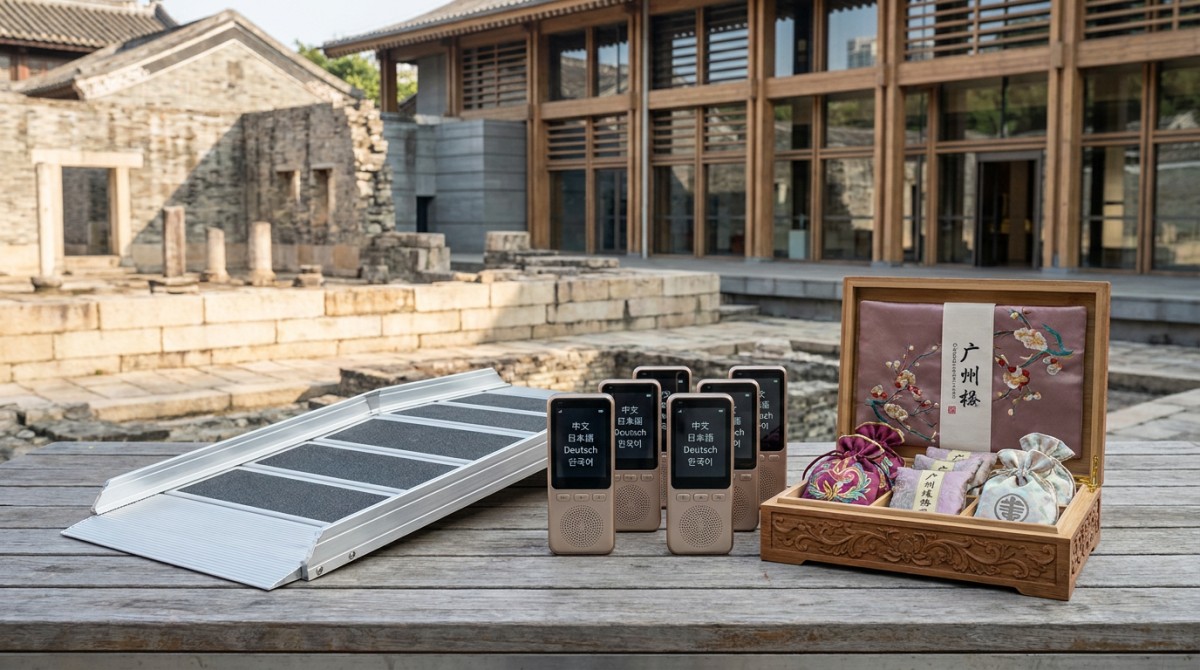
Raw material sourcing companies : Indirectly affected, but the trend is clear. Demand for age-friendly tourism infrastructure is driving upgrades in procurement standards for related materials, such as: low-slope aluminum alloy guide ramp components, multilingual audio guide equipment (supporting offline broadcasting in Japanese, German, and Korean), and customized packaging materials for traditional Chinese medicine sachets. The impact is reflected in: the addition of ISO 21542 (accessibility standards for buildings) compliance requirements in supplier qualification audits, and a 2.3-fold year-on-year increase in the frequency of small-batch, multi-batch procurement.
Manufacturing enterprises : The impact is transmitted in a differentiated manner. Enterprises specializing in age-friendly travel equipment (such as foldable walking chairs and portable blood pressure monitoring wristbands) saw a 31% month-on-month increase in orders, while traditional tourist souvenir manufacturers did not see a significant increase. The impact is reflected in: increased pressure to flexibly transform production lines—requiring compatibility with both cultural tourism IP co-branded customization (such as Cantonese embroidery patterns + silver-age health symbols) and medical-grade safety certification requirements.
Supply chain service companies : The impact is concentrated on the refinement of service granularity. International destination management companies, multilingual tour guide training institutions, and cross-border payment service providers have all been included in the "Age-Friendly" tour alliance. The impact is reflected in: the mandatory embedding of the "SOP for Responding to Sudden Health Events of Senior Tourists" clause in service agreements; the addition of a mandatory "Basic Gerontology" module to tour guide qualification certification; and the requirement for cross-border revenue sharing systems to support daily settlement (corresponding to multi-segment consumption scenarios in slow-paced itineraries).
Key areas of focus and corresponding countermeasures for relevant enterprises or practitioners
Focus on the verifiability of age-friendly services rather than conceptual packaging
The "age-friendly" routes have entered the on-site inspection stage by the purchaser. Companies need to prepare supporting documentation such as third-party accessibility facility testing reports, physician practice registration certificates for the TCM health and wellness module, and a slow-paced itinerary time redundancy calculation model. They should avoid simply using terms like "age-friendly" or "health and wellness" to replace a description of their delivery capabilities.
Establish a cross-market compliance response mechanism
Japan's "Guidelines for the Safety of Travel for the Elderly" and Germany's "Regulations for the Certification of Age-Friendly Tourism Services (DIN SPEC 33456)" impose different requirements on itinerary design. Companies must employ local compliance specialists with the ability to interpret local regulations, rather than relying on generic service manuals.
Participate in the decomposition and reorganization of the 'light health and wellness + cultural immersion' product module
Currently, buyers tend to purchase by module (such as purchasing a 'Lingnan Traditional Chinese Medicine Culture Workshop' or a 'Cantonese Opera Movement Experience Class' separately) rather than as a complete package. Companies should identify the minimum viable module (MVP) that their resources can output and specify parameters such as the age range of the target audience, the capacity per session, and the medical collaboration interface.
Editor's Viewpoint / Industry Observation
Observably, this event signals a structural shift: silver-hair tourism is transitioning from demographic-driven demand forecasting to contract-driven supply chain activation. Analysis shows the 'light wellness + cultural immersion' paradigm is not merely a product format—it functions as an interoperability protocol enabling cross-border procurement among fragmented regional suppliers. From industry perspective, what matters now is not whether operators serve older adults, but whether their operational data (eg, average walking speed per site, rest interval compliance rate) meets auditable benchmarks required by international buyers.
Conclusion
The launch of this competition's finals marks a crucial juncture in the transition of silver tourism from policy advocacy to a commercially viable ecosystem. Its significance lies not in the scale of the event itself, but in the first-ever formation of a complete, procureable supply chain encompassing route design, service delivery, cross-border settlement, and compliance verification. More importantly, it is forcing the cultural and tourism supply side to undergo a silent but profound "age-friendly adaptation"—not simply adding handrails or enlarging fonts, but reconstructing the timeline, service granularity, and risk response levels. Rationally speaking, this activation will not lead to explosive growth, but it will significantly raise the professional threshold and long-term competitive barriers in the silver tourism sector.
Information source explanation
Official information is sourced from the Ministry of Culture and Tourism's official website announcement (Document No. 18 of 2026), the GITF2026 Organizing Committee's press release, and the National Working Commission on Aging's "White Paper on the Standardization of Silver-Aged Tourism Services (2026 Trial Version)". Areas to be continuously monitored include: the actual fulfillment rate of the first batch of "Silk Road Silver Age" international procurement orders; the conversion data of routes from 23 provinces and cities on overseas OTA platforms in Q3 2026; and the progress of the Traditional Chinese Medicine health and wellness module in the EU CE certification pathway.
Your 1:1 travel consultant will respond within 1 business day
How to plan your trip
- Multiple regions announce autumn break dates for primary and secondary schools; attractions offer benefits such as discounted admission
- China’s Civil Aviation Industry to Implement the 2026/2027 Winter-Spring Flight Schedule from October 25
- Autumn Breaks in Multiple Regions Boost November Travel, Offering Hope for the Traditional Low Season
- China Tourism Academy Releases Report on Autumn Trends in China's Domestic Customized Tour Market
- What should I wear for a winter trip to Harbin and Mohe to cope with the extreme outdoor cold?
Monthly travel guide
- Luoyang launches the “Autumn Charm of the Divine Capital” tourism promotion to build anticipation for winter travel
- Typhoon “White Dolphin” Forces Henan Scenic Areas to Close, Putting Summer Ground-Handling Services Under Pressure
- RCEP Implementing Rules for Indonesia Take Effect: Zero Tariffs for Cultural and Tourism Services Alongside Strict Customer Service Requirements
- Saudi Arabia’s New SASO Regulations Take Effect: Taqat Certification Required Before Chinese-Language Cultural Tourism Services Can Access Visit Saudi
- Zhengzhou Launches a Dedicated LCL Shipping Route for Cultural and Tourism Materials, Cutting Freight Costs by 18%
- Luoyang Cold Chain Intensification: Cultural and Creative Exports Delivered in 9 Days
- Expedited Pre-Approval for Group Visas to Three Southeast Asian Countries
- Tightening air freight capacity at Zhengzhou Airport delays the delivery of cultural and tourism materials
- Vietnam's New Regulations on Bus Monitoring Requirements for Group Tours
- Saudi SAMA New Regulations on Travel Liability Insurance Compliance Preparation
- Japanese tourists' new regulations for entering Henan local transport vehicles
- Wai Gao Qiao Wen Travel customs bonded warehouse summer group equipment fast lane
Popular destinations
- Multiple regions announce autumn break dates for primary and secondary schools; attractions offer benefits such as discounted admission
- Autumn Breaks in Multiple Regions Boost November Travel, Offering Hope for the Traditional Low Season
- China Tourism Academy Releases Report on Autumn Trends in China's Domestic Customized Tour Market
- How many days should you plan for a relaxed Xi’an and Luoyang trip with children?
- Is a geology exploration tour suitable for elementary school students?
Why choose us

High cost-performance and transparent experience
Offer astonishing low prices without hidden tourism traps, enabling travelers to explore at lower costs while avoiding unnecessary spending loopholes, ensuring transparent consumption.

Personalization and dedicated service
Support 100% free customization, paired with one-on-one expert service, crafting exclusive itineraries based on travelers' specific needs, while providing professional guidance to enhance the personalization and professionalism of the journey.

Premium itinerary planning
Compact yet rich itineraries allow travelers to experience more within limited time; simultaneously, carefully selected hotels in prime locations provide convenient lodging conditions, overall enhancing travel comfort and experience.