Welcome to Our Travel Agency!




Travel Guide
If a booked driver fails to meet a business group in Henan because of a provider-side error, the contracting provider is generally the first party to approach for a replacement and reimbursement of reasonable additional transport costs. That does not mean every replacement fare is automatically recoverable: responsibility depends on the booking terms, the reason for the missed pickup, and the evidence supporting the expense. A group arriving in Zhengzhou or Luoyang may need to pay immediately to protect its meeting schedule, then resolve liability afterward.
The important distinction is between who pays now and who ultimately bears the cost. Do not leave delegates waiting while suppliers debate responsibility. Confirm whether the pickup has genuinely failed, give the booking provider a practical opportunity to respond, and arrange suitable alternative transport when further waiting would cause avoidable disruption.
Start with the party that promised the transfer
Check the booking confirmation, accepted quotation, service agreement, and payment record. Identify the business that agreed to supply the arrival transfer—not merely the person whose mobile number appears beside “driver.”
When a travel agency sold the transfer as part of a Henan business itinerary, direct the service-failure complaint to that agency. Its arrangements with a transport subcontractor do not, by themselves, determine your contractual rights. When your company booked directly with a transport operator, that operator is normally the starting point. Where an intermediary only introduced the supplier, its obligations may be narrower; check what it actually agreed to provide.
Ask for two separate decisions: whether the provider will dispatch and pay for an immediate replacement, and how it will handle any costs your group must advance. A message saying “please take taxis” is useful operational permission, but it is not necessarily agreement to reimburse every fare. Request written confirmation of the approved arrangement and any spending limit.
Establish whether this is a no-show or a missed connection
A driver missing from the arrivals hall is not always an absent vehicle. Airport access restrictions, a different exit, an incorrect passenger name, or confusion between railway stations can produce the same initial appearance. Before abandoning the booking, have one coordinator verify:
- The airport terminal or exact railway station, arrival date, and flight or train number.
- The agreed meeting point and whether the driver is meeting passengers inside or at a vehicle pickup area.
- The lead passenger’s contact details and whether calls or messages are reaching either side.
- The driver’s current location, vehicle identification, and realistic time to reach the group.
- The agreed waiting allowance and any procedure for reporting arrival changes.
Keep the group together in a safe, identifiable location while this happens. A corporate coordinator should remain the single contact, rather than having several delegates issue conflicting instructions.
There is no universal waiting period that makes a replacement reimbursable. Use the contracted waiting terms, the provider’s response, passenger needs, and the next fixed commitment. A credible short delay may justify waiting; an unreachable driver and no dispatch confirmation may justify moving sooner. Record why the decision was reasonable at that moment.
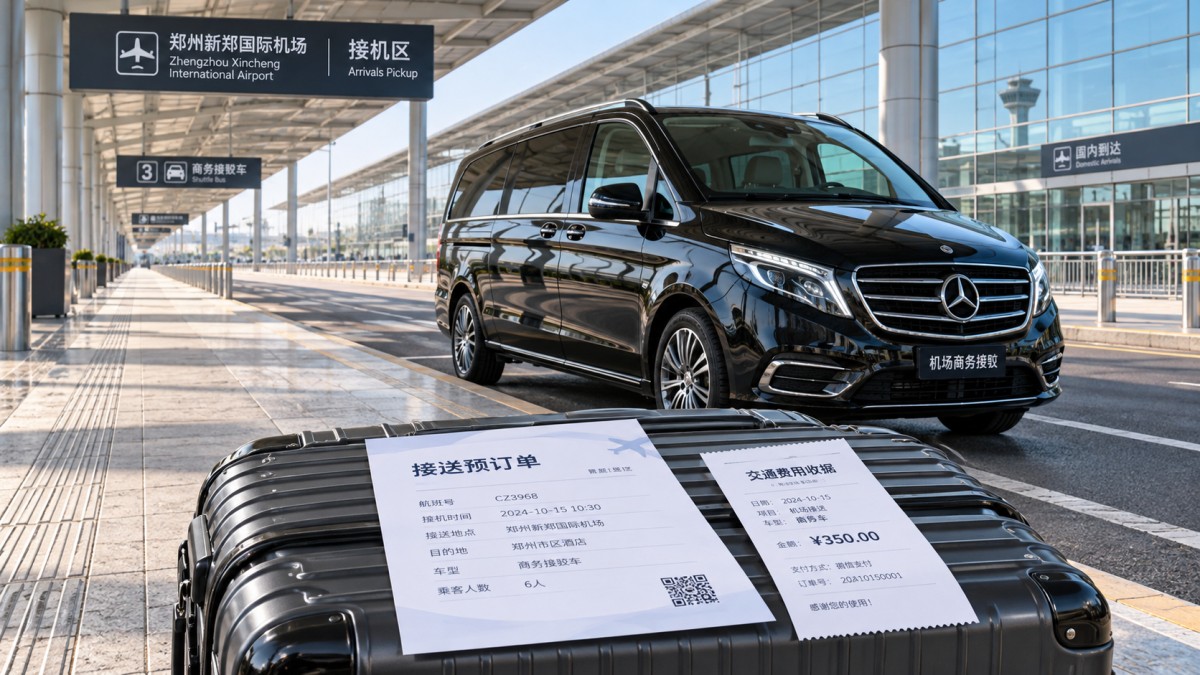
Match the cause to the likely cost responsibility
The following distinctions help frame a reimbursement request. They are practical starting points, not a substitute for the applicable contract or legal assessment.
“Traffic” is an explanation, not a complete answer to liability. Ask when the vehicle was dispatched, what prevented arrival, and whether the provider could reasonably offer another vehicle. Equally, an external disruption affecting the booked driver may also make an immediate replacement difficult. Focus on what was promised and what each side could reasonably do.
Arrange the replacement without weakening your claim
1. Notify the provider before committing, when practical
Send a concise message containing the booking reference, current location, actual arrival time, unsuccessful contact attempts, and the group’s next commitment. Ask for a confirmed replacement vehicle and arrival estimate by a stated, practical deadline.
For example: “Our group is at the agreed pickup point, but the booked driver has not arrived. Please confirm a suitable replacement and its arrival time by [time]. Without confirmation, we will arrange reasonable alternative transport to [destination] and retain receipts for review.”
This creates a clear record without claiming that silence automatically establishes liability. An urgent safety or accessibility need may make advance discussion impractical; document that reason rather than delaying necessary transport.
2. Choose a suitable substitute, not an unnecessary upgrade
Match the replacement to passenger numbers, luggage, accessibility needs, and destination. A properly licensed group vehicle may be preferable when available promptly. Several authorized taxis may be reasonable when waiting for a coach would jeopardize the schedule. Avoid accepting an unverified vehicle simply because someone offers immediate departure.
The cheapest option is not always reasonable. Splitting delegates across vehicles may require additional coordination, especially where passengers have language or mobility needs. Conversely, choosing a luxury vehicle when a suitable standard vehicle is readily available can make the excess cost harder to justify.
3. Separate payment authority from reimbursement approval
Your company’s internal spending approval does not bind the supplier. Obtain corporate approval for the emergency expenditure and, separately, ask the provider to confirm what it will cover. Record who paid each fare, particularly when delegates use personal funds.
Before departure, confirm the destination and fare basis, including foreseeable parking, toll, or waiting charges. Where reasonably available, retain a written quotation. Do not let a dispute over reimbursement lead to unsafe travel or leave part of the group without clear onward instructions.
Calculate the claim without counting the same cost twice
Distinguish the unused original service from the replacement expense. The financial objective is usually to address the failed service and the reasonable extra cost of obtaining the promised transport—not to receive overlapping compensation.
- Original transfer already paid: request a refund of the undelivered service, then identify any reasonable replacement cost above the refunded amount.
- Original transfer unpaid and cancelled without charge: account for the original cost your company no longer has to pay when calculating additional loss.
- Provider pays for the replacement directly: confirm whether the original booking price remains payable and whether any balance is due.
- Only part of the service failed: separate the missed arrival transfer from later transfers that were delivered.
Present a reconciliation showing the original price, amounts paid or still due, refunds received, replacement expenditure, and the remaining amount requested. For a bundled itinerary without a separately stated transfer price, ask the agency to explain its allocation rather than inventing one.
Keep consequential expenses separate. Extra parking or necessary vehicle waiting may be closely connected to the replacement journey. Missed meetings, lost business, or wider itinerary disruption involve different questions of proof, causation, and contractual limits. Record them if relevant, but do not assume they will be recoverable alongside the transport fare.
Build a reimbursement file that accounts can actually process
Save records while the incident is unfolding. A later statement that “the driver never came” is less useful than a short timeline supported by original messages and payment documents.
The file should contain the booking and applicable terms, confirmed arrival instructions, actual arrival details, attempted calls, provider responses, replacement authorization where obtained, receipts, and payment evidence. Include the replacement vehicle’s service details where available. Keep originals and label translations separately if the corporate reviewer needs English explanations of Chinese documents.
Ask your finance team what invoice or fapiao documentation it requires. A payment screenshot can support proof of expenditure but may not satisfy internal accounting requirements. If the replacement operator cannot supply the requested document immediately, record its contact details and the process for obtaining it.
Submit the claim promptly through the contractual complaints channel and within any applicable notice period. Request a written response date rather than assuming a standard deadline applies.
A focused request can read: “Please review the attached records for booking [reference]. The confirmed arrival transfer was not provided at [location/time]. After [contact attempts and response], we arranged [replacement] because [operational reason]. The attached reconciliation shows the unused-service amount, replacement expenditure, and net reimbursement requested. Please confirm the settlement position and identify any disputed item with reasons.”
Resolve disagreements item by item
A provider may accept that the pickup failed but dispute the replacement vehicle class, waiting charges, or part of the route. Ask which specific item is rejected and under which booking term. An itemized dispute is easier to resolve than an unexplained refusal of the entire claim.
Do not automatically deduct the claim from unrelated invoices; that can create another contractual dispute. Likewise, check whether accepting a partial payment requires signing a full-and-final settlement. Any agreement should identify the booking, covered costs, currency, payment method, and treatment of the original transfer charge.
Where the unresolved amount or wider business loss is material, use the dispute procedure in the agreement and obtain advice appropriate to the governing law. Liability for substantial consequential losses should not be inferred from a supplier’s agreement to refund a transfer.
Put the payment rule into the next booking
For future Henan arrivals, agree in writing who monitors arrival changes, when waiting begins, how long it lasts, and who can authorize backup transport. Name an operational escalation contact beyond the driver, and specify whether the provider must arrange and pay for a replacement after its own dispatch failure.
Also define a workable fallback: the acceptable vehicle standard, approval procedure for multiple taxis, documentation requirements, and how unused-service refunds interact with replacement costs. Those details let the coordinator move the group without having to negotiate the entire financial arrangement at the arrivals exit.
Your 1:1 travel consultant will respond within 1 business day
How to plan your trip
- “Discover Hebei in Winter” Tourism Exchange and Matchmaking Event Held in Jinan
- Zhangjiakou 2026–2027 Snow Season Launch and Ice and Snow Tourism Promotion Event Held in Shanghai
- The Palace Museum Explained: From Imperial Residence to Public Museum
- The 2026 autumn break covers over 100 cities, with family trips driving off-season demand for cultural and tourism services
- Family Travel in China: Planning a Relaxed Itinerary with Young Children
Monthly travel guide
- Luoyang launches the “Autumn Charm of the Divine Capital” tourism promotion to build anticipation for winter travel
- Typhoon “White Dolphin” Forces Henan Scenic Areas to Close, Putting Summer Ground-Handling Services Under Pressure
- RCEP Implementing Rules for Indonesia Take Effect: Zero Tariffs for Cultural and Tourism Services Alongside Strict Customer Service Requirements
- Saudi Arabia’s New SASO Regulations Take Effect: Taqat Certification Required Before Chinese-Language Cultural Tourism Services Can Access Visit Saudi
- Zhengzhou Launches a Dedicated LCL Shipping Route for Cultural and Tourism Materials, Cutting Freight Costs by 18%
- Luoyang Cold Chain Intensification: Cultural and Creative Exports Delivered in 9 Days
- Expedited Pre-Approval for Group Visas to Three Southeast Asian Countries
- Tightening air freight capacity at Zhengzhou Airport delays the delivery of cultural and tourism materials
- Vietnam's New Regulations on Bus Monitoring Requirements for Group Tours
- Saudi SAMA New Regulations on Travel Liability Insurance Compliance Preparation
- Japanese tourists' new regulations for entering Henan local transport vehicles
- Wai Gao Qiao Wen Travel customs bonded warehouse summer group equipment fast lane
Popular destinations
- Outdoor Team Building: Planning for Bad Weather and Mixed Fitness Levels
- Guided or Self-Guided Cultural Tour in China: Which Suits Your Interests?
- Is Jinshanling Great Wall Right for Beginners? Routes, Steps, and Fitness
- Business Travel in China: What to Include in a Corporate Travel Budget
- China's Natural Landscapes: Choosing Between Karst, Mountains, and Deserts
Why choose us

High cost-performance and transparent experience
Offer astonishing low prices without hidden tourism traps, enabling travelers to explore at lower costs while avoiding unnecessary spending loopholes, ensuring transparent consumption.

Personalization and dedicated service
Support 100% free customization, paired with one-on-one expert service, crafting exclusive itineraries based on travelers' specific needs, while providing professional guidance to enhance the personalization and professionalism of the journey.

Premium itinerary planning
Compact yet rich itineraries allow travelers to experience more within limited time; simultaneously, carefully selected hotels in prime locations provide convenient lodging conditions, overall enhancing travel comfort and experience.