Welcome to Our Travel Agency!




Travel Guide
A sightseeing day can look easy on a map and still unravel before lunch: a station transfer takes longer than expected, a child falls asleep just before entry, and the next attraction has a fixed admission time. For family travel in China, the most useful planning decision is to build each day around one main experience, keep hotel changes to a minimum, and protect time for meals, naps, and unstructured play.
Start with your youngest child’s normal routine, then fit sightseeing around it—not the other way around. A relaxed trip does not require avoiding famous landmarks. It requires choosing a manageable part of each landmark, understanding the journey there, and knowing what you can drop without disrupting the rest of the day.
Choose a base before choosing every attraction
A hotel change involves more than the train or car journey. Packing, checkout, luggage handling, station procedures, and settling into another room can consume much of a usable day. With young children, several nights in one well-located hotel often offer more enjoyment than a route covering a different city every night.
For a Henan-focused holiday, Luoyang can serve as a base for cultural sightseeing and quieter city breaks. A visit to Shaolin Temple near Dengfeng needs separate consideration because the road journey and time on site make it a substantially different outing from a local museum or park. Do not assume that attractions in the same province are convenient neighbors.
Compare hotels by the daily effort they remove:
- Room arrangement: Confirm actual bed sizes, occupancy rules, and whether a cot or extra bed is available. A room described as “family-friendly” may not match your sleeping needs.
- Food nearby: An accessible breakfast and a simple dinner option matter when children cannot wait for a long restaurant search.
- Return journey: Check the route back from your main sights, not just the distance to the city center.
- Rest conditions: Ask about quiet rooms, curtains, lifts, and laundry access if these affect your routine.
Keep arrival day light. Even an early arrival can follow poor sleep, unfamiliar food, and a tiring transfer. A short walk and an easy meal are enough; avoid making a prepaid attraction the test of whether everyone has recovered.
Build the day around the part you want most
Choose one anchor activity: the grottoes, a museum visit, or a temple outing. Everything else should be optional. This prevents a late breakfast or a longer toilet stop from creating a chain of missed reservations.
A useful starting pattern is breakfast, the main outing, lunch, a proper rest, and an optional nearby activity. Children who no longer nap may still need quiet time away from crowds and instructions. Returning to the hotel is worthwhile when it genuinely restores energy; crossing the city twice may be less restful than choosing a shorter morning visit.
Before booking, separate the essential experience from the full site. At a large cultural attraction, a focused route with a few memorable stops may work better than completing every section. Ask about the shortest worthwhile route, stairs, shaded areas, toilets, and exit locations. “We can leave whenever we want” is only useful if leaving is straightforward.
Do not treat the afternoon as reserved capacity. Leave it genuinely open until you know how the morning has gone.
A gentle four-day Luoyang plan
This sample is a pacing model rather than a fixed package. Opening arrangements, ticket availability, weather, and your hotel location should determine the final sequence.
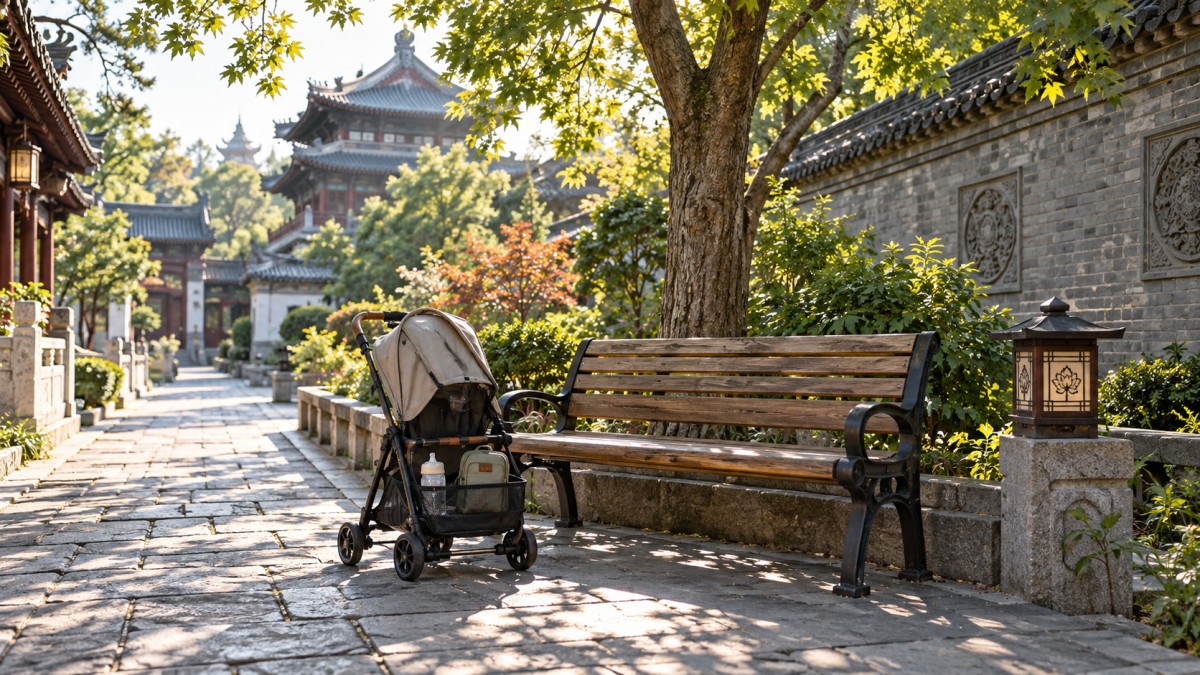
At Longmen Grottoes, expect outdoor walking and changes in level rather than a completely smooth stroller outing. A stroller may help on suitable approaches, while steps can require carrying it. Confirm the intended route before deciding whether to bring a stroller, a carrier appropriate for your child, or both.
Give children something specific to notice: differences in the size of carvings, shapes in the rock, or views across the river. A few short explanations usually work better than stopping for a detailed history lesson at every point.
Shaolin Temple can replace a sightseeing day when martial arts or temple culture is a strong family interest. Treat it as the day’s main excursion, not an addition after another major attraction. Confirm driving time, walking requirements, and any performance schedule separately; do not build the day around an assumed show time.
Count transfers door to door
The published train journey is only one part of a travel day. Include getting to the station, identification and security checks, finding the platform, boarding with luggage, and reaching the next hotel. A short rail journey can still interrupt both lunch and nap time.
High-speed rail can suit longer city-to-city travel, while a private vehicle may be more practical for rural sights or a day requiring flexible stops. Compare the complete journey rather than assuming one option is always easier. Road travel also brings traffic, motion sickness, and time in a child restraint.
For road transfers, specify your child’s age, height, and weight when requesting a suitable child seat. Obtain confirmation of the restraint type and its installation rather than accepting “a family vehicle” as sufficient. A larger vehicle does not automatically provide appropriate seating for a young child.
Keep passports and booking details accessible, and confirm current identification and ticket requirements for both adults and children. Check luggage arrangements too: carrying a sleeping child, a folded stroller, and several bags through a station is very different from traveling with a small backpack.
Adding another city without losing the relaxed pace
An additional destination is most sensible when you can give it several nights rather than using it as a brief stop between transfers. If Xi’an is part of your wider China plan, use Xi'an Tour Routes as a starting point for comparing possible sightseeing combinations, then assess each option against your family’s walking tolerance and rest needs.
Do not add a city simply because a rail connection exists. First identify which experience justifies the move and what you will remove to make room for it.
Keep food, toilets, and sleep off the critical path
Hunger becomes harder to manage when lunch depends on finishing a guided route or reaching a particular restaurant. Carry familiar snacks and drinking water, and stop for food before children are exhausted. Choose a substantial meal before a long transfer rather than assuming there will be a convenient opportunity on arrival.
Dietary needs require more than a general request for “child-friendly food.” Explain allergies clearly, ideally with an accurate written Chinese translation, and ask about ingredients and preparation. Vegetarian preferences, mild seasoning, and food allergies are different requests. For severe allergies, discuss travel preparation with your clinician and do not assume cross-contact can always be prevented.
- Carry tissues, hand-cleaning supplies, spare clothing, and a small bag for wet items.
- Use suitable toilets when available rather than waiting until the child urgently needs one.
- Expect toilet styles and changing facilities to vary between modern buildings and outdoor attractions.
- Keep essential medicine and feeding supplies in your day bag, not in stored luggage.
For naps, decide whether your child actually sleeps well in a stroller or vehicle. A moving nap can be convenient, but it should not be the only rest plan if noise, heat, or repeated stops usually wake them. Avoid placing the most demanding activity immediately after a transfer that was supposed to provide sleep.
Let weather and walking conditions change the plan
Outdoor sites feel very different in strong sun, rain, or cold wind. Check the forecast close to the visit and adjust the time outdoors accordingly. In hot weather, prioritize cooler visiting periods where opening arrangements allow, carry water, and shorten exposed routes. Do not rely on shade or refreshments being available exactly when needed.
Mountain scenery deserves a separate decision. A destination such as Mount Laojun should not be treated as an easy extension merely because transport or cable cars are available. Access journeys, queues, steps, changing weather, and the return route all matter. For toddlers or children who dislike being carried, a city park may be the better outdoor choice.
Keep one indoor alternative that is realistic from your hotel. Check its opening day and reservation requirements in advance so that bad weather does not turn into a morning spent searching for somewhere to go.
Book flexibility explicitly
A private itinerary is not automatically relaxed. It can still contain too many stops, long drives, and tightly timed entries. When arranging support, ask for a written plan showing estimated transfer times, the main walking sections, meal opportunities, and which activities can be removed.
Clarify what happens if your child is unwell or needs a shorter day. Driver availability, guide hours, ticket cancellation conditions, and hotel policies determine the practical limits of flexibility. “Adjustable itinerary” should have a clear meaning before payment.
Send the planner a short family brief: children’s ages, usual wake and sleep times, comfortable walking duration, food needs, stroller use, and the adults’ two most important experiences. Request a route without shopping stops if those do not suit your trip, and make sure any child-seat requirement appears in the booking details.
Before confirming, look at the busiest day rather than the average day. If it combines a hotel change, a substantial transfer, and a major attraction, remove one of those demands. That single adjustment often protects the part of the holiday the family most wants to enjoy.
Your 1:1 travel consultant will respond within 1 business day
How to plan your trip
- “Discover Hebei in Winter” Tourism Exchange and Matchmaking Event Held in Jinan
- Zhangjiakou 2026–2027 Snow Season Launch and Ice and Snow Tourism Promotion Event Held in Shanghai
- The Palace Museum Explained: From Imperial Residence to Public Museum
- The 2026 autumn break covers over 100 cities, with family trips driving off-season demand for cultural and tourism services
- Family Travel in China: Planning a Relaxed Itinerary with Young Children
Monthly travel guide
- Luoyang launches the “Autumn Charm of the Divine Capital” tourism promotion to build anticipation for winter travel
- Typhoon “White Dolphin” Forces Henan Scenic Areas to Close, Putting Summer Ground-Handling Services Under Pressure
- RCEP Implementing Rules for Indonesia Take Effect: Zero Tariffs for Cultural and Tourism Services Alongside Strict Customer Service Requirements
- Saudi Arabia’s New SASO Regulations Take Effect: Taqat Certification Required Before Chinese-Language Cultural Tourism Services Can Access Visit Saudi
- Zhengzhou Launches a Dedicated LCL Shipping Route for Cultural and Tourism Materials, Cutting Freight Costs by 18%
- Luoyang Cold Chain Intensification: Cultural and Creative Exports Delivered in 9 Days
- Expedited Pre-Approval for Group Visas to Three Southeast Asian Countries
- Tightening air freight capacity at Zhengzhou Airport delays the delivery of cultural and tourism materials
- Vietnam's New Regulations on Bus Monitoring Requirements for Group Tours
- Saudi SAMA New Regulations on Travel Liability Insurance Compliance Preparation
- Japanese tourists' new regulations for entering Henan local transport vehicles
- Wai Gao Qiao Wen Travel customs bonded warehouse summer group equipment fast lane
Popular destinations
- The 2026 autumn break covers over 100 cities, with family trips driving off-season demand for cultural and tourism services
- Family Travel in China: Planning a Relaxed Itinerary with Young Children
- What Should You Do if a Hotel Cannot Provide Confirmed Family Rooms?
- Connecting Rooms or Family Rooms for a Henan Family Group?
- Multiple regions announce autumn break dates for primary and secondary schools; attractions offer benefits such as discounted admission
Why choose us

High cost-performance and transparent experience
Offer astonishing low prices without hidden tourism traps, enabling travelers to explore at lower costs while avoiding unnecessary spending loopholes, ensuring transparent consumption.

Personalization and dedicated service
Support 100% free customization, paired with one-on-one expert service, crafting exclusive itineraries based on travelers' specific needs, while providing professional guidance to enhance the personalization and professionalism of the journey.

Premium itinerary planning
Compact yet rich itineraries allow travelers to experience more within limited time; simultaneously, carefully selected hotels in prime locations provide convenient lodging conditions, overall enhancing travel comfort and experience.