Welcome to Our Travel Agency!




Travel Guide
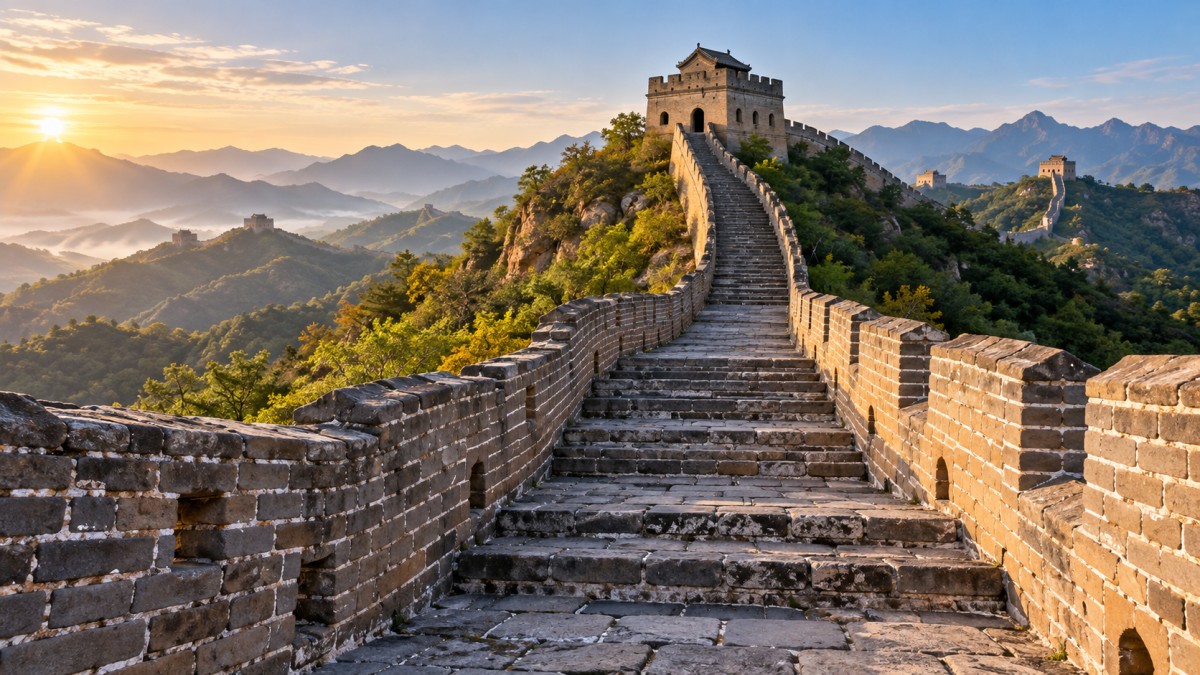
Is the Jinshanling Great Wall a good choice for your first Great Wall hike? For many beginners, yes—but choosing the right route matters more than completing a famous stretch. A short walk can still involve steep stairways, uneven stone steps, and descents that feel harder than the climb. The reward is a landscape of watchtowers and mountain ridges that you can appreciate without turning the day into an endurance test.
The key distinction is between being new to hiking and needing a largely step-free outing. Jinshanling can suit the first group with sensible planning. It is generally not the best choice for the second. Here is how to judge your fitness, choose a manageable route, and avoid committing to more walking than you actually want.
The quick verdict: suitable for beginners, not an easy promenade
Jinshanling lies in Hebei Province, northeast of Beijing. It is known for its mountain scenery and a mix of restored and weathered wall sections. That variety is part of its appeal, but it also means the walking surface and difficulty can change along the route.
A reasonably active beginner who can climb several flights of stairs, descend steadily, and walk on uneven ground will often find a short visit manageable. Someone with significant knee pain, balance difficulties, severe discomfort with heights, or limited walking endurance should be more cautious.
It helps to separate three questions:
- Can you get onto the wall? Access paths and, when operating, the cable car can reduce some of the approach effort.
- Can you move comfortably along it? The wall itself still has stairs, slopes, and irregular surfaces.
- Can you get back down? A route is only suitable if its exit and descent match your abilities too.
A cable-car-assisted visit may make Jinshanling more approachable, but it does not turn the wall into a flat, accessible viewing platform.
What makes the Jinshanling Great Wall physically demanding?
The challenge is rarely distance alone. On a normal city walk, you can settle into a rhythm. At Jinshanling, you may climb a staircase, pause at a tower, negotiate an awkward threshold, and immediately descend before climbing again.
Steps are inconsistent—and there is no useful universal step count
Expect variations in stair height, tread depth, and surface condition. Some steps require more deliberate foot placement than others. Worn edges, loose grit, or damp stone can make an otherwise manageable section feel much harder.
If you are searching for the exact number of steps at Jinshanling, be careful with single-number answers. Your total depends on the entrance, access path, towers visited, turnaround point, and use of the cable car. Route length, repeated climbing, and the descent are more useful measures than a headline step count.
Downhill can be the limiting factor
Beginners often judge their ability by whether they can climb. Yet descending uneven stairs places different demands on the knees and requires good balance. If you already struggle going downstairs at home, do not assume you will be comfortable after a tiring uphill walk.
Exposure adds a mental challenge
Ridge-top wind, steep views, narrow passages, and sections without a convenient handhold can affect confidence. A visitor who is fit on a treadmill may still move slowly here. There is nothing wrong with that; a good itinerary leaves room for careful footing rather than treating every pause as a delay.
Choose the route before choosing the distance
For a first visit, think in terms of access point, wall section, and exit—not simply “a two-hour hike.” Ask for the current scenic-area map and confirm which gates, paths, and wall sections are open. Route names used by tour sellers do not always describe the same walk.
The most forgiving option: a short out-and-back
For many beginners, the sensible plan is to reach the wall by an appropriate access route, visit a limited number of nearby towers, and return the same way. If the cable car is operating and suits your itinerary, it can reduce some of the approach effort.
The advantage is control. You can assess the first staircase before committing to the next ridge. Choose a provisional turnaround tower, but treat it as an option rather than a target you must reach. Remember that every descent on the outward walk may become a climb on the return.
A walking approach: rewarding, but count the effort before the wall
Access routes around the main visiting area, including approaches associated with Zhuanduokou or Shalingkou, may appear in itinerary descriptions. These names alone do not tell you how demanding the day will be. Ask where the walk begins, how much climbing comes before the first tower, and which path you will use to descend.
This option can work well if you regularly walk hills or climb stairs. For someone who is mostly sedentary, the approach may consume much of the energy they expected to spend enjoying the wall.
A point-to-point route: only with a clear exit plan
A longer walk toward an eastern exit can appeal to travelers who dislike retracing their steps. However, it removes some flexibility once you are well along the route. Confirm that the intended exit is open, that its descent is suitable, and that your vehicle will meet you there rather than at the original entrance.
Do not assume that an advertised “Jinshanling to Simatai” hike is an available through-route. Access arrangements and restrictions can affect connections. Plan around currently permitted routes, not an old travel blog or a line on an online map.
How fit should you be before booking?
You do not need to be an athlete for a short Jinshanling visit. You do need enough reserve energy to handle stairs after the initial excitement has worn off.
A useful informal check is whether you can walk for about an hour at a comfortable pace, climb several flights of stairs with pauses if needed, and descend without significant pain or instability. This is a planning guide, not a medical test or a guarantee of readiness.
- Likely a reasonable match: you walk regularly, tolerate stairs, and are happy to take breaks.
- Choose a very short route: you exercise infrequently, tire quickly uphill, or feel uncertain on uneven ground.
- Consider another experience or seek medical advice: you have significant joint problems, recent surgery, concerning breathlessness, or a condition that may make strenuous activity unsafe.
For preparation, ordinary walking and gradual stair practice are more relevant than trying to transform your fitness in a few days. Include controlled descents, not just uphill training. Wear your intended shoes beforehand so that the first steep staircase is not also their first proper outing.
Build a day that leaves room to enjoy the view
For a short, beginner-focused visit, allowing roughly two to three hours for access, a limited wall walk, photographs, and rests can be a useful starting point. This is a flexible planning allowance, not a promised route duration. Your pace, chosen approach, queues, and conditions may change it substantially.
Travel from Beijing also takes a substantial part of the day. Avoid judging the outing solely by time spent on the wall: early departures, road travel, and a late return can make even a short hike tiring.
On the wall, start more slowly than you think necessary. Take a break before your legs feel shaky, and reassess at each tower. A comfortable turnaround with energy left is a better result than reaching one more viewpoint and struggling through the descent.
Families should plan around the least confident walker. Children may need close supervision near steep stairs and edges, while older travelers vary enormously in ability. Age is less useful than current mobility, balance, and comfort with descending.
Weather and equipment can change the decision
A route that feels moderate on a cool, dry day can become unsuitable in heat, strong wind, rain, snow, or ice. Check both the forecast and scenic-area notices shortly before traveling. Cable-car operations may also be affected by conditions.
Spring and autumn are often considered for walking, but the season alone does not guarantee comfortable weather. Summer calls for careful heat management; winter requires particular caution about slippery surfaces.
Pack for the walking conditions rather than just the photographs:
- Well-fitting shoes with dependable grip; smooth-soled fashion shoes are a poor choice.
- Water and a small snack, without relying on refreshments being available along the wall.
- Sun protection and a suitable layer for exposed, windy sections.
- A small backpack that leaves both hands free.
- A charged phone and saved meeting-point details.
Trekking poles may help on suitable access paths, but narrow or steep stairs can make them awkward. Use them considerately and follow site rules. Never climb closed sections, parapets, or damaged structures for a better photograph.
Would another Great Wall section suit you better?
If your priority is a first Great Wall visit with established visitor facilities and assisted access options, compare Jinshanling with Mutianyu or Badaling. Neither is automatically stair-free, and both require route planning, but particular visitor routes may better suit someone who wants less hiking.
Choose Jinshanling when the mountain setting and a genuine walking experience are central to your day. Choose a more access-focused itinerary when mobility, limited time, or concern about steep descents matters more than exploring multiple towers.
The same distinction helps when comparing wider China itineraries. A trip described as “leisure” is not necessarily low-step: if you are also considering a Zhangjiajie and Fenghuang Ancient Town 4-day 3-night leisure tour, ask about daily walking, stairs, assisted transport, and opportunities to rest. Those questions are more reliable than the itinerary label alone.
What to confirm with your travel planner
Before booking, ask for a plain-language description of the actual walking: entry point, access method, approximate time on foot, steep sections, turnaround options, and exit. Also clarify what happens if the cable car is unavailable or someone decides not to continue.
Henan Le Journey Travel Agency Co., Ltd., based in Luoyang, offers customized domestic travel planning alongside its Henan inbound services. When discussing a wider China itinerary, describe your stair tolerance and mobility concerns specifically. “We want an easy day” is less useful than “one traveler struggles with long descents and needs the option to turn back.”
Jinshanling Great Wall can be an excellent first hike when the plan fits the person. Keep the route modest, confirm current access, and protect enough energy for the return. You do not need to cross every ridge to have a memorable visit; sometimes the best moment is simply stopping at a tower, catching your breath, and watching the wall disappear into the mountains.
Your 1:1 travel consultant will respond within 1 business day
How to plan your trip
- “Discover Hebei in Winter” Tourism Exchange and Matchmaking Event Held in Jinan
- Zhangjiakou 2026–2027 Snow Season Launch and Ice and Snow Tourism Promotion Event Held in Shanghai
- The Palace Museum Explained: From Imperial Residence to Public Museum
- The 2026 autumn break covers over 100 cities, with family trips driving off-season demand for cultural and tourism services
- Family Travel in China: Planning a Relaxed Itinerary with Young Children
Monthly travel guide
- Luoyang launches the “Autumn Charm of the Divine Capital” tourism promotion to build anticipation for winter travel
- Typhoon “White Dolphin” Forces Henan Scenic Areas to Close, Putting Summer Ground-Handling Services Under Pressure
- RCEP Implementing Rules for Indonesia Take Effect: Zero Tariffs for Cultural and Tourism Services Alongside Strict Customer Service Requirements
- Saudi Arabia’s New SASO Regulations Take Effect: Taqat Certification Required Before Chinese-Language Cultural Tourism Services Can Access Visit Saudi
- Zhengzhou Launches a Dedicated LCL Shipping Route for Cultural and Tourism Materials, Cutting Freight Costs by 18%
- Luoyang Cold Chain Intensification: Cultural and Creative Exports Delivered in 9 Days
- Expedited Pre-Approval for Group Visas to Three Southeast Asian Countries
- Tightening air freight capacity at Zhengzhou Airport delays the delivery of cultural and tourism materials
- Vietnam's New Regulations on Bus Monitoring Requirements for Group Tours
- Saudi SAMA New Regulations on Travel Liability Insurance Compliance Preparation
- Japanese tourists' new regulations for entering Henan local transport vehicles
- Wai Gao Qiao Wen Travel customs bonded warehouse summer group equipment fast lane
Popular destinations
- Outdoor Team Building: Planning for Bad Weather and Mixed Fitness Levels
- Guided or Self-Guided Cultural Tour in China: Which Suits Your Interests?
- Is Jinshanling Great Wall Right for Beginners? Routes, Steps, and Fitness
- Business Travel in China: What to Include in a Corporate Travel Budget
- China's Natural Landscapes: Choosing Between Karst, Mountains, and Deserts
Why choose us

High cost-performance and transparent experience
Offer astonishing low prices without hidden tourism traps, enabling travelers to explore at lower costs while avoiding unnecessary spending loopholes, ensuring transparent consumption.

Personalization and dedicated service
Support 100% free customization, paired with one-on-one expert service, crafting exclusive itineraries based on travelers' specific needs, while providing professional guidance to enhance the personalization and professionalism of the journey.

Premium itinerary planning
Compact yet rich itineraries allow travelers to experience more within limited time; simultaneously, carefully selected hotels in prime locations provide convenient lodging conditions, overall enhancing travel comfort and experience.