Welcome to Our Travel Agency!




Travel Guide
China's Natural Landscapes: Choosing Between Karst, Mountains, and Deserts
China’s natural landscapes offer strikingly different adventures, from Guilin’s limestone peaks to Henan’s mountain trails and the dunes near Dunhuang. Choosing between them is less about deciding which looks most spectacular and more about deciding how you want to spend your days. Sitting on a riverboat, climbing stone stairways, and walking across loose sand are very different holidays—even when all three appear under “scenic sightseeing” in a brochure.
Your best choice depends on walking tolerance, season, travel connections, and how much cultural sightseeing you want alongside the scenery. Start with those practical questions. The photographs can come later.
Choose the experience before the destination
For a relaxed first encounter with rural China, the Guilin–Yangshuo area is often the easiest fit. Limestone towers rise above rivers and farmland, and much of the scenery can be enjoyed without sustained climbing. Mountain destinations suit travelers who want viewpoints, changing elevations, and a stronger sense of physical exploration. Dunhuang appeals to those drawn to open horizons, desert light, and Silk Road heritage, provided they accept heat, wind, and less forgiving terrain.
Karst: the strongest choice for an unhurried scenic trip
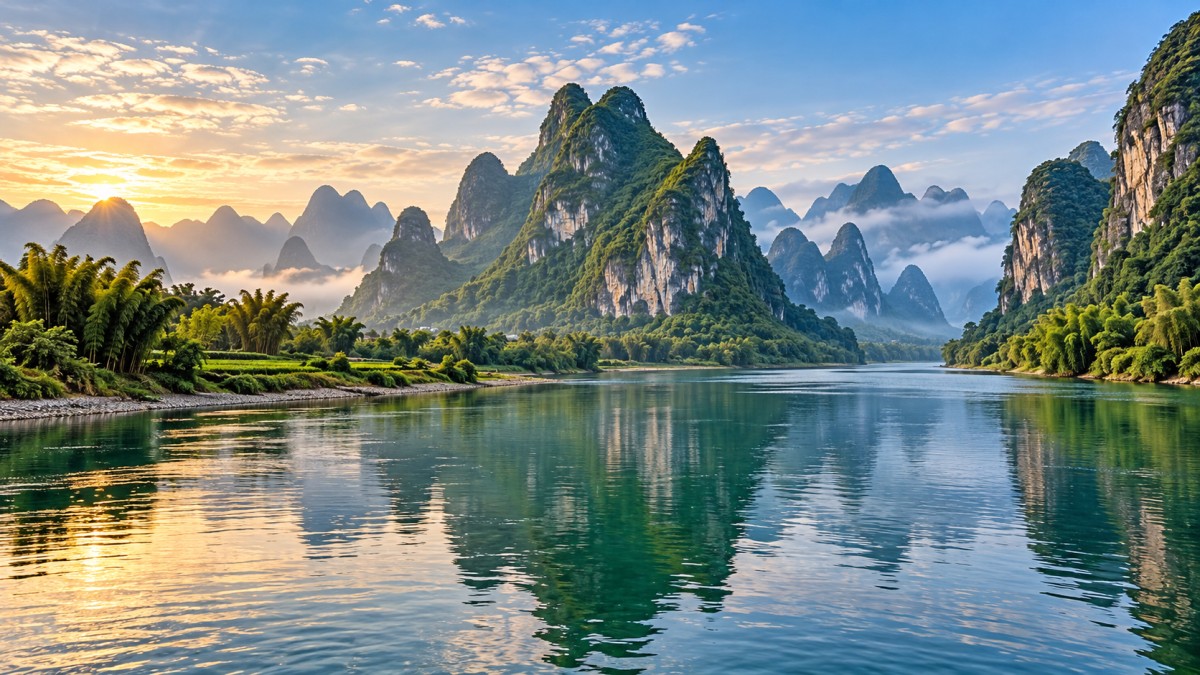
Around Guilin and Yangshuo, the landscape works particularly well at river level. A Li River cruise lets you watch peaks, villages, and riverbanks unfold without constantly moving between viewpoints. Around Yangshuo, countryside walks and suitable cycling routes offer a closer look at fields and settlements. The appeal is not a single summit; it is spending time inside the landscape.
That makes karst country a sensible option for couples, families with different activity levels, and travelers who dislike early starts every day. A useful planning allowance is three to four nights across the area, depending on arrival arrangements. This leaves room for a river experience, a countryside outing, and some flexibility if rain changes the schedule. It is a suggested pace, not a minimum stay requirement.
The main mistake is assuming every water activity is equally accessible. A larger sightseeing boat and a small raft-style excursion can have very different boarding arrangements, seating, exposure, and participation restrictions. Confirm the actual vessel and current operator rules, especially when traveling with children or anyone with reduced mobility.
Spring can bring atmospheric mist, but also rain and reduced visibility. Summer is generally hot and humid, and heavy rainfall can disrupt water-based activities. Autumn often provides more comfortable sightseeing conditions, although weather remains variable. If clear landscape photography is the main goal, allow spare time rather than relying on one cruise departure to deliver ideal light.
Also distinguish a countryside hotel from a convenient base. A quiet property outside town may be lovely, but meals and outings can require additional driving. Ask where your room is in relation to the activities you actually intend to do.
Mountains: choose the route, not just the famous name
“Mountain sightseeing” covers an enormous range of effort. A cableway-assisted visit with short walks is not the same as a full day of steep steps, even if both itineraries advertise the same summit. Before comparing prices, ask how long you will walk, how much of the route involves stairs, and whether there is a practical shorter alternative.
Henan is especially worth considering when you want natural landscapes without separating them from Chinese history. Mount Laojun offers mountain scenery and Taoist architecture, while the southern Taihang Mountains provide cliff landscapes, valleys, and village settings. Mount Song can be combined with Shaolin Temple, though a temple visit and a substantial mountain walk should not automatically be treated as one easy outing.
What a cableway does—and does not—solve
Cableways reduce ascent on certain sections, but they do not necessarily remove stairs between stations, viewpoints, and exits. Nor do they eliminate queues or weather-related interruptions. For older travelers, knee discomfort on the descent may matter more than breathlessness on the climb. A route described merely as “suitable for seniors” is not detailed enough.
Ask for a walking description that includes surfaces, steps, rest opportunities, and the return route. Families should also check whether an adult can shorten the outing with a child while the rest of the group continues. These details often determine whether the day feels rewarding or exhausting.
Spring and autumn are often comfortable starting points for planning, but conditions at elevation differ from those in the city. Summer greenery can be attractive, yet thunderstorms may affect exposed routes. Winter ice can make an otherwise manageable path unsuitable. A sea of clouds is a weather event, not something a responsible itinerary can guarantee.
Luoyang offers a useful cultural anchor for a Henan itinerary, with the Longmen Grottoes providing a different kind of outdoor day. However, Mount Laojun is not a quick city-side stop. Check the full road journey and consider staying closer to the mountain rather than combining a late arrival, an early climb, and a long return drive.
This is where local coordination can be valuable. Luoyang-based Henan Le Journey Travel Agency Co., Ltd. arranges inbound travel across Henan, including transport, hotels, guides, and ticket reservations. For a customized route, the useful discussion is not simply which attractions to include, but which mountain day matches your group’s mobility and where an overnight stay would reduce unnecessary travel.
Deserts: remarkable light, but less room for casual planning
Dunhuang makes sense when you want desert scenery alongside Silk Road culture. The Singing Sand Dunes and Crescent Lake offer an accessible introduction to a desert setting, while the Mogao Caves add an important cultural dimension. Visiting an established scenic area, however, is very different from traveling into remote desert terrain.
Loose sand makes even a short uphill walk demanding. Shade can be limited, wind can carry abrasive sand, and conditions change noticeably through the day. Travelers who walk comfortably on paved streets may still find dune climbing tiring. You do not need to reach a high ridge to appreciate the setting.
Late spring and early autumn are often worth considering for comfort, though individual days can still be hot or windy. Summer visits need careful timing and protection from sun exposure. Winter can be sharply cold. Check current forecasts and local operating information rather than choosing dates solely from photographs.
For a first visit, allow separate time for cultural sightseeing and the dunes rather than stacking everything into one rushed day. Mogao Caves arrangements require attention to current reservation procedures and available ticket options. Leave room for delays, and avoid making your only desert visit depend on the hours immediately before departure.
If considering camel rides, vehicle activities, or an overnight excursion, ask who operates them, what is included, and what happens when weather prevents departure. Remote outings need a more serious assessment of communications, water, vehicle suitability, and emergency support than a visit within a managed attraction.
Distance and daily effort should settle the final decision
For a short holiday, choose one landscape region. Guilin, Henan, and Dunhuang are not neighboring stops, and a flight or train connection consumes more than the scheduled journey time. Station transfers, check-in, luggage, and hotel changes all reduce usable sightseeing hours. A cheaper connection can become poor value if it removes your only relaxed afternoon.
On a longer trip, combine two contrasting settings only when the transport works comfortably. Henan’s mountains and historic cities already offer substantial variety within one province. Guilin can support a slower countryside-focused stay. Dunhuang deserves enough time to enjoy both its desert and cultural sites without treating either as a photo stop.
There is also a valid fourth answer: none of these is right for this particular holiday. If your group wants coastal walks, urban comforts, and less emphasis on strenuous terrain, a coastal itinerary may fit better. The Xiamen 5-Day Tour is an alternative to review; check its actual daily schedule and inclusions before assuming it offers a lighter pace.
Before paying a deposit, request a day-by-day plan showing hotel locations, approximate driving and walking time, included transport within attractions, and arrangements for bad weather. Confirm whether cableways, shuttle buses, or optional activities cost extra. Around major Chinese holiday periods, allow for heavier demand and avoid tightly timed connections after popular scenic visits.
Choose karst for river-level scenery and flexible activity, Henan’s mountains for elevation paired with cultural depth, or Dunhuang for desert atmosphere and Silk Road heritage. Then test that choice against your least energetic traveler and your least flexible travel day. If the itinerary still works for both, it is probably the right landscape for this trip.
Your 1:1 travel consultant will respond within 1 business day
How to plan your trip
- “Discover Hebei in Winter” Tourism Exchange and Matchmaking Event Held in Jinan
- Zhangjiakou 2026–2027 Snow Season Launch and Ice and Snow Tourism Promotion Event Held in Shanghai
- The Palace Museum Explained: From Imperial Residence to Public Museum
- The 2026 autumn break covers over 100 cities, with family trips driving off-season demand for cultural and tourism services
- Family Travel in China: Planning a Relaxed Itinerary with Young Children
Monthly travel guide
- Luoyang launches the “Autumn Charm of the Divine Capital” tourism promotion to build anticipation for winter travel
- Typhoon “White Dolphin” Forces Henan Scenic Areas to Close, Putting Summer Ground-Handling Services Under Pressure
- RCEP Implementing Rules for Indonesia Take Effect: Zero Tariffs for Cultural and Tourism Services Alongside Strict Customer Service Requirements
- Saudi Arabia’s New SASO Regulations Take Effect: Taqat Certification Required Before Chinese-Language Cultural Tourism Services Can Access Visit Saudi
- Zhengzhou Launches a Dedicated LCL Shipping Route for Cultural and Tourism Materials, Cutting Freight Costs by 18%
- Luoyang Cold Chain Intensification: Cultural and Creative Exports Delivered in 9 Days
- Expedited Pre-Approval for Group Visas to Three Southeast Asian Countries
- Tightening air freight capacity at Zhengzhou Airport delays the delivery of cultural and tourism materials
- Vietnam's New Regulations on Bus Monitoring Requirements for Group Tours
- Saudi SAMA New Regulations on Travel Liability Insurance Compliance Preparation
- Japanese tourists' new regulations for entering Henan local transport vehicles
- Wai Gao Qiao Wen Travel customs bonded warehouse summer group equipment fast lane
Popular destinations
- Outdoor Team Building: Planning for Bad Weather and Mixed Fitness Levels
- Guided or Self-Guided Cultural Tour in China: Which Suits Your Interests?
- Is Jinshanling Great Wall Right for Beginners? Routes, Steps, and Fitness
- Business Travel in China: What to Include in a Corporate Travel Budget
- China's Natural Landscapes: Choosing Between Karst, Mountains, and Deserts
Why choose us

High cost-performance and transparent experience
Offer astonishing low prices without hidden tourism traps, enabling travelers to explore at lower costs while avoiding unnecessary spending loopholes, ensuring transparent consumption.

Personalization and dedicated service
Support 100% free customization, paired with one-on-one expert service, crafting exclusive itineraries based on travelers' specific needs, while providing professional guidance to enhance the personalization and professionalism of the journey.

Premium itinerary planning
Compact yet rich itineraries allow travelers to experience more within limited time; simultaneously, carefully selected hotels in prime locations provide convenient lodging conditions, overall enhancing travel comfort and experience.