Welcome to Our Travel Agency!




Travel Guide
A corporate travel budget for China should cover the full cost of completing the approved itinerary: international flights, entry formalities, accommodation, intercity transport, local transfers, meals, interpretation, connectivity, insurance, and a controlled contingency allowance. It should also identify booking fees, cancellation exposure, payment charges, and the documents required for reimbursement. A low headline quote offers little budget certainty when these items remain outside the price.
Start with the business schedule, including arrival times, meeting locations, traveler numbers, and departure constraints. Price the services needed to make that schedule workable. For a trip combining a major commercial hub with partner meetings in Henan, station transfers and vehicle arrangements deserve separate attention: the rail fare alone does not represent the cost of reaching the meeting.
Build the budget around a defined itinerary
A useful estimate separates costs charged per traveler, per room, per journey, and per group. This prevents shared expenses from being multiplied unnecessarily and exposes costs that increase when attendance changes. A private vehicle is generally priced around an agreed service scope; an additional passenger does not necessarily create another full vehicle charge, but luggage capacity or seating requirements could require a different vehicle.
Record the quotation date, travel dates, currency, traveler count, and booking assumptions alongside the estimate. An unreserved fare is a planning figure. A confirmed reservation with payment and cancellation terms creates a different financial commitment.
Keep committed expenditure, estimated variable costs, and contingency distinct. Otherwise, an unused allowance can look like a saving even when the underlying quote has become more expensive.
Transport: price the complete journey between appointments
International flights and entry arrangements
Compare flight options using the cost of the complete itinerary. A cheaper arrival late at night can add a hotel night, an out-of-hours transfer, or a lost working morning. Connections also affect the amount of schedule protection needed before an important meeting.
Fare flexibility should reflect the stability of the business schedule. If the return date remains unsettled, compare the extra cost of a flexible ticket against the change charges and fare difference attached to a restricted ticket. Record both; a stated change fee alone does not show the full cost of changing flights.
Entry-related expenditure requires an individual assessment. Passport nationality, travel purpose, route, and length of stay affect the applicable arrangements. Confirm current requirements through official sources before making nonrefundable commitments. Where relevant, include application charges, processing services, document delivery, and travel to an application appointment. Do not assume that an arrangement suitable for tourism also covers the planned business activities.
Intercity rail, domestic flights, and station transfers
For multi-city Business Travel, compare door-to-door time and cost. High-speed rail and domestic flights involve different station or airport access times, departure procedures, and arrival transfers. The better option depends on the actual meeting addresses and the available departure schedule.
A Henan itinerary involving Zhengzhou and Luoyang needs precise station names and onward transport arrangements. A city name alone is insufficient for quoting a transfer. Include luggage volume, group size, and any requirement to keep the group together when selecting services.
Where tickets cannot yet be secured, label the amount as an estimate and identify the fallback arrangement. A lower travel class or preferred departure time has limited budget value if it is unavailable when booking opens or approval arrives.
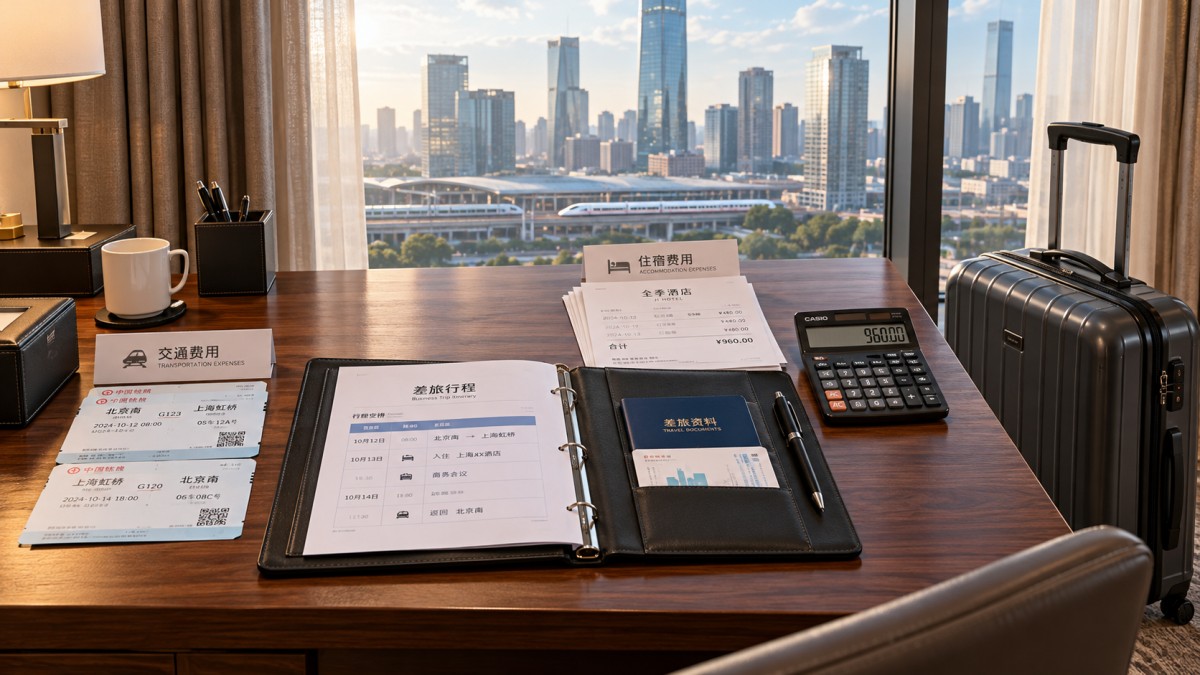
Local vehicles and waiting time
Airport pickup, a hotel-to-office journey, and a vehicle retained throughout a meeting day are different services. A transfer quote should identify the pickup point, destination, waiting allowance, and procedure for flight delays. A retained vehicle quote needs service hours, mileage coverage, overtime rates, and treatment of parking and tolls.
Meetings outside central districts can make a dedicated vehicle practical, particularly when several stops share one day. For a single appointment near the hotel, individual journeys could cost less. Compare both against the same schedule rather than assuming that a daily vehicle package is automatically economical.
Accommodation costs extend beyond the nightly rate
Compare hotels using the required room nights and meeting locations. A lower room rate farther away can create additional transport costs and reduce time available for appointments. Early arrival and late departure also deserve explicit treatment: guaranteed early access or late checkout may carry a charge.
Confirm whether breakfast is included and remove the corresponding meal allowance where policy requires it. Identify mandatory charges, booking fees, and any payment due directly at the property. Refundable deposits belong in the cash-flow plan even though they are not an expected final expense.
For group bookings, request the room-release schedule and any charges for reducing the room count. An individual room cancellation rule does not necessarily describe the terms of a group allocation. The budget should show when an attendance change begins to create a financial liability.
Hotel suitability also affects execution. Confirm that the property can accommodate the travelers and complete the required registration using their travel documents. Discovering a documentation problem at arrival can lead to replacement accommodation and additional transfers.
Include the services that make working time usable
Interpretation should be scoped separately from general guiding. Cultural commentary, commercial discussions, and technical meetings require different preparation and subject knowledge. Specify the language pair, meeting duration, subject matter, confidentiality expectations, and whether written translation is included. Longer or more demanding sessions require an appropriate staffing arrangement; this belongs in the quote before the schedule is approved.
Meeting support can include room hire, presentation equipment, printing, refreshments, or interpretation equipment. Establish whether these are supplied by the host, included in the hotel package, or charged separately. Avoid paying twice for facilities already covered by another booking.
Connectivity needs a practical allowance for roaming, an appropriate SIM or eSIM option, or another approved arrangement. Confirm device compatibility and access to essential work services before departure. Payment and communication applications should also be prepared in advance, with a workable alternative if account verification or payment acceptance causes difficulty.
Meals need clear boundaries between individual subsistence and hosted hospitality. A daily allowance and reimbursement of the same meal would duplicate expenditure. For group dining, specify headcount, dietary requirements, beverages, private-room charges where applicable, and the treatment of last-minute attendance changes.
If the schedule includes a structured learning or cultural visit, keep its purpose, duration, transport, admission, and guide costs visible. An item described as a Study Tour Travel Itinerary should state the actual activities included so that learning sessions, hospitality, and personal leisure receive the appropriate expense treatment. Optional personal activities should have separate payment arrangements.
Insurance and disruption need defined allowances
Review insurance against the actual journey and planned activities. Relevant considerations include overseas medical treatment, emergency assistance, evacuation, cancellation, interruption, and baggage. An existing corporate policy may already cover part of the trip; establish the applicable coverage, exclusions, and excess before purchasing additional insurance.
Contingency should reflect identifiable exposure. An itinerary with several cities, unsettled meeting times, and restrictive bookings needs different provision from a fixed visit with confirmed appointments. Use plausible disruption costs to size the allowance: an extra hotel night, replacement transport, a changed ticket, or extended interpretation.
Contingency is a spending reserve, not a supplier entitlement. Record who can authorize its use, what evidence is required, and whether unused amounts remain unspent. If a supplier includes a general buffer in a package price, ask how it is treated at settlement; otherwise, the same uncertainty could be funded twice.
Make quotes comparable and reimbursement workable
Two package totals are comparable only when they cover the same itinerary and service standard. Request itemized inclusions and exclusions, with quantities and unit rates where available. For transport, this means vehicle size and service limits. For hotels, it means named properties or an agreed standard, room type, meals, and cancellation conditions. For interpretation, it means service hours and scope.
Currency treatment also needs a written basis. State the quote currency, payment currency, exchange-rate method, quote validity, and responsibility for bank or payment fees. Distinguish a supplier’s conversion rate from the rate applied when a card transaction settles. Without that distinction, an apparent overspend can be difficult to reconcile.
Documentation should be agreed before payment. Specify the legal billing details, itemized invoice requirements, and acceptable supporting records. For expenditure in China, establish whether a fapiao is required and whether the supplier can issue the appropriate document. A booking confirmation, card slip, and tax invoice serve different purposes; reimbursement and accounting treatment depend on the organization’s requirements.
For bundled services, retain the agreed itinerary, service breakdown, payment evidence, and records of authorized changes. If final billing differs from the approved quote, those records should explain the difference without reconstructing the trip from messages.
The approval record should connect each material amount to a quantity, a service scope, and a booking condition. Any unresolved item needs an owner and a deadline before commitment. At settlement, reconcile actual charges against that record and release unused allowances rather than treating the approved ceiling as a spending target.
Your 1:1 travel consultant will respond within 1 business day
How to plan your trip
- “Discover Hebei in Winter” Tourism Exchange and Matchmaking Event Held in Jinan
- Zhangjiakou 2026–2027 Snow Season Launch and Ice and Snow Tourism Promotion Event Held in Shanghai
- The Palace Museum Explained: From Imperial Residence to Public Museum
- The 2026 autumn break covers over 100 cities, with family trips driving off-season demand for cultural and tourism services
- Family Travel in China: Planning a Relaxed Itinerary with Young Children
Monthly travel guide
- Luoyang launches the “Autumn Charm of the Divine Capital” tourism promotion to build anticipation for winter travel
- Typhoon “White Dolphin” Forces Henan Scenic Areas to Close, Putting Summer Ground-Handling Services Under Pressure
- RCEP Implementing Rules for Indonesia Take Effect: Zero Tariffs for Cultural and Tourism Services Alongside Strict Customer Service Requirements
- Saudi Arabia’s New SASO Regulations Take Effect: Taqat Certification Required Before Chinese-Language Cultural Tourism Services Can Access Visit Saudi
- Zhengzhou Launches a Dedicated LCL Shipping Route for Cultural and Tourism Materials, Cutting Freight Costs by 18%
- Luoyang Cold Chain Intensification: Cultural and Creative Exports Delivered in 9 Days
- Expedited Pre-Approval for Group Visas to Three Southeast Asian Countries
- Tightening air freight capacity at Zhengzhou Airport delays the delivery of cultural and tourism materials
- Vietnam's New Regulations on Bus Monitoring Requirements for Group Tours
- Saudi SAMA New Regulations on Travel Liability Insurance Compliance Preparation
- Japanese tourists' new regulations for entering Henan local transport vehicles
- Wai Gao Qiao Wen Travel customs bonded warehouse summer group equipment fast lane
Popular destinations
- Outdoor Team Building: Planning for Bad Weather and Mixed Fitness Levels
- Guided or Self-Guided Cultural Tour in China: Which Suits Your Interests?
- Is Jinshanling Great Wall Right for Beginners? Routes, Steps, and Fitness
- Business Travel in China: What to Include in a Corporate Travel Budget
- China's Natural Landscapes: Choosing Between Karst, Mountains, and Deserts
Why choose us

High cost-performance and transparent experience
Offer astonishing low prices without hidden tourism traps, enabling travelers to explore at lower costs while avoiding unnecessary spending loopholes, ensuring transparent consumption.

Personalization and dedicated service
Support 100% free customization, paired with one-on-one expert service, crafting exclusive itineraries based on travelers' specific needs, while providing professional guidance to enhance the personalization and professionalism of the journey.

Premium itinerary planning
Compact yet rich itineraries allow travelers to experience more within limited time; simultaneously, carefully selected hotels in prime locations provide convenient lodging conditions, overall enhancing travel comfort and experience.