



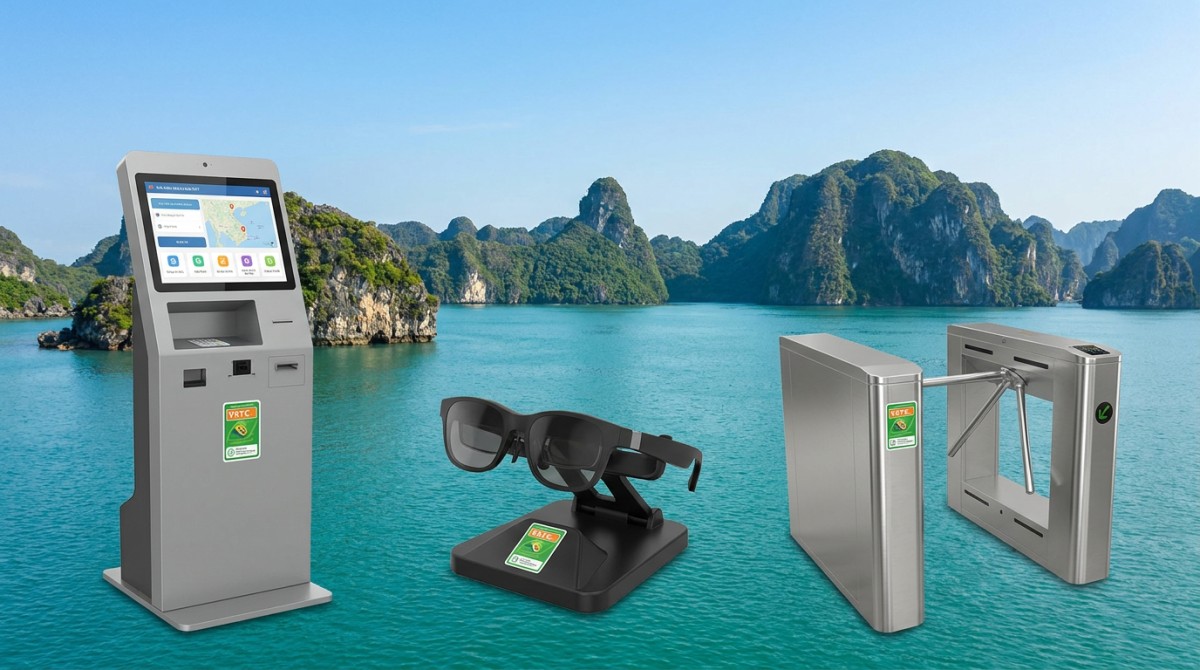
The Vietnam Standards and Quality Institute (VSTC) has officially announced that the implementation date for mandatory energy efficiency certification for smart cultural and tourism equipment will be moved forward from the originally scheduled October 2026 to July 1, 2026. This adjustment affects products such as self-service audio guide devices, AR glasses, and smart scenic area access gates, with only 42 days remaining in the transition period. This creates direct compliance pressure for Chinese exporters of smart cultural and tourism equipment targeting the Vietnamese market, localization service providers, and cross-border supply chain participants, and deserves close attention from industries related to smart hardware going global, cultural and tourism technology integration, and Southeast Asian market operations.
Event Overview
The Vietnam Standards and Quality Institute (VSTC) recently issued an official announcement, clarifying that the mandatory energy efficiency certification requirements for smart cultural and tourism equipment, originally scheduled to take effect from October 2026, will now be enforced starting July 1, 2026. Applicable products include three categories of equipment: self-service tour guide terminals, augmented reality (AR) glasses, and smart scenic area access gates. The announcement states that from that date onward, products that have not obtained VSTC-approved energy efficiency certification will not be able to complete Vietnam import customs clearance. At present, only 42 days remain in the transition period, and many Chinese equipment exporters have already initiated expedited testing and filing procedures with local Vietnamese agents.
Which market segments will be affected
Direct trading enterprises
Chinese companies exporting smart cultural and tourism equipment to Vietnam under their own brands or through OEM arrangements will be directly restricted by customs clearance access requirements. The impact is reflected as follows: if VSTC energy efficiency certification is not completed and filing with Vietnamese importers is not finished before July 1, 2026, the goods will be rejected at the port; signed orders may face delivery default risks; and some companies may need to simultaneously update certification strategies for other markets such as CE and KC to avoid resource crowding.
Processing and manufacturing enterprises
Hardware manufacturers providing ODM/OEM services for foreign trade companies will need to adjust energy efficiency-related design parameters on their production lines to meet certification requirements (such as standby power consumption of power modules, heat dissipation structure, firmware low-power logic, etc.). The impact is mainly reflected in the following: if existing inventory models have not reserved room for energy efficiency optimization, they may fail expedited testing; some companies may need to resubmit samples and conduct supplementary testing, resulting in extended delivery lead times and increased testing costs.
Channel distribution enterprises
Enterprises engaged in the distribution of cultural and tourism equipment, system integration, or project general contracting in Vietnam will need to bear joint compliance responsibility for end products. The impact is reflected as follows: if procurement contracts do not specify the allocation of certification responsibilities, upstream supply delays may cause project postponements; if technical specifications in bidding documents do not reflect VSTC energy efficiency certification status, there is a risk of bid invalidation; and companies need to accelerate the review of on-sale model lists, identify high-risk models, and initiate assessment of replacement solutions.
Supply chain service enterprises
Third-party organizations providing services such as local Vietnamese agent registration, certification agency handling, and customs clearance logistics will see a short-term surge in business demand. The impact is reflected as follows: the expedited certification cycle has been compressed to within a few weeks, placing higher demands on local laboratory scheduling, document translation accuracy, and communication response efficiency with VSTC; some small and medium-sized service providers may be unable to take on additional engagements due to resource saturation, leading customers to turn to service providers with full-chain capabilities.
What key points should relevant companies or practitioners pay attention to, and how should they respond at present
Immediately verify the certification status of corresponding models for goods in transit and pending shipment
Check against the applicable product catalog and certification implementation rules published on the VSTC official website to confirm whether current export models fall within the mandatory scope; review the submitted sample numbers, the issuance dates of test reports, and the validity periods of certification certificates; for models not yet submitted for testing or that have failed testing, prioritize expedited channels and simultaneously prepare a backup model list.
Simultaneously advance local agent filing and customs clearance document updates
VSTC certification only becomes effective after binding filing is completed with the Vietnamese importer, so companies need to confirm whether their cooperating agent has completed the qualification registration designated by VSTC; at the same time, update product model and certification number fields in customs clearance documents such as commercial invoices, packing lists, and certificates of origin to avoid inspection delays caused by inconsistent documentation.
Distinguish between policy implementation milestones and the actual pace of rollout
July 1, 2026 is the legal effective date of the regulation, but operational aspects such as customs system upgrades, frontline officer training, and testing institution workload may involve a buffer window of 1–2 months; what deserves more attention at present is whether the VSTC official website will release an updated version of the certification acceptance guidelines and whether a pre-review channel will be opened, rather than making absolute judgments based solely on the announcement text.
Establish a cross-departmental compliance response mechanism
It is recommended to form a temporary response team composed of export business, R&D, quality, and legal departments, with weekly synchronization of certification progress, testing feedback, and agent filing status; proactively send compliance progress explanation letters to key customers to reduce business friction caused by information asymmetry; and incorporate this adjustment into the company’s long-term compliance management framework for the Southeast Asian market to avoid repeatedly reacting to similar policy changes.
Editor’s Viewpoint / Industry Observation
Obviously, this adjustment reflects VSTC’s broader trend toward tightening energy efficiency oversight in consumer-facing digital infrastructure—not as an isolated technical update, but as part of Vietnam’s national energy conservation roadmap aligned with ASEAN Energy Efficiency Standards. Analysis shows the 3-month advance is unusually short for a mandatory certification shift, suggesting VSTC may be prioritizing enforcement readiness over industry adaptation time. From an industry perspective, it signals that regulatory agility in Vietnam’s tech-import regime is increasing—and that ‘certification-ready’ can no longer be treated as a post-sale or post-shipment activity. This is less a one-off deadline and more a structural reminder: for exporters targeting Vietnam, compliance must now be embedded into product development timelines, not appended at the end.
Conclusion: The advancement of the implementation date for this VSTC energy efficiency certification is not merely a technical fine-tuning, but a forward-looking test of exporters’ compliance response capabilities. It means that Vietnam’s market access management for smart cultural and tourism equipment is accelerating from “formal review” toward “substantive compliance,” and companies need to move certification requirements forward into the product development and order acceptance stages. At present, it is more appropriate to understand this as a landmark event signaling an accelerated regional regulatory pace, rather than an isolated policy change; the key to a rational response lies in transforming compliance actions into reusable process capabilities, rather than merely solving a one-time customs clearance issue.
Information source note:
Main source: official announcement of the Vietnam Standards and Quality Institute (VSTC) (document number not specified, subject to the latest publication on the official website).
Areas for continued observation: whether VSTC will issue revised supporting implementation rules, whether a pre-review acceptance channel will be opened, and the actual enforcement level at major Vietnamese ports for products during the transition period.
Your 1:1 travel consultant will respond within 1 business day
How to plan your trip
- Middle East family travel bookings surge 140% this summer: Customized family travel from China becomes a new hotspot.
- The finals of the 2nd "Silk Road Silver Age, Dancing in Guangzhou" Square Dance Competition have begun.
- Ningxia’s “Jingyou Ningxia” project wins the bid, focusing on taking wellness and residential tourism for the new silver-haired generation overseas
- Hebei launches the 'Starlight · Yanzhao' family summer retreat special train, offering customized transfer services for overseas travel agencies with MOQ<30 people
- The Chaoshan film "A Love Letter to Grandma" sparks a Huaqiao culture check-in craze
Monthly travel guide
- China Southern Airlines launches the Guangzhou—Zhengzhou—Luoyang cultural tourism charter flight route
- DiDi Global launches cross-border ride-hailing services, covering 12 cultural and tourism areas in Luoyang
- Guangdong has launched cultural and tourism subsidies exceeding 1 billion yuan to benefit the public, and overseas travel agencies can apply for inbound tour operator service subsidies
- Alipay’s ‘link international cards to domestic accounts + use international e-wallets in China’ covers cultural and tourism destinations nationwide
- Ctrip launches the ‘Go China’ inbound tourism special initiative
- Guangdong launches the development of export packaging standards for Cantonese-style leisure products
- Shandong Feicheng creates immersive cultural and tourism consumption scenarios to attract the attention of Middle Eastern buyers
- Chengcheng Cherries Debut at the Moganshan Conference, Cultural Tourism-Agriculture Integration Solution Attracts Overseas Inquiries
- Longmen Grottoes AR Guide Goes Multilingual, Accelerating the Global Expansion of Cultural IP
- Hanzhong Rapeseed Flower Sea Selected for the ‘Belt and Road’ Ecotourism Recommendation List
- Sichuan releases five youth cultural tourism routes, Middle East study tour groups launch API integration
- ‘Encounter Sichuan’ Launches Seven Rural Routes, with ESG Agri-Culture-Tourism Products Seeing a Surge in Inquiries from EU Buyers
Popular destinations
- China's Henan Province 144-Hour Visa-Free Transit Policy in 2026: Latest Regulations & In-Depth Travel Strategies
- Implementation of the Ministry of Culture and Tourism's New Regulations: Fire Safety Guidelines for Scripted Entertainment Venues Affect Certification for the Export of Foreign-related Theater Equipment
- Vietnam shortens the transition period for VSTC energy efficiency certification: Mandatory certification for imported smart cultural and tourism equipment will be brought forward to July 2026.
- EU EPR New Regulation Implementation Countdown: Exports of Cultural and Tourism Souvenirs Must Complete Producer Responsibility Registration
- Ministry of Culture and Tourism issues Fire Safety Guidelines for Scripted Entertainment Venues, affecting export certification for theater equipment used in foreign-related projects
Why choose us

High cost-performance and transparent experience
Offer astonishing low prices without hidden tourism traps, enabling travelers to explore at lower costs while avoiding unnecessary spending loopholes, ensuring transparent consumption.

Personalization and dedicated service
Support 100% free customization, paired with one-on-one expert service, crafting exclusive itineraries based on travelers' specific needs, while providing professional guidance to enhance the personalization and professionalism of the journey.

Premium itinerary planning
Compact yet rich itineraries allow travelers to experience more within limited time; simultaneously, carefully selected hotels in prime locations provide convenient lodging conditions, overall enhancing travel comfort and experience.