Welcome to Our Travel Agency!




Recently, demand from the Middle East for summer family travel to destinations in China has shown explosive growth, directly driving China’s outbound cultural and tourism service supply chain to accelerate its upgrade toward regionalization, refinement, and ESG orientation. Although the exact timing of this trend has not been explicitly identified, based on the release cycle characteristics of OTA platform data, it can reasonably be inferred to point to the booking window for the summer season of 2026 (July–August). The core driver lies in the dual upgrade of Middle Eastern middle-class families’ demand for in-depth cultural experiences and child-friendly services, combined with the systematic progress of China’s cultural and tourism products in customization, bilingual delivery, and religious-sensitivity assurance.
Event Overview
According to the latest data from Salam Booking, the largest online travel agency in the Middle East, bookings by family travelers for destinations in China during the summer of 2026 (July–August) surged 140% year-on-year; among them, “Luoyang Ancient Capital Cultural Parent-Child Camp” and “Zhengzhou Kung Fu Youth Study Camp” ranked among the top three in search popularity. Buyers generally focus on bilingual guide arrangements, child-friendly transportation transfers, halal dining assurance, and itinerary flexibility, and they also put forward clear requirements for suppliers’ ESG practices (such as low-carbon transportation and intangible cultural heritage craft material kits).
Which Sub-Sectors Are Affected
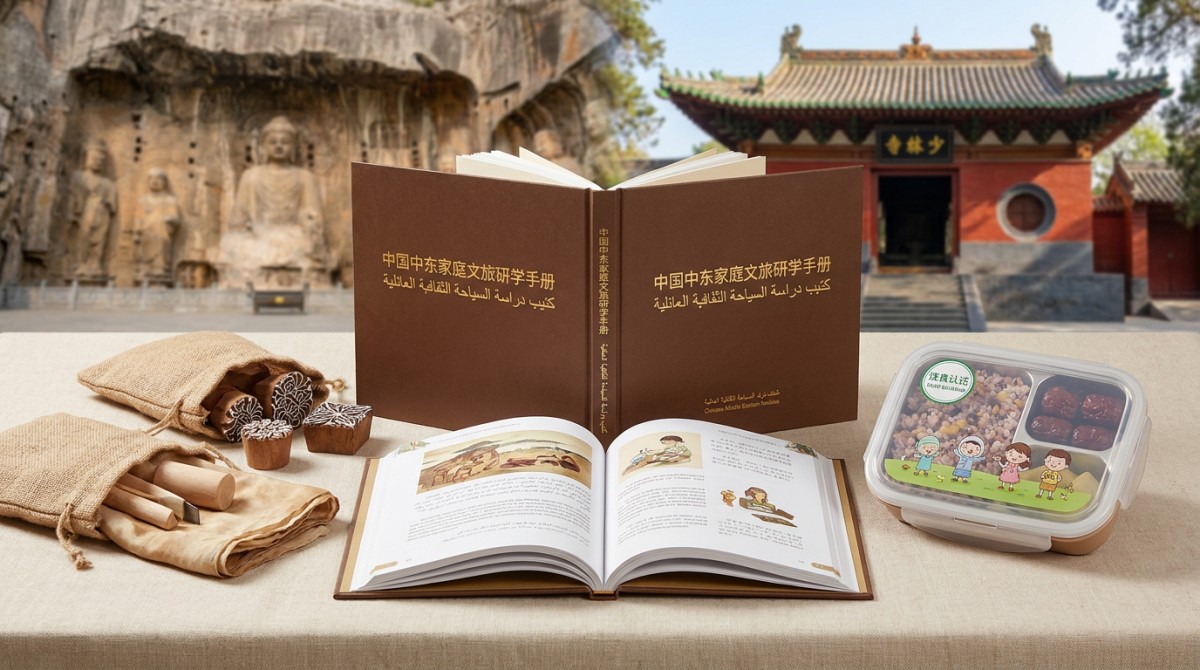
Direct Trade Enterprises
This refers to Chinese outbound travel agencies and cross-border cultural and tourism platforms that distribute cultural and tourism products and conduct B2B bundled sales for the Middle Eastern market. Directly affected by the surge in bookings, their order fulfillment pressure has increased significantly, especially in areas such as multilingual service resources (such as Arabic + Chinese bilingual study-tour guides), halal-certified catering partner networks, and the ability to adapt to Islamic holiday cycles. The impact is reflected in: compressed contract delivery cycles, rising localization compliance costs, and increased frequency in responding to customer customization demands.
Raw Material Procurement Enterprises
This mainly involves upstream suppliers of intangible cultural heritage craft material kits, child-friendly teaching aids, and printing consumables for multilingual study manuals. Since buyers have explicitly listed “intangible cultural heritage craft material kits” as part of ESG practices, their procurement standards are shifting from basic usability to sustainability certification (such as FSC paper, plant-based dyes, and biodegradable packaging). The impact is reflected in: green certification qualifications becoming a market-entry threshold, rising demand for small-batch, multi-batch, rapid-response procurement, and suppliers needing to simultaneously provide carbon footprint documentation.
Processing and Manufacturing Enterprises
This covers manufacturers of study-tour equipment (such as AR ancient-capital guide devices and kung fu-themed interactive teaching aids), child safety traffic signage systems, and halal food pre-packaging production lines. The logic of the impact lies in end-demand forcing a restructuring of product functions: for example, transfer equipment needs to integrate Arabic voice prompts and child-height-adapted design; food packaging must comply with GCC halal certification standards and reserve space for multilingual labels. The impact is reflected in: shortened product iteration cycles, increased costs for cross-standard compliance testing, and challenges to the feasibility of mass production for niche customized models.
Supply Chain Service Enterprises
These include international logistics service providers (focused on temperature-controlled/high-timeliness transportation of cultural and tourism supplies), multilingual content localization companies, and third-party ESG inspection and certification institutions. As buyers list “low-carbon transportation” and “intangible cultural heritage material kits” as mandatory clauses, their services have been upgraded from auxiliary support to key nodes in contract fulfillment. The impact is reflected in: logistics solutions needing to embed carbon emission calculation modules; translation services needing to cover religious terminology databases and children’s language usage habits; and ESG audit reports needing to cover the behavior of secondary suppliers in the supply chain.
Key Areas of Attention and Response Measures for Relevant Enterprises or Practitioners
Accelerate the Building of a Middle East Regional Service Resource Pool
Focus on reserving halal catering suppliers certified by GCC, study-tour guides holding Arabic teaching qualification certificates, and operators of dedicated child transport vehicles familiar with local traffic regulations. Avoid relying on a single overseas agent, and build the capability to directly connect with local service nodes.
Embed ESG Elements into the Entire Product Development Process
Intangible cultural heritage craft material kits must simultaneously provide raw material traceability chains and carbon footprint summaries; study-tour itinerary design must indicate carbon emission comparisons among transportation modes (such as high-speed rail vs charter flights), as well as the green certification levels of accommodation venues. ESG is no longer merely a marketing phrase, but a verifiable contractual commitment.
Establish a Dynamic and Responsive Contract Management Mechanism
In response to Middle Eastern family travelers’ frequent demand for “itinerary flexibility,” elastic clauses need to be preset in B2B contracts: such as allowing one experience segment to be adjusted free of charge within 72 hours before departure, automatically activating alternative plans in case of sudden weather changes, and maintaining a backup supplier list for temporary changes in halal dining arrangements.
Editorial Viewpoint / Industry Observation
显然,这一增长不仅仅是周期性需求,而是标志着一种结构性转变:中东家庭游客正 increasingly 将中国视为“精心策划的文化目的地”,而非“异域中转站”。分析显示,140% 的增长主要集中在拥有 6–14 岁儿童、年收入高于 USD 80,000 的家庭——这表明是高端化,而不是大众市场扩张。从行业角度看,真正的瓶颈不在于产品供给,而在于可验证的跨境服务互操作性(例如,将阿拉伯语售后支持整合进中国运营商 CRM 系统)。当前更值得关注的是,位于 GCC 的旅行社是否开始与中国供应商联合开发行程——这可能成为价值链更深度整合的潜在拐点。
Conclusion
The recent surge in bookings for Middle Eastern family travel is essentially a precise coupling between China’s cultural and tourism supply system and emerging regional consumption patterns. It not only validates the synergistic value of cultural IP conversion capabilities and localized service capabilities, but also exposes room for improvement in dimensions such as mutual recognition of standards, service granularity, and ESG verifiability. It is more appropriately understood as a supply-side upgrade sequence aimed at a customer group with high net worth, strong educational backgrounds, and strong cultural identity, rather than a short-term traffic dividend.
Source Information Notes
Data source: Official release of the 2026 summer booking trend brief by Salam Booking, the largest OTA platform in the Middle East (released in X month 2026, original link to be added);
Pending continued observation: whether Salam Booking will subsequently disclose refined data by city and by customer segment (such as Saudi Arabia vs the UAE); whether the cultural and tourism authorities of GCC countries will issue special certification guidelines for China study-tour products; and the progress of Chinese cultural and tourism enterprises’ participation in jointly building GCC-localized service standards.
Your 1:1 travel consultant will respond within 1 business day
How to plan your trip
- Hebei Launches Five “Trendy Hebei” Premium Tourism Routes for Inbound Travelers, Moving Toward Standardized Offerings
- The 12th Qionghai Tanmen Coastal Foraging Festival Opens on August 16
- Guangxi’s Digital Silk Road Accelerates: Orah Mandarin Juice Secures an Italian Order, Drawing Attention to Export Standards for Souvenirs
- New Inquiry Triggered by Coastal Cultural Tourism Space Standards
- Zhuanghe’s agro-cultural tourism model draws ASEAN attention, highlighting the compliance requirements for the internationalization of camping and intangible cultural heritage handicrafts
Monthly travel guide
- Typhoon “White Dolphin” Forces Henan Scenic Areas to Close, Putting Summer Ground-Handling Services Under Pressure
- RCEP Implementing Rules for Indonesia Take Effect: Zero Tariffs for Cultural and Tourism Services Alongside Strict Customer Service Requirements
- Saudi Arabia’s New SASO Regulations Take Effect: Taqat Certification Required Before Chinese-Language Cultural Tourism Services Can Access Visit Saudi
- Zhengzhou Launches a Dedicated LCL Shipping Route for Cultural and Tourism Materials, Cutting Freight Costs by 18%
- Luoyang Cold Chain Intensification: Cultural and Creative Exports Delivered in 9 Days
- Expedited Pre-Approval for Group Visas to Three Southeast Asian Countries
- Tightening air freight capacity at Zhengzhou Airport delays the delivery of cultural and tourism materials
- Vietnam's New Regulations on Bus Monitoring Requirements for Group Tours
- Saudi SAMA New Regulations on Travel Liability Insurance Compliance Preparation
- Japanese tourists' new regulations for entering Henan local transport vehicles
- Wai Gao Qiao Wen Travel customs bonded warehouse summer group equipment fast lane
- JTB Warning: Risks in Henan’s September Red Leaf Family Tour Purchases
Popular destinations
- Zhuanghe’s agro-cultural tourism model draws ASEAN attention, highlighting the compliance requirements for the internationalization of camping and intangible cultural heritage handicrafts
- Tongcheng Travel data: Summer “factory tours” booking popularity rises by 36%, with family travelers leading demand
- Saudi OTA Opens a Direct Procurement Channel for Henan Inbound Ground Services
- JIS S 0022:2026 Takes Effect, Requiring Bilingual Contingency Plans and Route Record Archiving for Customized Tours
- TripAdvisor Summer Rankings Released: Luoyang Itinerary Named Among the TOP 10 Family Travel Destinations in Asia
Why choose us

High cost-performance and transparent experience
Offer astonishing low prices without hidden tourism traps, enabling travelers to explore at lower costs while avoiding unnecessary spending loopholes, ensuring transparent consumption.

Personalization and dedicated service
Support 100% free customization, paired with one-on-one expert service, crafting exclusive itineraries based on travelers' specific needs, while providing professional guidance to enhance the personalization and professionalism of the journey.

Premium itinerary planning
Compact yet rich itineraries allow travelers to experience more within limited time; simultaneously, carefully selected hotels in prime locations provide convenient lodging conditions, overall enhancing travel comfort and experience.