Welcome to Our Travel Agency!




The EU's "Packaging and Packaging Waste Regulation" (EPR) has expanded its scope of application, clearly stipulating that from October 1, 2026, a mandatory extended producer responsibility system will be implemented for cultural and tourism souvenirs sold to the EU. This move will directly affect China's export chain of tourism and cultural creative products to the EU market, involving multiple links such as design, manufacturing, trade, and cross-border logistics. The policy rollout stems from the upgrade of the EU Circular Economy Action Plan, aiming to strengthen the attribution of environmental responsibility throughout the entire life cycle, rather than simply setting up trade barriers.
Event Overview
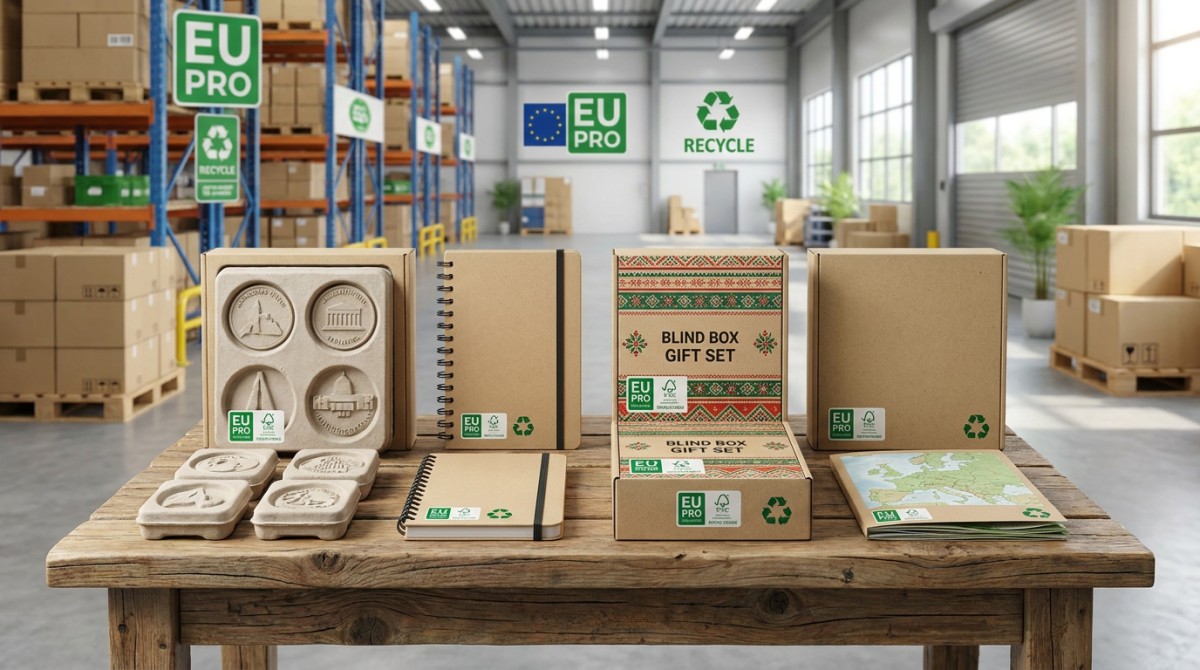
The EU's "Packaging and Packaging Waste Regulation" (EPR) has officially been expanded to cover cultural and tourism creative products, stipulating that from October 1, 2026, all tourism souvenirs sold to EU member states—including but not limited to scenic spot badges, notebooks, intangible cultural heritage IP derivative products, paper maps, blind box cultural creative gift boxes, etc.—must have their manufacturers or importers complete registration with a Producer Responsibility Organization (PRO) in the target country of sale and pay recycling and disposal fees based on sales volume/weight. Products that fail to complete registration or fee payment will face compliance risks such as detention by EU customs, removal from e-commerce platforms, and sales bans in physical channels.
Which Sub-sectors Will Be Affected
This policy does not only affect end exporters, but transmits compliance pressure upstream and downstream along the industrial chain, with structural and forward-looking impacts.
Direct Trading Enterprises
As the entities responsible for market access to the EU market, trading enterprises must undertake statutory obligations such as registration filing, annual declarations, fee payment, and archiving of compliance certification documents. The impact is reflected in: extended customs clearance cycles for individual export shipments (due to the need to simultaneously submit PRO registration numbers and fee payment certificates), increased operating costs (registration fees + annual processing fees + third-party agency service fees), and reduced flexibility in responding to customer orders—some EU buyers have already begun embedding EPR compliance warranty clauses in procurement contracts.
Raw Material Procurement Enterprises
Although they do not directly face EU regulation, if the packaging materials they supply (such as color-printed paper boxes, aluminum badge base materials, biodegradable film) are not included in the recyclable material list recognized by PRO, downstream finished products will fail to pass environmental attribute reviews. The impact is reflected in: a surge in demand for supplier qualification certification, with some small and medium-sized raw material factories losing supporting qualifications due to a lack of LCA (Life Cycle Assessment) data support; premiums on environmentally friendly materials may be passed on to the procurement side, squeezing overall gross profit margins.
Processing and Manufacturing Enterprises
As the actual producers, if they undertake overseas brand orders under the OEM/ODM model, their factory information may be proactively declared by EU importers as the "actual manufacturer," thereby triggering joint PRO registration requirements. The impact is reflected in: enterprises need to clarify responsibility boundary clauses in contracts; some contract factories face the pressure of first-time exposure to the EU environmental regulatory system, lacking internal EPR liaison positions and processes; if asset-light cultural creative design companies register their own brands and export independently, they will also be regarded as "producers" and bear the same obligations.
Supply Chain Service Enterprises
Service providers such as freight forwarders, customs brokers, and compliance consulting agencies are accelerating the rollout of new business lines such as EPR agency registration, coordinated multi-country PRO membership, and annual report preparation. The impact is reflected in: service standards have not yet been unified, and the market contains low-price, low-quality registration intermediaries, which can easily trigger secondary risks such as abnormal subsequent fee payments and incorrect data reporting; some regional service providers have not yet covered registration channels for all 27 EU member states, forcing enterprises to make separate entrustments and increasing management complexity.
Key Points of Attention and Response Measures for Relevant Enterprises or Practitioners
Confirm the Target Country of Sale and Start Preparations for PRO Registration in Advance
EU EPR follows a "one country, one registration" system and is not universally applicable across the entire region. Enterprises must connect separately with the designated PROs of each country (such as Germany's EAR, France's CITEO, and the Netherlands' NVC) based on the actual shipment destinations (such as Germany, France, and the Netherlands as major sales countries). Before registration, documents such as the business license, EU Authorized Representative (OR) authorization letter, product material composition table, and estimated annual sales volume/weight must be prepared. The average preparation cycle is 4–6 weeks, and it is recommended to start no later than Q1 2026.
Rebuild the Product Packaging and Material Database
PRO registration and subsequent declarations both rely on accurate material classification (such as PET, FSC-certified paperboard, aluminum-plastic composite layers, etc.) and weight data. Enterprises need to establish packaging BOM tables at the smallest sales unit (SSU) level, avoiding general labeling such as "environmentally friendly materials." For cultural creative gift boxes with multilayer composite structures, it is recommended to entrust a third-party laboratory to issue a material decomposition report to support the authenticity of the declaration.
Review Rights and Responsibilities Clauses in Existing Foreign Trade Contracts
Focus on verifying, under FOB/CIF terms, the attribution of EPR obligations, whether intellectual property ownership implicitly includes identification of producer status, and whether liability for breach of contract covers port detention or return losses caused by EPR non-compliance. It is recommended to add a special "EPR compliance warranty" clause and clearly define the designation method and cost-sharing mechanism for the EU Authorized Representative (OR).
Assess Whether to Establish a Local Compliance Entity in the EU
For enterprises with annual export volumes exceeding 500,000 euros or covering more than 3 EU countries, establishing a local subsidiary or appointing a professional EU Authorized Representative (OR) offers better long-term cost efficiency. At present, most OR services charge annually and include declaration response support, which can reduce the risk of single-country registration failure and also help address future EPR audit inspections.
Editorial Viewpoint / Industry Observation
Observably, this EPR expansion is not a sudden regulatory shock but a logical progression of the EU’s 2020 Circular Economy Action Plan — it targets high-visibility, low-recyclability consumer goods where greenwashing has been prevalent. Analysis shows that cultural and tourism souvenirs, though small in volume, carry disproportionate symbolic weight in EU sustainability narratives; their inclusion signals tightening scrutiny on “emotional consumption” categories. From an industry perspective, the bigger challenge lies not in registration mechanics, but in data traceability across fragmented SME supply chains — many craft workshops or village cooperatives lack digital inventory systems needed for accurate annual reporting. This regulation, therefore, functions less as a trade barrier and more as a structural catalyst for supply chain digitization.
Conclusion
The EU's EPR coverage of cultural and tourism souvenirs marks that China's cultural creative exports are officially entering the stage where "compliance is competitiveness." It no longer only tests product creativity and cost control, but also examines the maturity of enterprises in environmental responsibility disclosure, cross-regional data coordination, and legal response capability. Rationally speaking, short-term pain is unavoidable, but enterprises that take the lead in building EPR adaptive capabilities are expected to gain priority recommendation positions in the EU's green consumption tiering system, thereby transforming compliance costs into a premium of brand trust.
Information Source Notes
Official document of the European Commission, "Regulation (EU) 2022/2401 on packaging and packaging waste" (effective from January 2023, Article 28 explicitly authorizes expansion to specific consumer goods);
European Environment Agency (EEA) March 2025 updated version of "EPR Implementation Guidance for Cultural & Tourism Goods" (draft number EEA-GUIDE-CT-2025-03);
Announcement on the website of the German Federal Environment Agency (UBA), "EAR Registration Requirements for Non-EU Producers of Souvenir Items" (published in April 2025).
Note: The specific fee rate standards, exemption thresholds, and annual report format details of each country's PRO are still being dynamically updated, and it is necessary to continuously track follow-up notices on the official websites of the environmental authorities of each member state and the Official Journal of the European Union (OJEU).
Your 1:1 travel consultant will respond within 1 business day
How to plan your trip
- Hebei Launches Five “Trendy Hebei” Premium Tourism Routes for Inbound Travelers, Moving Toward Standardized Offerings
- The 12th Qionghai Tanmen Coastal Foraging Festival Opens on August 16
- Guangxi’s Digital Silk Road Accelerates: Orah Mandarin Juice Secures an Italian Order, Drawing Attention to Export Standards for Souvenirs
- New Inquiry Triggered by Coastal Cultural Tourism Space Standards
- Zhuanghe’s agro-cultural tourism model draws ASEAN attention, highlighting the compliance requirements for the internationalization of camping and intangible cultural heritage handicrafts
Monthly travel guide
- Typhoon “White Dolphin” Forces Henan Scenic Areas to Close, Putting Summer Ground-Handling Services Under Pressure
- RCEP Implementing Rules for Indonesia Take Effect: Zero Tariffs for Cultural and Tourism Services Alongside Strict Customer Service Requirements
- Saudi Arabia’s New SASO Regulations Take Effect: Taqat Certification Required Before Chinese-Language Cultural Tourism Services Can Access Visit Saudi
- Zhengzhou Launches a Dedicated LCL Shipping Route for Cultural and Tourism Materials, Cutting Freight Costs by 18%
- Luoyang Cold Chain Intensification: Cultural and Creative Exports Delivered in 9 Days
- Expedited Pre-Approval for Group Visas to Three Southeast Asian Countries
- Tightening air freight capacity at Zhengzhou Airport delays the delivery of cultural and tourism materials
- Vietnam's New Regulations on Bus Monitoring Requirements for Group Tours
- Saudi SAMA New Regulations on Travel Liability Insurance Compliance Preparation
- Japanese tourists' new regulations for entering Henan local transport vehicles
- Wai Gao Qiao Wen Travel customs bonded warehouse summer group equipment fast lane
- JTB Warning: Risks in Henan’s September Red Leaf Family Tour Purchases
Popular destinations
- China's Henan Province 144-Hour Visa-Free Transit Policy in 2026: Latest Regulations & In-Depth Travel Strategies
- Japan to Introduce a Credit Point System for Chinese-Speaking Tour Guides, Trial Operation in August
- The EU Clarifies That Digital Platforms for Culture and Tourism Are Subject to GDPR Regulation
- Thailand Upgrades “China Ready” Certification, Adding AI Voice Compliance Testing for Chinese-Language Commentary
- Japan Revises the Tourism Services Industry Act, Introducing a Credit Points System for Chinese-Speaking Tour Guides
Why choose us

High cost-performance and transparent experience
Offer astonishing low prices without hidden tourism traps, enabling travelers to explore at lower costs while avoiding unnecessary spending loopholes, ensuring transparent consumption.

Personalization and dedicated service
Support 100% free customization, paired with one-on-one expert service, crafting exclusive itineraries based on travelers' specific needs, while providing professional guidance to enhance the personalization and professionalism of the journey.

Premium itinerary planning
Compact yet rich itineraries allow travelers to experience more within limited time; simultaneously, carefully selected hotels in prime locations provide convenient lodging conditions, overall enhancing travel comfort and experience.