Welcome to Our Travel Agency!




Travel Guide
Yes—you can visit Shaolin Temple from Zhengzhou and return the same day. An overnight stay is not necessary for a visit focused on the temple, the Pagoda Forest, and a martial arts performance if the day’s schedule allows. The practical requirement is to keep the itinerary focused: adding a substantial mountain hike or another major attraction changes the timing considerably.
For a straightforward Zhengzhou to Shaolin Temple day trip, allow a full day rather than treating it as a quick excursion. Direct road transport offers the most control over your return time; public transport can work for a flexible traveler, but connections and the last return service need to be established before departure.
How much time does the journey actually need?
Shaolin Temple is near Dengfeng, southwest of Zhengzhou, rather than within Zhengzhou’s urban sightseeing area. Depending on your starting point and route, the road journey is roughly 85–100 kilometers. For planning purposes, allow approximately 1.5–2.5 hours each way by direct vehicle, with additional time during heavy traffic or busy holiday periods. These are planning estimates, not guaranteed transfer times.
Your hotel location matters. A pickup in central Zhengzhou, a departure from Zhengzhou East Railway Station, and a transfer from the airport are different journeys. A quoted driving time is useful only if it refers to your actual departure point and the scenic-area arrival point.
Allow around three to four hours on site for a moderately paced visit to the main temple and Pagoda Forest, with a performance included only if its timing fits. Lunch, ticket checks, walking between areas, and returning to the vehicle all sit outside a simple map-based driving estimate.
The distinction is between a full day and a tightly packed day. Returning to a Zhengzhou hotel gives you flexibility. Returning for a flight or train creates a hard deadline and requires a more conservative plan.
Choose transport around the return journey
The outbound journey is only half the decision. A transport option that gets you to Shaolin Temple cheaply may be less attractive if the return involves uncertain departures or an additional transfer late in the afternoon.
Private vehicle: the clearest option for a fixed schedule
A prearranged round-trip vehicle is the simplest choice when you want hotel pickup, a defined departure time, and a driver waiting for the return. It is particularly useful for families, travelers with limited walking stamina, or anyone who needs to be back in Zhengzhou at a specific time.
Confirm what “round trip” includes. The quotation should identify the pickup and drop-off addresses, vehicle size, waiting allowance, parking and road charges, and any overtime conditions. A vehicle with a driver does not automatically include an English-speaking guide, entrance tickets, or help interpreting the site.
Agree on the return meeting point before entering. Scenic-area parking arrangements can make “meet at the entrance” too vague, especially when several access points or parking areas are involved. Keep the driver’s contact details and the vehicle information available offline.
Organized day tour: useful if the itinerary is genuinely focused
A group excursion can remove the need to coordinate transport and admission separately. Its value depends less on how many stops it advertises than on how much usable time it provides at Shaolin.
Check the actual pickup arrangements, tour language, expected group size, included admissions, optional charges, and return location. A tour described as departing from Zhengzhou may require you to reach a meeting point rather than collect you from your hotel. Multiple pickups can also delay the start of the main journey.
Look closely at additional stops. Shopping visits or loosely related attractions can reduce temple time without making the day more rewarding. If Shaolin is the reason for the trip, an itinerary with fewer stops and a clear return arrangement is generally the stronger choice.
Public transport: workable when flexibility matters more than certainty
Traveling independently by bus can reduce transport costs, particularly for a solo traveler. Depending on available services, the journey may involve a tourist coach toward the scenic area or travel to Dengfeng followed by a local connection. Do not assume that a bus labeled “Dengfeng” ends at Shaolin Temple.
Before setting out, establish the current departure terminal, destination stop, whether a transfer is required, and the return departure point. Zhengzhou has multiple transport hubs, and older travel accounts may refer to services or terminals that have changed.
The last usable return connection is more important than the first outbound departure. Leave enough time to reach the correct stop, rather than planning to finish sightseeing at the advertised departure time. If you cannot establish a dependable return route, public transport is a poor match for a same-day flight or train connection.
One-way taxi or ride-hailing: avoid leaving the return unresolved
An outbound ride does not guarantee that another car will be readily available when you finish. Driver availability, long-distance acceptance, and pricing may differ from central Zhengzhou. If using a taxi or ride-hailing service, resolve the return arrangement in advance rather than relying on an immediate booking outside the attraction.
What fits comfortably into one day?
The strongest day-trip combination is the main Shaolin Temple complex, the Pagoda Forest, and a martial arts demonstration when available. These offer different experiences: a living Buddhist setting, a historic monastic burial landscape, and a scheduled presentation of martial arts skills.
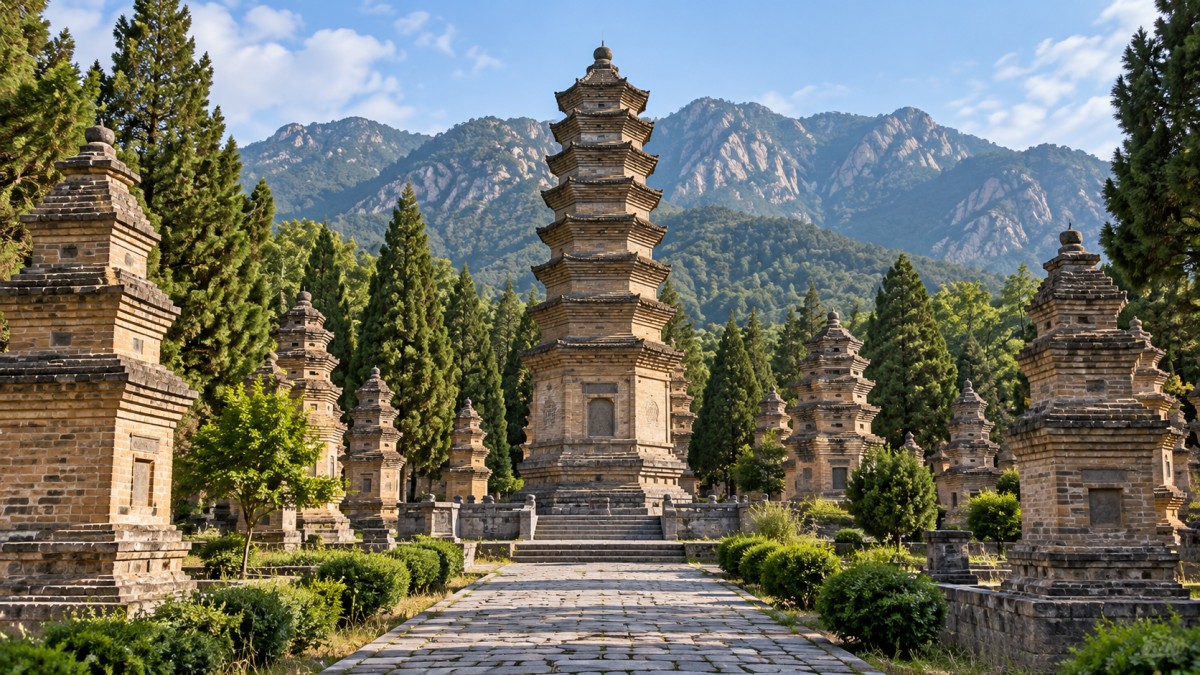
The Pagoda Forest is not simply another courtyard within the temple. Allow walking time between the main areas and avoid treating the whole visit as one compact building. Comfortable shoes matter even if you have no intention of hiking.
A martial arts demonstration can fit into the day, but it should not be treated as a guaranteed performance at an assumed time. Confirm the current venue, schedule, admission arrangements, and any changes on arrival or through the official booking channel. Build the visit around a confirmed session rather than waiting indefinitely and compromising your return.
Watching a demonstration is also different from taking a kung fu class. A participatory lesson requires a separate arrangement and a realistic time allowance; it should not be assumed to be included in a standard sightseeing ticket or day tour.
A substantial hike in the surrounding mountain scenery is a different proposition. Trail access, steps, cableways, weather, and queues can absorb the afternoon. If mountain walking is your main interest, either reduce the cultural sightseeing or consider an overnight stay near Dengfeng. Trying to give both experiences equal attention is what makes an otherwise manageable day feel rushed.
A realistic same-day schedule
An early departure creates useful flexibility without requiring an exceptionally long day. The example below assumes direct road transport, ordinary conditions, and a return to a Zhengzhou hotel. It is not a statement of opening hours or performance times.
- Around 7:30–8:00 a.m.: Leave your Zhengzhou accommodation.
- Mid-morning: Arrive, complete admission procedures, and check the performance schedule before deciding your sightseeing order.
- Late morning to early afternoon: Explore the temple and Pagoda Forest, allowing time for lunch and a demonstration if one fits.
- Around 3:00–4:00 p.m.: Meet your driver and start the return journey.
- Late afternoon or early evening: Return to Zhengzhou, subject to road conditions.
Public transport requires a timetable-led version of this plan. Your departure from the attraction should be determined by the confirmed return service and connection time, not by the private-car example.
If the morning journey takes longer than expected, drop optional activities rather than compressing every part of the visit. Keeping the temple and Pagoda Forest as priorities gives you a clear way to adjust without losing the main purpose of the trip.
Tickets, walking conditions, and departure-day risks
Check current admission rules through the attraction’s official channels or a reliable booking provider before traveling. Confirm the date, accepted identification, whether advance reservations are required, and what the ticket actually covers. Do not assume that performances, internal transport, cableways, or other activities share the same admission conditions.
International visitors should confirm that the booking method accepts their passport details and carry the original identification used for the reservation. Save the reservation confirmation and essential destination information offline. A phone with mobile data, adequate battery power, and a workable payment method is especially valuable when traveling without a guide.
The core visit involves outdoor walking, with steps and potentially uneven surfaces. A private vehicle reduces transport effort but does not remove the walking inside the attraction. Anyone with mobility limitations should ask about the exact accessible route and available assistance rather than relying on a general description such as “easy sightseeing.”
Rain, heat, and cold can change the pace of the visit. On a wet day, mountain activities are the first element to reconsider. During major Chinese holiday periods, congestion can affect roads, entrance procedures, and food service; an overnight stay does not eliminate those pressures, but it reduces dependence on completing everything within one transfer window.
Can you visit before an evening train or flight?
It can be feasible, but “evening departure” alone is not enough to judge. You need the exact station or airport, the required arrival time, luggage arrangements, and a road-delay allowance. Zhengzhou Railway Station and Zhengzhou East Railway Station are not interchangeable destinations.
For a departure-day visit, work backward from your required terminal arrival time and establish a firm time to leave Shaolin. A prearranged vehicle offers greater control, but no driver can guarantee traffic conditions. If the schedule only works with an uninterrupted journey, it is too tight.
When staying overnight is worth it
An overnight stay becomes worthwhile when it buys time for something specific: a longer mountain walk, a separately arranged martial arts activity, a slower cultural visit, or relief from an early or late onward connection. It is not inherently necessary to appreciate the temple.
For a first visit centered on Shaolin’s main sights, staying in Zhengzhou and making a dedicated day trip is a sound choice. Choose direct transport when timing certainty matters, an organized excursion when the inclusions and pace suit you, or public transport when you can accommodate connections. The decisive issue is not whether the round trip is possible—it is whether your chosen transport leaves enough unhurried time at the site and a dependable way back.
Your 1:1 travel consultant will respond within 1 business day
How to plan your trip
- Inner Mongolia Issues RMB 5 Million in Ice and Snow Tourism Vouchers and Launches a RMB 299 Culture and Tourism Pass
- Xinjiang Production and Construction Corps Holds Meeting to Advance Winter Tourism Consumption Promotion
- A first-time Luoyang travel guide to choosing where to stay
- Heilongjiang to Issue RMB 100 Million in Consumer Vouchers and Launch a 100-Day Winter Ice and Snow Tourism Initiative
- Planning a photography tour of historic architecture in winter
Monthly travel guide
- The 2026 Guangxi Cultural Tourism Carnival Held in Hezhou
- Luoyang launches the “Autumn Charm of the Divine Capital” tourism promotion to build anticipation for winter travel
- Typhoon “White Dolphin” Forces Henan Scenic Areas to Close, Putting Summer Ground-Handling Services Under Pressure
- RCEP Implementing Rules for Indonesia Take Effect: Zero Tariffs for Cultural and Tourism Services Alongside Strict Customer Service Requirements
- Saudi Arabia’s New SASO Regulations Take Effect: Taqat Certification Required Before Chinese-Language Cultural Tourism Services Can Access Visit Saudi
- Zhengzhou Launches a Dedicated LCL Shipping Route for Cultural and Tourism Materials, Cutting Freight Costs by 18%
- Luoyang Cold Chain Intensification: Cultural and Creative Exports Delivered in 9 Days
- Expedited Pre-Approval for Group Visas to Three Southeast Asian Countries
- Tightening air freight capacity at Zhengzhou Airport delays the delivery of cultural and tourism materials
- Vietnam's New Regulations on Bus Monitoring Requirements for Group Tours
- Saudi SAMA New Regulations on Travel Liability Insurance Compliance Preparation
- Japanese tourists' new regulations for entering Henan local transport vehicles
Popular destinations
- Are private Luoyang tours worth the extra cost over group tours?
- Can a one-day Luoyang tour fit in Longmen Grottoes and the old town?
- How to plan a Henan tour around high-speed rail connections
- Is a Longmen Grottoes Guide Worth the Extra Cost for Overseas Groups?
- What Should We Do if a Booked Shaolin Kung Fu Session Is Cancelled?
Why choose us

High cost-performance and transparent experience
Offer astonishing low prices without hidden tourism traps, enabling travelers to explore at lower costs while avoiding unnecessary spending loopholes, ensuring transparent consumption.

Personalization and dedicated service
Support 100% free customization, paired with one-on-one expert service, crafting exclusive itineraries based on travelers' specific needs, while providing professional guidance to enhance the personalization and professionalism of the journey.

Premium itinerary planning
Compact yet rich itineraries allow travelers to experience more within limited time; simultaneously, carefully selected hotels in prime locations provide convenient lodging conditions, overall enhancing travel comfort and experience.