Welcome to Our Travel Agency!




Travel Guide
A practical Henan tour uses high-speed trains between cities and road transport for sights beyond the rail network. Start by choosing your arrival and departure cities, then build the route around the places where you will spend the most time. For a first visit focused on Luoyang, Shaolin Temple, and Kaifeng, two hotel bases often work better than changing hotels every night.
The main planning mistake is treating a short train journey as a short transfer. Reaching the station, passing security, finding your platform, and traveling onward to your hotel can take longer than the ride itself. Plan each journey from hotel door to hotel door, and keep your most important sightseeing away from tight departure deadlines.
Choose your route before choosing individual trains
Zhengzhou is a useful connection point because it sits between several major travel directions. Luoyang lies to the west, Kaifeng to the east, and Anyang to the north. These cities can form a rewarding cultural itinerary, but they do not need equal amounts of time.
Luoyang suits travelers who want Buddhist art, museums, and time in an ancient capital. Kaifeng rewards an overnight stay if evening food and atmospheric streets matter to you. Anyang deserves a deliberate place in the itinerary for its Shang history and oracle bone heritage. Adding it simply because it appears accessible by rail can create an unnecessary detour.
Three route patterns are particularly useful:
- A compact first visit: arrive in Zhengzhou, visit Kaifeng, continue toward Shaolin Temple and Luoyang, then depart from Luoyang or return to Zhengzhou.
- An ancient capitals journey: connect Anyang, Zhengzhou or Kaifeng, and Luoyang, arranging the order around your incoming and outgoing transport.
- A slower cultural break: stay in Luoyang, make a separate road excursion to Shaolin Temple, and add one other city only if time allows.
If you can arrive in one city and leave from another, you may avoid retracing your route. However, a convenient direct connection home can be worth a return train journey. Compare the complete travel day before committing to an open-ended itinerary.
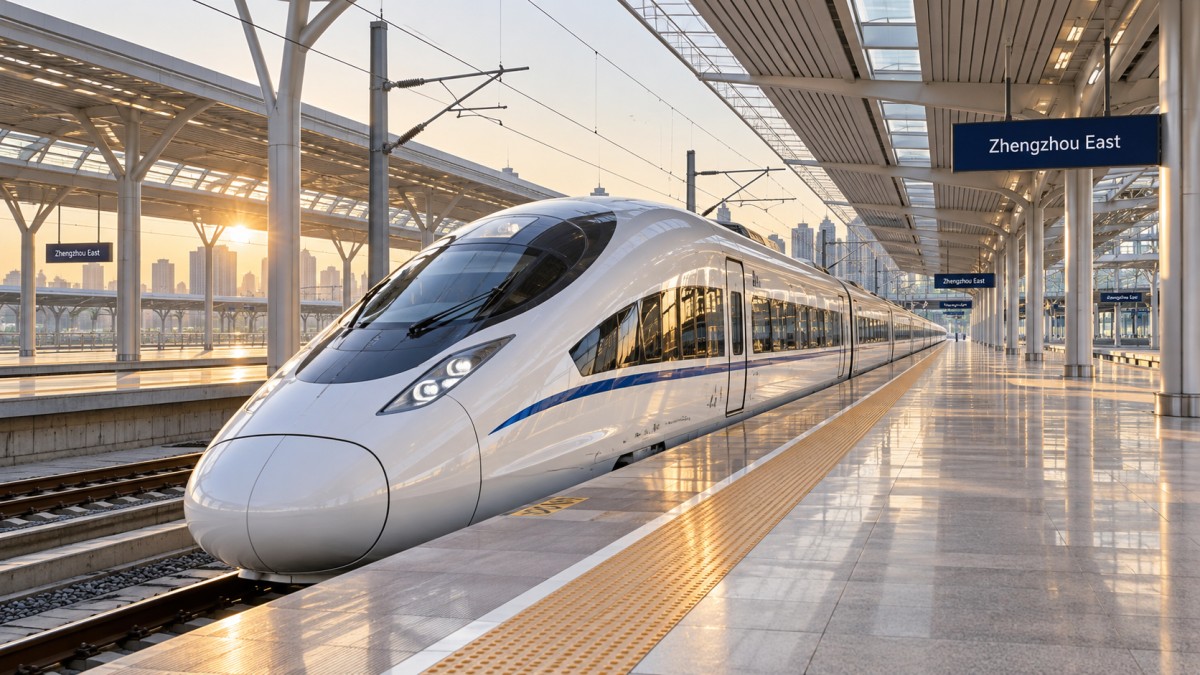
Match the station to the visit, not just the city name
Chinese cities can have several railway stations, and their names are not interchangeable. A hotel near the traditional central station may be inconvenient for a departure from a newer high-speed rail station. Save the exact station name with every booking and share it with anyone arranging your transfer.
When comparing departures, look at both the station and the arrival time. A slightly longer train journey can be the easier choice if it leaves from a more convenient station or avoids an awkward hotel checkout. Likewise, a late arrival may save daylight elsewhere but leave you with little opportunity to enjoy your destination that evening.
Keep station names in Chinese on your phone alongside your hotel address. This is useful when communicating with drivers, especially where the English names of multiple stations look similar.
Give Shaolin Temple its own road transport plan
Shaolin Temple is near Dengfeng, away from the main city-to-city high-speed rail stops used on this route. You cannot step off a train in central Zhengzhou or at Luoyang Longmen and walk into the temple complex. The road journey needs its own place in the schedule.
There are two sensible approaches. You can visit as a return excursion from your hotel base, leaving your luggage at the hotel. Alternatively, you can arrange a vehicle from Zhengzhou to Shaolin Temple and onward to Luoyang, or travel in the opposite direction. The second option can reduce backtracking when you already intend to change cities.
A private transfer is particularly useful for families, travelers with substantial luggage, or anyone combining the temple visit with a hotel move. Before booking, establish whether the arrangement includes waiting time, luggage storage in the vehicle, attraction parking, and the final hotel drop-off. These details affect the day more than the advertised starting price.
Keep the sightseeing scope realistic. Visiting the temple, watching an available martial arts performance, and adding walking in the surrounding scenic area all compete for time. A day built around the temple is different from a hiking day. Decide which experience matters most before setting the pickup and onward departure times.
A six-day Henan tour with manageable hotel changes
The following outline uses Zhengzhou and Luoyang as bases. It suits a first visit centered on cultural landmarks, with Kaifeng as a day trip. It assumes you can arrive in Zhengzhou and depart from Luoyang; if your outgoing journey begins elsewhere, reserve additional transfer time.
Day 1: Arrive in Zhengzhou and settle in
Use the arrival day for hotel check-in, a local meal, and a modest activity near your accommodation. If you want to visit Henan Museum, give it a proper place in the schedule and arrange admission around its opening calendar. Avoid making an important museum visit depend on an incoming flight or train arriving punctually.
Day 2: Visit Kaifeng by rail
Travel to Kaifeng North, then continue into the city. Choose a focused combination of historic sights, food, and walking rather than trying to cover every attraction. Build the return journey around the time needed to reach the station from your final stop.
If Kaifeng’s evening atmosphere is a priority, stay overnight instead. That adds a hotel change, but it removes the pressure of leaving dinner or an evening activity to catch a train. The following day’s transport will then need adjusting around your luggage and next destination.
Day 3: Travel through Shaolin Temple to Luoyang
Arrange a road transfer from Zhengzhou with a sightseeing stop at Shaolin Temple and a final drop-off in Luoyang. This uses the hotel-moving day for a major visit. Keep the evening flexible: a relaxed dinner is more practical than another timed attraction after a full day outdoors.
Day 4: Give Longmen Grottoes an unhurried visit
Reserve a substantial part of the day for Longmen Grottoes. The site involves outdoor walking, so footwear, weather, and individual mobility affect the pace. A guide can help explain the Buddhist imagery and historical context, especially if this is your first encounter with Chinese cave art.
Avoid attaching a demanding museum schedule simply because both visits appear possible on a map. Leave room for lunch, rest, and a quieter evening in Luoyang.
Day 5: Explore Luoyang beyond the headline sight
Use this day for museums, historic neighborhoods, or another cultural site that matches your interests. Keeping the same hotel makes it easier to adjust for weather or fatigue. It also gives you space to move an outdoor visit if conditions earlier in the trip were uncomfortable.
Day 6: Depart from Luoyang Longmen
Choose a departure that allows a comfortable checkout and station transfer. If you must return to Zhengzhou for a flight, treat the train and airport journey as separate stages. A connection that looks easy between two city names may involve considerable travel between the railway station and airport.
When to add Anyang or a countryside visit
Add Anyang when early Chinese history is a central interest, rather than squeezing it into the spare hours of a Luoyang–Kaifeng itinerary. Give yourself enough time to understand the archaeological context and move between the places you want to see. An overnight stay can be more satisfying than a rushed visit between trains.
Mountain scenery changes the transport balance further. Excursions into the southern Taihang Mountains require road planning beyond the rail gateway. Treat them as a separate part of the journey, with time for the landscape itself. Adding a mountain outing to an already full cultural circuit usually means removing something else or extending the trip.
Ancestral roots travel also needs a different approach. A family village, ancestral hall, or local archive may be far from a useful railway station. Establish the precise place name and any local arrangements before choosing your rail stop. Travelers with this purpose could explore Encounter Henan—Customized Ancestral Roots Tour as a starting point for discussing a personalized route. The rail journey should support the family-history visit, with sufficient road time around it.
Book around the parts of the trip that are hardest to move
Begin with your international or intercity arrival and departure, then identify any attraction reservations or guided visits that require a particular day. Fit the shorter rail journeys around those commitments. Booking every train first can leave you with an efficient transport schedule and inconvenient sightseeing times.
China Railway’s 12306 service provides train searches and booking. Enter passenger details exactly as they appear on the travel document used for the reservation, and keep that document accessible during the journey. If an agency books on your behalf, ask for the train number, date, departure station, arrival station, and passenger details in one clear itinerary.
For a first departure from an unfamiliar large station, allowing roughly an hour before departure is a useful planning buffer. Increase it if you need assistance, are traveling during a busy holiday period, or have several people to organize. This time covers finding the correct entrance, security, and reaching the boarding area; it is separate from the journey to the station.
Keep luggage manageable. Repeatedly lifting large cases, moving through stations, and storing bags can erode the convenience of fast trains. If your route includes a sightseeing stop between hotels, decide where the luggage will remain before booking that day.
Choose local support where it removes a real difficulty
Independent rail booking works well for straightforward city stays when you are comfortable handling station transfers and attraction arrangements. Local assistance becomes more valuable when the itinerary includes Shaolin Temple, countryside destinations, several generations traveling together, or a guide needed to interpret cultural sites.
Henan Le Journey Travel Agency, based in Luoyang, offers transport, hotel bookings, ticket reservations, and guide services within the province. A useful request would specify the parts you need coordinated: for example, a Zhengzhou–Shaolin Temple–Luoyang transfer, cultural guiding at Longmen Grottoes, and hotel choices that suit your evening plans.
Before committing, ask for an itinerary showing exact stations, road transfers, sightseeing time, hotel locations, and included services. Read the busiest day closely. If it depends on every train, transfer, meal, and attraction visit running without delay, remove a stop. A well-planned journey leaves enough room to enjoy the places the railway has helped you reach.
Your 1:1 travel consultant will respond within 1 business day
How to plan your trip
- Xinjiang Production and Construction Corps Holds Meeting to Advance Winter Tourism Consumption Promotion
- A first-time Luoyang travel guide to choosing where to stay
- Heilongjiang to Issue RMB 100 Million in Consumer Vouchers and Launch a 100-Day Winter Ice and Snow Tourism Initiative
- Planning a photography tour of historic architecture in winter
- “Discover Hebei in Winter” Tourism Exchange and Matchmaking Event Held in Jinan
Monthly travel guide
- Luoyang launches the “Autumn Charm of the Divine Capital” tourism promotion to build anticipation for winter travel
- Typhoon “White Dolphin” Forces Henan Scenic Areas to Close, Putting Summer Ground-Handling Services Under Pressure
- RCEP Implementing Rules for Indonesia Take Effect: Zero Tariffs for Cultural and Tourism Services Alongside Strict Customer Service Requirements
- Saudi Arabia’s New SASO Regulations Take Effect: Taqat Certification Required Before Chinese-Language Cultural Tourism Services Can Access Visit Saudi
- Zhengzhou Launches a Dedicated LCL Shipping Route for Cultural and Tourism Materials, Cutting Freight Costs by 18%
- Luoyang Cold Chain Intensification: Cultural and Creative Exports Delivered in 9 Days
- Expedited Pre-Approval for Group Visas to Three Southeast Asian Countries
- Tightening air freight capacity at Zhengzhou Airport delays the delivery of cultural and tourism materials
- Vietnam's New Regulations on Bus Monitoring Requirements for Group Tours
- Saudi SAMA New Regulations on Travel Liability Insurance Compliance Preparation
- Japanese tourists' new regulations for entering Henan local transport vehicles
- Wai Gao Qiao Wen Travel customs bonded warehouse summer group equipment fast lane
Popular destinations
- Are private Luoyang tours worth the extra cost over group tours?
- Can a one-day Luoyang tour fit in Longmen Grottoes and the old town?
- How to plan a Henan tour around high-speed rail connections
- Is a Longmen Grottoes Guide Worth the Extra Cost for Overseas Groups?
- What Should We Do if a Booked Shaolin Kung Fu Session Is Cancelled?
Why choose us

High cost-performance and transparent experience
Offer astonishing low prices without hidden tourism traps, enabling travelers to explore at lower costs while avoiding unnecessary spending loopholes, ensuring transparent consumption.

Personalization and dedicated service
Support 100% free customization, paired with one-on-one expert service, crafting exclusive itineraries based on travelers' specific needs, while providing professional guidance to enhance the personalization and professionalism of the journey.

Premium itinerary planning
Compact yet rich itineraries allow travelers to experience more within limited time; simultaneously, carefully selected hotels in prime locations provide convenient lodging conditions, overall enhancing travel comfort and experience.