Welcome to Our Travel Agency!



On May 17, 2026, Dongsheng District, Ordos City, Inner Mongolia, launched the themed event ‘International Museum Day · Cultural and Museum Resources into Scenic Areas’ at the Botanical Garden Theme Park, and simultaneously announced that 12 intangible cultural heritage workshops within its jurisdiction had officially opened cross-border small-batch OEM services for overseas markets. This move directly targets the three major bottlenecks long faced by small and medium-sized cultural and creative retailers in Europe and the United States: ‘difficulty in trial orders, difficulty in compliance, and high minimum order quantities,’ marking the first systematic connection between northern China’s intangible cultural heritage production system and international long-tail order demand, with substantial implications for arts and crafts exports, cultural trade services, and regional industrialization paths for intangible cultural heritage.
Event Overview
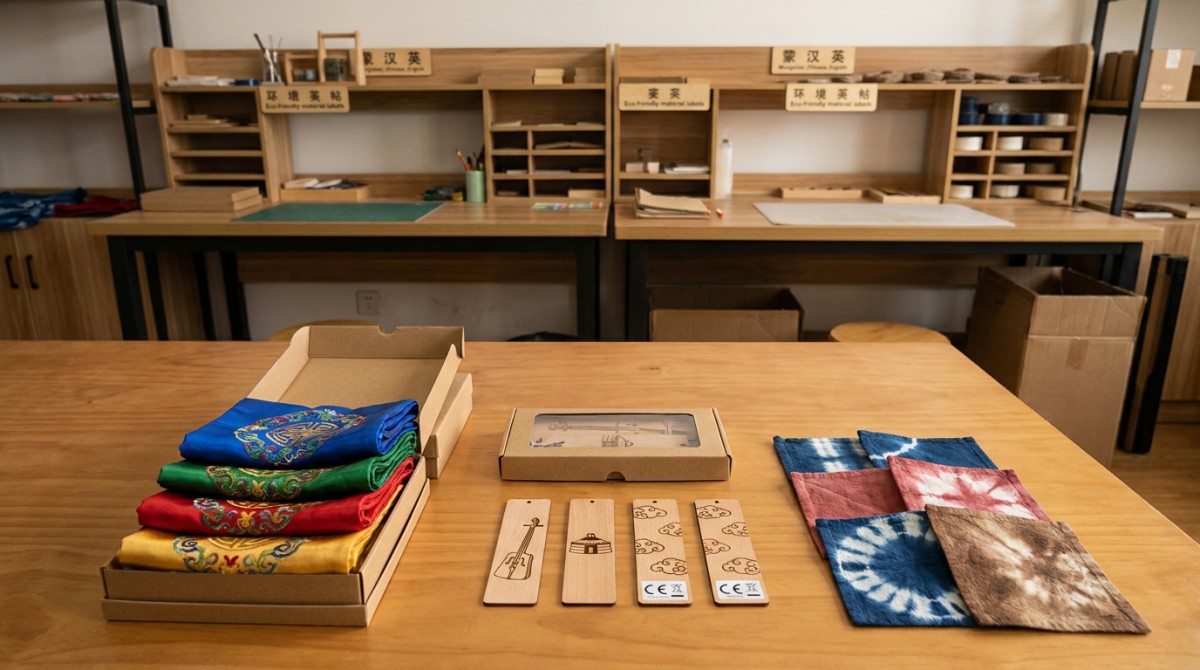
On May 17, Dongsheng District, Ordos, Inner Mongolia, held the ‘Cultural and Museum Resources into Scenic Areas’ event at the Botanical Garden Theme Park, while simultaneously announcing that 12 intangible cultural heritage workshops within the district had opened small-batch OEM services to overseas buyers, lowering the minimum order quantity (MOQ) to 30–50 pieces and supporting English manuals, EU CE label application, and FSC-certified paper packaging.
Which Sub-sectors Will Be Affected
Direct trading enterprises: this mainly refers to foreign trade companies, independent website operators, and overseas distributors engaged in the export of intangible cultural heritage-related cultural and creative products. The substantial reduction in MOQ significantly lowers their product selection trial-and-error costs and inventory pressure, particularly benefiting small and medium-sized buyers focused on the European handicraft market, campus gift channels, or independent designer brands; however, it also compels them to improve their localized compliance response capabilities—for example, CE label application must match specific product categories and cannot be completed by simply affixing a label.
Raw material procurement enterprises: including FSC-certified paper suppliers, eco-friendly ink manufacturers, and distributors of traceable natural dyes. The policy’s clear requirement for FSC paper packaging and compliant labeling will drive upstream green material procurement standards toward the export end; in the short term, it may intensify regional shortages of high-quality packaging material supply, but in the medium to long term, it will help establish a localized supplier list that meets standards such as EU EN 71-3.
Processing and manufacturing enterprises: specifically referring to small and medium-sized handicraft cooperatives, studios of intangible cultural heritage inheritors, and operators of lightweight flexible production lines undertaking intangible cultural heritage OEM work. The drop in MOQ to 30–50 pieces means greater order fragmentation, placing higher demands on production scheduling, small-batch quality inspection, and multilingual documentation processing capabilities; some workshops lacking digital order intake systems may face bottlenecks in order conversion efficiency.
Supply chain service enterprises: covering cross-border logistics service providers (especially those focused on dedicated small-parcel lines), compliance consulting agencies, multilingual technical documentation translation teams, and third-party testing agents. Demand for CE label application services will grow structurally, but attention is needed: CE is not a certification but a self-declaration, and in practice, conformity assessment must be completed by a qualified EU Authorized Representative—Dongsheng District has not yet disclosed whether it has introduced a supporting mechanism for such representatives, so there is a potential risk of implementation gaps at this stage.
Key Focus Areas and Response Measures for Relevant Enterprises or Practitioners
Clarify the Responsible Party and Implementation Path for CE Compliance
Enterprises must clarify whether CE label application is completed independently by the workshop, entrusted to an overseas EU Authorized Representative, or reliant on a platform/freight forwarder as a fallback. If it is the latter, they need to verify the validity of that representative’s qualifications and the product categories covered, in order to avoid notifications from EU Market Surveillance Authorities (MSA) caused by inaccurate CE declarations.
Establish an SOP for Rapid Response to Small Orders
For orders of 30–50 pieces, it is recommended to break the process down into six steps: ‘order intake—material pre-inspection—bilingual BOM confirmation—first-sample CE labeling verification—FSC packaging traceability filing,’ compressing the cycle time to within 72 hours to avoid buyers abandoning orders due to lengthy procedures.
Prudently Assess the Feasibility of Passing on FSC Packaging Costs
FSC-certified paper materials carry an average premium of 12%–18%, and under small-order scenarios, the increase in unit cost is even more pronounced. Enterprises should calculate the break-even point under different MOQ levels and list a ‘sustainable packaging surcharge’ separately in quotations to improve buyers’ awareness and acceptance of ESG premiums.
Editorial Viewpoint / Industry Observation
Observably, this initiative is less a wholesale policy breakthrough and more a targeted operational experiment in cultural trade facilitation. The 30–50 MOQ threshold aligns precisely with the median trial order size reported by EU-based indie gift retailers (per 2025 Craft Export Survey), suggesting data-informed design rather than symbolic gesture. However, scalability hinges on whether supporting infrastructure — especially qualified EU representatives and FSC chain-of-custody verification — can be deployed at workshop level without inflating unit costs beyond viability. Analysis shows that without parallel investment in digital compliance toolkits (e.g., auto-generated CE DoC templates, FSC certificate QR traceability), fragmentation risks outweighing efficiency gains.
Conclusion
This measure by Dongsheng District should not be simply understood as ‘lowering the threshold,’ but rather as an adaptive adjustment of cultural production capacity for the long-tail market. It does not change the fundamental constraints on intangible cultural heritage products going overseas—such as the degree of design internationalization, intellectual property rights confirmation capabilities, and customer service responsiveness across time zones—but it does provide a practical point of entry at the levels of order granularity and compliance interfaces. What deserves more attention at present is whether similar models can form differentiated replication in intangible cultural heritage-rich areas such as Pingyao in Shanxi and Qiandongnan in Guizhou, rather than homogenously competing in the low-MOQ track.
Information Source Notes
Announcement on the official website of the People’s Government of Dongsheng District, Ordos City (released on May 17, 2026); Dongsheng District Bureau of Culture and Tourism’s “Detailed Rules for the Implementation of Cross-border Services by Intangible Cultural Heritage Workshops in 2026 (Trial)”; European Commission’s “Guide to the Use of the CE Marking (2024 Revised Edition).” Note: details such as the specific implementing entities for CE label application, the directory of FSC-certified paper suppliers, and the detailed production capacity list of the 12 workshops are still pending further official disclosure and will continue to be tracked and updated.
Your 1:1 travel consultant will respond within 1 business day
How to plan your trip
- Hebei Launches Five “Trendy Hebei” Premium Tourism Routes for Inbound Travelers, Moving Toward Standardized Offerings
- The 12th Qionghai Tanmen Coastal Foraging Festival Opens on August 16
- Guangxi’s Digital Silk Road Accelerates: Orah Mandarin Juice Secures an Italian Order, Drawing Attention to Export Standards for Souvenirs
- New Inquiry Triggered by Coastal Cultural Tourism Space Standards
- Zhuanghe’s agro-cultural tourism model draws ASEAN attention, highlighting the compliance requirements for the internationalization of camping and intangible cultural heritage handicrafts
Monthly travel guide
- Typhoon “White Dolphin” Forces Henan Scenic Areas to Close, Putting Summer Ground-Handling Services Under Pressure
- RCEP Implementing Rules for Indonesia Take Effect: Zero Tariffs for Cultural and Tourism Services Alongside Strict Customer Service Requirements
- Saudi Arabia’s New SASO Regulations Take Effect: Taqat Certification Required Before Chinese-Language Cultural Tourism Services Can Access Visit Saudi
- Zhengzhou Launches a Dedicated LCL Shipping Route for Cultural and Tourism Materials, Cutting Freight Costs by 18%
- Luoyang Cold Chain Intensification: Cultural and Creative Exports Delivered in 9 Days
- Expedited Pre-Approval for Group Visas to Three Southeast Asian Countries
- Tightening air freight capacity at Zhengzhou Airport delays the delivery of cultural and tourism materials
- Vietnam's New Regulations on Bus Monitoring Requirements for Group Tours
- Saudi SAMA New Regulations on Travel Liability Insurance Compliance Preparation
- Japanese tourists' new regulations for entering Henan local transport vehicles
- Wai Gao Qiao Wen Travel customs bonded warehouse summer group equipment fast lane
- JTB Warning: Risks in Henan’s September Red Leaf Family Tour Purchases
Popular destinations
- China's Henan Province 144-Hour Visa-Free Transit Policy in 2026: Latest Regulations & In-Depth Travel Strategies
- The China-Europe Railway Express (Zhengzhou) Launches a Dedicated Train for Culture and Tourism Equipment, Cutting Customs Clearance Time to 48 Hours
- RCEP Cultural and Tourism Services Commitment Upgrade: Faster Market Access for Chinese Outbound Tourism Service Providers in Vietnam and Malaysia
- Japan to Introduce a Credit Point System for Chinese-Speaking Tour Guides, Trial Operation in August
- The EU Clarifies That Digital Platforms for Culture and Tourism Are Subject to GDPR Regulation
Why choose us

High cost-performance and transparent experience
Offer astonishing low prices without hidden tourism traps, enabling travelers to explore at lower costs while avoiding unnecessary spending loopholes, ensuring transparent consumption.

Personalization and dedicated service
Support 100% free customization, paired with one-on-one expert service, crafting exclusive itineraries based on travelers' specific needs, while providing professional guidance to enhance the personalization and professionalism of the journey.

Premium itinerary planning
Compact yet rich itineraries allow travelers to experience more within limited time; simultaneously, carefully selected hotels in prime locations provide convenient lodging conditions, overall enhancing travel comfort and experience.