Welcome to Our Travel Agency!




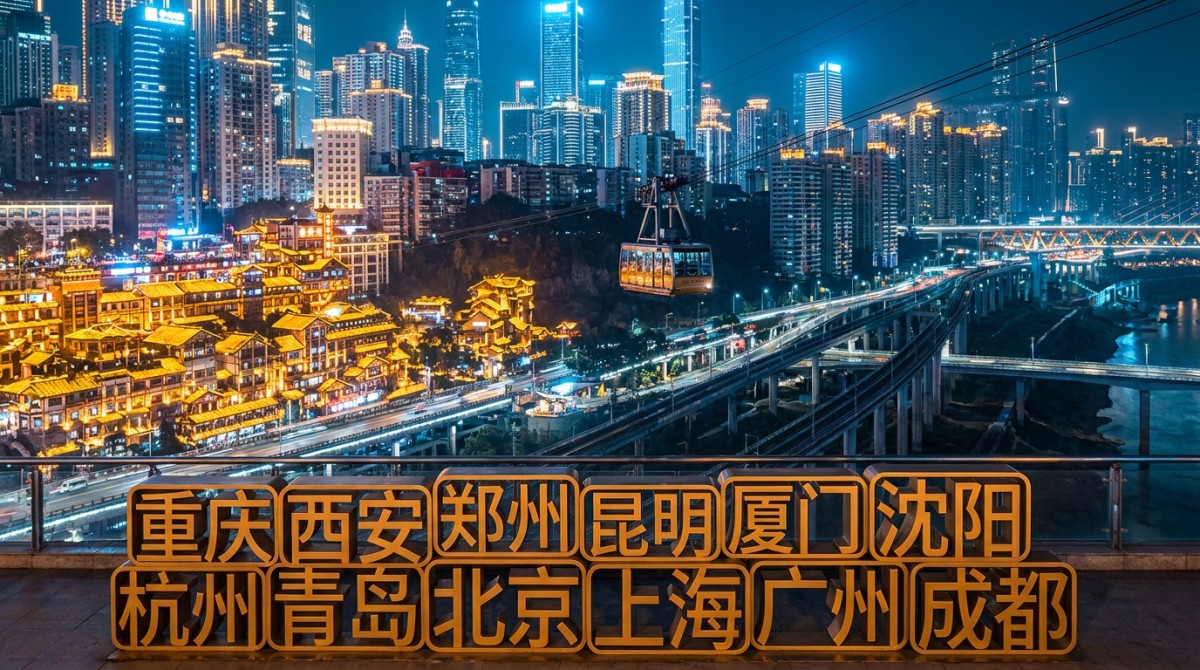
On May 9, 2026, the Ministry of Culture and Tourism officially announced that Chongqing had been awarded the title of ‘Top 10 Cultural and Tourism Destinations in China’, and simultaneously declared that the ports eligible for the 144-hour transit visa-free policy would be expanded from the original 6 to 12. This expansion is directly related to the improvement of inbound tourism facilitation and will have a structural impact on cross-border services, regional coordination, product design, and supporting保障 across the cultural and tourism industry chain, marking the evolution of China’s inbound tourism policy from ‘single-point breakthrough’ to ‘hub coordination’.
Event Overview
On May 9, 2026, the Ministry of Culture and Tourism issued the Notice on Announcing the List of China’s Top 10 Cultural and Tourism Destinations for 2026 and Optimizing Measures to Facilitate Inbound Tourism, confirming that Chongqing had been selected as one of the ‘Top 10 Cultural and Tourism Destinations in China’ for two consecutive years. The document clearly states: starting from June 1, 2026, the ports eligible for the 144-hour transit visa-free policy will increase from the original 6, namely Beijing, Shanghai, Guangzhou, Chengdu, Xi’an (previously included), and Chongqing (previously included), by adding 6 new ports including Zhengzhou, Kunming, Xiamen, Shenyang, Hangzhou, and Qingdao, bringing the total to 12. Among them, Xi’an, Zhengzhou, Kunming, and Xiamen are included for the first time; although Luoyang does not have a port, it was explicitly positioned by the Ministry of Culture and Tourism in the supporting interpretation as a ‘Central Plains cultural and tourism transit hub’.
Which Sub-sectors Will Be Affected
Direct trade enterprises: refers to enterprises engaged in cross-border distribution of cultural and tourism products, B2B exports by international travel agencies, operations of multilingual OTA platforms, etc. After the policy expansion, coverage of major direct-flight destinations in Europe and the Middle East will increase, the customer acquisition radius for inter-provincial linked itineraries (such as the ‘Xi’an—Luoyang—Zhengzhou—Kaifeng’ cultural corridor) will expand, and order response cycles will shorten, but there will also be a need to simultaneously upgrade multilingual service capabilities and visa compliance review processes.
Raw material procurement enterprises: specifically refers to enterprises that develop cultural and creative derivative products, intangible cultural heritage handicraft material kits, festival experience consumables, etc. based on regional cultural resources. As transit travelers’ length of stay increases (144 hours≈6 days), demand for lightweight cultural and tourism products for ‘buy and use immediately’ will rise, and procurement rhythms will trend toward higher frequency and smaller batch sizes; the bargaining power for regional centralized procurement of traditional craft raw materials in places such as Luoyang and Xi’an (such as Tang Sancai clay and leather shadow-puppet hide) may strengthen.
Processing and manufacturing enterprises: including hardware manufacturers of smart tour guide devices for scenic spots, multilingual AI voice translation terminals, portable cultural and tourism information interactive screens, etc. Newly added port cities generally lack mature inbound service infrastructure, driving demand for localized adaptation and retrofitting, such as the need to quickly complete customized production tasks including Arabic/Russian interface embedding, passport OCR recognition module upgrades, and localized deployment of offline map data.
Supply chain service enterprises: covering service providers such as cross-border payment settlement (supporting foreign card acceptance), multilingual call center outsourcing, international logistics customs clearance agencies, and localized overseas social media operations. The 12 ports fall under different customs districts and foreign exchange administration branches, so enterprises need to adapt to differentiated regulatory requirements; for example, Xiamen Port focuses on tourist sources from Southeast Asia, and payments need to be compatible with GrabPay/ShopeePay; Xi’an and Zhengzhou, meanwhile, need to strengthen the construction of settlement channels for the euro and riyal.
Key Focus Points and Response Measures for Relevant Enterprises or Practitioners
Pay attention to the degree of match between newly added port cities and source market structures
Zhengzhou, Xi’an, Kunming, and Xiamen are included for the first time, and the maturity of their international route networks varies: Xi’an has already opened direct flights to Frankfurt and Dubai; Kunming mainly connects to Bangkok and Singapore; Xiamen focuses on Taipei and Seoul; Zhengzhou is supported by cargo flights to Luxembourg, but its passenger routes are still in the cultivation stage. Enterprises should not allocate resources broadly and indiscriminately, but should instead use a three-dimensional model of ‘route—language—consumption preference’ to screen and select priority landing cities.
Attach importance to the practical connection mechanism of the ‘Central Plains cultural and tourism transit hub’
Although Luoyang does not have port qualifications, the Ministry of Culture and Tourism document has for the first time assigned it the functional positioning of a ‘transit hub’. This means that inter-provincial linked itinerary products need to establish a standardized service chain of ‘port entry—high-speed rail transfer—cultural route linkage’. Enterprises should work with railway bureaus and local cultural and tourism groups to promote mutual recognition of ‘one-ticket pass’ electronic vouchers, pilot programs for through-checked baggage, and the co-construction of multilingual in-station guidance systems.
Accelerate the development of visa compliance capabilities
The applicable conditions for the 144-hour visa-free policy include ‘holding an interline ticket to a third country (region) with a confirmed date and seat within 144 hours’. Travel agencies and OTA platforms must upgrade their order systems and embed automatic verification logic (such as flight number validity and comparison of departure/destination country codes) to avoid compliance risks caused by traveler detention due to ticket defects.
Editorial Viewpoint / Industry Observation
显然,这次扩容并不仅仅是数量上的增加,而是标志着入境旅游治理向‘hub-and-spoke’模式的战略转型——其中门户城市(如Xi’an、Zhengzhou)承担监管和物流节点功能,而内陆文化枢纽(如Luoyang)则承担体验聚合角色。分析表明,真正的瓶颈已不再在于签证政策本身,而在于非沿海枢纽之间交通、支付、语言和数据系统的互操作性。当前比政策发布更关键的,是跨部门协同推进的速度——尤其是在移民管理部门、铁路运营方和省级文化主管部门之间。
Conclusion
This policy adjustment is not an isolated move, but a key step in building China’s cultural and tourism ecosystem of ‘institutional opening-up’. Its significance lies not only in boosting short-term visitor flows, but also in forcing hub cities in central and western China to strengthen soft-service infrastructure and promoting inter-provincial cultural and tourism resources from ‘physical connectivity’ to ‘service integration’. Rational observation suggests that over the next 12–18 months, industry differentiation will intensify: enterprises with capabilities in multi-port coordinated operations, transit-scenario productization, and compliant technical response are expected to gain structural growth dividends.
Information Source Notes
Official source: Official website of the Ministry of Culture and Tourism of the People’s Republic of China, Notice on Announcing the List of China’s Top 10 Cultural and Tourism Destinations for 2026 and Optimizing Measures to Facilitate Inbound Tourism (Wenlvfa〔2026〕No.28), released on May 9, 2026.
To be continuously observed: progress in the issuance of implementation rules by border inspection departments at newly added ports; changes in actual international flight operation rates and load factors in places such as Zhengzhou and Kunming; the specific implementation plan for the ‘Central Plains cultural and tourism transit hub’ and the actual rollout of inter-provincial fiscal subsidy mechanisms.
Your 1:1 travel consultant will respond within 1 business day
How to plan your trip
- Hebei Launches Five “Trendy Hebei” Premium Tourism Routes for Inbound Travelers, Moving Toward Standardized Offerings
- The 12th Qionghai Tanmen Coastal Foraging Festival Opens on August 16
- Guangxi’s Digital Silk Road Accelerates: Orah Mandarin Juice Secures an Italian Order, Drawing Attention to Export Standards for Souvenirs
- New Inquiry Triggered by Coastal Cultural Tourism Space Standards
- Zhuanghe’s agro-cultural tourism model draws ASEAN attention, highlighting the compliance requirements for the internationalization of camping and intangible cultural heritage handicrafts
Monthly travel guide
- Typhoon “White Dolphin” Forces Henan Scenic Areas to Close, Putting Summer Ground-Handling Services Under Pressure
- RCEP Implementing Rules for Indonesia Take Effect: Zero Tariffs for Cultural and Tourism Services Alongside Strict Customer Service Requirements
- Saudi Arabia’s New SASO Regulations Take Effect: Taqat Certification Required Before Chinese-Language Cultural Tourism Services Can Access Visit Saudi
- Zhengzhou Launches a Dedicated LCL Shipping Route for Cultural and Tourism Materials, Cutting Freight Costs by 18%
- Luoyang Cold Chain Intensification: Cultural and Creative Exports Delivered in 9 Days
- Expedited Pre-Approval for Group Visas to Three Southeast Asian Countries
- Tightening air freight capacity at Zhengzhou Airport delays the delivery of cultural and tourism materials
- Vietnam's New Regulations on Bus Monitoring Requirements for Group Tours
- Saudi SAMA New Regulations on Travel Liability Insurance Compliance Preparation
- Japanese tourists' new regulations for entering Henan local transport vehicles
- Wai Gao Qiao Wen Travel customs bonded warehouse summer group equipment fast lane
- JTB Warning: Risks in Henan’s September Red Leaf Family Tour Purchases
Popular destinations
- China's Henan Province 144-Hour Visa-Free Transit Policy in 2026: Latest Regulations & In-Depth Travel Strategies
- Japan to Introduce a Credit Point System for Chinese-Speaking Tour Guides, Trial Operation in August
- The EU Clarifies That Digital Platforms for Culture and Tourism Are Subject to GDPR Regulation
- Thailand Upgrades “China Ready” Certification, Adding AI Voice Compliance Testing for Chinese-Language Commentary
- Japan Revises the Tourism Services Industry Act, Introducing a Credit Points System for Chinese-Speaking Tour Guides
Why choose us

High cost-performance and transparent experience
Offer astonishing low prices without hidden tourism traps, enabling travelers to explore at lower costs while avoiding unnecessary spending loopholes, ensuring transparent consumption.

Personalization and dedicated service
Support 100% free customization, paired with one-on-one expert service, crafting exclusive itineraries based on travelers' specific needs, while providing professional guidance to enhance the personalization and professionalism of the journey.

Premium itinerary planning
Compact yet rich itineraries allow travelers to experience more within limited time; simultaneously, carefully selected hotels in prime locations provide convenient lodging conditions, overall enhancing travel comfort and experience.