Welcome to Our Travel Agency!




Travel Guide
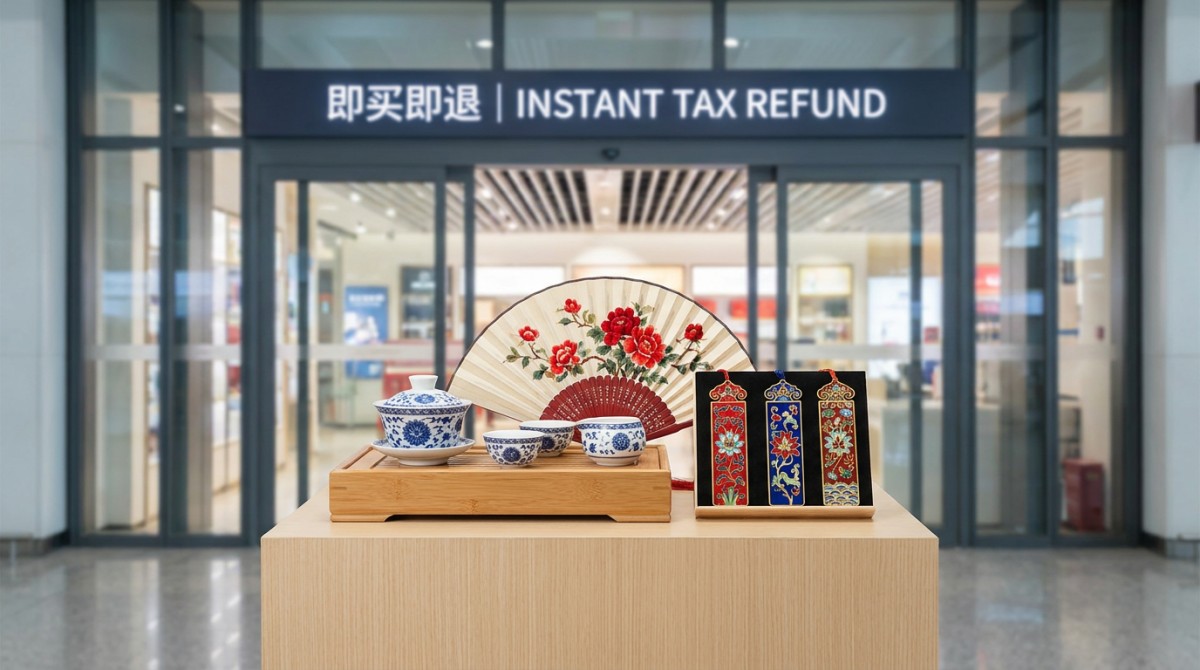
As of May 15, 2026, China has implemented a unilateral visa-free policy for 50 countries, and more than 8000 tax refund stores nationwide have launched the ‘buy now, refund now’ service. This measure has significantly improved the convenience of spending and the willingness to stay longer for overseas tourists in China, directly relating to the export of cultural and tourism products, duty-free cultural and creative supply chains, cross-border tourism distribution, and B2B destination service procurement. Relevant enterprises need to pay attention to the pace of policy implementation and the compatibility of localized service capabilities.
Event Overview
As of May 15, 2026, China has implemented a unilateral visa-free policy for 50 countries; nationwide, more than 8000 tax refund stores have enabled the ‘buy now, refund now’ service. This information reflects the currently publicly confirmed policy progress and does not involve undisclosed details such as the specific list of countries, tax refund limits, applicable product scope, or technical system deployment details.
Which Segments Are Affected
Cultural and Tourism Product Export Enterprises
Visa-free entry combined with ‘buy now, refund now’ shortens the decision-making path for overseas consumers and improves the on-site conversion rate of high-unit-price, highly identifiable cultural and tourism products, such as intangible cultural heritage derivatives and regionally distinctive handicrafts. The impact is mainly reflected in faster end-market sales pacing, greater order fragmentation, and higher requirements for small-batch rapid response delivery capabilities.
Duty-free Cultural and Creative Supply Chain Enterprises
The expansion of tax refund stores means more offline touchpoints are being included in the tax refund system, driving cultural and creative products with compliant qualifications, traceability, and Chinese and multilingual labels into mainstream circulation channels. The impact is mainly reflected in increased requirements for product compliance certification, such as tax refund product coding registration, packaging standardization, including tax refund prompt elements, and inventory turnover efficiency.
Cross-border Tourism Distribution and B2B Destination Service Providers
The policy lowers the entry barriers and consumption friction for overseas tourists visiting China, amplifying the value of destination resource integration. The impact is mainly reflected in the following: response efficiency of Chinese destination service providers to overseas travel agencies, multilingual service capabilities, and the ability to integrate tax refund routing design into customized itineraries have become key screening criteria; B2B procurement windows are expanding, but requirements for the stability of localized delivery are also increasing accordingly.
What Relevant Enterprises or Practitioners Should Focus On and How to Respond at Present
Pay Attention to Follow-up Official Statements or Policy Changes
Continuously track updates to implementation rules jointly issued by the National Immigration Administration, the Ministry of Finance, the State Taxation Administration, and the Ministry of Commerce, especially the clear timetable for operational provisions regarding the ‘buy now, refund now’ system interface standards, compatibility with overseas payment tools, and optimization of departure verification procedures.
Pay Attention to Changes in Key Categories, Key Markets, or Key Business Links
Give priority to sorting out best-selling product lists targeting tourists from countries that have obtained visa-free eligibility, such as Japan, South Korea, France, and Italy, which are among the first high-frequency source markets, focus on the price bands they prefer under tax refund scenarios, such as the 500–3000 yuan range, and product categories with strong gift attributes, and review whether existing SKUs meet the filing requirements of the tax refund system.
Differentiate Between Policy Signals and Actual Business Implementation
The number of visa-free countries and the number of tax refund stores are macro indicators and do not directly equate to increased customer flow or sales conversion. Enterprises should evaluate short-term business flexibility in combination with micro-level implementation conditions such as the coverage density of tax refund stores at their own cooperative ports of exit, such as Beijing Capital Airport, Shanghai Pudong Airport, and Guangzhou Baiyun Airport, the progress of POS system access, and the completion level of multilingual staff training.
Prepare in Advance for Procurement, Supply Chain, Communication, or Contingency Plans
For partner merchants already connected to the ‘buy now, refund now’ system, initiate the printing of tax refund labels, updating of multilingual instructions, and staff training on tax refund process scripts; for enterprises planning to expand overseas distribution channels, simultaneously prepare product documentation packages that comply with the tax refund declaration logic of target markets, including basic documents such as HS codes, certificates of origin, and the basis for retail price verification.
Editorial Viewpoint / Industry Observation
Observably, this policy package functions primarily as an infrastructure-level enabler—not an immediate demand catalyst. The expansion of unilateral visa exemption and instant tax refund coverage signals a structural shift toward lowering institutional friction for inbound tourism, but actual transaction volume growth remains contingent on downstream execution: airport staff proficiency, cross-border payment interoperability, and real-time inventory visibility across participating stores. From an industry perspective, it is more accurate to interpret this development as a medium-term alignment signal for supply chain readiness rather than a short-term sales trigger. Continuous monitoring of operational KPIs—such as average refund processing time per store, foreign card acceptance rate at point-of-sale, and post-refund customer satisfaction scores—will be critical to gauge real-world impact.
Conclusion: This policy package is an important step in optimizing the institutional environment for inbound tourism, and its core value lies in systematically reducing the time cost and operational complexity of overseas tourists’ spending in China. At present, it is more appropriate to understand it as a stress test of the circulation efficiency of cultural and tourism products, the responsiveness of cross-border services, and the compliance level of supply chains, rather than as a certain source of immediate business growth. Industry participants should take “capability building” as the orientation, focus on verifiable implementation nodes, and avoid simply equating policy coverage with market opportunity scale.
Source note: Mainly based on phased policy bulletins jointly issued by the National Immigration Administration, the Ministry of Finance, the State Taxation Administration, and the Ministry of Commerce; among them, ‘50 countries’, ‘May 15, 2026’, and ‘more than 8000 tax refund stores’ are publicly confirmed data. Items pending continued observation include the approval rate of tax refund verification at various ports, the proportion of tourists of different nationalities actually using the ‘buy now, refund now’ service, and the progress of coverage rates for supporting cross-border payment tools.
Your 1:1 travel consultant will respond within 1 business day
How to plan your trip
- Hebei Launches Five “Trendy Hebei” Premium Tourism Routes for Inbound Travelers, Moving Toward Standardized Offerings
- The 12th Qionghai Tanmen Coastal Foraging Festival Opens on August 16
- Guangxi’s Digital Silk Road Accelerates: Orah Mandarin Juice Secures an Italian Order, Drawing Attention to Export Standards for Souvenirs
- New Inquiry Triggered by Coastal Cultural Tourism Space Standards
- Zhuanghe’s agro-cultural tourism model draws ASEAN attention, highlighting the compliance requirements for the internationalization of camping and intangible cultural heritage handicrafts
Monthly travel guide
- Typhoon “White Dolphin” Forces Henan Scenic Areas to Close, Putting Summer Ground-Handling Services Under Pressure
- RCEP Implementing Rules for Indonesia Take Effect: Zero Tariffs for Cultural and Tourism Services Alongside Strict Customer Service Requirements
- Saudi Arabia’s New SASO Regulations Take Effect: Taqat Certification Required Before Chinese-Language Cultural Tourism Services Can Access Visit Saudi
- Zhengzhou Launches a Dedicated LCL Shipping Route for Cultural and Tourism Materials, Cutting Freight Costs by 18%
- Luoyang Cold Chain Intensification: Cultural and Creative Exports Delivered in 9 Days
- Expedited Pre-Approval for Group Visas to Three Southeast Asian Countries
- Tightening air freight capacity at Zhengzhou Airport delays the delivery of cultural and tourism materials
- Vietnam's New Regulations on Bus Monitoring Requirements for Group Tours
- Saudi SAMA New Regulations on Travel Liability Insurance Compliance Preparation
- Japanese tourists' new regulations for entering Henan local transport vehicles
- Wai Gao Qiao Wen Travel customs bonded warehouse summer group equipment fast lane
- JTB Warning: Risks in Henan’s September Red Leaf Family Tour Purchases
Popular destinations
- China's Henan Province 144-Hour Visa-Free Transit Policy in 2026: Latest Regulations & In-Depth Travel Strategies
- Japan to Introduce a Credit Point System for Chinese-Speaking Tour Guides, Trial Operation in August
- The EU Clarifies That Digital Platforms for Culture and Tourism Are Subject to GDPR Regulation
- Thailand Upgrades “China Ready” Certification, Adding AI Voice Compliance Testing for Chinese-Language Commentary
- Japan Revises the Tourism Services Industry Act, Introducing a Credit Points System for Chinese-Speaking Tour Guides
Why choose us

High cost-performance and transparent experience
Offer astonishing low prices without hidden tourism traps, enabling travelers to explore at lower costs while avoiding unnecessary spending loopholes, ensuring transparent consumption.

Personalization and dedicated service
Support 100% free customization, paired with one-on-one expert service, crafting exclusive itineraries based on travelers' specific needs, while providing professional guidance to enhance the personalization and professionalism of the journey.

Premium itinerary planning
Compact yet rich itineraries allow travelers to experience more within limited time; simultaneously, carefully selected hotels in prime locations provide convenient lodging conditions, overall enhancing travel comfort and experience.