Welcome to Our Travel Agency!




Travel Guide
On May 11, 2026, the Tibet Autonomous Region officially published the monograph "Evaluation of Resource and Environmental Carrying Capacity and Suitability of Territorial Spatial Development in Tibet", which is the region's first systematic, full-coverage outcome of the resource and environment 'dual evaluation'. This monograph establishes the key technical support system required for environmental impact assessment approval of plateau cultural and tourism projects, forms standardized criteria for ecological sensitivity identification and grading of cultural and tourism development suitability, and directly relates to the environmental impact assessment procedures for newly built homestays, viewing platforms, and ecological trails in key scenic areas such as Namtso and Nyingchi. Relevant sub-sectors such as cultural and tourism investment, ecological infrastructure, and plateau tourism services should pay close attention to its implementation pace and practical application effectiveness.
Event Overview
On May 11, 2026, Tibet published the monograph "Evaluation of Resource and Environmental Carrying Capacity and Suitability of Territorial Spatial Development in Tibet". For the first time, the book systematically establishes a full-region ecological sensitivity atlas and a grading model for cultural and tourism development suitability across Tibet, and clearly states that the results will be applied to environmental assessment approvals for projects such as newly built homestays, viewing platforms, and ecological trails in key scenic areas such as Namtso and Nyingchi, with the approval cycle expected to be shortened by 30%.
Which sub-sectors will be affected
Plateau cultural and tourism project investment and development enterprises
As the environmental assessment approval cycle is expected to be shortened by 30%, this group will gain a more predictable time window in terms of early-stage project feasibility assessment, investment scheduling, and capital turnover efficiency. The impact is mainly reflected in the compression of the pre-environmental assessment period, the earlier identification of compliance risk points, and greater flexibility in adjusting cross-year development plans.
Ecological infrastructure design and construction units
The ecological sensitivity atlas and development suitability grading model in the monograph will directly affect the spatial siting, material selection, and construction process adaptation requirements for facilities such as viewing platforms and ecological trails. The impact is mainly reflected in the need to update design standards simultaneously, a possible increase in the frequency of field surveys and plan iterations, and the ability to respond to plateau ecological constraints becoming a core competitiveness indicator.
Foreign-funded and multinational cultural and tourism groups' business units in Tibet
Greater certainty in approvals will reduce the cost of institutional uncertainty in their investment decisions in Tibet. The impact is mainly reflected in the expected shortening of due diligence cycles, the need to incorporate 'dual evaluation' adaptation capability assessment into the logic for selecting local partners, and the possibility of increased confidence from overseas headquarters in project delivery schedules.
What key points should relevant enterprises or practitioners focus on, and how should they respond at present
Pay attention to the subsequent implementation rules and application lists officially released
At present, the monograph has been published, but how it will be embedded into the environmental assessment approval process, and whether operational guidelines or negative lists will be issued accordingly, still await further clarification from the competent departments of ecology and environment and natural resources. It is recommended that relevant enterprises continue to follow announcements on the official websites of the Department of Ecology and Environment of the Tibet Autonomous Region and the Department of Natural Resources, as well as information from policy interpretation meetings.
Sort out the ecological sensitivity grade classification of areas involved in existing and planned application projects
Key scenic areas such as Namtso and Nyingchi have been clearly listed as the first batch of application areas. Enterprises should, as soon as possible, compare the publicly released ecological sensitivity atlas and cultural and tourism suitability grading model in the monograph to preliminarily identify the classification results of the map units where their projects are located, and pre-assess the complexity of environmental assessment and the types of supplementary materials required.
Differentiate between policy signals and the actual pace of approval acceleration implementation
'Approval cycle shortened by 30%' is an expected target, not a mandatory time-limit commitment that takes effect immediately. Enterprises need to note: whether this target has a pilot phase, whether it will be implemented in stages, and whether it is linked to project type (such as new construction/renovation/expansion) should all be based on feedback from the actual acceptance window, and the publication of the monograph should not be equated with the full realization of faster approvals.
Launch optimization plans for internal environmental assessment coordination mechanisms in advance
It is recommended that development enterprises work jointly with environmental assessment agencies and design units to sort out, under the framework of the monograph, common issue lists and material templates for typical project types (such as standalone homestays and small viewing platforms), shorten cross-departmental collaboration response times, and avoid rework delays caused by misunderstandings.
Editorial Viewpoint / Industry Observation
Observably, this publication marks a formal transition from conceptual 'dual evaluation' practice to operational technical reference in Tibet's ecological governance framework. It is currently more of a foundational signal than an immediately executable regulatory instrument — its real-world impact hinges on integration depth with existing environmental review procedures and frontline enforcement consistency. From an industry perspective, the value lies not in immediate procedural simplification, but in the emerging standardization of spatial risk assessment logic for high-altitude tourism development. Continued attention is warranted as pilot applications unfold and inter-departmental coordination mechanisms become visible.
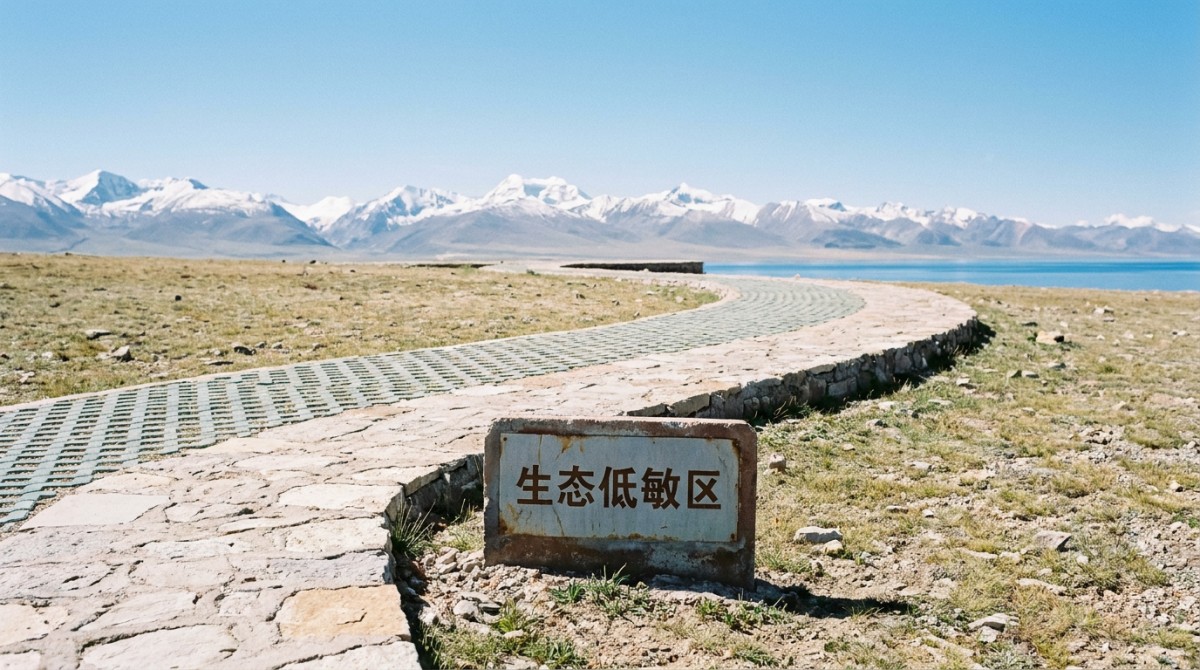
Conclusion: The publication of this monograph is an important milestone in building a coordinated mechanism between ecological governance and cultural and tourism development on the Tibetan Plateau. Its industry significance lies in providing, for the first time, measurable, comparable, and traceable resource and environmental constraint standards for plateau cultural and tourism projects. At present, it is more appropriate to understand it as the implementation preparation of a foundational technical tool, rather than an immediate restructuring of the approval process; relevant entities should grasp the main line with the rhythm of 'standards first, pilot follow-up, mechanism adaptation', and rationally assess the actual extent of its adjustment to their own business cycles and compliance strategies.
Information source note: Public information of the People's Government of the Tibet Autonomous Region; the monograph "Evaluation of Resource and Environmental Carrying Capacity and Suitability of Territorial Spatial Development in Tibet" (published in May 2026). Areas pending continued observation: whether the Department of Ecology and Environment of the Tibet Autonomous Region will issue supporting detailed operational rules for environmental assessment approval, the actual statistical results of approval duration for the first batch of application projects, and the progress of building inter-departmental data-sharing mechanisms.
Your 1:1 travel consultant will respond within 1 business day
How to plan your trip
- Hebei Launches Five “Trendy Hebei” Premium Tourism Routes for Inbound Travelers, Moving Toward Standardized Offerings
- The 12th Qionghai Tanmen Coastal Foraging Festival Opens on August 16
- Guangxi’s Digital Silk Road Accelerates: Orah Mandarin Juice Secures an Italian Order, Drawing Attention to Export Standards for Souvenirs
- New Inquiry Triggered by Coastal Cultural Tourism Space Standards
- Zhuanghe’s agro-cultural tourism model draws ASEAN attention, highlighting the compliance requirements for the internationalization of camping and intangible cultural heritage handicrafts
Monthly travel guide
- Typhoon “White Dolphin” Forces Henan Scenic Areas to Close, Putting Summer Ground-Handling Services Under Pressure
- RCEP Implementing Rules for Indonesia Take Effect: Zero Tariffs for Cultural and Tourism Services Alongside Strict Customer Service Requirements
- Saudi Arabia’s New SASO Regulations Take Effect: Taqat Certification Required Before Chinese-Language Cultural Tourism Services Can Access Visit Saudi
- Zhengzhou Launches a Dedicated LCL Shipping Route for Cultural and Tourism Materials, Cutting Freight Costs by 18%
- Luoyang Cold Chain Intensification: Cultural and Creative Exports Delivered in 9 Days
- Expedited Pre-Approval for Group Visas to Three Southeast Asian Countries
- Tightening air freight capacity at Zhengzhou Airport delays the delivery of cultural and tourism materials
- Vietnam's New Regulations on Bus Monitoring Requirements for Group Tours
- Saudi SAMA New Regulations on Travel Liability Insurance Compliance Preparation
- Japanese tourists' new regulations for entering Henan local transport vehicles
- Wai Gao Qiao Wen Travel customs bonded warehouse summer group equipment fast lane
- JTB Warning: Risks in Henan’s September Red Leaf Family Tour Purchases
Popular destinations
- China's Henan Province 144-Hour Visa-Free Transit Policy in 2026: Latest Regulations & In-Depth Travel Strategies
- Japan to Introduce a Credit Point System for Chinese-Speaking Tour Guides, Trial Operation in August
- The EU Clarifies That Digital Platforms for Culture and Tourism Are Subject to GDPR Regulation
- Thailand Upgrades “China Ready” Certification, Adding AI Voice Compliance Testing for Chinese-Language Commentary
- Japan Revises the Tourism Services Industry Act, Introducing a Credit Points System for Chinese-Speaking Tour Guides
Why choose us

High cost-performance and transparent experience
Offer astonishing low prices without hidden tourism traps, enabling travelers to explore at lower costs while avoiding unnecessary spending loopholes, ensuring transparent consumption.

Personalization and dedicated service
Support 100% free customization, paired with one-on-one expert service, crafting exclusive itineraries based on travelers' specific needs, while providing professional guidance to enhance the personalization and professionalism of the journey.

Premium itinerary planning
Compact yet rich itineraries allow travelers to experience more within limited time; simultaneously, carefully selected hotels in prime locations provide convenient lodging conditions, overall enhancing travel comfort and experience.