Welcome to Our Travel Agency!




On May 15, Wenshan Prefecture announced the selection of cultural and tourism promotion officers for 2026. This move is not a routine personnel arrangement, but a key institutional practice of China in promoting the standardized export of health and wellness cultural tourism services under the RCEP framework. For the first time, this announcement directly links talent capability indicators with the cross-border service procurement evaluation system, marking that cultural and tourism service trade is moving from the stage of ‘project matching’ to a new cycle driven by ‘capability certification’.
Event Overview
On May 15, Wenshan Prefecture announced the selection of cultural and tourism promotion officers for 2026. The selection is based on the “Ten Measures to Strengthen the Building of Tourism Talent Teams”, which clearly requires candidates to possess hard indicators such as bilingual ability, new media communication capability, and health and wellness knowledge certification. The announcement did not disclose the specific list of selected candidates, only stating that the review process has been completed and has entered the stage of public supervision.
Which Sub-sectors Will Be Affected
Direct Trade Enterprises
Travel agencies and platform-based service providers that sell health and wellness travel packages and migratory bird-style retirement routes to RCEP countries will be directly affected. Because the capability profile of promotion officers will essentially form a reference framework for overseas buyers to evaluate the professional delivery capabilities of Chinese destination service providers, indicators such as their bilingual service ability, health risk response communication scripts, and knowledge of cross-border payment and insurance coordination will gradually be incorporated into the technical response clauses of overseas B2B tenders. The impact is reflected in: increased weighting of technical scores in bidding, the need for localized service proposals to simultaneously provide multilingual SOP documents, and the need to embed health and wellness service standard checkpoints into customer complaint traceability mechanisms.
Raw Material Procurement Enterprises
Enterprises mainly engaged in medicinal and edible homologous plants (such as notoginseng and dendrobium), ethnic medicine auxiliary materials, and age-friendly health equipment consumables will face indirect transmission pressure. As promotion officers are required to provide certified explanations of the scientific basis of health and wellness resources, downstream service providers will significantly raise procurement requirements for traceability certification of upstream raw materials, international certification qualifications (such as GACP, ISO 22000), and support from clinical efficacy literature. The impact is reflected in: suppliers need to proactively strengthen their compliance documentation packages, and a single product test report is no longer sufficient to meet the scenario-based verification needs of the cultural and tourism service chain.
Processing and Manufacturing Enterprises
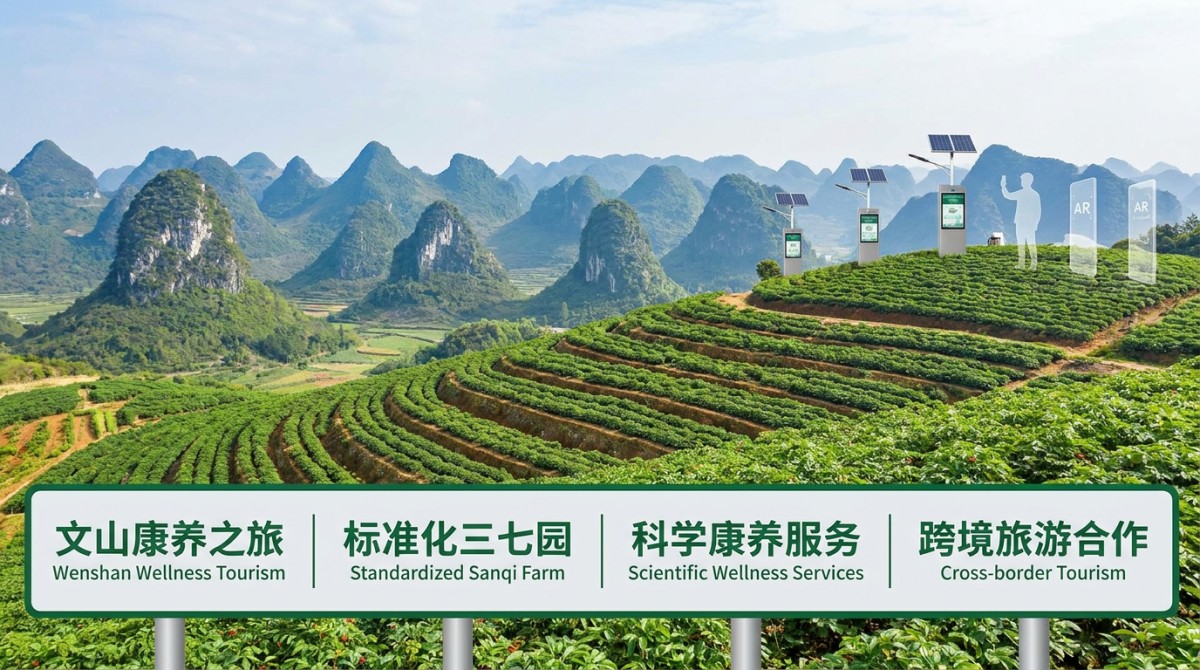
Enterprises engaged in customized production of health and wellness devices, contract manufacturing of ethnic medicine preparations, and development of smart travel accommodation terminals need to respond to the service delivery logic carried by promotion officers. For example, the ‘notoginseng dietary intervention dynamic line’ demonstrated by promotion officers will force food processing enterprises to develop matching portable packaging with functional labeling; the AR guide equipment used by promotion officers will drive hardware iterations featuring multilingual interactive interfaces and compliance with ASEAN data localization requirements. The impact is reflected in: product design needs to embed service scenario scripts at the front end, and certification pathways must cover the access lists for medical/health service equipment in target countries.
Supply Chain Service Enterprises
Third-party institutions providing cross-border personnel qualification certification, multilingual content localization, and digital evidence preservation for cultural and tourism services will usher in structural opportunities. In the current public notice standards, ‘new media communication capability’ points to operational data on platforms such as TikTok/YouTube, while ‘health and wellness knowledge certification’ requires alignment with the training system filed with domestic health commissions and the mutual recognition mechanism of continuing education credits in ASEAN countries. Such cross-system coordination work cannot be independently completed by cultural and tourism entities alone. The impact is reflected in: service purchasers will be more inclined to choose integrated service providers with full-chain capabilities in ‘certification—content—evidence preservation’, rather than single-item tool providers.
Key Focus Points and Response Measures for Relevant Enterprises or Practitioners
Conduct Internal Talent Capability Audits Against the Capability Profile
Enterprises should use the three hard indicators in the announcement—bilingual ability, new media communication capability, and health and wellness knowledge certification—as benchmarks to verify whether existing destination service teams possess corresponding level certificates (such as CATTI Level 2 Interpretation, TikTok official creator certification, and the National Administration of Traditional Chinese Medicine health and wellness instructor certificate), so as to avoid treating vague expressions such as ‘can speak English’ and ‘has posted short videos’ as equivalent to meeting the standard.
Transform Talent Qualifications into Verifiable Elements of Service Deliverables
When submitting service proposals to RCEP buyers, promotion officer qualifications need to be translated into concrete delivery assurance clauses: for example, ‘equipped with ≥2 certified health and wellness interpreters, with an electronic signature system for English/Thai/Vietnamese trilingual health risk disclosure forms throughout the process’, rather than merely listing personnel resumes. This can improve the technical bid scoring rate and reduce the probability of service disputes at a later stage.
Launch a Pre-Coordination Mechanism with Certification Institutions
Given that health and wellness knowledge certification has not yet been unified nationwide, enterprises should proactively connect with training institutions filed with the Yunnan Provincial Health Commission and the China—ASEAN Education and Training Center to confirm whether their courses have been listed by health authorities in countries such as Laos and Vietnam as recognized sources of continuing education credits, so as to avoid investing training resources without being able to form cross-border credit endorsement afterward.
Editorial Viewpoint / Industry Observation
Obviously, this is not a local talent selection event but a pilot implementation of China’s ‘service capability certification’ strategy in the RCEP context. Analysis shows that the Wenshan standard deliberately avoids prescribing service content (e.g., specific therapy protocols), focusing instead on verifiable human capabilities — a design choice that lowers regulatory friction for cross-border adoption. From an industry perspective, it signals a shift from ‘selling destinations’ to ‘licensing delivery competence’, where third-party verification bodies may soon emerge as new gatekeepers in the health tourism value chain.
Conclusion
This announcement by Wenshan Prefecture is essentially a pragmatic attempt to transform talent policy into an interface for service trade rules. Its significance does not lie in how many promotion officers are selected, but in establishing a measurable, comparable, and transferable language for expressing health and wellness cultural tourism service capabilities. What is currently more worthy of attention is whether this capability profile can be upgraded to a provincial standard in Yunnan within the year and be incorporated into the annexes of the service trade agenda under the China—ASEAN Free Trade Agreement. More appropriately, this can be understood as the practice of the ‘minimum viable unit’ for China’s cultural and tourism service industry to participate in the formulation of global rules.
Information Source Notes
Public notice documents from the official website of the Wenshan Prefecture Bureau of Culture and Tourism (May 15, 2024);“Ten Measures to Strengthen the Building of Tourism Talent Teams” (Yun Wenlv Fa〔2023〕XX No.);Article 8 of the RCEP chapter on trade in services, the clause on ‘mutual recognition of professional service qualifications’. Pending continued observation: whether the Yunnan Provincial Department of Culture and Tourism will issue the supporting “Guidelines for the Evaluation of Health and Wellness Cultural Tourism Service Delivery Capabilities” in the third quarter of 2024.
Your 1:1 travel consultant will respond within 1 business day
How to plan your trip
- Hebei Launches Five “Trendy Hebei” Premium Tourism Routes for Inbound Travelers, Moving Toward Standardized Offerings
- The 12th Qionghai Tanmen Coastal Foraging Festival Opens on August 16
- Guangxi’s Digital Silk Road Accelerates: Orah Mandarin Juice Secures an Italian Order, Drawing Attention to Export Standards for Souvenirs
- New Inquiry Triggered by Coastal Cultural Tourism Space Standards
- Zhuanghe’s agro-cultural tourism model draws ASEAN attention, highlighting the compliance requirements for the internationalization of camping and intangible cultural heritage handicrafts
Monthly travel guide
- Typhoon “White Dolphin” Forces Henan Scenic Areas to Close, Putting Summer Ground-Handling Services Under Pressure
- RCEP Implementing Rules for Indonesia Take Effect: Zero Tariffs for Cultural and Tourism Services Alongside Strict Customer Service Requirements
- Saudi Arabia’s New SASO Regulations Take Effect: Taqat Certification Required Before Chinese-Language Cultural Tourism Services Can Access Visit Saudi
- Zhengzhou Launches a Dedicated LCL Shipping Route for Cultural and Tourism Materials, Cutting Freight Costs by 18%
- Luoyang Cold Chain Intensification: Cultural and Creative Exports Delivered in 9 Days
- Expedited Pre-Approval for Group Visas to Three Southeast Asian Countries
- Tightening air freight capacity at Zhengzhou Airport delays the delivery of cultural and tourism materials
- Vietnam's New Regulations on Bus Monitoring Requirements for Group Tours
- Saudi SAMA New Regulations on Travel Liability Insurance Compliance Preparation
- Japanese tourists' new regulations for entering Henan local transport vehicles
- Wai Gao Qiao Wen Travel customs bonded warehouse summer group equipment fast lane
- JTB Warning: Risks in Henan’s September Red Leaf Family Tour Purchases
Popular destinations
- China's Henan Province 144-Hour Visa-Free Transit Policy in 2026: Latest Regulations & In-Depth Travel Strategies
- Japan to Introduce a Credit Point System for Chinese-Speaking Tour Guides, Trial Operation in August
- The EU Clarifies That Digital Platforms for Culture and Tourism Are Subject to GDPR Regulation
- Thailand Upgrades “China Ready” Certification, Adding AI Voice Compliance Testing for Chinese-Language Commentary
- Japan Revises the Tourism Services Industry Act, Introducing a Credit Points System for Chinese-Speaking Tour Guides
Why choose us

High cost-performance and transparent experience
Offer astonishing low prices without hidden tourism traps, enabling travelers to explore at lower costs while avoiding unnecessary spending loopholes, ensuring transparent consumption.

Personalization and dedicated service
Support 100% free customization, paired with one-on-one expert service, crafting exclusive itineraries based on travelers' specific needs, while providing professional guidance to enhance the personalization and professionalism of the journey.

Premium itinerary planning
Compact yet rich itineraries allow travelers to experience more within limited time; simultaneously, carefully selected hotels in prime locations provide convenient lodging conditions, overall enhancing travel comfort and experience.