Welcome to Our Travel Agency!



On May 17, 2026, the National Tourism Development Conference was convened, and the Ministry of Culture and Tourism officially proposed the strategic goal of ‘accelerating the building of a strong tourism nation’, and listed ‘promoting 100% access for leading outbound tour operators to global distribution systems (GDS) such as Amadeus and Sabre’ as a key task for 2026. This move marks that the upgrading of China’s outbound tourism service infrastructure has entered the implementation stage, with the core impact targeting tourism service providers oriented toward the international market, driving simultaneous improvements in their technical integration capabilities, channel collaboration efficiency, and cross-border transaction compliance.
Event Overview
The National Tourism Development Conference was held on May 17, 2026, and the Ministry of Culture and Tourism clarified at the meeting the roadmap for building a strong tourism nation, for the first time including ‘promoting 100% access for leading outbound tour operators to global distribution systems (GDS) such as Amadeus and Sabre’ in the annual key task list. This requirement focuses on backbone enterprises qualified to organize outbound group tours, without setting a mandatory access deadline for small and medium-sized travel agencies, nor does it impose unified rules on GDS integration methods (direct connection, API integration, or via third-party technical service providers).
Which Industry Segments Will Be Affected
Direct trade enterprises: mainly refers to travel agencies that hold outbound group tour qualifications and supply China destination products in bulk to overseas wholesalers (such as TUI and DER Touristik) and overseas OTAs (such as Expedia and Booking.com). The impact is reflected in: the need to complete GDS system integration certification within 2026, otherwise product exposure weighting may be reduced by mainstream channels; real-time multi-currency settlement capability will become a new market entry threshold; and the dynamic update frequency of product inventory will shift from “daily updates” to “minute-level” updates, forcing upgrades to their back-end PMS and order middle-office systems.
Raw material procurement enterprises: mainly refers to outbound tour product designers that build product supply chains by relying on overseas local operator networks, contracted rates with hotel groups, and airline seat allotment resources. The impact is reflected in: after GDS integration, their packaged products will be directly embedded into the procurement workflows of overseas wholesalers, and buyers will place higher demands on resource stability and contract performance response timeliness (such as room status change notification delays of ≤15 minutes); some small and medium-sized resource suppliers that have long relied on email/Excel quotations face the risk of being bypassed in the procurement process.
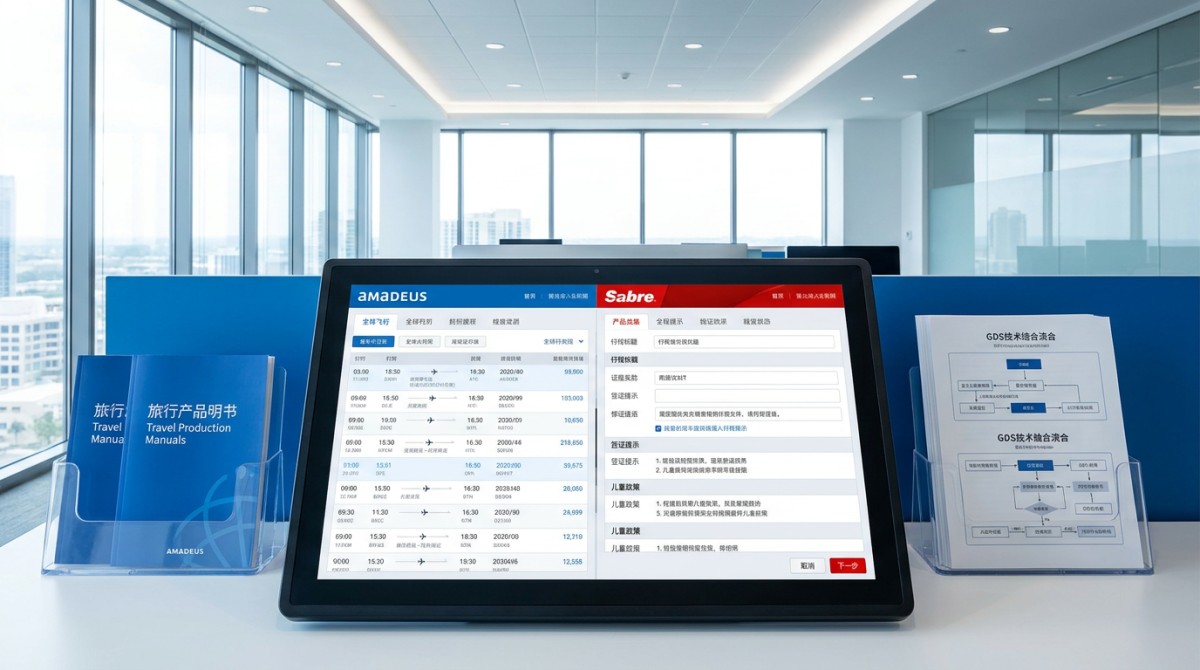
Processing and manufacturing enterprises: here specifically refers to SaaS service providers that supply digital tools for the outbound tourism industry chain, including travel ERP providers, multilingual booking engines, and GDS adapter middleware developers. The impact is reflected in: a surge in demand for standardized development for Amadeus and Sabre interfaces, especially creating new development hotspots in semantic mapping modules for Chinese product metadata (such as itinerary descriptions, visa reminders, and child policies); however, there is currently no unified technical certification system recognized by the Ministry of Culture and Tourism, so vendors must independently complete sandbox testing and production deployment on each GDS platform.
Supply chain service enterprises: mainly refers to third-party service providers offering cross-border payment settlement, multi-currency account management, GDS system operation and maintenance hosting, and compliance audit support. The impact is reflected in: the value of their services is shifting from “optional supporting services” to “pre-entry requirements”, for example: settlement channels not connected to licensed cross-border payment institutions will result in GDS orders being unable to complete real-time USD/EUR split settlement; some institutions have already launched paid “GDS compliance readiness assessment” services for tour operators.
Key Focus Areas and Response Measures for Relevant Enterprises or Practitioners
Confirm whether you fall within the scope of identification as a “leading outbound tour operator”
The Ministry of Culture and Tourism has not publicly released a list of leading enterprises, but has clearly stated that the comprehensive criteria are based on “outbound group tour scale over the past 3 years, depth of overseas channel cooperation, and foundation for GDS technical integration”. Enterprises should conduct self-assessments against the Detailed Rules for the Implementation of the Travel Agency Regulations and the 2025 National Travel Agency Statistical Annual Report data, so as to avoid delayed preparation caused by misjudgment.
Prioritize GDS interface compatibility assessment rather than starting direct development immediately
Both Amadeus and Sabre provide free sandbox environments and Chinese technical documentation, but there are significant differences in interface logic (for example, Sabre emphasizes flight + hotel combined inventory, while Amadeus strengthens the structuring of destination activity products). It is recommended to first complete dual-platform interface call stress testing and error code mapping analysis, and then determine whether to build in-house or procure a third-party middleware solution.
Synchronize the review of product metadata standards and multilingual content assets
GDS imposes strict character limits on product description fields (for example, itinerary titles ≤64 characters, selling point tags ≤8), and requires key information (cancellation policy, visa reminders, child pricing rules) to be submitted in structured JSON format. Existing Chinese product libraries need field mapping and machine-readable transformation according to the GDS Schema, and cannot meet the requirements through simple translation alone.
Establish a cross-departmental GDS coordination mechanism
GDS integration involves four functional areas: product, technology, finance, and legal. The product side is responsible for metadata standardization; the technology side is responsible for API integration and exception circuit breaking; the finance side needs to open multi-currency settlement accounts and configure tax rules; and the legal side must review clauses in GDS service agreements regarding data sovereignty, jurisdiction for disputes (usually agreed as Switzerland or the United States), and liability caps. Advancement by a single department is likely to create implementation bottlenecks.
Editorial Viewpoint / Industry Observation
Observably, this GDS mandate is not primarily about technical modernization—it functions as a de facto quality gate for outbound tourism suppliers entering global wholesale channels. Analysis shows that the 100% target applies only to ‘head enterprises’, suggesting a tiered compliance strategy rather than blanket regulation. From an industry perspective, the real bottleneck lies not in API connectivity, but in operational readiness: few Chinese operators currently maintain real-time inventory synchronization across hotel, flight and ground handling resources. The policy therefore serves more as a catalyst for supply chain integration than a pure IT upgrade directive.
Conclusion
In essence, this GDS access requirement from the Ministry of Culture and Tourism is a critical step in promoting China’s outbound tourism services from ‘channel accessibility’ to ‘system coordination’. Its significance lies not in the technology itself, but in forcing every link in the industry chain to rebuild its operational logic anchored to global channel standards. What deserves more attention at present is: how to achieve product data interoperability among different GDS platforms in the absence of unified national standards; and whether small and medium-sized tour operators can make a smooth transition through SaaS-based services, so as to avoid a further rise in market concentration.
Information Source Notes
The official information comes from public reports of the National Tourism Development Conference on May 17, 2026 and the Three-Year Action Priorities for Building a Strong Tourism Nation (2026–2028) (Draft for Comments) published on the official website of the Ministry of Culture and Tourism. The technical details regarding Amadeus/Sabre cited in the article are drawn from the Q1 2026 Asia-Pacific developer white papers of the two companies. Items requiring continued observation include: whether the Ministry of Culture and Tourism will jointly issue special guidance on GDS cross-border settlement with the central bank and the State Administration of Foreign Exchange; whether a quarterly reporting mechanism for GDS access rates of leading travel agencies will be implemented; and whether pilot adjustments to channel traffic for non-compliant enterprises will be launched by the end of 2026.
Your 1:1 travel consultant will respond within 1 business day
How to plan your trip
- Hebei Launches Five “Trendy Hebei” Premium Tourism Routes for Inbound Travelers, Moving Toward Standardized Offerings
- The 12th Qionghai Tanmen Coastal Foraging Festival Opens on August 16
- Guangxi’s Digital Silk Road Accelerates: Orah Mandarin Juice Secures an Italian Order, Drawing Attention to Export Standards for Souvenirs
- New Inquiry Triggered by Coastal Cultural Tourism Space Standards
- Zhuanghe’s agro-cultural tourism model draws ASEAN attention, highlighting the compliance requirements for the internationalization of camping and intangible cultural heritage handicrafts
Monthly travel guide
- Typhoon “White Dolphin” Forces Henan Scenic Areas to Close, Putting Summer Ground-Handling Services Under Pressure
- RCEP Implementing Rules for Indonesia Take Effect: Zero Tariffs for Cultural and Tourism Services Alongside Strict Customer Service Requirements
- Saudi Arabia’s New SASO Regulations Take Effect: Taqat Certification Required Before Chinese-Language Cultural Tourism Services Can Access Visit Saudi
- Zhengzhou Launches a Dedicated LCL Shipping Route for Cultural and Tourism Materials, Cutting Freight Costs by 18%
- Luoyang Cold Chain Intensification: Cultural and Creative Exports Delivered in 9 Days
- Expedited Pre-Approval for Group Visas to Three Southeast Asian Countries
- Tightening air freight capacity at Zhengzhou Airport delays the delivery of cultural and tourism materials
- Vietnam's New Regulations on Bus Monitoring Requirements for Group Tours
- Saudi SAMA New Regulations on Travel Liability Insurance Compliance Preparation
- Japanese tourists' new regulations for entering Henan local transport vehicles
- Wai Gao Qiao Wen Travel customs bonded warehouse summer group equipment fast lane
- JTB Warning: Risks in Henan’s September Red Leaf Family Tour Purchases
Popular destinations
- China's Henan Province 144-Hour Visa-Free Transit Policy in 2026: Latest Regulations & In-Depth Travel Strategies
- Japan to Introduce a Credit Point System for Chinese-Speaking Tour Guides, Trial Operation in August
- The EU Clarifies That Digital Platforms for Culture and Tourism Are Subject to GDPR Regulation
- Thailand Upgrades “China Ready” Certification, Adding AI Voice Compliance Testing for Chinese-Language Commentary
- Japan Revises the Tourism Services Industry Act, Introducing a Credit Points System for Chinese-Speaking Tour Guides
Why choose us

High cost-performance and transparent experience
Offer astonishing low prices without hidden tourism traps, enabling travelers to explore at lower costs while avoiding unnecessary spending loopholes, ensuring transparent consumption.

Personalization and dedicated service
Support 100% free customization, paired with one-on-one expert service, crafting exclusive itineraries based on travelers' specific needs, while providing professional guidance to enhance the personalization and professionalism of the journey.

Premium itinerary planning
Compact yet rich itineraries allow travelers to experience more within limited time; simultaneously, carefully selected hotels in prime locations provide convenient lodging conditions, overall enhancing travel comfort and experience.