Welcome to Our Travel Agency!




Travel Guide
How Can Customized Business Study Tours for Enterprises Avoid Becoming a Mere Formality? From Visit Reservations to Topic Design
A tightly packed itinerary may result in nothing more than group photos and brochures upon return. The problem often lies not in whether the reception was warm, but in failing to clarify before departure what needs to be verified, who will provide the answers, and what materials will support the assessment. To prevent customized business study tours for enterprises from becoming a mere formality, visit reservations, discussion topics, and outcome records should be linked together, with transportation and accommodation serving business objectives rather than arranging meetings around attractions.
Determine What Needs to Be Assessed Before Selecting Visit Organizations
“Learning from advanced experience” is not sufficient to guide itinerary design. When studying a cultural tourism project, is the purpose to determine whether nighttime tourism content can be replicated, or to understand secondary consumption at scenic areas, the operation of historic-town neighborhoods, or the organization of educational tour reception? Different questions require meeting different people and observing different sites. A brand exhibition hall may be suitable for understanding the overall layout, but it may not answer operational questions such as off-season staffing, coordination among merchants, and equipment maintenance.
It is advisable to prepare a one-page assignment brief before departure, specifying the questions to be verified, the conditions already available within the company, and the expected deliverables. For example, when studying nighttime tourism in a historic town, the focus could be on “who is responsible for content updates, which positions are required for routine operations, and how changes in visitor flow affect performance scheduling.” Each question should correspond to a position available for discussion or a scenario that can be observed, rather than selecting sites solely based on project popularity.
For Visit Reservations, Confirm “Who Will Present and What Can Be Seen”
A “proposed visit” listed on an itinerary does not mean that reception has been confirmed. Reservations should be verified through channels recognized by the receiving organization, with at least the reception date, discussion venue, contact person, attending positions, and scope of access clearly specified. If the core objective is to understand operations, but only an interpreter is available and no operations personnel participate, expectations should be adjusted in advance instead of requesting an in-depth discussion on site.
Reservation status should preferably be classified as “pending application,” “accepted,” or “confirmed,” with email or written confirmation retained. Consent should be obtained in advance for access to internal areas, photography, audio recording, material sharing, and commercial data. When the receiving party cannot provide certain information, it may be appropriate to ask about processes or influencing factors instead. A paid visit should not be interpreted as permission to request business secrets.
It is also necessary to agree on what will happen in the event of a last-minute cancellation: whether to switch to a similar organization, move the discussion online, or adjust the fees. Alternative organizations should be able to address the same topics. A key business discussion cannot be replaced with additional sightseeing while the project is still accepted and evaluated according to the original plan.
Design Topics to Explore Applicable Conditions Rather Than Simply Listen to Highlights
An effective discussion outline does not need to be lengthy, but it should have a clear central line. Taking a cultural tourism district as an example, the discussion can begin with “Why do visitors stay?” and continue by asking about the mix of business formats, event frequency, division of responsibilities among merchants, and complaint handling, before verifying what visitor sources, venues, or organizational conditions these practices depend on. Listening only to successful highlights can easily lead to mistaking non-replicable resource advantages for transferable methods.
Three types of questions can be prepared for each core topic: how it is actually done, what is used to determine whether it is effective, and what limitations would arise if it were applied within the company. Send the outline to the receiving party before the discussion, specifying which questions are expected to be answered on site and which materials may be provided later. For metrics involving revenue, conversion rates, and similar data, clarify the statistical period, calculation criteria, and coverage. Verbal information that cannot be verified should be marked with its source and the items pending confirmation.
It is best to assign separate roles for facilitation, follow-up questions, and note-taking on site. The facilitator keeps the discussion on track, business personnel ask detailed follow-up questions, and note-takers distinguish facts, opinions, and assumptions. Do not allow presentations to occupy the entire schedule; time should also be reserved for on-site observation and internal review.
The Value of Local Ground Services Is to Protect Time for Effective Discussions
Traveling hurriedly between cities, staying too far from meeting venues, and allowing meals to take up discussion time can all weaken the effectiveness of a study tour. Scheduling should work backward from confirmed visit times and include time for gathering, security checks, parking, walking, and traffic buffers. Quotations should also clearly separate the costs of vehicles, accommodation, guides, meeting venues, and visit coordination, with particular attention to third-party reception fees and cancellation or modification terms.
Henan Lelyu Travel Agency Co., Ltd. is based in Luoyang and provides ground travel services in Henan as well as customized travel services within China. It can coordinate transportation, hotels, ticket reservations, guides, and other arrangements. For business study tours in Henan, this type of local service capability can be used to connect transportation with cultural experiences. However, reservations for tourism resources and corporate business visits are two different matters. The latter still requires confirmation from each receiving organization and cannot be replaced by commitments based on resource partnerships.
Leisure activities may be retained, but their purpose and budget should be listed separately. If the team arranges a separate rest itinerary in Dali, it may refer to the Yunnan Dali Leisure Tour for activities such as visiting Cangshan Mountain and Erhai Lake, experiencing the culture of Xizhou Ancient Town, or cycling along the Erhai Ecological Corridor. These activities are suitable for relaxation and team communication. They should not be presented as an implemented industrial study tour or used to replace interviews about operations.
Evaluate Whether the Questions Were Answered Rather Than How Many Stops Were Visited
Before returning, organize the results item by item according to the assignment brief: What facts have been confirmed, where did the evidence come from, which practices are suitable for trial implementation, and which still require verification? On-site photos do not automatically prove operational performance, and an introduction from the receiving party is not equivalent to independent verification. For items that are ready to move forward, clarify the person responsible for follow-up, supplementary materials, and verification methods.
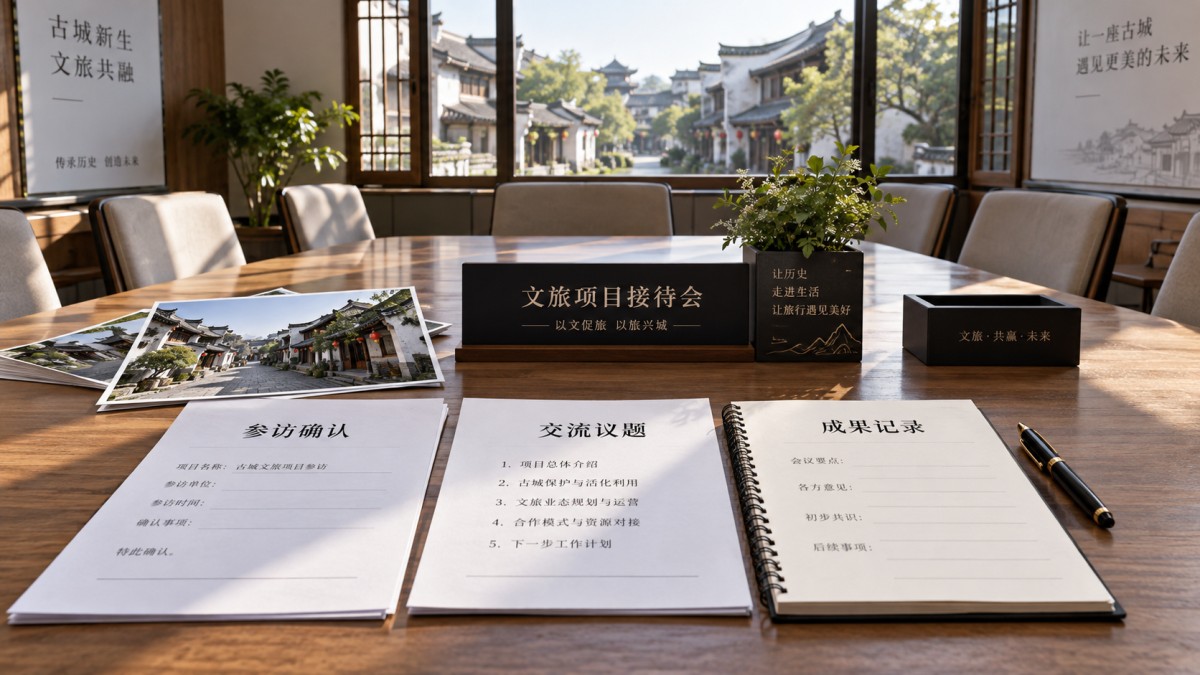
When reviewing the plan, it is advisable to first examine the reception confirmations, discussion outline, and format for recording results, and only then compare hotels and attractions. If these three items are still blank, even a carefully designed itinerary will have difficulty supporting business decisions. First secure the key discussions, and then decide which sightseeing activities are worth retaining.
Your 1:1 travel consultant will respond within 1 business day
How to plan your trip
- Multiple regions announce autumn break dates for primary and secondary schools; attractions offer benefits such as discounted admission
- China’s Civil Aviation Industry to Implement the 2026/2027 Winter-Spring Flight Schedule from October 25
- Autumn Breaks in Multiple Regions Boost November Travel, Offering Hope for the Traditional Low Season
- China Tourism Academy Releases Report on Autumn Trends in China's Domestic Customized Tour Market
- What should I wear for a winter trip to Harbin and Mohe to cope with the extreme outdoor cold?
Monthly travel guide
- Luoyang launches the “Autumn Charm of the Divine Capital” tourism promotion to build anticipation for winter travel
- Typhoon “White Dolphin” Forces Henan Scenic Areas to Close, Putting Summer Ground-Handling Services Under Pressure
- RCEP Implementing Rules for Indonesia Take Effect: Zero Tariffs for Cultural and Tourism Services Alongside Strict Customer Service Requirements
- Saudi Arabia’s New SASO Regulations Take Effect: Taqat Certification Required Before Chinese-Language Cultural Tourism Services Can Access Visit Saudi
- Zhengzhou Launches a Dedicated LCL Shipping Route for Cultural and Tourism Materials, Cutting Freight Costs by 18%
- Luoyang Cold Chain Intensification: Cultural and Creative Exports Delivered in 9 Days
- Expedited Pre-Approval for Group Visas to Three Southeast Asian Countries
- Tightening air freight capacity at Zhengzhou Airport delays the delivery of cultural and tourism materials
- Vietnam's New Regulations on Bus Monitoring Requirements for Group Tours
- Saudi SAMA New Regulations on Travel Liability Insurance Compliance Preparation
- Japanese tourists' new regulations for entering Henan local transport vehicles
- Wai Gao Qiao Wen Travel customs bonded warehouse summer group equipment fast lane
Popular destinations
- Luoyang Museum to Close; Night Tours at Longmen to Be Suspended; Restoration Work to Begin at White Horse Temple
- How can you confirm the actual group size when booking a small-group tour in western Sichuan?
- What cancellation fees apply when a participant drops out of a customized corporate trip at short notice?
- Which stop should come first on a Wudang Mountain and Shennongjia tour for the most convenient route?
- How should time for altitude acclimatization be planned for a Mount Siguniang and Bipenggou tour?
Why choose us

High cost-performance and transparent experience
Offer astonishing low prices without hidden tourism traps, enabling travelers to explore at lower costs while avoiding unnecessary spending loopholes, ensuring transparent consumption.

Personalization and dedicated service
Support 100% free customization, paired with one-on-one expert service, crafting exclusive itineraries based on travelers' specific needs, while providing professional guidance to enhance the personalization and professionalism of the journey.

Premium itinerary planning
Compact yet rich itineraries allow travelers to experience more within limited time; simultaneously, carefully selected hotels in prime locations provide convenient lodging conditions, overall enhancing travel comfort and experience.