Welcome to Our Travel Agency!




Travel Guide
How Should Acclimatization Time Be Arranged for a Trip to Mount Siguniang and Bipenggou?
When traveling to Mount Siguniang and Bipenggou, it is important not to focus only on “how many days are needed to finish the trip,” but also on how high you will ascend each day and where you will sleep at night. For people who have lived at low altitudes for a long time and have little high-altitude experience, it is recommended to keep the first two days relatively relaxed and avoid combining high-altitude sightseeing with long-distance hiking on the day of arrival. Acclimatization takes time, but staying for one full night does not necessarily mean that you have already acclimatized. Whether you can continue ascending the next day depends on your physical response.
Check the Accommodation Altitude First, Then Decide the Order of the Two Scenic Areas
What is easily overlooked on this route is the difference in altitude between the “scenic area entrance” and the “actual sightseeing areas.” Lixian County is approximately 2,000 meters above sea level, while Mount Siguniang Town is about 3,200 meters above sea level. Some sightseeing areas in Bipenggou and Shuangqiaogou are above 3,500 meters. The altitude may vary depending on the specific hotel, parking area, and trail location, so the workload for the entire day cannot be judged based on the altitude of just one scenic area.
If you are departing from Chengdu and have not recently acclimatized to high altitudes, you can generally consider prioritizing the Lixian direction and then proceeding to Mount Siguniang according to your condition. The advantage is that you can choose accommodation at a lower altitude during the first part of the trip instead of sleeping directly at around 3,200 meters on the first night. However, “Bipenggou first, then Mount Siguniang” is not automatically safer: traveling rapidly to a high altitude by vehicle on the same day may still cause altitude sickness.
You should also take mountain-crossing sections into account. When traveling from Chengdu to Mount Siguniang via the Balang Mountain route, you may pass through areas significantly higher than your accommodation, depending on the route in use. Do not treat a high-altitude viewpoint as an acclimatization stop. Parking to take photos and climbing slopes to find a good angle may instead increase the burden on your body. Confirm before departure whether the road is open and whether any detours are required.
If You Have Six Days, You Can Leave Room for Acclimatization Like This
The following is an itinerary that is convenient to adjust and is not a fixed prescription suitable for everyone. The focus is to separate travel, sightseeing, and physical monitoring instead of filling every day with attractions.
Day 1: Arrive in Chengdu and rest normally. In particular, if you are traveling from places such as Henan by plane or long-distance train, it is not recommended to continue into the mountains overnight. This night in Chengdu is mainly for relieving travel fatigue and does not count as genuine high-altitude acclimatization.
Day 2: Travel to the vicinity of Lixian and stay at a relatively low altitude. Focus on transit and short walks, without arranging additional mountain climbing. On Day 3, visit Bipenggou and use the scenic area’s transportation to reduce physical exertion. Shorten the walking distance according to your condition, and return to accommodation at a lower altitude after sightseeing.
Day 4: Travel to Mount Siguniang, visit one valley on Day 5, and return on Day 6. Do not arrange long-distance hiking in Changpinggou on the day of transfer. If you are feeling well on Day 5, you can choose Shuangqiaogou, which mainly uses sightseeing buses for transfers, but there is no need to walk the full length of every stop. The walking demands of Changpinggou and Haizigou are different, so they should not be treated as interchangeable simply because both are part of Mount Siguniang.
There is still one point to note about this arrangement: traveling from the vicinity of Lixian to Mount Siguniang Town involves a significant increase in sleeping altitude. If you have a previous history of altitude sickness, have already felt unwell during the earlier part of the trip, or want a more cautious plan, you should add an intermediate night at a mid-altitude location. Confirm the specific stop based on road and hotel conditions. If no suitable stop can be found, it is better to reduce one destination than to force the itinerary to continue.
If You Only Have Three or Four Days, Do Not Complete the Route by Compressing Rest Time
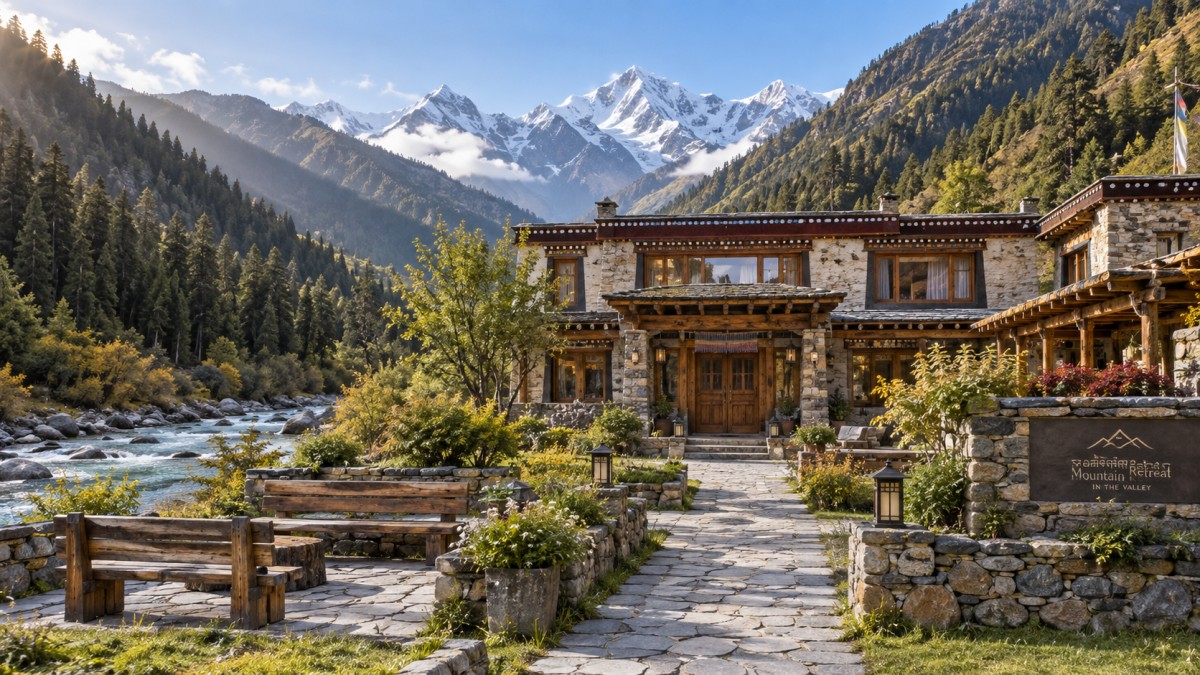
A three- or four-day round trip covering both scenic areas often means consecutive long-distance vehicle journeys, rapid altitude gains, and early mornings. For first-time high-altitude travelers, it is generally better to choose one destination and leave room for rest and adjustment. Staying at a lower altitude may increase the transfer distance, while staying near the scenic area is more convenient but may increase sleeping altitude. When booking a hotel, weigh these two factors first, before considering the view from the window and the room type.
A general recommendation for high-altitude travel is to limit the daily increase in sleeping altitude to approximately 300–500 meters above about 3,000 meters and to arrange additional acclimatization days. This is a planning reference, not a safety guarantee. If this is difficult to achieve on a road trip, it is even more important to reduce time spent at high altitudes, avoid strenuous activity, and retain the option of returning to a lower altitude.
When You Feel Unwell, The Itinerary Must Give Way
If you develop a headache after reaching a high altitude, accompanied by nausea, dizziness, or obvious fatigue, do not simply attribute it to motion sickness or insufficient sleep. Stop ascending and rest while monitoring your condition. If the symptoms worsen or do not improve after rest, descend and seek medical assistance. If you experience difficulty breathing while at rest, unsteady walking, or an altered level of consciousness, seek help immediately and descend safely as soon as possible. Do not wait until the next day’s gathering. Portable oxygen can provide temporary assistance, but it cannot replace descending and seeking medical attention.
When you have just arrived at a high altitude, avoid running, jumping, drinking alcohol, and overexertion. Drink water normally; there is no need to force yourself to drink excessive amounts. Good physical fitness does not mean that you will not develop altitude sickness. Children, older adults, and people with underlying conditions such as heart or lung disease should consult a doctor in advance. Preventive medication also requires professional evaluation and should not be taken in the same way as other travelers.
When asking an agency such as Henan Le Tour Travel Agency Co., Ltd., which provides customized domestic travel services, to plan the trip, you can directly request that it: specify the accommodation altitude for each night, reserve half a day for flexibility, and clearly state the descent route and rebooking fees in case someone feels unwell. Especially for private family groups, there is no need to require everyone to walk the same distance. Compared with “guaranteeing that no one will suffer from altitude sickness,” clearly arranging when to stop, modify, or cancel the itinerary is the more practical safeguard for this route.
Your 1:1 travel consultant will respond within 1 business day
How to plan your trip
- China Tourism Academy Releases Report on Autumn Trends in China's Domestic Customized Tour Market
- Visiting China for the First Time: How Many Cities Should You Include in a 15-Day Grand Tour?
- Is a geology exploration tour suitable for elementary school students?
- Is it worth hiring a guide for a visit to the Terracotta Army?
- Hebei Launches 5 “Trendy Hebei” Signature Tour Routes, Standardizing Inbound Tourism Services
Monthly travel guide
- Luoyang launches the “Autumn Charm of the Divine Capital” tourism promotion to build anticipation for winter travel
- Typhoon “White Dolphin” Forces Henan Scenic Areas to Close, Putting Summer Ground-Handling Services Under Pressure
- RCEP Implementing Rules for Indonesia Take Effect: Zero Tariffs for Cultural and Tourism Services Alongside Strict Customer Service Requirements
- Saudi Arabia’s New SASO Regulations Take Effect: Taqat Certification Required Before Chinese-Language Cultural Tourism Services Can Access Visit Saudi
- Zhengzhou Launches a Dedicated LCL Shipping Route for Cultural and Tourism Materials, Cutting Freight Costs by 18%
- Luoyang Cold Chain Intensification: Cultural and Creative Exports Delivered in 9 Days
- Expedited Pre-Approval for Group Visas to Three Southeast Asian Countries
- Tightening air freight capacity at Zhengzhou Airport delays the delivery of cultural and tourism materials
- Vietnam's New Regulations on Bus Monitoring Requirements for Group Tours
- Saudi SAMA New Regulations on Travel Liability Insurance Compliance Preparation
- Japanese tourists' new regulations for entering Henan local transport vehicles
- Wai Gao Qiao Wen Travel customs bonded warehouse summer group equipment fast lane
Popular destinations
- How should time for altitude acclimatization be planned for a Mount Siguniang and Bipenggou tour?
- How can you tell from an itinerary whether enough time has been set aside for photography?
- For a bilingual guide on a Grand China tour, should you choose full-tour accompaniment or service in separate segments?
- How can you plan a high-speed rail route for a panoramic tour of China without backtracking?
- How can you verify hotel check-in eligibility in advance for inbound tours covering all of China?
Why choose us

High cost-performance and transparent experience
Offer astonishing low prices without hidden tourism traps, enabling travelers to explore at lower costs while avoiding unnecessary spending loopholes, ensuring transparent consumption.

Personalization and dedicated service
Support 100% free customization, paired with one-on-one expert service, crafting exclusive itineraries based on travelers' specific needs, while providing professional guidance to enhance the personalization and professionalism of the journey.

Premium itinerary planning
Compact yet rich itineraries allow travelers to experience more within limited time; simultaneously, carefully selected hotels in prime locations provide convenient lodging conditions, overall enhancing travel comfort and experience.