Welcome to Our Travel Agency!




Travel Guide
Should a Henan Cultural Tour Use One Ground Handler or City Suppliers?
Should we use one ground handler or separate city suppliers for a Henan cultural tour? For travel planners linking Luoyang’s Longmen Grottoes, Shaolin Temple, and historic Kaifeng, the answer affects more than price: it shapes coordination, cultural interpretation, service consistency, and accountability when plans change. A single Henan ground handler can simplify multi-city logistics, while separate suppliers may offer greater control over individual arrangements. Drawing on Henan Le Journey Travel Agency’s local operating approach, this guide compares the trade-offs for your itinerary, budget, and service expectations.
For a connected, multi-city inbound group, one accountable provincial handler is usually the more practical starting point. Separate city suppliers make sense when your own team can manage the connections between them, or when specialist experiences justify the extra coordination. The deciding question is not how many suppliers participate, but who owns the complete journey.
One contract does not mean one company delivers everything
A ground handler coordinates local delivery: vehicles, accommodation, admissions, guides, meals, and operational support. It may use partner hotels, transport companies, and local specialists rather than owning those resources. That is not inherently a weakness. What matters is how it selects partners, confirms services, communicates changes, and accepts contractual responsibility.
With separate city suppliers, your company contracts different portions of the tour directly. A Luoyang operator might deliver Longmen and local accommodation, while another handles Kaifeng. You gain direct visibility into each arrangement, but someone on your side must manage the gaps between those contracts.
Those gaps deserve attention. Who provides the intercity vehicle? When does one guide’s responsibility end? Who calls the next hotel if departure slips? A series of well-run city services can still produce an uneven tour if nobody manages the transitions.
The pressure points lie between the attractions
Consider a proposed journey from Luoyang through Dengfeng for Shaolin Temple and onward to Kaifeng. On paper, the attractions look like separate bookings. Operationally, the day connects hotel departure, luggage loading, road travel, admission arrangements, lunch, guiding, and evening arrival.
If the morning visit takes longer than planned, shortening lunch may not be acceptable for older travelers or a group with dietary requirements. Arriving later could also affect an evening activity or dinner service. The team needs authority to adjust the whole sequence, not merely report that its own segment is finished.
A provincial handler can coordinate that sequence through one operations lead. With city suppliers, the overseas planner or accompanying tour manager may need to make the same decisions across several contacts. Neither model removes disruption; they allocate the work of resolving it differently.
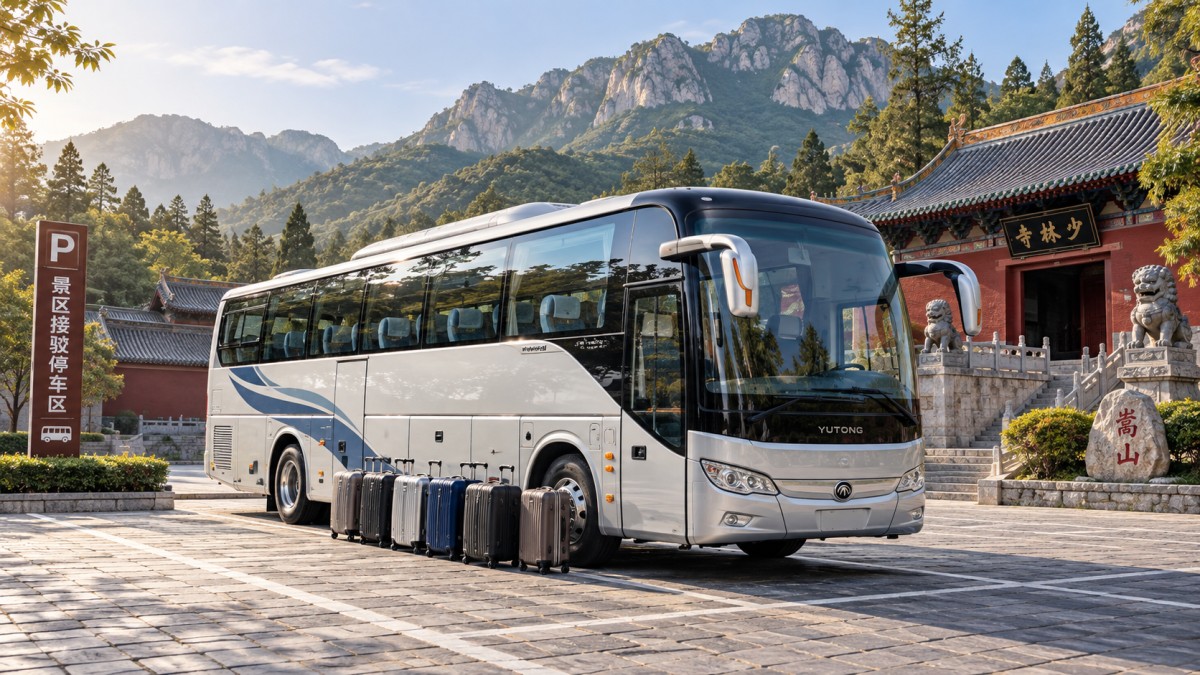
Before comparing proposals, mark every change of vehicle, guide, hotel, and operating company on the itinerary. Assign responsibility for luggage, guest information, booking confirmations, and delay notifications at each transition. This simple exercise often reveals whether separate contracts will remain manageable.
Compare the full operating cost, not just city quotations
Separate suppliers can appear cheaper because each quotation covers a narrower service area. A provincial package may include coordination and through-route arrangements that are absent from the individual prices. Equally, a bundled quotation can obscure costs unless the scope is clear. Neither structure is automatically better value.
Request a common service specification before comparing totals:
- Transport: vehicle capacity, luggage allowance, service hours, intercity coverage, parking, tolls, and any driver accommodation requirements.
- Guiding: working language, daily coverage, site interpretation, transfer assistance, and whether a through-guide is included.
- Accommodation: named properties or an agreed substitution process, room categories, breakfast, and cancellation terms.
- Admissions and activities: included visits, reservation status, optional experiences, and treatment of unavailable services.
- Commercial terms: taxes, payment currency, bank charges, overtime, change fees, and refund conditions.
Your internal coordination time also belongs in the comparison. Multiple payment schedules, revised passenger lists, and separate cancellation deadlines create work even when nothing goes wrong. If your team already runs China programs with local support, that work may be economical. For an occasional Henan departure, it may outweigh a modest saving.
Cultural depth needs more than consistent logistics
A cultural itinerary should feel connected without treating every destination as interchangeable. Longmen’s Buddhist art, Shaolin’s religious and martial traditions, and Kaifeng’s Northern Song heritage need different interpretive approaches. Adding Anyang introduces another subject area through oracle bone inscriptions and early Chinese history.
One handler can brief guides around a shared narrative: how belief, political power, artistic patronage, and urban life changed across the Central Plains. But appointing one company does not guarantee that depth. Ask who develops the commentary, how guides adapt to the group’s knowledge, and where specialist input is needed.
City suppliers may offer valuable local expertise, especially for a focused art-history, educational, or heritage program. The risk is repetition or disconnected commentary. A shared briefing document should state what guests have already covered, which themes each stop should develop, and how much time is available for questions.
Also separate language fluency from subject expertise. A guide may communicate comfortably in the required language without being the right interpreter for a specialist group. Where an expert and interpreter work together, allow time for translation rather than expecting the same pace as a general sightseeing visit.
When separate suppliers—or a hybrid—are worth the effort
Direct city contracting is most defensible when the program is modular. A group spending several nights in each city, with clearly separated services and an experienced tour manager, has fewer vulnerable connections than a fast-moving circuit with daily hotel changes.
It can also suit an established operator with trusted local partners and staff able to coordinate during China operating hours. In that situation, direct relationships may provide useful control over hotel selection, specialist guiding, or a particular cultural activity. The planner must still own a single master itinerary and circulate revisions consistently.
A hybrid model often avoids an unnecessary either-or choice. One Henan ground handler can manage transport, hotels, reservations, and operational support while incorporating an agreed specialist supplier. Confirm who contracts and pays that specialist, who checks availability, and who handles cancellation or replacement. Otherwise, the supposedly integrated arrangement can leave exactly the same gaps as separate contracts.
This approach is particularly useful when most of the tour is conventional but one visit needs unusual depth. There is little benefit in fragmenting the entire journey solely to secure one strong specialist.
Test accountability before confirming the tour
A single contact is convenient, but it is not proof of operational control. Ask the proposed handler to explain how a delayed arrival, unavailable guide, or attraction closure would be managed. You are looking for a decision process, not a promise that problems never happen.
The operating agreement should identify the main contact, backup contact, communication channels, and escalation procedure. It should also explain who may approve additional spending, what needs your consent, and how material changes are recorded. Emergency support and financial authority are related, but they are not the same thing.
Check the underlying delivery arrangements as well: appropriate vehicle licensing, guide credentials where required, relevant insurance documentation, and procedures for incidents. Requirements should be verified against the actual services and applicable local rules. One contract does not eliminate the need for due diligence.
For inbound groups, agree how passenger details needed for bookings will be collected, checked, and shared. Dietary needs, mobility limitations, rooming arrangements, and emergency contacts should reach the people who need them without circulating personal information unnecessarily. Confirm current attraction booking requirements rather than assuming every site uses the same process.
Finally, distinguish local relationships from guaranteed access. Established partnerships may help with availability checks and alternatives, but they do not override capacity restrictions, closures, or booking rules.
Choose the structure around the journey you are selling
Henan Le Journey Travel Agency Co., Ltd., based in Luoyang, provides inbound services across Henan, coordinating transport, accommodation, ticket reservations, guides, and dining. Its routes include Luoyang, Zhengzhou–Shaolin Temple–Longmen Grottoes, Anyang, and the southern Taihang Mountains. That provincial scope is relevant when a planner wants one team to connect different parts of a cultural itinerary.
Its stated approach includes licensed vehicles, licensed guides, transparent pricing, and standardized operating procedures. For any proposed departure, those commitments should become specific inclusions, named responsibilities, and agreed service conditions—not remain general assurances. The same test should apply to every shortlisted provider.
If your group moves frequently, needs consistent language support, or expects flexible adjustments, start by evaluating one accountable Henan handler. If your team has strong local operating capacity and the program consists of distinct city stays, separate suppliers can be sensible. Use a hybrid when specialist content is the main reason to look beyond one provider.
Before requesting final prices, share travel dates, group size, language, hotel expectations, mobility needs, cultural priorities, and any no-shopping requirement. Then ask each bidder to show who manages every intercity connection and what happens when a confirmed service changes. The stronger proposal is the one that makes those responsibilities clear before your guests arrive.
Your 1:1 travel consultant will respond within 1 business day
How to plan your trip
- Heilongjiang to Issue RMB 100 Million in Consumer Vouchers and Launch a 100-Day Winter Ice and Snow Tourism Initiative
- “Discover Hebei in Winter” Tourism Exchange and Matchmaking Event Held in Jinan
- Zhangjiakou 2026–2027 Snow Season Launch and Ice and Snow Tourism Promotion Event Held in Shanghai
- Is a Three-City Henan Itinerary Too Rushed for Families?
- The Palace Museum Explained: From Imperial Residence to Public Museum
Monthly travel guide
- Luoyang launches the “Autumn Charm of the Divine Capital” tourism promotion to build anticipation for winter travel
- Typhoon “White Dolphin” Forces Henan Scenic Areas to Close, Putting Summer Ground-Handling Services Under Pressure
- RCEP Implementing Rules for Indonesia Take Effect: Zero Tariffs for Cultural and Tourism Services Alongside Strict Customer Service Requirements
- Saudi Arabia’s New SASO Regulations Take Effect: Taqat Certification Required Before Chinese-Language Cultural Tourism Services Can Access Visit Saudi
- Zhengzhou Launches a Dedicated LCL Shipping Route for Cultural and Tourism Materials, Cutting Freight Costs by 18%
- Luoyang Cold Chain Intensification: Cultural and Creative Exports Delivered in 9 Days
- Expedited Pre-Approval for Group Visas to Three Southeast Asian Countries
- Tightening air freight capacity at Zhengzhou Airport delays the delivery of cultural and tourism materials
- Vietnam's New Regulations on Bus Monitoring Requirements for Group Tours
- Saudi SAMA New Regulations on Travel Liability Insurance Compliance Preparation
- Japanese tourists' new regulations for entering Henan local transport vehicles
- Wai Gao Qiao Wen Travel customs bonded warehouse summer group equipment fast lane
Popular destinations
- How Do We Dispute Unapproved Charges on a Henan Cultural Tour Invoice?
- Should a Henan Cultural Tour Use One Ground Handler or City Suppliers?
- How Can We Verify Henan Cultural Tour Hotel Bookings in Peak Season?
- Do Guided Hiking Groups in Henan Need Extra Insurance?
- Forbidden City Tickets: Entry Prices and Separately Ticketed Galleries
Why choose us

High cost-performance and transparent experience
Offer astonishing low prices without hidden tourism traps, enabling travelers to explore at lower costs while avoiding unnecessary spending loopholes, ensuring transparent consumption.

Personalization and dedicated service
Support 100% free customization, paired with one-on-one expert service, crafting exclusive itineraries based on travelers' specific needs, while providing professional guidance to enhance the personalization and professionalism of the journey.

Premium itinerary planning
Compact yet rich itineraries allow travelers to experience more within limited time; simultaneously, carefully selected hotels in prime locations provide convenient lodging conditions, overall enhancing travel comfort and experience.