Welcome to Our Travel Agency!




Travel Guide
For a food-themed trip, whether to travel independently or join a tour depends first on what the itinerary is built around. If you want to choose restaurants to suit your own tastes and adjust meal times as you go, independent travel is a better fit. If you would rather spend less time planning and have transport and restaurants coordinated for you, a small-group tour with clearly defined food experiences is more convenient. Even if a standard sightseeing tour includes group meals, it may not be suitable for a trip focused specifically on food. When deciding, consider what you can eat, how meals are arranged, and whether there is room to make changes.
If Luoyang water banquet cuisine and Kaifeng snacks are your goals, each way of traveling has its advantages. Water banquet dishes are best shared around a table, while snacks are better sampled at different stops. If both are squeezed into fixed group-meal slots, you may end up too full after a formal meal to enjoy the street snacks.
Decide “how to eat” before “how to get around”
The advantage of independent travel is having the freedom to choose. You can plan to have soup in the morning, take a break in the afternoon, and explore a snack street in the evening according to your appetite. If the queue is too long or a shop is unexpectedly closed, you can go somewhere else. But this flexibility depends on knowing opening hours, locations, and transport options in advance. Saving a list of restaurants without checking how far apart they are can turn a food search into a race from place to place.
The value of a tour is that it reduces the work of coordinating logistics, especially when traveling between cities or dining as a group. However, a restaurant described as serving “local specialties” does not necessarily guarantee a worthwhile experience. Check the specific dishes, dining format, time allowed, and whether you can opt out of a meal. If the itinerary only includes set group meals and leaves no time to explore food on your own, your choices will be limited.
Luoyang water banquet cuisine and Kaifeng snacks call for different plans
The Luoyang water banquet experience includes soup-based dishes, the order in which they are served, and sharing around the table. If your group is small, ordering a full banquet may be impractical because of the portion sizes and appetites involved. If traveling independently, ask the restaurant whether it offers a set menu suited to your group size or à la carte options before deciding how much of the experience to have. On a tour, confirm whether the meal is a full banquet, a selection of specialty dishes, or simply a standard group meal with a few water banquet dishes added; these are not the same thing.
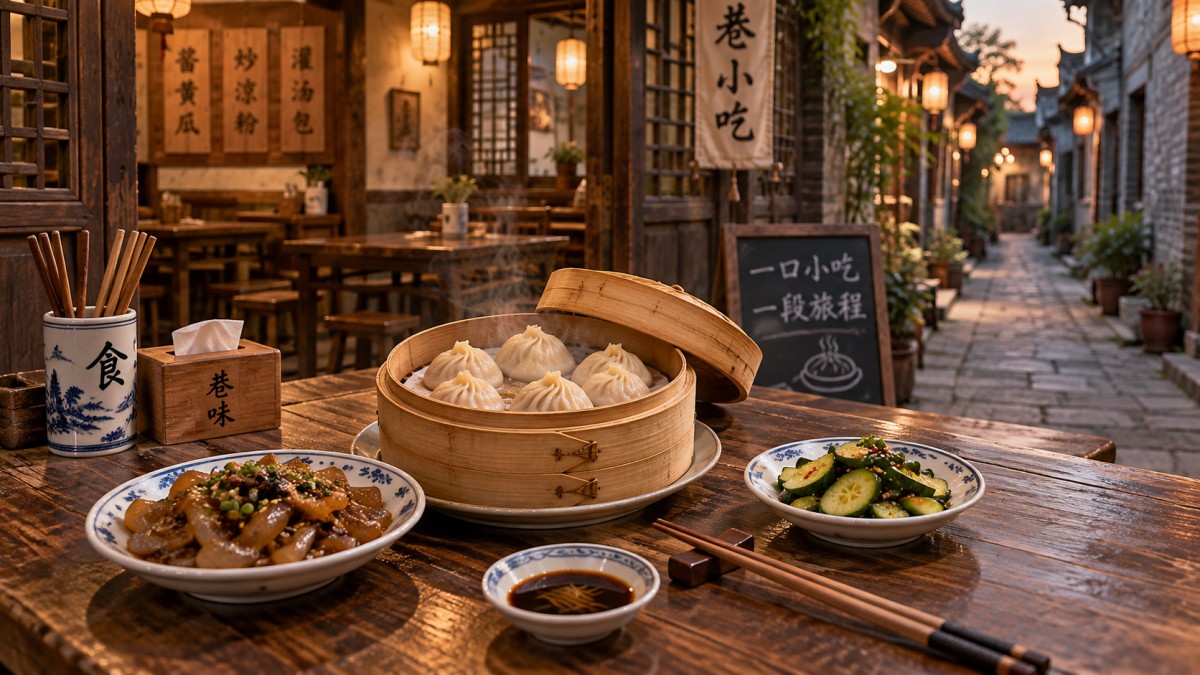
Kaifeng snacks are best enjoyed when you have time to walk around and share different items. Eating several kinds of noodles and fried snacks in succession can quickly leave you feeling full. Rather than scheduling a large dinner and then rushing through the night market, leave some room in your meal budget for snacks, buy small portions, and get more after you have tried them. Check opening hours and which stalls are operating shortly before your trip, and avoid making one particular shop your only goal for the evening.
If your day includes both sightseeing and food exploration, try to keep your route within the same area. Repeatedly crossing the city to reach one restaurant costs more than just the fare—it also cuts into time for meals and rest. If a tour itinerary lists “free time,” check the location and duration, and make sure they give you enough time to visit the dining area you have in mind.
Calculate the budget for the entire trip, not just the meal allowance
Independent travel is not necessarily cheaper. Sharing the cost of a hired car between two people, taking taxis out of your way for meals, or ordering too much can all increase expenses. Staying near the main food areas and walking between restaurants makes it easier to keep costs under control. Leave some room in your food budget for extra snacks, too, so you do not pay for a full meal and then spend again on snacks.
Break down tour prices to see what is included: how many meals, whether each is a set group meal or allows you to choose dishes, whether drinks cost extra, and whether specialty meals require an upgrade fee. The meal allowance only indicates how costs are arranged; it does not by itself prove that the food will suit your tastes or provide an in-depth experience. Even when two meals are both described as “specialty cuisine,” the actual experience can differ depending on the dishes, the number of people sharing the table, and the portion sizes.
When comparing options, calculate both on the same basis: “transport and accommodation + confirmed meals + allowance for meals paid for independently + required booking fees.” Comparing total prices is meaningful only when the inclusions are similar.
The more specific your dietary requirements, the more important it is to confirm what can be adjusted
Food restrictions, allergies, and a preference for lighter food can directly affect your choices. Traveling independently makes it easier to ask at each restaurant, but you still need to understand the ingredients and preparation methods. If you are joining a tour, discuss your needs when booking and confirm which adjustments the restaurant can accommodate. Do not assume that avoiding spicy food will make every dish suitable: broths, sauces, and side dishes may also contain ingredients you need to avoid.
When travel companions have different tastes, fixed group meals can leave some people unsatisfied. Consider an itinerary that leaves some meals for you to arrange yourself, or make a specialty banquet a shared experience and order separately at other times. If you need set times for rest and meals, prioritize a steady pace and avoid repeated queues and last-minute restaurant changes.
For a balance of freedom and convenience, you can book only the services you need
There are more flexible options between independent travel and joining a tour for the entire trip. You can arrange your own transport and accommodation and book a specialty banquet in advance, or choose a small-group tour for intercity transfers and guided visits while keeping evenings free for meals and exploring local streets. Whether this arrangement works depends on clearly defining the scope of services; “small group” does not automatically mean that the itinerary can be changed at any time.
Before booking, make sure the details that matter most to you are stated in the itinerary or order: the specific specialty meal, the dining location or substitution policy, free-time periods, and what happens if a planned activity cannot go ahead. If food is the main purpose of your trip, plan sightseeing around your dining route. If you simply want to sample local food while sightseeing, keeping a few meals open for your own choices is often enough.
Your 1:1 travel consultant will respond within 1 business day
How to plan your trip
- China Tourism Academy Releases Report on Autumn Trends in China's Domestic Customized Tour Market
- Visiting China for the First Time: How Many Cities Should You Include in a 15-Day Grand Tour?
- Is a geology exploration tour suitable for elementary school students?
- Is it worth hiring a guide for a visit to the Terracotta Army?
- Hebei Launches 5 “Trendy Hebei” Signature Tour Routes, Standardizing Inbound Tourism Services
Monthly travel guide
- Luoyang launches the “Autumn Charm of the Divine Capital” tourism promotion to build anticipation for winter travel
- Typhoon “White Dolphin” Forces Henan Scenic Areas to Close, Putting Summer Ground-Handling Services Under Pressure
- RCEP Implementing Rules for Indonesia Take Effect: Zero Tariffs for Cultural and Tourism Services Alongside Strict Customer Service Requirements
- Saudi Arabia’s New SASO Regulations Take Effect: Taqat Certification Required Before Chinese-Language Cultural Tourism Services Can Access Visit Saudi
- Zhengzhou Launches a Dedicated LCL Shipping Route for Cultural and Tourism Materials, Cutting Freight Costs by 18%
- Luoyang Cold Chain Intensification: Cultural and Creative Exports Delivered in 9 Days
- Expedited Pre-Approval for Group Visas to Three Southeast Asian Countries
- Tightening air freight capacity at Zhengzhou Airport delays the delivery of cultural and tourism materials
- Vietnam's New Regulations on Bus Monitoring Requirements for Group Tours
- Saudi SAMA New Regulations on Travel Liability Insurance Compliance Preparation
- Japanese tourists' new regulations for entering Henan local transport vehicles
- Wai Gao Qiao Wen Travel customs bonded warehouse summer group equipment fast lane
Popular destinations
- How should time for altitude acclimatization be planned for a Mount Siguniang and Bipenggou tour?
- How can you tell from an itinerary whether enough time has been set aside for photography?
- For a bilingual guide on a Grand China tour, should you choose full-tour accompaniment or service in separate segments?
- How can you plan a high-speed rail route for a panoramic tour of China without backtracking?
- How can you verify hotel check-in eligibility in advance for inbound tours covering all of China?
Why choose us

High cost-performance and transparent experience
Offer astonishing low prices without hidden tourism traps, enabling travelers to explore at lower costs while avoiding unnecessary spending loopholes, ensuring transparent consumption.

Personalization and dedicated service
Support 100% free customization, paired with one-on-one expert service, crafting exclusive itineraries based on travelers' specific needs, while providing professional guidance to enhance the personalization and professionalism of the journey.

Premium itinerary planning
Compact yet rich itineraries allow travelers to experience more within limited time; simultaneously, carefully selected hotels in prime locations provide convenient lodging conditions, overall enhancing travel comfort and experience.