Welcome to Our Travel Agency!




Setting out before dawn to photograph the sunrise, the most important consideration when hiring a private vehicle is not “whether it can arrive on time,” but whether the vehicle is legally authorized to carry passengers, whether the driver has had sufficient rest, and whether there are workable alternatives in the event of road closures or breakdowns. Simply checking a business license, vehicle photos, and an “experienced driver” promise cannot prove that the trip is properly safeguarded.
When choosing a private vehicle service for photography tours, confirm the actual carrier, the qualifications of the vehicle and driver, and the conditions for nighttime operation before making payment. The departure time, waiting time for photography, return arrangements, and procedures for handling unexpected situations should all be included in the order. Sunrise time is fixed, but traffic, scenic-area opening hours, and weather conditions may not cooperate. A driver cannot make up for gaps in the plan simply by driving faster.
First clarify: who accepts the booking and who actually drives
A travel agency, platform, or photography tour leader may organize the itinerary, but may not be the actual carrier. Require the booking party to clearly identify the name of the carrier, the vehicle type, and the nature of the service. Do not accept vague responses such as “a partner fleet will make the arrangements” without receiving information about the actual service provider.
Where a travel agency organizes tourism activities, its tourism business operating license can be verified through official channels such as the National Tourism Supervision and Service Platform. For road passenger transport vehicles, verify the carrier’s relevant road transport operating license, the vehicle’s Road Transport Certificate, and the driver’s applicable driving class and professional qualification. Different vehicle-use arrangements are subject to different rules. If a ride-hailing vehicle is provided, it should be verified in accordance with local ride-hailing management requirements; different types of certificates must not be treated as interchangeable.
Ordinary car-rental procedures cannot replace the qualifications required for commercial passenger transport. A clean vehicle with company markings, or a driver willing to show a driving license, does not mean that the requirements for commercial passenger transport have been met.
During verification, focus on whether the carrier’s name is consistent, whether the certificates are valid, whether the business scope covers the current service, and whether the vehicle license plate matches the order. You may request the necessary license and certificate information and check it through publicly available channels of the transportation authorities. If no public verification channel is available, consult the competent local authority. Certificate photos should not be widely circulated in group chats, and personal information unrelated to the verification may be redacted.
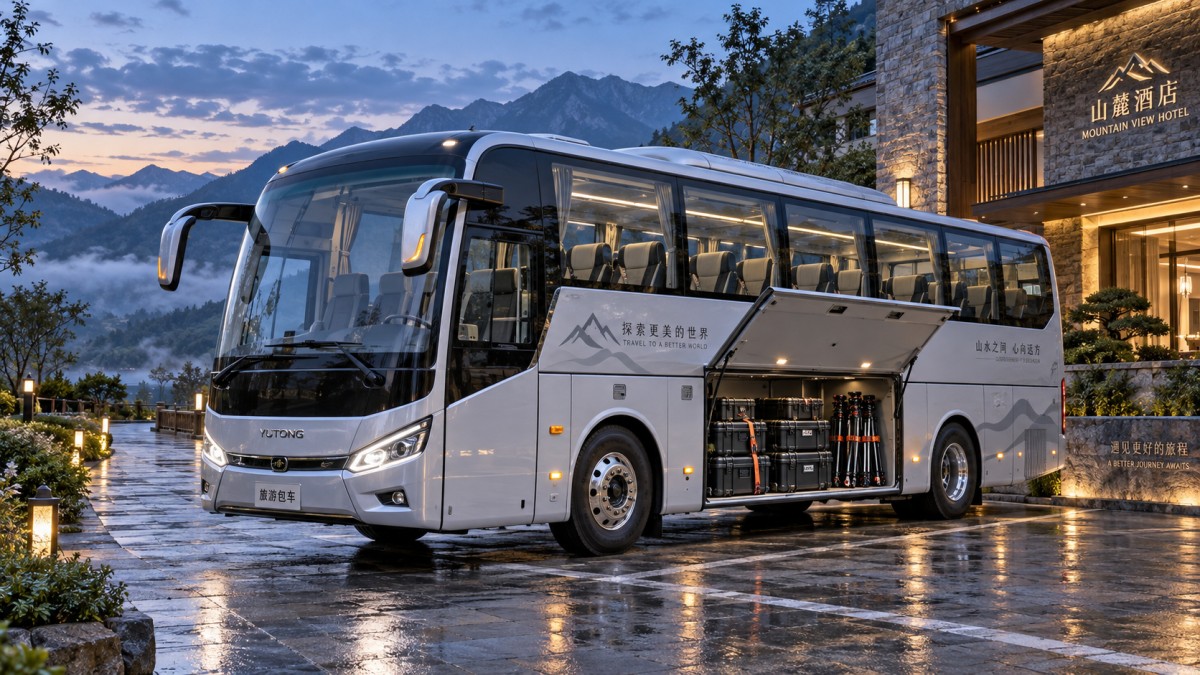
Whether a vehicle can depart before dawn depends on the route and vehicle type
“Depart at 3:00 a.m. and arrive at the foot of the mountain at 5:00 a.m.” cannot be judged solely by the travel time shown on a navigation app. First confirm whether the vehicle type, route, or roads along the way are subject to nighttime operating restrictions. Long-distance passenger transport is subject to specific safety management requirements for nighttime operation. “Tourist charter service” does not mean that the vehicle can operate overnight without restrictions; the carrier should explain the specific arrangements in accordance with the applicable regulations.
Then separately calculate the time required for hotel pickup, loading equipment, entry checks at the mountain, scenic-area shuttle transfers, and walking to the shooting location. The destination shown on the navigation app may only be a parking lot, not the actual photography spot. Work backward from the sunrise time on the shooting date, the scenic area’s opening hours, and the first shuttle departure, rather than setting a meeting point before dawn first and then asking the driver to find a way to arrive on time.
If the opening hours make it impossible to catch the sunrise, using a faster vehicle will not solve the problem. A more reasonable option is to change the shooting location, stay closer the night before, or cancel the photography arrangement if access conditions cannot be met.
Asking whether the driver has rested is more useful than asking how long they have been driving
Mountain-road experience is worth understanding, but it cannot offset the risk of fatigue. When booking a vehicle, ask whether the driver had any pickup or drop-off assignments the previous day, when they plan to rest, whether they will have to handle other orders during the photography session, and who will drive on the return trip. Continuous driving and rest arrangements should comply with the applicable requirements; simply waiting in a parked vehicle cannot automatically be counted as sufficient rest.
Be especially alert to back-to-back arrangements such as “picking up passengers at night, driving them to photograph the sunrise before dawn, and continuing to visit scenic spots during the day.” Adding a second driver does not automatically solve the problem; you must also confirm both drivers’ actual schedules and rest conditions.
If the driver needs to move the vehicle frequently or transport people between different shooting locations during the waiting period, this is not a period of complete rest. When choosing a service, prioritize comparing the scheduling arrangements for the entire vehicle-use period rather than only comparing the departure segment.
Insurance should be assessed by what it covers, not simply by the phrase “full insurance”
“Full insurance” is not a clear description of coverage. Require confirmation of the vehicle’s compulsory traffic insurance, relevant commercial insurance, and carrier liability insurance, and check the vehicle, carrier, insurance period, scope of liability, and liability limits stated in the policy to ensure that they correspond to the actual commercial use of the vehicle.
Travel agency liability insurance, carrier liability insurance, and personal travel accident insurance cover different parties and have different conditions for compensation; they cannot replace one another. Personal accident insurance may also exclude activities such as mountaineering and activities in non-open areas.
Cameras, lenses, and drones should not automatically be assumed to be covered under ordinary passenger personal accident protection. Ask separately whether valuable equipment is insured and how loss or damage will be handled. When loading the vehicle, tripods and hard cases must be secured and must not block aisles or emergency exits.
The “one-day private vehicle” rate should be broken down into clear terms
Photography vehicle services are prone to disputes over waiting time and changes of location. The quotation should clearly specify the service start and end times, mileage limits, charges for service before dawn, parking fees, road and bridge tolls, the driver’s accommodation and meals, and the method for calculating overtime and excess mileage. Whether additional shooting locations may be added due to weather changes, and how they will be charged, should also be agreed in advance.
The distinction between intercity transportation and local private vehicle service must also be made clear. For example, an intercity itinerary such as Chengdu → Chongqing → Guangzhou that includes high-speed rail connections does not mean that transportation for photography before dawn is automatically included. The specific vehicle, time period, and fees still need to be confirmed separately.
Before paying the deposit, agree on the latest time by which the license plate number, driver’s contact details, and verification information will be provided. If the vehicle is changed at the last minute, the replacement vehicle must also be verified again. Do not approve the change based solely on a verbal promise of an “equivalent vehicle model.”
Emergency protection depends on specific actions, not “we can coordinate at any time”
There should be clear arrangements for who answers the phone in the event of a vehicle breakdown, who dispatches a replacement vehicle, how quickly a response is expected, where the replacement vehicle will come from, and how refunds will be handled if the service cannot continue. Saying that “a backup vehicle is available” cannot be regarded as reliable protection if the dispatch location and response process are unclear.
Poor weather must also be handled according to the circumstances. A lack of clouds or a sunrise obscured by clouds does not mean that the carrier has breached its obligations. Road icing, traffic controls, or scenic-area closures, however, should trigger suspension of travel, a route change, or cancellation. How fees will be settled should be clarified before departure, rather than disputed on site.
Before boarding, verify the license plate, driver, and seat belts. If there is a last-minute change of driver or vehicle, obvious driver fatigue, overloading, or a request to take a dangerous route through a closed section, suspend the trip and contact the party responsible for the order. A worthwhile private vehicle service for photography does not guarantee that you will definitely capture the sunrise. Instead, it should clearly explain under what conditions departure is possible, when the trip must be stopped, and who will handle matters after the trip is stopped.
Your 1:1 travel consultant will respond within 1 business day
How to plan your trip
- Autumn Breaks in Multiple Regions Boost November Travel, Offering Hope for the Traditional Low Season
- China Tourism Academy Releases Report on Autumn Trends in China's Domestic Customized Tour Market
- Visiting China for the First Time: How Many Cities Should You Include in a 15-Day Grand Tour?
- Is a geology exploration tour suitable for elementary school students?
- Is it worth hiring a guide for a visit to the Terracotta Army?
Monthly travel guide
- Luoyang launches the “Autumn Charm of the Divine Capital” tourism promotion to build anticipation for winter travel
- Typhoon “White Dolphin” Forces Henan Scenic Areas to Close, Putting Summer Ground-Handling Services Under Pressure
- RCEP Implementing Rules for Indonesia Take Effect: Zero Tariffs for Cultural and Tourism Services Alongside Strict Customer Service Requirements
- Saudi Arabia’s New SASO Regulations Take Effect: Taqat Certification Required Before Chinese-Language Cultural Tourism Services Can Access Visit Saudi
- Zhengzhou Launches a Dedicated LCL Shipping Route for Cultural and Tourism Materials, Cutting Freight Costs by 18%
- Luoyang Cold Chain Intensification: Cultural and Creative Exports Delivered in 9 Days
- Expedited Pre-Approval for Group Visas to Three Southeast Asian Countries
- Tightening air freight capacity at Zhengzhou Airport delays the delivery of cultural and tourism materials
- Vietnam's New Regulations on Bus Monitoring Requirements for Group Tours
- Saudi SAMA New Regulations on Travel Liability Insurance Compliance Preparation
- Japanese tourists' new regulations for entering Henan local transport vehicles
- Wai Gao Qiao Wen Travel customs bonded warehouse summer group equipment fast lane
Popular destinations
- Luoyang Museum to Close; Night Tours at Longmen to Be Suspended; Restoration Work to Begin at White Horse Temple
- What cancellation fees apply when a participant drops out of a customized corporate trip at short notice?
- Which stop should come first on a Wudang Mountain and Shennongjia tour for the most convenient route?
- How should time for altitude acclimatization be planned for a Mount Siguniang and Bipenggou tour?
- How can you tell from an itinerary whether enough time has been set aside for photography?
Why choose us

High cost-performance and transparent experience
Offer astonishing low prices without hidden tourism traps, enabling travelers to explore at lower costs while avoiding unnecessary spending loopholes, ensuring transparent consumption.

Personalization and dedicated service
Support 100% free customization, paired with one-on-one expert service, crafting exclusive itineraries based on travelers' specific needs, while providing professional guidance to enhance the personalization and professionalism of the journey.

Premium itinerary planning
Compact yet rich itineraries allow travelers to experience more within limited time; simultaneously, carefully selected hotels in prime locations provide convenient lodging conditions, overall enhancing travel comfort and experience.