Welcome to Our Travel Agency!




Travel Guide
Wondering how many days in Luoyang will let you explore without rushing? For most first-time visitors, three full sightseeing days offer the best balance. That gives you time for the Longmen Grottoes, a historic temple, a museum, and evenings when dinner does not have to compete with another attraction.
Two days can work if you choose your priorities carefully. Four or five are better for a slower pace, deeper cultural interests, or a trip beyond the city. The important distinction is between days on your booking and days you can actually use: arriving late on Friday and leaving Sunday afternoon is not a three-day visit.
Here is how to choose a stay that feels like a holiday rather than a race through an ancient capital.
How many days in Luoyang fit your travel style?
Start with what you would regret missing, then consider how much walking, travel, and structured sightseeing you enjoy in one day.
For a relaxed first visit, three days is the strongest default—not because every hour needs filling, but because you have room to change your mind. A longer lunch, a fascinating gallery, or a rainy morning need not disrupt the whole trip.
Count usable days before booking your nights
A common planning mistake is treating arrival and departure days as full sightseeing days. Luoyang’s railway stations, hotels, and attractions are not all close together. Getting off a train is only the beginning of your arrival: allow for reaching your hotel, leaving luggage, and finding something to eat.
Three nights can provide three useful sightseeing days if you arrive early and leave late. If your first evening begins with a late check-in, four nights is the more comfortable arrangement for three complete days.
For example, arrive on Monday evening, explore Tuesday through Thursday, and depart Friday morning. That is a five-calendar-day travel window, but only three full days in Luoyang.
When comparing train or flight options, consider the usable time each creates, not just the ticket price. An inconvenient arrival may save money while costing most of a day you hoped to spend exploring.
What a relaxed three-day Luoyang itinerary looks like
The simplest approach is to give each day one main focus. Smaller activities can sit around it, but should remain optional. The order below can change with weather, museum opening days, and ticket availability.
Day one: Give the Longmen Grottoes your attention
The Longmen Grottoes are the essential starting point for many first visits. Buddhist carvings spread along the river landscape, and their scale becomes much easier to appreciate when you are not watching the clock.
Allow roughly half a day for the visit itself, with additional time for transport, entry procedures, and breaks. This is a planning allowance rather than a fixed visiting time: your route, interest in the sculpture, and walking pace will all make a difference.
The site involves substantial walking, steps, and exposed outdoor sections. Wear comfortable shoes, carry water, and avoid assuming that every member of your group will move at the same speed. Families and older travelers may prefer a shorter route with more pauses.
Afterward, keep the afternoon light. Return to the hotel, have a leisurely meal, or take a short walk near your accommodation. If everyone still has energy, spend the evening around the old city or Lijing Gate area. There is no need to add another major paid attraction simply because a few hours remain.
Day two: White Horse Temple, then an unhurried evening
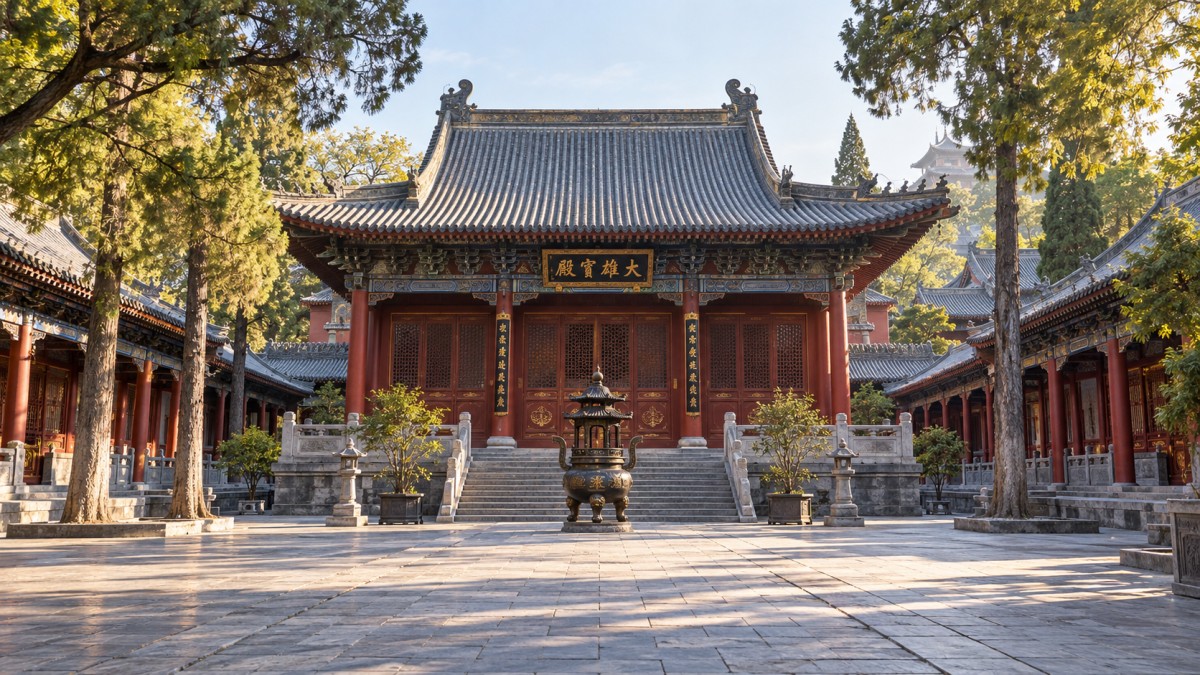
White Horse Temple offers a different setting from Longmen: courtyards, halls, and a quieter way to engage with Luoyang’s Buddhist heritage. Its location outside the central sightseeing area means it deserves a planned outing rather than being squeezed between unrelated stops.
Give the temple a generous morning, allowing for travel in both directions. You can then decide whether the afternoon calls for another cultural stop or a rest. This flexibility is particularly welcome after the walking at Longmen.
In the evening, explore at street level. Try a local soup meal, browse a lively neighborhood, or arrange a Luoyang water banquet if food is an important part of your trip. The banquet is a multi-dish tradition, so ask about portion sizes and menus, especially when traveling as a couple or small family.
Day three: A museum and the city beyond the headline sights
Luoyang Museum is a useful choice for understanding the city’s long history and placing individual monuments in context. Allow two to three hours as a starting point; keen museum visitors may want longer.
Check current opening days, reservation procedures, and identification requirements before fixing your schedule. These details can change, and a museum closure should not become a surprise on your last morning.
Leave the rest of the day for your own interests. That might mean another heritage site, time in the old city, or a long lunch followed by a café stop. Travelers drawn to Sui and Tang history may consider the relevant heritage attractions, checking what is included in each ticket and which experiences depend on evening programming.
This lighter final day also provides a buffer if weather or fatigue forced you to rearrange something earlier.
When two days are enough—and when they are not
A two-day Luoyang itinerary is reasonable if the city is one stop on a longer China journey and your priorities are clear. Devote one day mainly to Longmen Grottoes. On the other, choose a museum-led or temple-led day, with evening exploration if energy allows.
The key word is choose. Trying to fit Longmen, White Horse Temple, multiple museums, several heritage parks, and nightly activities into two days changes the character of the visit. You may cover more names without having much time to absorb them.
Two days work best for travelers who:
- Have two genuinely usable days, rather than two partial travel days.
- Are comfortable walking and moving between sights without long breaks.
- Prioritize a few highlights over comprehensive coverage.
- Do not plan to include Shaolin Temple or another substantial excursion.
If Luoyang is a major reason for your trip to China, rather than a brief stop along the route, the third day is usually worth protecting.
Should you extend your stay to four or five days?
An extra day becomes valuable when it solves a specific problem: slower walking, children’s rest times, a strong interest in archaeology, or a wish to spend longer at fewer places. You do not need to leave Luoyang to justify staying longer.
Four days can turn the three-day outline into a gentler visit, with later starts and more open afternoons. Alternatively, it can accommodate one full-day excursion while keeping the city highlights reasonably balanced.
Five days makes more sense if you want both a regional outing and breathing room. Shaolin Temple, near Dengfeng, is a common addition, but transport, walking, and any scheduled performances can make it a substantial day. Check current performance arrangements rather than building your visit around an assumed timetable.
Mount Laojun is another possible extension, but it is not a quick city-side attraction. Road travel, mountain weather, cableway operations, and your chosen walking route all affect the experience. For a relaxed trip, consider whether an overnight arrangement would suit you better than a long return journey.
Avoid adding excursions simply to fill the calendar. If your ideal afternoon involves tea and a quiet courtyard, extra city time may be more rewarding than another transfer.
Season and transport can change the answer
Spring peony season is a particularly popular time to visit Luoyang. Flowering dates vary with weather, and popular periods can bring busier hotels, roads, and attractions. If peonies are a priority, reserve time for a garden rather than adding it to an already full day.
During major Chinese holiday periods, leave more space around transfers and attraction entry. An extra night can reduce pressure, although it does not guarantee quieter sightseeing.
Summer heat can make a schedule that looks modest on paper feel demanding, especially at outdoor sites. Earlier outings and an afternoon break may suit you better. In winter, colder conditions and shorter daylight favor a more selective outdoor itinerary. Rain can also make a museum day more appealing, subject to opening and booking availability.
Hotel location matters too. Staying near evening dining options can make independent dinners easier; staying mainly for station convenience may mean longer journeys elsewhere. Choose according to your actual itinerary, not a vague promise that a hotel is “central.” Check the precise station named on your rail ticket when arranging transfers.
Make Luoyang fit the wider journey—not compete with it
When planning several destinations, allocate time according to the experience you want in each place. Luoyang benefits from time for historical context and outdoor monuments, while a Jiangnan itinerary places more emphasis on gardens, canals, and water-town scenery.
If you are also considering the Shanghai + Suzhou + Wuzhen 6-Day Custom Tour, treat Luoyang as a separate cultural chapter and allow for the journey between regions. Do not count an intercity transfer day as a full sightseeing day in both places.
For a Henan-focused trip, a Luoyang-based operator can help assess whether onward travel through Dengfeng, Zhengzhou, or Kaifeng makes more sense than repeatedly returning to the same hotel. Henan Le Journey Travel Agency Co., Ltd. can coordinate transport, accommodation, reservations, and guide services around your preferred pace. The useful starting point is your daily comfort level—not the maximum number of attractions that can fit into a route.
The simplest booking decision
Choose two full days for a selective highlights visit, three full days for a relaxed first introduction, and four or five for slower travel or a regional excursion.
Before booking, write down your arrival time, departure time, three must-see places, and any mobility or rest requirements. If those essentials already fill every available hour, add a day or remove a stop. The best Luoyang itinerary leaves enough room to notice the city between its monuments.
Your 1:1 travel consultant will respond within 1 business day
How to plan your trip
- The Ice and Snow Industry Surpasses RMB 1 Trillion, with Direct High-Speed Rail Access and Upgraded Nighttime Offerings Driving Spending
- Autumn Breaks in Multiple Regions Boost Family Travel and Tourism
- Liaoning 2026–2027 Winter Culture Carnival Kicks Off
- Shenyang Cultural Tourism Promotion Delegation Visits Guangzhou to Promote Winter Tourism and Attract Investment
- 2026 Hebei Culture and Tourism Promotion Week in Beijing Kicks Off
Monthly travel guide
- October 2026 County-Level Tourism Communications Report Released: Top 100 Index Rebounds
- More Than 100 Cities Introduce Autumn Breaks, Creating a New Hotspot for Family and Educational Travel
- The 2026 China-Vietnam (Honghe) Border Economic, Trade and Tourism Fair Opens in Hekou
- The 2026 Guangxi Cultural Tourism Carnival Held in Hezhou
- Luoyang launches the “Autumn Charm of the Divine Capital” tourism promotion to build anticipation for winter travel
- Typhoon “White Dolphin” Forces Henan Scenic Areas to Close, Putting Summer Ground-Handling Services Under Pressure
- RCEP Implementing Rules for Indonesia Take Effect: Zero Tariffs for Cultural and Tourism Services Alongside Strict Customer Service Requirements
- Saudi Arabia’s New SASO Regulations Take Effect: Taqat Certification Required Before Chinese-Language Cultural Tourism Services Can Access Visit Saudi
- Zhengzhou Launches a Dedicated LCL Shipping Route for Cultural and Tourism Materials, Cutting Freight Costs by 18%
- Luoyang Cold Chain Intensification: Cultural and Creative Exports Delivered in 9 Days
- Expedited Pre-Approval for Group Visas to Three Southeast Asian Countries
- Tightening air freight capacity at Zhengzhou Airport delays the delivery of cultural and tourism materials
Popular destinations
- Is Jingshan Park worth visiting for sunset views over Beijing?
- Mutianyu vs Jinshanling Great Wall: Which Suits a First Visit?
- Is Luoyang, China, worth a stop on your first visit to China?
- How many days do you need in Luoyang to see its major sights?
- What local snacks should you try at a Luoyang night market?
Why choose us

High cost-performance and transparent experience
Offer astonishing low prices without hidden tourism traps, enabling travelers to explore at lower costs while avoiding unnecessary spending loopholes, ensuring transparent consumption.

Personalization and dedicated service
Support 100% free customization, paired with one-on-one expert service, crafting exclusive itineraries based on travelers' specific needs, while providing professional guidance to enhance the personalization and professionalism of the journey.

Premium itinerary planning
Compact yet rich itineraries allow travelers to experience more within limited time; simultaneously, carefully selected hotels in prime locations provide convenient lodging conditions, overall enhancing travel comfort and experience.