Welcome to Our Travel Agency!




Travel Guide
On 2026年5月20日, Alipay's 'linking foreign cards to domestic wallets + using foreign wallets domestically' service achieved 100%覆盖 of core scenic areas in Henan such as Longmen Grottoes, Shaolin Temple, and Laojun Mountain, supporting Visa and Mastercard card linking, and providing operation interfaces in English, Japanese, and Korean. This progress marks the completion of a key-stage upgrade in the cross-border payment infrastructure of Henan's cultural tourism scenarios, and constitutes an observable variable in the business evaluation logic of three types of entities: overseas cultural tourism distributors, OTA platforms, and cross-border payment service providers, which is worthy of continued attention from relevant industries.
Event Overview
As of 2026年5月20日, Alipay's 'linking foreign cards to domestic wallets + using foreign wallets domestically' service has achieved 100%覆盖 across core scenic areas in Henan such as Longmen Grottoes, Shaolin Temple, and Laojun Mountain; it supports linking Visa and Mastercard international bank cards; it provides operation interfaces in English, Japanese, and Korean; this service is intended to reduce payment friction for overseas tourists when making on-site purchases at scenic areas.
Which segmented industries will be affected
Overseas cultural tourism distributors
Such institutions rely on the digital service capabilities of destinations to support product packaging and price competitiveness. Whether the payment chain supports mainstream international card types and multilingual interfaces directly affects their conversion efficiency and after-sales response costs when promoting Henan routes to overseas source markets (尤其 Japanese, Korean, European, and American markets). The impact is mainly reflected in the addition of quantifiable indicators to the evaluation dimensions of destination handling service maturity. The original rough judgment of 'whether Alipay is available' is shifting toward the refined verification of 'whether direct foreign card linking + multilingual interfaces are supported.'
Online travel platforms (OTA)
OTA platforms need to embed payment capabilities into the entire booking process. When scenic-area terminals already have stable foreign card acceptance capabilities, platforms can reduce reliance on compromise solutions such as third-party acquiring redirects or prepaid deposits, thereby optimizing the user journey and lowering cart abandonment rates. The impact is mainly reflected in: shortened settlement chains, partial transfer of foreign exchange settlement compliance pressure to the scenic-area side, and multilingual interface requirements forcing adjustments to platform localization adaptation strategies.
Cross-border payment service providers
Service providers need to connect with scenic-area acquiring systems and international card organization networks. This coverage means that key scenic areas in Henan have been connected to an acceptance environment that meets the basic requirements of PCI DSS, and also possess front-end interaction capabilities for overseas users. The impact is mainly reflected in: making regional market technical acceptance standards explicit, enabling current interface specifications to be reused in the subsequent expansion to second- and third-tier scenic areas, and making multilingual UI adaptation experience one of the differentiated service capabilities.
What key points should relevant companies or practitioners pay attention to, and how should they respond at present
Pay attention to follow-up official statements or policy changes
The current coverage scope is clearly limited to 'core scenic areas', and it has not yet been disclosed whether it will extend to related consumption scenarios such as transportation connections, cultural and creative retail, and dining. Relevant companies should track subsequent expansion lists released through official channels of the Henan Provincial Department of Culture and Tourism or Alipay, so as to avoid misreading 'scenic-area coverage' as full regional payment infrastructure readiness.
Pay attention to changes in key market business links
Japanese and Korean interfaces have already gone live, but no mention has been made of other high-frequency inbound languages such as Traditional Chinese, Thai, and Vietnamese. For distributors and OTAs targeting the Southeast Asian market, it is not advisable to directly apply the current solution. They need to independently verify the completeness of language support for their target customer groups, and should not assume that the coverage logic can be directly replicated.
Distinguish between policy signals and actual business implementation
'100%覆盖' means technical access has been completed, but it does not mean that merchant-side training is in place, terminal devices are operating stably, or customer service multilingual response capabilities are simultaneously ready. Before carrying out cooperation, companies should conduct on-site sampling tests of practical indicators such as card-linking success rates, language consistency of transaction failure prompts, and the timeliness of chargeback dispute handling.
Prepare in advance for system integration and localization contingency plans
If cross-border payment service providers and large OTAs plan to connect to Henan destination handling resources, they should initiate a compliance review of Alipay's foreign card acceptance API documentation, focusing on confirming whether it supports B2B-required functions such as split settlement, refunds returned to the original route, and transaction currency identification; at the same time, they should reserve update cycles for multilingual customer service knowledge bases to avoid a disconnect between interface localization and service response.
Editor's View / Industry Observation
Observably, this rollout is better understood as a measurable infrastructure signal—not yet a fully scaled operational outcome. It reflects provincial-level alignment between tourism authorities and digital payment providers on baseline interoperability standards, but does not indicate uniform readiness across all merchant touchpoints. From an industry perspective, the value lies less in immediate transaction volume lift, and more in establishing a benchmark for evaluating regional digital maturity in cross-border tourism services. Analysis shows that stakeholders should treat this as a trigger for due diligence refinement, not as a green light for wholesale channel expansion.
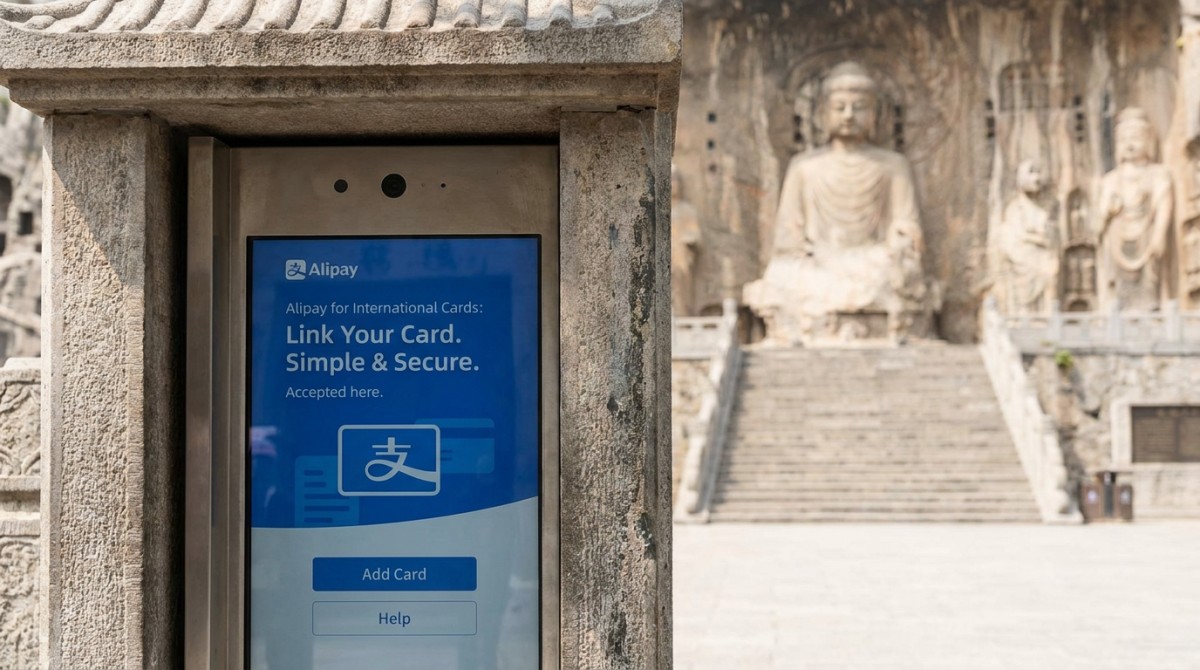
Conclusion: This full coverage of Alipay's foreign card linking service across core scenic areas in Henan is essentially an observable node in the standardization process of cultural tourism payment chains. It does not directly represent that the cross-border consumption environment across all of Henan has already been seamlessly connected, but it provides the first concrete technical readiness reference system for overseas distribution, platform integration, and payment services. At present, it is more appropriately understood as: regional digital destination handling capabilities are beginning to enter a new stage that can be verified, compared, and incorporated into procurement evaluation.
Source note:
Main source: Official announcement from Alipay (released on 2026年5月20日)
Areas for continued observation: whether the coverage scope will expand to non-A-level scenic areas and supporting consumption scenarios; whether additional languages will be added to the multilingual interface in the future; details of Visa/Mastercard transaction limits and risk control strategies
Your 1:1 travel consultant will respond within 1 business day
How to plan your trip
- Multiple regions announce autumn break dates for primary and secondary schools; attractions offer benefits such as discounted admission
- China’s Civil Aviation Industry to Implement the 2026/2027 Winter-Spring Flight Schedule from October 25
- Autumn Breaks in Multiple Regions Boost November Travel, Offering Hope for the Traditional Low Season
- China Tourism Academy Releases Report on Autumn Trends in China's Domestic Customized Tour Market
- What should I wear for a winter trip to Harbin and Mohe to cope with the extreme outdoor cold?
Monthly travel guide
- Luoyang launches the “Autumn Charm of the Divine Capital” tourism promotion to build anticipation for winter travel
- Typhoon “White Dolphin” Forces Henan Scenic Areas to Close, Putting Summer Ground-Handling Services Under Pressure
- RCEP Implementing Rules for Indonesia Take Effect: Zero Tariffs for Cultural and Tourism Services Alongside Strict Customer Service Requirements
- Saudi Arabia’s New SASO Regulations Take Effect: Taqat Certification Required Before Chinese-Language Cultural Tourism Services Can Access Visit Saudi
- Zhengzhou Launches a Dedicated LCL Shipping Route for Cultural and Tourism Materials, Cutting Freight Costs by 18%
- Luoyang Cold Chain Intensification: Cultural and Creative Exports Delivered in 9 Days
- Expedited Pre-Approval for Group Visas to Three Southeast Asian Countries
- Tightening air freight capacity at Zhengzhou Airport delays the delivery of cultural and tourism materials
- Vietnam's New Regulations on Bus Monitoring Requirements for Group Tours
- Saudi SAMA New Regulations on Travel Liability Insurance Compliance Preparation
- Japanese tourists' new regulations for entering Henan local transport vehicles
- Wai Gao Qiao Wen Travel customs bonded warehouse summer group equipment fast lane
Popular destinations
- The 17th China Yangtze Three Gorges International Tourism Festival Sees 17 Cultural and Tourism Projects Signed
- Henan Cultural Tourism Explores the Shift from Traffic to Immersive Experiences
- Liaoning Launches Inbound Tourism Promotion Event for Global Travel Trade, Releases Service Guide
- Shandong Hosts Cultural and Creative Industry Networking Event, Releases Annual Plan for Province-Wide Renewal
- Hong Kong Travel Industry Council Visits Henan, Aiming to Jointly Develop Distinctive Tourism Products
Why choose us

High cost-performance and transparent experience
Offer astonishing low prices without hidden tourism traps, enabling travelers to explore at lower costs while avoiding unnecessary spending loopholes, ensuring transparent consumption.

Personalization and dedicated service
Support 100% free customization, paired with one-on-one expert service, crafting exclusive itineraries based on travelers' specific needs, while providing professional guidance to enhance the personalization and professionalism of the journey.

Premium itinerary planning
Compact yet rich itineraries allow travelers to experience more within limited time; simultaneously, carefully selected hotels in prime locations provide convenient lodging conditions, overall enhancing travel comfort and experience.