Welcome to Our Travel Agency!




Travel Guide
Arriving at a hotel with tired children and finding that your confirmed family room is unavailable creates an immediate problem: everyone needs somewhere safe to sleep, without unexpected costs or unsuitable sleeping arrangements. Ask the duty manager to arrange an alternative that meets your family’s actual needs, contact whoever issued the booking, and get the proposed solution and payment arrangements in writing before agreeing.
What should we do if a hotel cannot provide the family rooms it confirmed? Start by separating tonight’s accommodation decision from any later refund or compensation discussion. You can seek a workable place to stay while documenting the booking failure, rather than trying to settle every dispute at reception before the children can rest.
Establish exactly what the hotel cannot provide
Open your confirmation email, booking voucher, or travel contract and compare it with what reception is offering. A confirmed room category is different from a preference recorded under “special requests.” Connecting rooms, a cot, or a particular bed arrangement may have been requested without being guaranteed, even when the accommodation itself was confirmed.
Check the details that affect whether your family can actually use the room:
- The number of adults and children recorded, including children’s ages.
- The confirmed room category, number of rooms, and length of stay.
- The number and type of beds, including any confirmed cot or extra bed.
- Whether connecting rooms were guaranteed or merely requested.
- Included meals, accessibility features, and other essential arrangements.
- Payment status, cancellation terms, and the name of the booking issuer.
Ask the manager to explain the precise problem. Is the room occupied, out of service, incorrectly allocated, or available only for part of your stay? A delayed room-cleaning issue calls for a different response from a room that cannot be supplied at all. Establishing the scope also prevents you from accepting a one-night arrangement that leaves the remaining nights unresolved.
If the hotel says the reservation never reached its system, show the confirmation and ask the booking provider to reconcile the records directly. Do not cancel the booking yourself simply to make it disappear from the system; depending on the terms, that could complicate the record or trigger a cancellation charge.
Ask for a concrete proposal, not an open-ended wait
Request the duty manager or another employee authorized to approve room changes and relocation. Reception staff may be able to identify vacancies but not approve transport, refunds, or charges at another property.
A useful request is:
“Our confirmation is for this room arrangement for these guests and dates. Please confirm what you can provide instead, whether it accommodates everyone safely, and who will pay any additional room and transfer costs. Please also tell us when you can confirm the arrangement.”
While staff investigate, ask for somewhere suitable for the family to wait and access to luggage if you need medication, nappies, or warm clothing. These practical requests do not replace the accommodation solution, but they reduce pressure to accept the first unsuitable offer.
Agree on a specific update time rather than accepting “please wait” indefinitely. The appropriate deadline depends on the hour, the children’s needs, and nearby availability. Where onward transport or a late-night transfer is involved, tell the manager about those constraints immediately.
Judge replacement rooms by sleeping arrangements, not their label
A hotel may describe an alternative as an upgrade because it is larger or more expensive. That does not make it suitable for a family. A suite with one bed can be less useful than a modest room with the confirmed sleeping capacity.
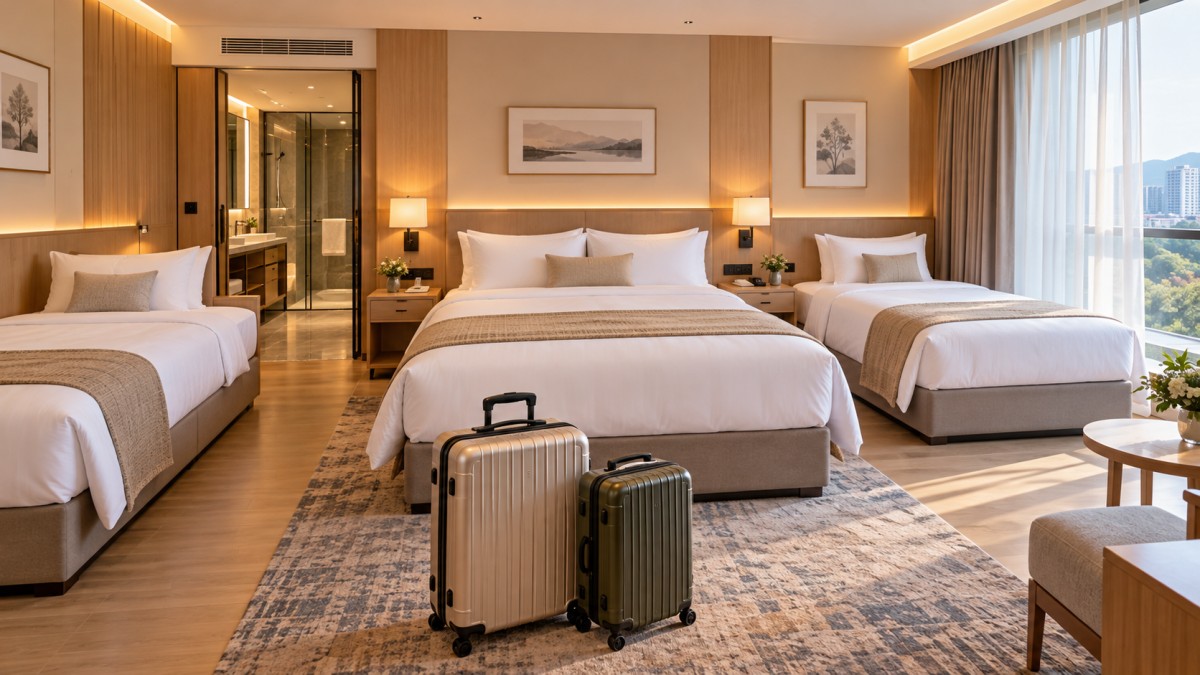
Do not accept an arrangement that leaves young children unsupervised or exceeds the room’s permitted occupancy. Inspect the actual room where possible. Check that extra beds have been installed, doors work properly, and essential accessibility features are present rather than relying on a room description.
For families travelling with an infant, ask specifically about a suitable cot and its availability. “A cot can usually be arranged” is not the same as having one ready. Where sleeping equipment is essential, make it part of the written acceptance conditions.
If relocation is necessary, confirm the destination before leaving
A suggested alternative is not yet a confirmed reservation. Ask the original hotel or booking provider to contact the receiving hotel, secure the required accommodation, and send you written details. This matters especially during busy travel periods, when availability can change while arrangements are being discussed.
- Confirm the full stay. Establish whether the replacement covers every affected night or requires another move.
- Verify the room arrangement. Obtain the room category, bed setup, guest count, and essential inclusions.
- Settle the payment method. Clarify whether the original hotel pays directly, the provider rebooks, or you must pay and request reimbursement.
- Arrange the transfer. Include luggage capacity and any child-seat requirements rather than assuming any available car will work.
- Check the location. Consider travel time to scheduled activities, meal options, and access needed by older relatives or travellers with reduced mobility.
For international visitors in China, the receiving hotel should confirm that it can complete the required guest registration using the family’s travel documents. Provide guest details through an appropriate channel and have original documents available for check-in. Resolving this before departure helps avoid a second accommodation problem.
On a multi-stop itinerary through Luoyang, Zhengzhou, or other parts of Henan, relocation may also affect a driver’s pickup point or the next morning’s departure. Notify the person coordinating transport once the new hotel is confirmed. Do not assume the hotel has passed that information to your guide or driver.
Before leaving the original property, obtain a written record that it could not supply the confirmed accommodation. If staff will not provide one, send a factual message through the booking channel describing what happened and asking them to confirm or correct it.
Keep room charges, refunds, and extra expenses separate
There are several distinct financial issues: the amount already paid for the unavailable room, the cost of the replacement, and additional expenses caused by the change. Discuss each explicitly. An offer to refund the original booking may still leave you paying substantially more for a last-minute alternative.
Ask for a written agreement covering any rate difference, transport charges, breakfast changes, extra-bed fees, and unused nights. Where the replacement is materially inferior, request an appropriate price adjustment. Do not assume that every inconvenience creates an automatic entitlement to a particular payment; the outcome depends on the booking terms, the circumstances, and applicable rules.
Avoid paying a second time without understanding how the first payment will be handled. If an additional payment is unavoidable to secure safe accommodation, keep the invoice and payment record, and document why you made it. Written reimbursement authorization is preferable to a verbal promise at the desk.
Keep additional spending reasonable and connected to the disruption. Necessary transfers are easier to explain than optional upgrades or unrelated purchases. Record expenses separately, with receipts, rather than submitting one estimated total later.
Read any settlement or cancellation wording before accepting it. Check whether it resolves only the room change or also asks you to waive further claims. If you accept temporary accommodation without settling the financial dispute, state that clearly in your written message; the legal effect of that statement will depend on the circumstances.
Escalate through the booking chain with a clear request
Contact the party that issued your confirmation. For a direct reservation, that will usually mean the hotel’s reservations team or management. For an intermediary booking, use its support channel. For a package or customized tour, contact the arranging travel agency so it can coordinate accommodation, transport, and itinerary changes together.
Send one concise evidence bundle:
- Your booking reference and confirmation showing the promised accommodation.
- A short timeline of arrival, the reported problem, and offers received.
- The family requirements that make an offered alternative unsuitable.
- Relevant messages, payment records, and receipts.
- The resolution you need now, followed by any outstanding refund request.
Be precise about the requested action: “Please confirm accommodation for all guests tonight and authorize the transfer cost” is more actionable than “Please fix this.” Ask for a case reference and a named contact where available.
If the immediate problem remains unresolved, safe accommodation takes priority over prolonged argument. Search for a reasonable alternative while keeping the booking provider informed, but recognize that reimbursement is not guaranteed without agreement or a supporting contractual or legal basis.
After the stay, unresolved financial disputes can be raised through the provider’s formal complaints process and, where appropriate, relevant consumer or tourism complaint channels. Travel insurance or payment-dispute options may also be relevant, but coverage, evidence requirements, and deadlines vary. Avoid seeking duplicate recovery for the same expense.
Reconfirm the details that matter before the next arrival
Once tonight’s problem is settled, check the remaining hotels on the itinerary. Send the guest count, children’s ages, required beds, and any essential connecting-room or accessibility arrangements. Ask each property to distinguish confirmed features from requests subject to availability.
Keep those replies accessible offline alongside the booking vouchers. If a travel agency is coordinating the trip, ask it to record the agreed arrangements with each property and identify who should be contacted outside normal office hours. The useful safeguard is not another generic “family room confirmed” message, but a clear record of where every family member will sleep and what happens if that arrangement becomes unavailable.
Your 1:1 travel consultant will respond within 1 business day
How to plan your trip
- “Discover Hebei in Winter” Tourism Exchange and Matchmaking Event Held in Jinan
- Zhangjiakou 2026–2027 Snow Season Launch and Ice and Snow Tourism Promotion Event Held in Shanghai
- The Palace Museum Explained: From Imperial Residence to Public Museum
- The 2026 autumn break covers over 100 cities, with family trips driving off-season demand for cultural and tourism services
- Family Travel in China: Planning a Relaxed Itinerary with Young Children
Monthly travel guide
- Luoyang launches the “Autumn Charm of the Divine Capital” tourism promotion to build anticipation for winter travel
- Typhoon “White Dolphin” Forces Henan Scenic Areas to Close, Putting Summer Ground-Handling Services Under Pressure
- RCEP Implementing Rules for Indonesia Take Effect: Zero Tariffs for Cultural and Tourism Services Alongside Strict Customer Service Requirements
- Saudi Arabia’s New SASO Regulations Take Effect: Taqat Certification Required Before Chinese-Language Cultural Tourism Services Can Access Visit Saudi
- Zhengzhou Launches a Dedicated LCL Shipping Route for Cultural and Tourism Materials, Cutting Freight Costs by 18%
- Luoyang Cold Chain Intensification: Cultural and Creative Exports Delivered in 9 Days
- Expedited Pre-Approval for Group Visas to Three Southeast Asian Countries
- Tightening air freight capacity at Zhengzhou Airport delays the delivery of cultural and tourism materials
- Vietnam's New Regulations on Bus Monitoring Requirements for Group Tours
- Saudi SAMA New Regulations on Travel Liability Insurance Compliance Preparation
- Japanese tourists' new regulations for entering Henan local transport vehicles
- Wai Gao Qiao Wen Travel customs bonded warehouse summer group equipment fast lane
Popular destinations
- The 2026 autumn break covers over 100 cities, with family trips driving off-season demand for cultural and tourism services
- Family Travel in China: Planning a Relaxed Itinerary with Young Children
- What Should You Do if a Hotel Cannot Provide Confirmed Family Rooms?
- Connecting Rooms or Family Rooms for a Henan Family Group?
- Multiple regions announce autumn break dates for primary and secondary schools; attractions offer benefits such as discounted admission
Why choose us

High cost-performance and transparent experience
Offer astonishing low prices without hidden tourism traps, enabling travelers to explore at lower costs while avoiding unnecessary spending loopholes, ensuring transparent consumption.

Personalization and dedicated service
Support 100% free customization, paired with one-on-one expert service, crafting exclusive itineraries based on travelers' specific needs, while providing professional guidance to enhance the personalization and professionalism of the journey.

Premium itinerary planning
Compact yet rich itineraries allow travelers to experience more within limited time; simultaneously, carefully selected hotels in prime locations provide convenient lodging conditions, overall enhancing travel comfort and experience.