Welcome to Our Travel Agency!




Travel Guide
The best things to do in Luoyang, China, with young children are not necessarily the ones that fill a sightseeing itinerary. A manageable visit to the Longmen Grottoes, a short museum outing, and time to play in a park can make a more rewarding trip than a full day moving between historic sites. Plan one main attraction each day, protect nap time, and treat evening activities as optional.
Longmen is worth prioritizing for its extraordinary carvings, but it requires more physical effort than photographs suggest. Luoyang Museum offers an indoor alternative, peony gardens work best during the flowering season, and the old city is better approached as a short food-and-strolling outing than a late-night excursion. The right combination depends less on how much history you want to see than on how comfortably your child can walk, rest, and cope with crowds.
Visit the Longmen Grottoes without trying to see everything
The Longmen Grottoes are Luoyang’s standout cultural attraction, and even children too young to understand Buddhist history can respond to the scale of the statues. For a preschooler, looking for tiny carvings and then finding an enormous Buddha is more engaging than listening to a detailed chronology.
The challenge is the site’s physical layout. Walking between transport points, entrances, and the carvings adds to the outing, while steps and uneven surfaces make some sections unsuitable for a stroller. The climb toward the monumental carvings at Fengxian Temple is a particular consideration for anyone carrying a toddler.
For a first family visit, prioritize the West Hill carvings and decide in advance which features matter most. Do not assume that visiting every area included in an admission ticket is necessary. A shorter visit that ends before a child becomes overtired is better than completing a circuit with no energy left to enjoy it.
- Choose the coolest practical part of the day. In hot weather, exposed walking areas can become uncomfortable. Check opening arrangements before committing to an early departure.
- Use a carrier for steps if it suits your child. A compact stroller can help on approach paths, but it will not solve access throughout the grottoes.
- Make the visit a spotting game. Ask children to find a large hand, a small figure, or a carving high above them. Keep explanations brief and connected to what they can see.
- Allow time for the exit. Finishing the carvings does not necessarily mean you are immediately back at your vehicle.
Keep children close around stairs, changes in level, and riverside areas, and prevent climbing on historic surfaces. If an adult has limited mobility or cannot safely carry a child, ask about the current accessible route before purchasing tickets rather than assuming the main highlights are step-free.
Use Luoyang Museum as a short discovery visit
Luoyang Museum is a useful choice for a rainy day, a hot afternoon, or a child who needs a break from outdoor sightseeing. Its archaeological collections offer tangible subjects for young visitors: pottery animals, horse figures, vessels, and objects with unfamiliar shapes.
The mistake is to approach the museum as a room-by-room assignment. Choose a few objects and let the child look closely. A horse figure can start a conversation about travel before cars; a decorated vessel can become a search for patterns. For a toddler, a brief visit may be entirely sufficient.
Aim for roughly an hour as an initial planning allowance, not a target that must be reached. Leave earlier if interest disappears. Check current opening days, reservation requirements, and identification rules through official channels, especially around public holidays. International visitors should confirm whether advance booking can be completed with a passport and carry the identification used for the reservation.
Do not count on an indoor museum being a place where children can run freely. Follow gallery rules on food, drinks, photography, and strollers, and schedule a snack before entering or after leaving rather than depending on refreshments inside.
Choose peony gardens for the season, parks for everyday play
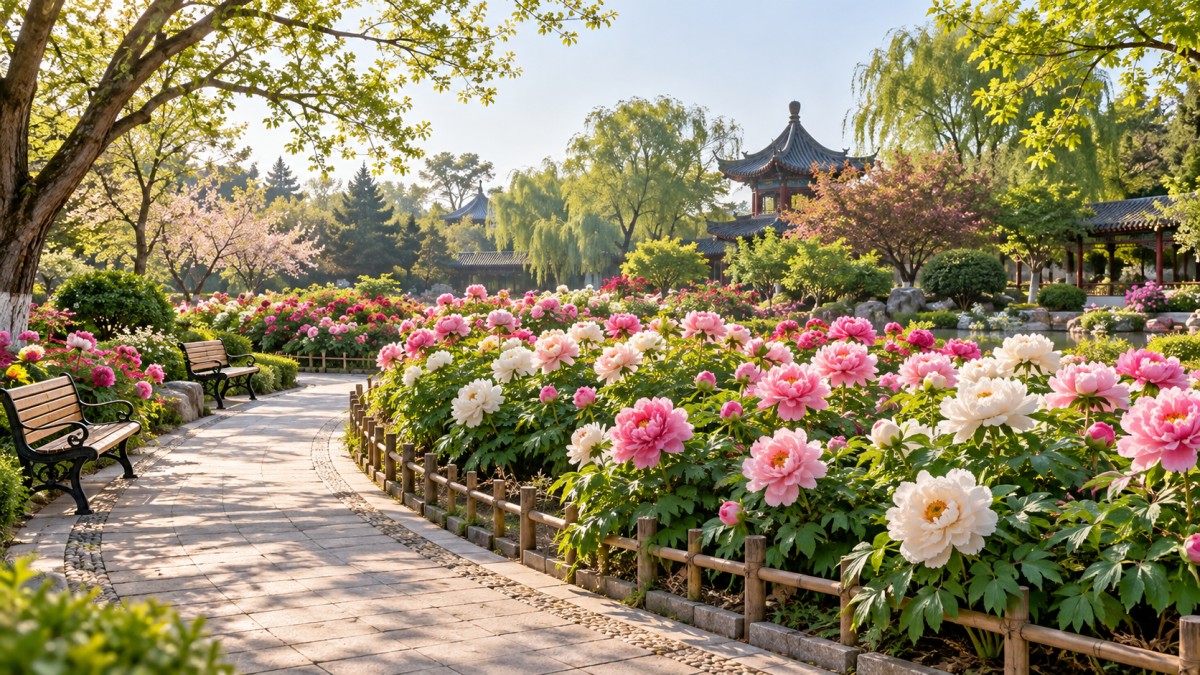
Luoyang’s peonies are a strong reason to visit in spring, but a garden is only a reliable flower outing when the blooms coincide with your dates. Flowering varies with weather, location, and variety. Check current bloom reports close to the visit rather than booking around a photograph or assuming one calendar date guarantees peak flowers.
Wangcheng Park can combine garden scenery with a less formal outing, while the Sui and Tang Dynasties City Ruins Botanical Garden offers another option for planted landscapes and walking. Their appeal to families depends on the route chosen, the weather, and how far children must walk between entrances, flower displays, toilets, and resting places.
During the peony season, busy entrances and popular flower beds can create more fatigue than the walk itself. Pick one garden rather than comparing several in a day. Arrive with snacks, sun protection, and realistic expectations about crowds.
Outside flowering season, judge a park by practical features: shade, accessible paths, seating, and space to move. A nearby green space can be more valuable than a famous garden across the city if your child simply needs an unstructured hour outdoors. Check any play equipment before use, and do not promise rides or special activities without confirming that they are operating.
Keep the old city outing short, early, and food-focused
The area around Lijing Gate and Luoyang’s old-city streets offers a change from museums and monuments. For young children, the attraction is immediate: gate architecture, shopfronts, lights, and something interesting to eat. There is no need to turn the walk into a detailed lesson on dynastic history.
Late afternoon into early evening can work well if the child has rested, but leave before tiredness and dense crowds make the outing difficult. Popular pedestrian streets can become awkward with a stroller, and a route that looks short on a map may take much longer when everyone is moving slowly.
Choose dinner around familiar textures and manageable portions. Noodles, rice, steamed foods, and mild dishes may be easier starting points than an extended tasting session. Luoyang’s water banquet is a distinctive local dining tradition, but a full multi-course meal is not essential for a family with a small appetite or an early bedtime.
Ask clearly about chili, bones, nuts, sesame, and other ingredients relevant to your child. A translated allergy card is more useful than relying on gestures, although it cannot guarantee that a kitchen can prevent cross-contact. For street food, look for food cooked thoroughly and served hot, and avoid items that have been sitting exposed.
Decide whether White Horse Temple fits your child’s pace
White Horse Temple can suit children who enjoy courtyards, distinctive buildings, and a quieter style of exploration. It is less suitable as an extra stop added after an already tiring day at Longmen. The transfer and walking make it a separate commitment, not a quick addition.
For preschoolers, focus on visible details such as roof shapes, gateways, and the arrangement of courtyards. Explain that it is an active religious place, with expectations around noise, behavior, and photography. Keep children away from incense, flames, and hot burners wherever these are present.
If your child has little interest in buildings and is already resisting walks, choose a park instead. Missing a famous attraction is not a failure of planning; choosing an outing that matches the family’s energy is usually the more useful decision.
A two-day plan with room to change course
Two days allow a family to experience a major landmark without forcing every activity into one long sightseeing day. Keep travel times realistic: Longmen, the central museum area, the old city, and White Horse Temple are not one compact walking district.
With just one full day, combine Longmen with rest and a simple dinner. Trying to add the museum, a garden, and the old city leaves little protection against traffic, queues, or a missed nap. With three days, give White Horse Temple or a seasonal garden its own unhurried slot.
Practical arrangements that make the biggest difference
Choose the hotel for recovery, not only sightseeing. A quiet room, dependable temperature control, breakfast your child will eat, and nearby dinner options matter when everyone returns tired. Staying near a famous attraction is less helpful if it makes every other journey inconvenient. Check room occupancy rules and request a cot in advance if needed.
Match transport to the child’s safety needs. Public transport can work for light-traveling families, but station access and walking connections need to be included in the journey. For private transfers, request an age- and size-appropriate child restraint explicitly. Do not assume that booking a family vehicle means a suitable seat is supplied; confirm the seat type and installation before travel.
Verify tickets before setting out. Opening hours, entry procedures, child concessions, and reservation systems can change. Check the attraction’s official information for your date, including passport requirements. Keep booking confirmations accessible offline, and carry the documents associated with them.
Carry supplies for the whole outing. Bring drinking water, familiar snacks, wipes, spare clothes, and any necessary medication. Do not rely on finding a changing table or the right food immediately beside a sightseeing stop. Use toilets when convenient rather than waiting until the child urgently needs one.
If arranging a guide or driver, ask for a plan built around your child’s walking tolerance and nap schedule, with clear flexibility to shorten visits. Confirm which transfers, tickets, waiting time, and child equipment are included. The most useful local support is not a longer list of attractions, but a realistic route and an easy way to change it.
A successful Luoyang visit might leave a young child remembering one enormous Buddha, a pottery horse, and an evening snack beneath an old city gate. Those are worthwhile encounters with the city. Leave enough space between them for the family to enjoy being there.
Your 1:1 travel consultant will respond within 1 business day
How to plan your trip
- The Ice and Snow Industry Surpasses RMB 1 Trillion, with Direct High-Speed Rail Access and Upgraded Nighttime Offerings Driving Spending
- Autumn Breaks in Multiple Regions Boost Family Travel and Tourism
- Liaoning 2026–2027 Winter Culture Carnival Kicks Off
- Shenyang Cultural Tourism Promotion Delegation Visits Guangzhou to Promote Winter Tourism and Attract Investment
- 2026 Hebei Culture and Tourism Promotion Week in Beijing Kicks Off
Monthly travel guide
- October 2026 County-Level Tourism Communications Report Released: Top 100 Index Rebounds
- More Than 100 Cities Introduce Autumn Breaks, Creating a New Hotspot for Family and Educational Travel
- The 2026 China-Vietnam (Honghe) Border Economic, Trade and Tourism Fair Opens in Hekou
- The 2026 Guangxi Cultural Tourism Carnival Held in Hezhou
- Luoyang launches the “Autumn Charm of the Divine Capital” tourism promotion to build anticipation for winter travel
- Typhoon “White Dolphin” Forces Henan Scenic Areas to Close, Putting Summer Ground-Handling Services Under Pressure
- RCEP Implementing Rules for Indonesia Take Effect: Zero Tariffs for Cultural and Tourism Services Alongside Strict Customer Service Requirements
- Saudi Arabia’s New SASO Regulations Take Effect: Taqat Certification Required Before Chinese-Language Cultural Tourism Services Can Access Visit Saudi
- Zhengzhou Launches a Dedicated LCL Shipping Route for Cultural and Tourism Materials, Cutting Freight Costs by 18%
- Luoyang Cold Chain Intensification: Cultural and Creative Exports Delivered in 9 Days
- Expedited Pre-Approval for Group Visas to Three Southeast Asian Countries
- Tightening air freight capacity at Zhengzhou Airport delays the delivery of cultural and tourism materials
Popular destinations
- Autumn Breaks in Multiple Regions Boost Family Travel and Tourism
- Should you take the cable car or chairlift at Mutianyu with children?
- Visiting with Kids? Compare Mutianyu vs Jinshanling for Families
- Things to do in Luoyang, China, when traveling with young children
- Is a Three-City Henan Itinerary Too Rushed for Families?
Why choose us

High cost-performance and transparent experience
Offer astonishing low prices without hidden tourism traps, enabling travelers to explore at lower costs while avoiding unnecessary spending loopholes, ensuring transparent consumption.

Personalization and dedicated service
Support 100% free customization, paired with one-on-one expert service, crafting exclusive itineraries based on travelers' specific needs, while providing professional guidance to enhance the personalization and professionalism of the journey.

Premium itinerary planning
Compact yet rich itineraries allow travelers to experience more within limited time; simultaneously, carefully selected hotels in prime locations provide convenient lodging conditions, overall enhancing travel comfort and experience.