Welcome to Our Travel Agency!




Travel Guide
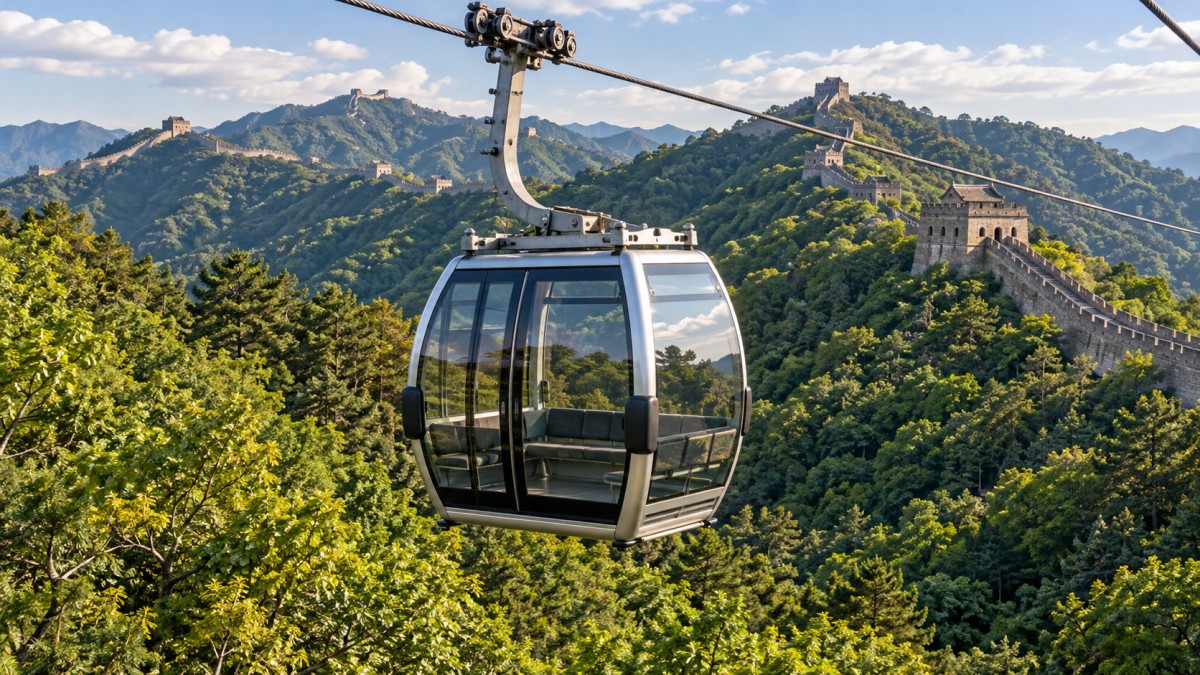
For most families visiting Mutianyu with young children, the enclosed cable car is the more comfortable starting choice. It gives children a contained space, avoids the exposed feeling of an open chairlift, and makes the return journey easier to plan. The chairlift can suit older children who enjoy heights, follow instructions reliably, and feel comfortable boarding an open seat.
The decision also affects where you reach the Great Wall and how you come down. The cable car and chairlift serve different sections, and the toboggan descent is associated with the chairlift side. Choose the complete outing—ride up, walk, and descent—before buying tickets.
What changes when you choose one ride over the other?
Both options save you the substantial uphill walk to the wall. Neither removes the steps, uneven surfaces, or climbing you will encounter after arrival.
The tower numbers help you understand the layout; they are not a checklist to complete. Moving between the two arrival areas involves walking along the wall, including changes in level. For a child who is already tired, that connection can become the hardest part of the visit.
When the cable car makes the better family choice
The cable car is a sensible default for toddlers, preschoolers, and children who become uneasy around exposed edges. An enclosed cabin gives adults a more manageable setting for reassurance and supervision. There is less temptation for a nervous child to cling awkwardly to a parent while sitting above an open slope.
Enclosure does not eliminate a fear of heights. Children can still see the hillside through the windows and feel the movement of the cabin. Explain the ride before joining the queue: the cabin travels above the ground, everyone stays seated, and adults remain close. A calm explanation is more useful than promising that the ride will not feel high.
The cable car also works well when the adults have competing demands. A parent carrying a small child, managing a daypack, or supporting an older relative may appreciate having fewer things to coordinate during the ride. Staff instructions still matter, and bags should be secure before boarding.
Its weather protection is useful, but limited to the journey. Once you step outside, the wall remains exposed. A comfortable ride uphill does not make a windy, hot, or wet walking route comfortable.
For a family whose main goal is to see the Great Wall, take photographs, and enjoy a manageable walk, a cable-car return route is often enough. There is no need to add a second transport experience to make the visit worthwhile.
When the chairlift is a reasonable choice
The chairlift suits children who actively want the open-air experience and can remain seated without leaning, twisting around, or reaching for dropped belongings. Confidence should come from the child’s own willingness, rather than an adult’s enthusiasm.
Age alone is a weak guide. A younger child may be calm around heights, while an older child may find an open seat distressing. Temperament, ability to follow instructions, and comfort with boarding matter alongside the operator’s admission requirements.
Boarding deserves particular attention. A chairlift requires passengers to coordinate with the arriving seat and follow staff directions. Before reaching the loading area, put away phones, secure loose items, and make sure each child understands what will happen. The loading point is a poor place to negotiate with a reluctant passenger.
Watching the ride from the ground can help. Let your child see the seats, passengers’ position, and the height above the slope. If they remain hesitant, choosing the cable car avoids turning the first part of the day into an endurance exercise.
The adults’ comfort matters too. A parent who dislikes open heights may struggle to reassure a nervous child while managing their own reaction. Choose a ride the accompanying adult can handle calmly.
Plan the descent before promising the toboggan
The toboggan is a major reason some families choose the chairlift side of Mutianyu. It is a separate downhill experience on a track, not another name for the chairlift. The enclosed cable car does not arrive directly at its upper departure point.
That distinction matters when children have been promised a slide after visiting the wall. Taking the cable car up and then walking toward the toboggan creates a more demanding itinerary than returning to the same station. It can work for capable walkers, but it should be a deliberate route choice.
Toboggan participation depends on the operator’s rules, including the arrangements for children riding with adults. A child who can use an uphill ride should not automatically be assumed eligible for every descent option. Ask about eligibility when arranging tickets, before presenting the slide as a guaranteed part of the day.
Weather can also affect operation. Wet conditions may prevent the toboggan from running, so choose an outing that still works with a lift descent. Children are less likely to be disappointed if the slide is described as an optional activity.
The descent itself requires attention. Riders need to follow instructions, control their movement appropriately, and maintain spacing. A child who is exhausted or upset after walking may no longer enjoy an activity they wanted earlier.
Your walking route matters as much as the ride
The wall is not a level promenade. Steps vary, some sections are steep, and watchtower passages can interrupt the walking rhythm. A distance that sounds modest on a map may demand considerable effort from a child with short legs.
Three route patterns cover most family needs:
- Cable car up and down: Explore near the arrival area, extend the walk while everyone remains comfortable, and return to the same station. This is a straightforward option for younger children or mixed abilities.
- Chairlift up, then chairlift or toboggan down: Suitable for children comfortable with the open ride, with the descent selected around eligibility, conditions, and energy levels.
- Cable car up, walk toward the chairlift side, then descend there: Offers variety but requires more walking, compatible tickets, and a clear understanding of the route.
For a first visit with small children, a short walk out and back is usually easier to manage than a route with a fixed destination. Turn around while the child still has energy. Waiting until they announce that they cannot walk any farther leaves the whole return journey unresolved.
Avoid treating the distant, steeper sections as an essential achievement. Enjoying a few towers without rushing can be a better experience than spending the afternoon coaxing an exhausted child toward a station.
Tickets, strollers, and timing: details that can change the decision
The enclosed cable car and the chairlift/toboggan service use separate ticket arrangements. Do not assume a return ticket for one service covers the other. If you want to go up one way and down another, describe both rides when booking and have the relevant tickets itemized.
Also distinguish wall admission, any ground shuttle transport, and the uphill or downhill rides. A package described simply as “Mutianyu tickets” may not communicate the route clearly enough. The useful question is: “Which ride takes us up, and which ride brings us down?”
A stroller can help during other parts of a Beijing holiday, but the wall’s steps make it unsuitable as the main way to move a child around at the top. Taking a stroller onto transport and using it successfully on the wall are separate issues. Arrange storage before boarding if you will leave it below, and keep essentials in a manageable daypack.
If using a child carrier, consider the adult’s balance and stamina on stairs. Carrying a child adds effort on both the climb and descent. The enclosed ride uphill does not remove that demand once walking begins.
Queues can also change how children cope. Leave room in the day for toilets, snacks, and waiting before the ride. Avoid scheduling the return around the last possible departure; a tired child, a queue, and an approaching closing time make an awkward combination.
Make the choice around the child’s hardest moment
Imagine the visit after the novelty has worn off. Your child has walked, eaten a snack, and begun asking to be carried. Which route still feels manageable? That is a more useful test than choosing solely from photographs of the rides.
If you are arranging a private family tour, tell the planner about fears of heights, walking ability, naps, and any adult mobility limitations. Request a named ascent and descent, a manageable walking section, and flexibility to turn back. A description such as “family-friendly Great Wall visit” leaves too much open to interpretation.
For younger or hesitant children, choose the cable car and keep the walk flexible. For confident children who want an open-air ride, the chairlift can be an enjoyable part of the day when boarding and descent arrangements suit them. Buy tickets only after you can explain the whole route simply: where you arrive, how far you intend to walk, and how everyone gets back down.
Your 1:1 travel consultant will respond within 1 business day
How to plan your trip
- The Ice and Snow Industry Surpasses RMB 1 Trillion, with Direct High-Speed Rail Access and Upgraded Nighttime Offerings Driving Spending
- Autumn Breaks in Multiple Regions Boost Family Travel and Tourism
- Liaoning 2026–2027 Winter Culture Carnival Kicks Off
- Shenyang Cultural Tourism Promotion Delegation Visits Guangzhou to Promote Winter Tourism and Attract Investment
- 2026 Hebei Culture and Tourism Promotion Week in Beijing Kicks Off
Monthly travel guide
- October 2026 County-Level Tourism Communications Report Released: Top 100 Index Rebounds
- More Than 100 Cities Introduce Autumn Breaks, Creating a New Hotspot for Family and Educational Travel
- The 2026 China-Vietnam (Honghe) Border Economic, Trade and Tourism Fair Opens in Hekou
- The 2026 Guangxi Cultural Tourism Carnival Held in Hezhou
- Luoyang launches the “Autumn Charm of the Divine Capital” tourism promotion to build anticipation for winter travel
- Typhoon “White Dolphin” Forces Henan Scenic Areas to Close, Putting Summer Ground-Handling Services Under Pressure
- RCEP Implementing Rules for Indonesia Take Effect: Zero Tariffs for Cultural and Tourism Services Alongside Strict Customer Service Requirements
- Saudi Arabia’s New SASO Regulations Take Effect: Taqat Certification Required Before Chinese-Language Cultural Tourism Services Can Access Visit Saudi
- Zhengzhou Launches a Dedicated LCL Shipping Route for Cultural and Tourism Materials, Cutting Freight Costs by 18%
- Luoyang Cold Chain Intensification: Cultural and Creative Exports Delivered in 9 Days
- Expedited Pre-Approval for Group Visas to Three Southeast Asian Countries
- Tightening air freight capacity at Zhengzhou Airport delays the delivery of cultural and tourism materials
Popular destinations
- Autumn Breaks in Multiple Regions Boost Family Travel and Tourism
- Should you take the cable car or chairlift at Mutianyu with children?
- Visiting with Kids? Compare Mutianyu vs Jinshanling for Families
- Things to do in Luoyang, China, when traveling with young children
- Is a Three-City Henan Itinerary Too Rushed for Families?
Why choose us

High cost-performance and transparent experience
Offer astonishing low prices without hidden tourism traps, enabling travelers to explore at lower costs while avoiding unnecessary spending loopholes, ensuring transparent consumption.

Personalization and dedicated service
Support 100% free customization, paired with one-on-one expert service, crafting exclusive itineraries based on travelers' specific needs, while providing professional guidance to enhance the personalization and professionalism of the journey.

Premium itinerary planning
Compact yet rich itineraries allow travelers to experience more within limited time; simultaneously, carefully selected hotels in prime locations provide convenient lodging conditions, overall enhancing travel comfort and experience.