Welcome to Our Travel Agency!




Travel Guide
Haibei Prefecture, Qinghai officially announced on May 12, 2026 that it had completed full-region coverage of oxygen supply equipment across 24 key scenic areas in the prefecture, marking that public services for plateau tourism have entered a new stage in the practice of ‘full-oxygen travel’. This event not only reconstructs the infrastructure standards for high-altitude destinations, but is also accelerating the evolution of international tourism procurement rules toward aging-friendly, health-oriented, and ESG-driven directions, producing structural impacts on tourism equipment manufacturing, cross-border service trade, and the silver economy supply chain.
Event Overview
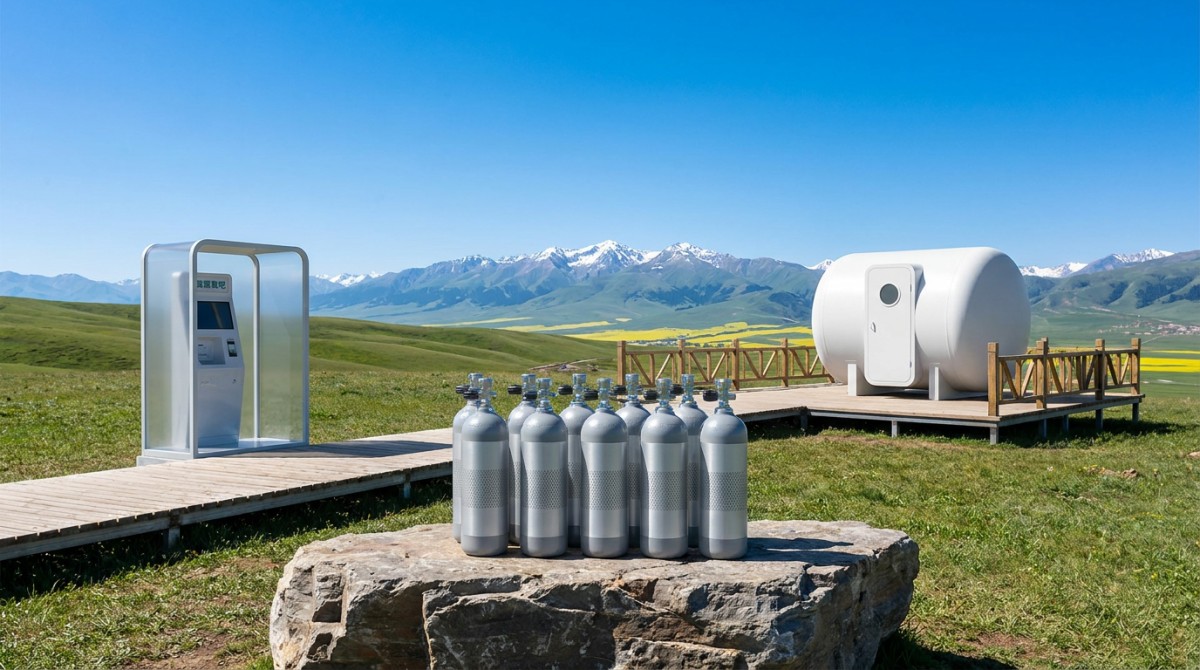
Haibei Prefecture, Qinghai announced on May 12, 2026 that all 24 key scenic areas in the prefecture have been fully equipped with three types of oxygen supply facilities: portable oxygen refill devices, self-service plateau oxygen bars, and micro-pressure oxygen chambers, achieving service responsiveness of ‘oxygen accessible within 5 minutes’ and ‘intervention available within 10 minutes’ along tourist routes. All equipment has passed joint technical acceptance by the Qinghai Provincial Department of Culture and Tourism and the Health Commission, and has been connected to the provincial smart tourism supervision platform for real-time monitoring of operating status.
Which Sub-sectors Are Affected
Direct trade enterprises: Outbound tour wholesalers and local destination management agencies serving senior travel groups from regions such as the EU and the Middle East are now facing new buyer requirements for ‘high-altitude oxygen supply service capability certification’. The impact is reflected in the addition of obligations in pre-contract clauses for equipment list verification, operation and maintenance record audits, and submission of third-party aging-friendliness assessment reports, with compliance costs rising by about 12%–18%.
Raw material procurement enterprises: For suppliers of key components such as medical-grade molecular sieves, core valve parts for low-pressure compressors, and medical oxygen concentration sensors, the order structure is undergoing significant changes——the share of demand previously dominated by medical equipment is declining, while demand from cultural and tourism scenarios for low power consumption, weather resistance, and modular customization is increasing; procurement cycles are shifting from quarterly bidding to concentrated ordering during the ‘scenic area construction season’, increasing pressure on delivery flexibility.
Processing and manufacturing enterprises: Manufacturers of complete high-altitude oxygen supply equipment must simultaneously meet three layers of standards: user-friendly human-machine interaction for cultural and tourism scenarios (such as multilingual voice prompts and contactless identity-recognition oxygen supply), reliability in plateau environments (-25℃ to 45℃ continuous operation, UV-resistant casing), and ESG traceability (carbon footprint labels, recyclable material proportion ≥75%). At present, only about 37% of product models currently in production have passed certification under the new edition of the White Paper on the Adaptability of Plateau Cultural and Tourism Oxygen Supply Equipment (Trial).
Supply chain service enterprises: These include equipment remote operation and maintenance SaaS service providers, annual inspection institutions for special plateau equipment, and multilingual emergency medical training service providers, whose service packages are being incorporated into annual procurement catalogs for scenic areas. Observations show that regional small and medium-sized service providers face market entry barriers in expanding cross-prefecture projects due to the lack of a cross-provincial mutual recognition mechanism for qualifications; meanwhile, enterprises with dual certification under ISO 13485+ISO 22301 have achieved order growth of 41% (year-on-year in Q1 2026).
Key Focus Points and Response Measures for Relevant Enterprises or Practitioners
Promptly compare the technical parameters of the new edition of the White Paper on the Adaptability of Plateau Cultural and Tourism Oxygen Supply Equipment (Trial)
This document was issued in April 2026 by the Qinghai Provincial Technical Committee for Standardization in Culture and Tourism, clearly listing ‘oxygen concentration fluctuation tolerance ≤±1.5%’ and ‘single oxygen supply endurance ≥90 minutes’ as mandatory items. Products that fail to meet the standards may not participate in government procurement or equipment filing for A-level scenic areas.
Initiate preparations for integration with ESG data collection systems
Mainstream EU senior tourism buyers (such as Germany Senior Travel Alliance and Dubai Golden Age Partners) have included three indicators—equipment life-cycle carbon emissions data, localized operation and maintenance coverage rate, and multilingual emergency response time—into their supplier ESG scoring models for the second half of 2026. Enterprises need to complete LCA (life cycle assessment) basic modeling and platform interface development within 6 months.
Monitor developments in the expansion of the ‘high-altitude aging-friendly service certification’ pilot program
The Ministry of Culture and Tourism has designated Haibei Prefecture as the country’s first provincial pilot for ‘high-altitude aging-friendly tourism service certification’, with the first batch of certification applications expected to begin in Q3 2026. The certification covers three dimensions: equipment, personnel, and processes. Certified scenic areas will receive an exclusive ‘full-oxygen assurance’ traffic label on OTA platforms. It is recommended that tourism equipment enterprises participate in consultations on the detailed certification rules in advance.
Editor’s Viewpoint / Industry Observation
显然, the Haibei model is not merely an infrastructure upgrade — it functions as a de facto standard-setting experiment at the intersection of gerontechnology, destination ESG, and cross-border tourism procurement. Analysis shows that its scalability hinges less on technical feasibility than on interoperability governance: whether oxygen data protocols (e.g., real-time O₂ saturation logging, device uptime telemetry) can be harmonized across provincial regulatory silos and international certification bodies. This makes standardization alliances — not just product compliance — the next critical battleground.
Conclusion
Haibei Prefecture’s full coverage of oxygen supply is not an isolated infrastructure project, but a key support point for plateau tourism’s leap from a ‘resource-dependent’ model to a ‘service-credit-based’ model. More appropriately understood, it is transforming ‘physiological safety assurance capability’ into a quantifiable, verifiable, and tradable tourism service asset. Its industry significance lies in establishing, for the first time in high-altitude scenarios, the market pricing power and market access logic of ‘health baseline services’, providing a Chinese practical model for the sustainable development of global mountain tourism.
Information Source Notes
Official sources: Announcement on the official website of the Qinghai Provincial Department of Culture and Tourism (2026-05-12), White Paper on the Adaptability of Plateau Cultural and Tourism Oxygen Supply Equipment (Trial) (Issued by Qinghai Culture and Tourism Standards Committee [2026] No. 3), and transcript of the Haibei Prefecture People’s Government press conference.
To be continuously monitored: the release date of the implementation rules for the Ministry of Culture and Tourism’s ‘high-altitude aging-friendly tourism service certification’; whether EASA (European Union Aviation Safety Agency) will include similar oxygen supply services in the revised draft of the ‘Road Extension Health Assurance Guidelines’; and whether mainstream senior tourism buyers in the Middle East will formally embed oxygen supply capability clauses in their summer 2026 tender documents.
Your 1:1 travel consultant will respond within 1 business day
How to plan your trip
- Hebei Launches Five “Trendy Hebei” Premium Tourism Routes for Inbound Travelers, Moving Toward Standardized Offerings
- The 12th Qionghai Tanmen Coastal Foraging Festival Opens on August 16
- Guangxi’s Digital Silk Road Accelerates: Orah Mandarin Juice Secures an Italian Order, Drawing Attention to Export Standards for Souvenirs
- New Inquiry Triggered by Coastal Cultural Tourism Space Standards
- Zhuanghe’s agro-cultural tourism model draws ASEAN attention, highlighting the compliance requirements for the internationalization of camping and intangible cultural heritage handicrafts
Monthly travel guide
- Typhoon “White Dolphin” Forces Henan Scenic Areas to Close, Putting Summer Ground-Handling Services Under Pressure
- RCEP Implementing Rules for Indonesia Take Effect: Zero Tariffs for Cultural and Tourism Services Alongside Strict Customer Service Requirements
- Saudi Arabia’s New SASO Regulations Take Effect: Taqat Certification Required Before Chinese-Language Cultural Tourism Services Can Access Visit Saudi
- Zhengzhou Launches a Dedicated LCL Shipping Route for Cultural and Tourism Materials, Cutting Freight Costs by 18%
- Luoyang Cold Chain Intensification: Cultural and Creative Exports Delivered in 9 Days
- Expedited Pre-Approval for Group Visas to Three Southeast Asian Countries
- Tightening air freight capacity at Zhengzhou Airport delays the delivery of cultural and tourism materials
- Vietnam's New Regulations on Bus Monitoring Requirements for Group Tours
- Saudi SAMA New Regulations on Travel Liability Insurance Compliance Preparation
- Japanese tourists' new regulations for entering Henan local transport vehicles
- Wai Gao Qiao Wen Travel customs bonded warehouse summer group equipment fast lane
- JTB Warning: Risks in Henan’s September Red Leaf Family Tour Purchases
Popular destinations
- Zhuanghe’s agro-cultural tourism model draws ASEAN attention, highlighting the compliance requirements for the internationalization of camping and intangible cultural heritage handicrafts
- Tongcheng Travel data: Summer “factory tours” booking popularity rises by 36%, with family travelers leading demand
- Saudi OTA Opens a Direct Procurement Channel for Henan Inbound Ground Services
- JIS S 0022:2026 Takes Effect, Requiring Bilingual Contingency Plans and Route Record Archiving for Customized Tours
- TripAdvisor Summer Rankings Released: Luoyang Itinerary Named Among the TOP 10 Family Travel Destinations in Asia
Why choose us

High cost-performance and transparent experience
Offer astonishing low prices without hidden tourism traps, enabling travelers to explore at lower costs while avoiding unnecessary spending loopholes, ensuring transparent consumption.

Personalization and dedicated service
Support 100% free customization, paired with one-on-one expert service, crafting exclusive itineraries based on travelers' specific needs, while providing professional guidance to enhance the personalization and professionalism of the journey.

Premium itinerary planning
Compact yet rich itineraries allow travelers to experience more within limited time; simultaneously, carefully selected hotels in prime locations provide convenient lodging conditions, overall enhancing travel comfort and experience.