Welcome to Our Travel Agency!




Travel Guide
Shanghai Skyline Views: The Bund vs. Lujiazui for First-Time Visitors
Where should you go for your first unforgettable view of the Shanghai Skyline: the Bund or Lujiazui? Across the Huangpu River from each other, these two waterfront districts offer very different experiences. The Bund frames Pudong’s futuristic towers from a historic promenade, while Lujiazui puts you among the skyscrapers, with observation decks offering sweeping city views. Whether you want sunset photos, an evening stroll, or a bird’s-eye perspective, the right choice depends on what you want to see—and how much time you have.
For most first-time visitors, start with the Bund. It provides the familiar, across-the-water panorama without requiring an admission ticket. Choose Lujiazui first if going up a skyscraper is a priority. With half a day available, you can experience both, but crossing the river deserves a place in your schedule rather than being treated as an instant transfer.
The key difference: looking at the towers or looking out from them
The Bund sits on the western bank of the Huangpu, in Puxi. From its waterfront promenade, you look across toward Lujiazui’s cluster of skyscrapers, including the Oriental Pearl Tower, Shanghai Tower, Jin Mao Tower, and Shanghai World Financial Center. The river creates enough distance to appreciate the buildings together rather than as isolated structures overhead.
Lujiazui occupies the opposite bank in Pudong. At street level, its scale feels completely different: tall façades, elevated pedestrian walkways, shopping complexes, and broad roads. Walk to its riverside and you look back toward the Bund’s historic buildings. Go up an observation deck and the river becomes part of a much larger urban landscape.
This explains a common disappointment: booking a tower ticket expecting the classic photograph of all the famous towers together. From inside one of those towers, that building cannot appear in your picture. For the recognizable Shanghai skyline composition, the Bund is usually the more straightforward choice.
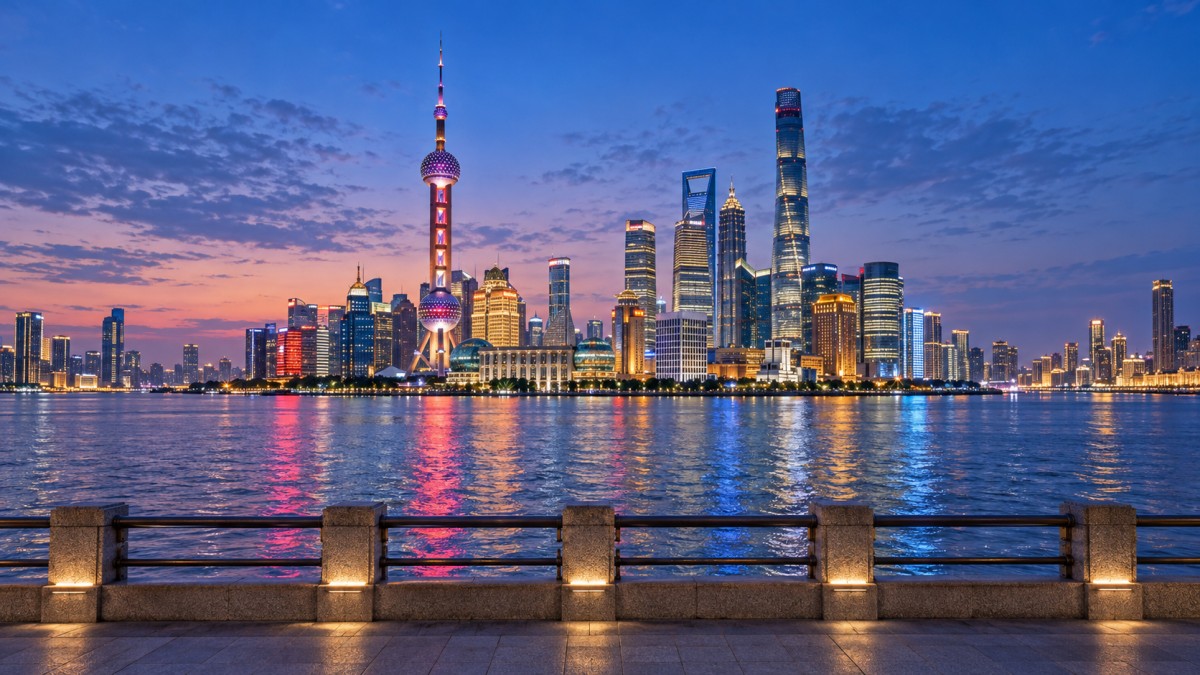
Which experience fits your first visit?
The Bund: the strongest introduction at ground level
The Bund works well because you do not need to commit to a complicated activity. Arrive, reach the promenade, and adjust your walk to the weather and your energy. It is especially useful on an arrival day, when a timed attraction may be awkward after an international flight.
For photographs, try several positions rather than stopping at the first crowded viewpoint. Moving along the river changes how the towers overlap and how much water enters the frame. A wide composition shows the district’s overall shape; a tighter crop emphasizes the contrast between individual buildings.
The experience is not only about Pudong. Turn around and the Bund’s historic commercial buildings give the skyline a different context: Shanghai’s trading history facing its contemporary financial district. That contrast makes the walk more interesting than a quick photograph followed by an immediate departure.
The trade-off is exposure. Wind, rain, summer heat, and dense evening crowds can make an otherwise easy outing tiring. Seating may not be available where you want it. With young children or older companions, plan a nearby rest stop and keep the route shorter than the maximum distance everyone could theoretically walk.
Lujiazui: when a tower ticket is worth buying
A Lujiazui observation deck earns its place when you want to understand the city’s scale. From above, the Huangpu’s bends, bridges, dense neighborhoods, and clusters of development become easier to appreciate. It is a different experience from looking across the river, not simply an upgraded version of the Bund.
Shanghai Tower, the Oriental Pearl Tower, and Jin Mao Tower offer different visitor experiences. Compare the actual admission package rather than choosing solely by building height. Included levels, optional attractions, entry arrangements, and operating hours can differ. Check current official information before paying, especially if a third-party listing bundles several experiences together.
Visibility matters more than height. Low cloud can obscure a high observation level while the waterfront remains enjoyable below. Haze can flatten distant views even when it is not raining. If your dates are flexible, avoid locking your only tower visit into a non-changeable booking long before you can assess conditions.
Night visits introduce another issue: reflections on the glass. Turn off your camera flash and avoid bright screens or clothing reflected directly in the window. Follow venue rules on tripods and other equipment. For travelers mainly interested in clean, unobstructed skyline photographs, the outdoor waterfront may be more satisfying than an indoor viewing deck.
Timing: sunset is not the same view from both banks
“Visit at sunset” is useful advice only when you understand the direction you are facing. From the Bund, you generally look east toward Pudong, so the setting sun is usually behind you rather than behind the towers. The late light may illuminate the buildings, depending on the season and conditions. From the Lujiazui waterfront, you look broadly west toward the historic Bund, making a sunset-facing composition more plausible.
For a first evening on the Bund, arrive before sunset and stay into blue hour, when the sky still retains color as building lights become visible. Check the local sunset time for your travel date. Do not build the evening around an assumed lighting schedule: illumination arrangements can change, and special dates may bring crowd restrictions.
Morning can suit travelers who value breathing room over illuminated towers. At night, accept that popular waterfront areas may feel busy rather than tranquil. Public holidays warrant extra flexibility, particularly around pedestrian access points and transport connections.
How to see both without rushing the river crossing
If an observation deck is important, visit Lujiazui earlier in the afternoon, then cross to the Bund for dusk. This gives each district a distinct purpose. Allow a flexible half-day rather than trying to compress a tower, a meal, a river crossing, and sunset photography into two hours.
Metro Line 2 connects Lujiazui and East Nanjing Road stations, but neither station platform is your final waterfront viewpoint. Include walking, station navigation, security screening, and attraction queues. A taxi or private vehicle can reduce some walking, but river-crossing traffic and legal pickup locations still affect the journey.
A public ferry can make the crossing part of the outing if its route and operating arrangements suit your plans. Check the relevant terminal and current service details rather than assuming every boat connects the places you want. A sightseeing cruise and the Bund Sightseeing Tunnel are separate paid experiences, not interchangeable transport options.
With only one evening, resist adding activities simply because they are nearby on a map. A relaxed riverside walk and dinner often work better than racing between a tower reservation and a cruise departure.
Budget for the experience, not just the entrance fee
Both the Bund promenade and public riverside areas in Lujiazui can be enjoyed without buying a tower ticket. Paid observation decks, cruises, rooftop venues, and restaurants create very different budgets. Compare what is included, cancellation terms, reservation requirements, and any minimum spend before deciding that one option is better value.
For a longer regional holiday, a plan such as the Shanghai + Suzhou + Wuzhen 6-Day Custom Tour offers a framework to discuss rather than a reason to overload the Shanghai portion. Ask how the skyline evening fits around arrival times, onward travel, and rest. Confirm whether tower admission, transfers, and guiding are included instead of inferring them from the tour title.
Henan Le Journey Travel Agency Co., Ltd., based in Luoyang, combines its core Henan inbound services with customized domestic travel planning across China. Its arrangements can cover transport, accommodation, ticket reservations, and guides. For a Shanghai itinerary, the useful discussion is practical: walking tolerance, weather alternatives, transparent inclusions, and whether a private vehicle genuinely improves the route.
If you can choose only one location, make it the Bund for the classic Shanghai Skyline view. Choose Lujiazui when the high-rise experience itself is the attraction. If you visit both, check visibility before committing to the tower and protect enough time to enjoy the waterfront without watching the clock.
Your 1:1 travel consultant will respond within 1 business day
How to plan your trip
- “Discover Hebei in Winter” Tourism Exchange and Matchmaking Event Held in Jinan
- Zhangjiakou 2026–2027 Snow Season Launch and Ice and Snow Tourism Promotion Event Held in Shanghai
- The Palace Museum Explained: From Imperial Residence to Public Museum
- The 2026 autumn break covers over 100 cities, with family trips driving off-season demand for cultural and tourism services
- Family Travel in China: Planning a Relaxed Itinerary with Young Children
Monthly travel guide
- Luoyang launches the “Autumn Charm of the Divine Capital” tourism promotion to build anticipation for winter travel
- Typhoon “White Dolphin” Forces Henan Scenic Areas to Close, Putting Summer Ground-Handling Services Under Pressure
- RCEP Implementing Rules for Indonesia Take Effect: Zero Tariffs for Cultural and Tourism Services Alongside Strict Customer Service Requirements
- Saudi Arabia’s New SASO Regulations Take Effect: Taqat Certification Required Before Chinese-Language Cultural Tourism Services Can Access Visit Saudi
- Zhengzhou Launches a Dedicated LCL Shipping Route for Cultural and Tourism Materials, Cutting Freight Costs by 18%
- Luoyang Cold Chain Intensification: Cultural and Creative Exports Delivered in 9 Days
- Expedited Pre-Approval for Group Visas to Three Southeast Asian Countries
- Tightening air freight capacity at Zhengzhou Airport delays the delivery of cultural and tourism materials
- Vietnam's New Regulations on Bus Monitoring Requirements for Group Tours
- Saudi SAMA New Regulations on Travel Liability Insurance Compliance Preparation
- Japanese tourists' new regulations for entering Henan local transport vehicles
- Wai Gao Qiao Wen Travel customs bonded warehouse summer group equipment fast lane
Popular destinations
- The Palace Museum Explained: From Imperial Residence to Public Museum
- Shanghai Skyline Views: The Bund vs. Lujiazui for First-Time Visitors
- Is a 15-day panoramic tour of China covering multiple cities too rushed?
- Visiting China for the First Time: How Many Cities Should You Include in a 15-Day Grand Tour?
- Is it worth hiring a guide for a visit to the Terracotta Army?
Why choose us

High cost-performance and transparent experience
Offer astonishing low prices without hidden tourism traps, enabling travelers to explore at lower costs while avoiding unnecessary spending loopholes, ensuring transparent consumption.

Personalization and dedicated service
Support 100% free customization, paired with one-on-one expert service, crafting exclusive itineraries based on travelers' specific needs, while providing professional guidance to enhance the personalization and professionalism of the journey.

Premium itinerary planning
Compact yet rich itineraries allow travelers to experience more within limited time; simultaneously, carefully selected hotels in prime locations provide convenient lodging conditions, overall enhancing travel comfort and experience.