Welcome to Our Travel Agency!




Travel Guide
On May 12, 2026, the main venue event for China Tourism Day was launched in Guangzhou, with the “ticket stub economy” digital verification and write-off system going online simultaneously, comprehensively supporting real-time settlement via overseas credit cards and the international version of Alipay+ for the first time. This event has a direct business impact on sub-sectors such as inbound tourism services, cross-border payment services, scenic area operation management, and B2B tourism procurement, as it marks a substantive step forward in the international payment compatibility and B2B financial closed-loop capabilities of domestic cultural and tourism consumption infrastructure.
Event Overview
The main venue event for China Tourism Day 2026 was launched in Guangzhou on May 12. During the event, the “ticket stub economy” digital verification and write-off system was officially launched. The system has now connected with service modules of 237 A-level scenic spots and 112 local destination management agencies nationwide, covering core cultural and tourism resources such as the Longmen Grottoes and Shaolin Temple in Henan. For the first time, the system comprehensively supports real-time verification, write-off, and settlement functions for overseas Visa and Mastercard credit cards as well as the international version of Alipay+.
Which Sub-sectors Are Affected
Inbound Tourism B2B Procurement Enterprises
Such enterprises (such as overseas travel agencies, MICE service providers, and international wholesale departments of OTAs) directly benefit from the system-supported fully online closed-loop process of “booking—payment—verification/write-off—reconciliation”. The impact is mainly reflected in improved procurement response efficiency, reduced compliance costs for foreign exchange settlement, and shortened reconciliation cycles from several manual working days to system-automated completion within seconds.
Cross-border Payment and Clearing Service Providers
The system’s integration with Visa/Mastercard and the international version of Alipay+ means that domestic cultural and tourism scenarios are, for the first time at scale, opening cross-border clearing interfaces for multiple international card schemes and local wallets. The impact is mainly reflected in: increased frequency of payment channel invocation, changes in settlement currency structure (with a higher proportion of direct foreign currency receipts), and stronger adaptation requirements for clearing compliance documentation (such as PCI DSS and GDPR data processing agreements).
A-level Scenic Spots and Cultural Tourism Operators
The 237 A-level scenic spots already connected to the system need to simultaneously upgrade ticketing system integration standards and adapt to multi-currency verification and write-off logic. The impact is mainly reflected in: evident pressure for IT system upgrades, the need to add payment identification steps in overseas tourist flow management, and the need for the finance side to establish a matching mechanism between foreign currency income and RMB bookkeeping.
Local Destination Management Agencies and Regional Cultural Tourism Service Providers
The 112 connected local destination management agencies will undertake order fulfillment and verification/write-off coordination functions for overseas buyers. The impact is mainly reflected in: the need to equip bilingual verification/write-off operators, refine financial reconciliation granularity down to each individual overseas card transaction, and clearly define applicable clearing channels and change/cancellation rules in settlement clauses within service contracts.
What Relevant Enterprises or Practitioners Should Focus On, and How to Respond at Present
Pay Attention to the Detailed System Access Rules and Technical White Paper to Be Officially Released Later
At present, it is only confirmed that the system has gone online and has connected with some scenic spots and local destination management agencies, but practical parameters such as API standards, clearing fee structures, and foreign exchange rate lock-in mechanisms have not yet been disclosed. It is recommended that relevant enterprises continue tracking follow-up documents such as the “Access Guidelines for the ‘Ticket Stub Economy’ Verification and Write-off System” to be issued later by the Ministry of Culture and Tourism and the Guangzhou main venue.
Prioritize Evaluating Coverage of Payment Tools Corresponding to Frequently Cooperating Overseas Markets
For example, institutions targeting European and American source markets should verify the stability of Visa/Mastercard verification and write-off; institutions targeting Southeast Asian, Japanese, and Korean markets should test the actual settlement timeliness and failure rates of Alipay+ partner wallets (such as GrabPay, KakaoPay, and GCash), so as to avoid order loss caused by incomplete channel coverage.
Differentiate Between Policy Signals and the Actual Pace of Business Implementation
This launch is pilot in nature, and the proportion of covered scenic spots and local destination management agencies in the national total remains limited. Enterprises should not immediately adjust their full procurement processes, but should instead select 1–2 high-frequency routes for small-scale validation, focusing on recording quantifiable indicators such as verification/write-off success rate, delays in foreign currency receipt posting, and financial reconciliation discrepancy rate.
Prepare Bilingual Verification and Write-off Operation SOPs and Financial Reconciliation Templates in Advance
For scenic spots or local destination management agencies already confirmed as connected, it is recommended to review existing contract clauses regarding payment methods, invoice types, and refund paths, simultaneously formulate verification/write-off operation guidelines containing English fields, and update financial system reconciliation templates to ensure cross-checking by transaction number, card scheme, currency, settlement date, and other dimensions.
Editorial Viewpoint / Industry Observation
Observably, this initiative is better understood as an infrastructure signal—not yet a fully scaled operational outcome. The inclusion of international card schemes and Alipay+ reflects a deliberate alignment with global travel payment expectations, but the current scope (237 scenic spots, 112 agencies) remains selective. From an industry perspective, its significance lies less in immediate revenue impact and more in validating a technical and regulatory pathway for cross-border tourism settlement. Analysis shows that sustained rollout will depend on two factors: interoperability stability across diverse legacy ticketing systems, and clarity on tax treatment of multi-currency settlements at the operator level. Therefore, continuous monitoring—not wholesale process redesign—is the appropriate near-term stance.
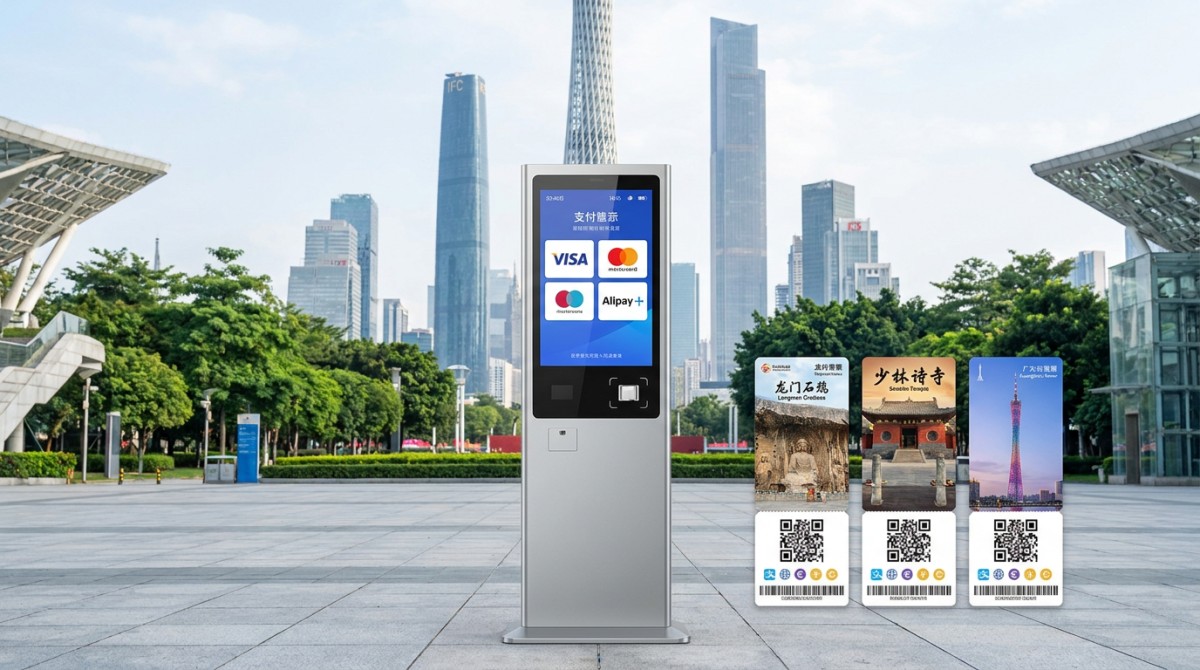
Conclusion: The launch of this “ticket stub economy” system is a phased milestone in the coordinated advancement of digitalization and internationalization in the cultural and tourism sector, with its core value lying in verifying the feasibility of multi-channel international payments in B2B cultural and tourism procurement scenarios. At present, it is more appropriately understood as an infrastructure upgrade with a clear directional purpose but still in the pilot validation stage. Relevant parties should follow the principles of prudent verification and phased adaptation, and avoid misjudging pilot capabilities as a state of full readiness.
Information source notes:
Main source: Official information released by the Guangzhou main venue of China Tourism Day 2026.
Items requiring continued observation: The subsequent nationwide rollout pace of the “ticket stub economy” system, the expanded list of connected scenic spots/local destination management agencies, and implementation details such as the specific clearing fee rates and settlement cycles for Visa/Mastercard and Alipay+ have not yet been disclosed.
Your 1:1 travel consultant will respond within 1 business day
How to plan your trip
- Hebei Launches Five “Trendy Hebei” Premium Tourism Routes for Inbound Travelers, Moving Toward Standardized Offerings
- The 12th Qionghai Tanmen Coastal Foraging Festival Opens on August 16
- Guangxi’s Digital Silk Road Accelerates: Orah Mandarin Juice Secures an Italian Order, Drawing Attention to Export Standards for Souvenirs
- New Inquiry Triggered by Coastal Cultural Tourism Space Standards
- Zhuanghe’s agro-cultural tourism model draws ASEAN attention, highlighting the compliance requirements for the internationalization of camping and intangible cultural heritage handicrafts
Monthly travel guide
- Typhoon “White Dolphin” Forces Henan Scenic Areas to Close, Putting Summer Ground-Handling Services Under Pressure
- RCEP Implementing Rules for Indonesia Take Effect: Zero Tariffs for Cultural and Tourism Services Alongside Strict Customer Service Requirements
- Saudi Arabia’s New SASO Regulations Take Effect: Taqat Certification Required Before Chinese-Language Cultural Tourism Services Can Access Visit Saudi
- Zhengzhou Launches a Dedicated LCL Shipping Route for Cultural and Tourism Materials, Cutting Freight Costs by 18%
- Luoyang Cold Chain Intensification: Cultural and Creative Exports Delivered in 9 Days
- Expedited Pre-Approval for Group Visas to Three Southeast Asian Countries
- Tightening air freight capacity at Zhengzhou Airport delays the delivery of cultural and tourism materials
- Vietnam's New Regulations on Bus Monitoring Requirements for Group Tours
- Saudi SAMA New Regulations on Travel Liability Insurance Compliance Preparation
- Japanese tourists' new regulations for entering Henan local transport vehicles
- Wai Gao Qiao Wen Travel customs bonded warehouse summer group equipment fast lane
- JTB Warning: Risks in Henan’s September Red Leaf Family Tour Purchases
Popular destinations
- The China-Europe Railway Express (Zhengzhou) Launches a Dedicated Train for Culture and Tourism Equipment, Cutting Customs Clearance Time to 48 Hours
- RCEP Cultural and Tourism Services Commitment Upgrade: Faster Market Access for Chinese Outbound Tourism Service Providers in Vietnam and Malaysia
- Tourism Authority of Thailand Launches “China Ready” Certification Program, with Henan Inbound Travel Service Providers Included in the First Batch of Recommended Providers
- Thailand Tourism Authority Promotes “China Ready” Certification, with a Henan Local Tour Operator Included in the First Recommended List
- Overseas Chinese Fair Opens in Shenzhen: Smart Culture and Tourism Equipment and Culinary Tourism Services Go Global on Two Fronts
Why choose us

High cost-performance and transparent experience
Offer astonishing low prices without hidden tourism traps, enabling travelers to explore at lower costs while avoiding unnecessary spending loopholes, ensuring transparent consumption.

Personalization and dedicated service
Support 100% free customization, paired with one-on-one expert service, crafting exclusive itineraries based on travelers' specific needs, while providing professional guidance to enhance the personalization and professionalism of the journey.

Premium itinerary planning
Compact yet rich itineraries allow travelers to experience more within limited time; simultaneously, carefully selected hotels in prime locations provide convenient lodging conditions, overall enhancing travel comfort and experience.