Welcome to Our Travel Agency!




Travel Guide
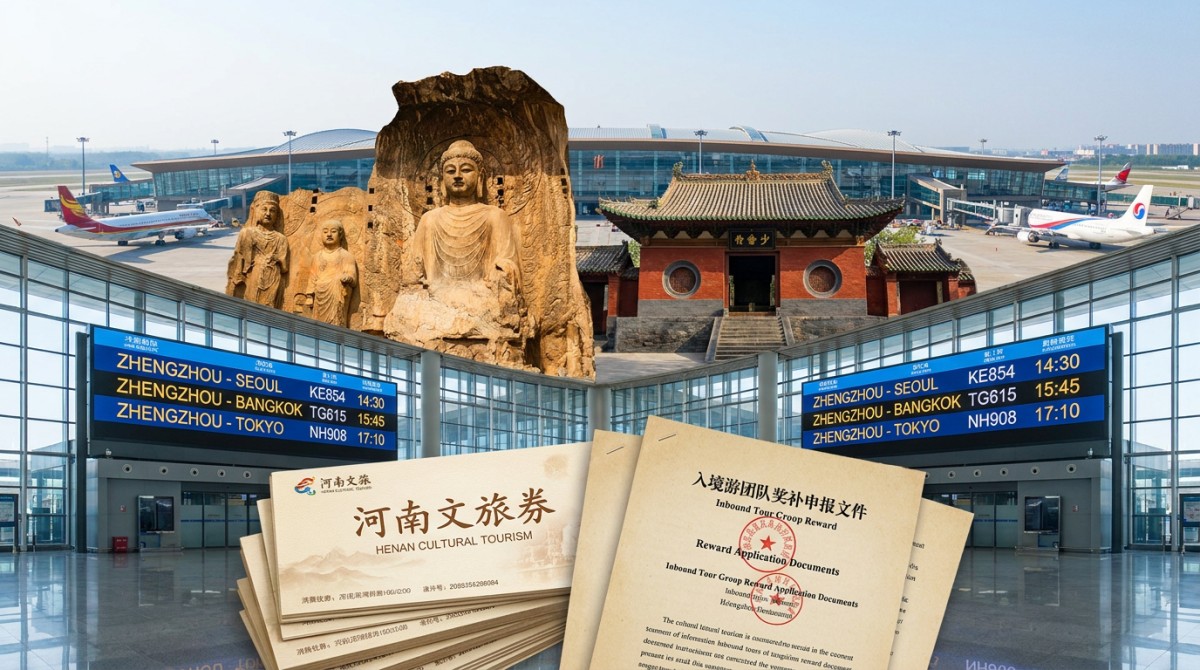
On May 15, the Henan Provincial Government announced that it will study the timely issuance of province-wide cultural tourism and accommodation consumption vouchers, and will simultaneously launch the review process for subsidy funds for inbound tour groups. Although the policy has not yet specified a clear implementation timetable, the signal it has released has already created substantive expectation guidance for service providers in the cultural and tourism industry chain that serve overseas markets, especially as the peak travel season in Q3-Q4 approaches, providing a critical order-buffer window for export-oriented cultural and tourism service providers.
Event Overview
On May 15, the Henan Provincial Government publicly stated that it will study the timely issuance of cultural tourism and accommodation consumption vouchers covering the entire province; during the same period, it will also carry out the review of subsidy funds for inbound tour groups. The policy is clearly aimed at stimulating local cultural and tourism consumption, enhancing the reception capacity for international tourists, and strengthening fiscal support for destination management service capabilities.
Which Sub-sectors Will Be Affected
Direct trade enterprises: mainly refers to Chinese outbound/inbound cultural and tourism trading companies that provide charter group packages, themed tour route sales, and settlement services for overseas tour operators (such as licensed travel agencies in Europe, the United States, Japan, and South Korea). The reason they are affected is that provincial-level consumption vouchers combined with inbound subsidies will accelerate capacity release and standardization upgrades on the supply side of Henan’s destination management resources, thereby enhancing overseas buyers’ confidence in the contract performance of Chinese destination management suppliers; the impact is reflected in increased order inquiries, shorter contract signing cycles, and greater certainty in advance scheduling for long-haul charter group series.
Raw material procurement enterprises: here, “raw materials” specifically refers to non-physical elements required for the delivery of cultural and tourism services, including scenic area ticket quotas, dedicated time slots for high-speed rail/airport transfer lanes, performance schedules of intangible cultural heritage troupes, and multilingual tour guide talent pools. Such enterprises are affected by the policy because the expected increase in Henan’s local reception capacity in Q3-Q4 will drive them to lock in scarce service resources in advance; the impact is reflected in a phased weakening of procurement bargaining power, earlier resource booking cycles, and increased demand for cross-regional coordinated procurement.
Processing and manufacturing enterprises: mainly refers to manufacturers that provide customized hardware products for cultural and tourism scenarios, such as smart guide devices, multilingual voice translation terminals, modular low-carbon homestay building materials, and cultural IP derivative product manufacturers. The logic behind their impact is that, under the stimulus of consumption vouchers, the pace of upgrading cultural and tourism projects within the province will accelerate, driving upward demand for supporting hardware procurement; the impact is reflected in stronger B2G/B2B order intentions, shortened product compatibility verification cycles, and higher requirements for compliant responses in multilingual interactive functions.
Supply chain service enterprises: covers cross-border payment and settlement institutions, international travel insurance service providers, multilingual legal compliance consulting platforms, overseas social media localization operation service providers, etc. They are affected because growth in inbound tourism business volume will increase calls on underlying service infrastructure; the impact is reflected in higher requirements for the stability of RMB-foreign currency real-time settlement channels, greater pressure to adapt insurance liability clauses to different source countries, and increasingly stringent timeliness thresholds for localized delivery of compliance documents.
Key Focus Areas and Response Measures for Relevant Enterprises or Practitioners
Closely monitor the release timing of detailed subsidy review rules
The current policy clearly states that it will “simultaneously carry out the review of subsidy funds for inbound tour groups,” but the application conditions, calculation standards, and disbursement schedule have not yet been announced. Enterprises need to complete the consolidation of historical group tour data and compliant record retention before the end of June, paying particular attention to audit points such as identity verification records of overseas tourists, the completeness of transport ticket documentation chains, and the degree of matching between accommodation invoices and actual check-in information.
Dynamically assess the delivery flexibility of Henan destination management resources
The issuance of consumption vouchers will intensify the time-slot pressure on high-quality local resources (such as core scenic spots including Shaolin Temple, Longmen Grottoes, and Yuntai Mountain). It is recommended that overseas tour operators and destination management companies jointly establish a quarterly resource reservation mechanism, prioritize locking in weekend and holiday slots from July to October, and conduct feasibility pre-research on alternative routes (such as the Southern Henan Ancient Architecture Cultural Belt and the Yellow River ecological study tour route).
Strengthen preparation for multilingual service capability certification
The review of inbound subsidies may include tour guide language qualifications, bilingual signage coverage in scenic areas, and multilingual emergency broadcasting response capabilities as scoring items. Relevant enterprises should complete benchmarking self-inspections against ISO 20700 (tourism service quality management system) or multilingual service standards (such as JIS Z 8301) within Q2, so as to avoid delays in service certification affecting eligibility for subsidy applications.
Editorial Viewpoint / Industry Observation
Observably, this policy is not merely a domestic demand stimulus tool — it functions as a strategic calibration of China’s inbound tourism infrastructure readiness. The timing (Q2 announcement for Q3–Q4 execution) suggests provincial authorities are aligning with national “Welcome to China” campaign milestones, prioritizing service capacity over volume targets. Analysis shows the dual-track design — consumer vouchers + inbound team subsidies — deliberately decouples domestic recovery from international reopening pace, offering foreign buyers a rare window of contractual certainty amid global travel volatility. It is more accurate to interpret this as a supply-chain confidence-building measure than a short-term sales booster.
Conclusion
The essence of Henan’s current policy package is to use provincial fiscal leverage to drive the standardization and internationalization of destination management services amid the restructuring of the global tourism supply chain. Its long-term value does not lie in the transaction volume driven by a single round of consumption vouchers, but in promoting, through a predictable incentive mechanism, a group of destination management service providers with cross-border delivery capabilities to complete their role transition from “resource movers” to “localized experience architects.” Rational observation indicates that if such regional policy pilots can form a replicable service quality evaluation system, they may provide a new model for the development of China’s cultural and tourism export capabilities nationwide.
Information Source Notes
Official sources: Henan Provincial People’s Government official website (news release dated May 15, 2024), and the Henan Provincial Department of Culture and Tourism’s “Pre-notice on Carrying Out the 2024 Application Work for Inbound Tourism Group Subsidies” (internal draft for comments).
Items requiring continued observation: the specific issuance timing, denomination structure, and usage rules of the consumption vouchers; the detailed implementation rules for the review of inbound tourism subsidy funds and the first batch of publicized lists; the recovery progress of international flights and changes in the distribution of source countries at Henan’s key port of entry (Zhengzhou Xinzheng International Airport) from Q3 onward.
Your 1:1 travel consultant will respond within 1 business day
How to plan your trip
- Multiple regions announce autumn break dates for primary and secondary schools; attractions offer benefits such as discounted admission
- China’s Civil Aviation Industry to Implement the 2026/2027 Winter-Spring Flight Schedule from October 25
- Autumn Breaks in Multiple Regions Boost November Travel, Offering Hope for the Traditional Low Season
- China Tourism Academy Releases Report on Autumn Trends in China's Domestic Customized Tour Market
- What should I wear for a winter trip to Harbin and Mohe to cope with the extreme outdoor cold?
Monthly travel guide
- Luoyang launches the “Autumn Charm of the Divine Capital” tourism promotion to build anticipation for winter travel
- Typhoon “White Dolphin” Forces Henan Scenic Areas to Close, Putting Summer Ground-Handling Services Under Pressure
- RCEP Implementing Rules for Indonesia Take Effect: Zero Tariffs for Cultural and Tourism Services Alongside Strict Customer Service Requirements
- Saudi Arabia’s New SASO Regulations Take Effect: Taqat Certification Required Before Chinese-Language Cultural Tourism Services Can Access Visit Saudi
- Zhengzhou Launches a Dedicated LCL Shipping Route for Cultural and Tourism Materials, Cutting Freight Costs by 18%
- Luoyang Cold Chain Intensification: Cultural and Creative Exports Delivered in 9 Days
- Expedited Pre-Approval for Group Visas to Three Southeast Asian Countries
- Tightening air freight capacity at Zhengzhou Airport delays the delivery of cultural and tourism materials
- Vietnam's New Regulations on Bus Monitoring Requirements for Group Tours
- Saudi SAMA New Regulations on Travel Liability Insurance Compliance Preparation
- Japanese tourists' new regulations for entering Henan local transport vehicles
- Wai Gao Qiao Wen Travel customs bonded warehouse summer group equipment fast lane
Popular destinations
- The Complete 2026 Guide to Inbound Tourism in Henan, China: 144-Hour Visa-Free Transit, the Latest Policies, and In-Depth Travel Tips
- The Guizhou Provincial Government Approves the Guizhou Province 15th Five-Year Plan for Culture and Tourism
- Liaoning Issues 15th Five-Year Plan for Cultural and Tourism Integration, Setting 2030 Targets
- The Ministry of Culture and Tourism Announces the Second Batch of Technology Innovation Centers, with 11 Centers Entering Formal Operation
- Heilongjiang Repeals Travel Agency Rewards for Bringing Tourists into the Province and Clarifies Application Arrangements
Why choose us

High cost-performance and transparent experience
Offer astonishing low prices without hidden tourism traps, enabling travelers to explore at lower costs while avoiding unnecessary spending loopholes, ensuring transparent consumption.

Personalization and dedicated service
Support 100% free customization, paired with one-on-one expert service, crafting exclusive itineraries based on travelers' specific needs, while providing professional guidance to enhance the personalization and professionalism of the journey.

Premium itinerary planning
Compact yet rich itineraries allow travelers to experience more within limited time; simultaneously, carefully selected hotels in prime locations provide convenient lodging conditions, overall enhancing travel comfort and experience.