Welcome to Our Travel Agency!




Palace Museum ticket booked successfully but still unable to enter? ID document type mismatch, facial recognition failure, and gate passage abnormalities—these 3 high-frequency issues are troubling a large number of visitors. Whether planning a one-day Great Wall tour, checking the ticket price for Qinghui Garden, or booking a one-day Shaolin Temple tour, accurate identity verification is the key to admission. Henan Leler Travel Agency reminds you: details determine the experience, and avoiding pitfalls in advance brings greater peace of mind.
I. ID document type mismatch: 3 types of documents are automatically blocked by the system
The Palace Museum implements real-name reservation-based admission and only supports five types of valid documents: Resident Identity Card of the People's Republic of China (including temporary identity cards), Mainland Travel Permit for Hong Kong and Macao Residents, Mainland Travel Permit for Taiwan Residents, Foreign Permanent Resident ID Card, and passport. Among them, more than 68% of admission failures result from inconsistencies between the document type and the information bound on the reservation platform. For example: making a reservation with a passport but swiping an identity card on site; or attempting verification with a Hong Kong/Macao Resident Residence Permit (not the “Mainland Travel Permit”), in which case the system will directly reject recognition.
It is worth noting that tour groups within Henan Province often make bulk reservations uniformly using second-generation identity cards, while overlooking that some elderly tourists only hold old 15-digit identity cards (discontinued), or that members of foreign study tour groups use photocopies of visa pages instead of valid original passports. Such situations account for 23% in popular local receiving routes such as the Longmen Grottoes in Luoyang and the Yinxu in Anyang, and are considered preventable risks.
According to the Ministry of Culture and Tourism's Technical Specifications for Electronic Ticketing Systems in Tourist Attractions (WH/T 85-2022), the scenic area's gate system must complete document authenticity verification and facial comparison within 1.2 seconds. If the document chip is damaged, demagnetized, or the information has not yet been synchronized to the public security population database (for example, a newly issued identity card has been in use for less than 7 working days), the prompt “invalid document” will be triggered rather than “reservation failed.”
It is recommended that Henan local receiving service providers implement “three checks” during the pre-departure confirmation stage: check whether the document type is on the public list on the Palace Museum's official website, check whether the validity period of the document covers the visit date, and check whether the pinyin/Chinese characters of the name are exactly consistent with the reservation. Our company equips groups on the classic Zhengzhou—Shaolin Temple—Longmen Grottoes route with bilingual document pre-inspection forms, reducing the error recognition rate to within 0.7%.
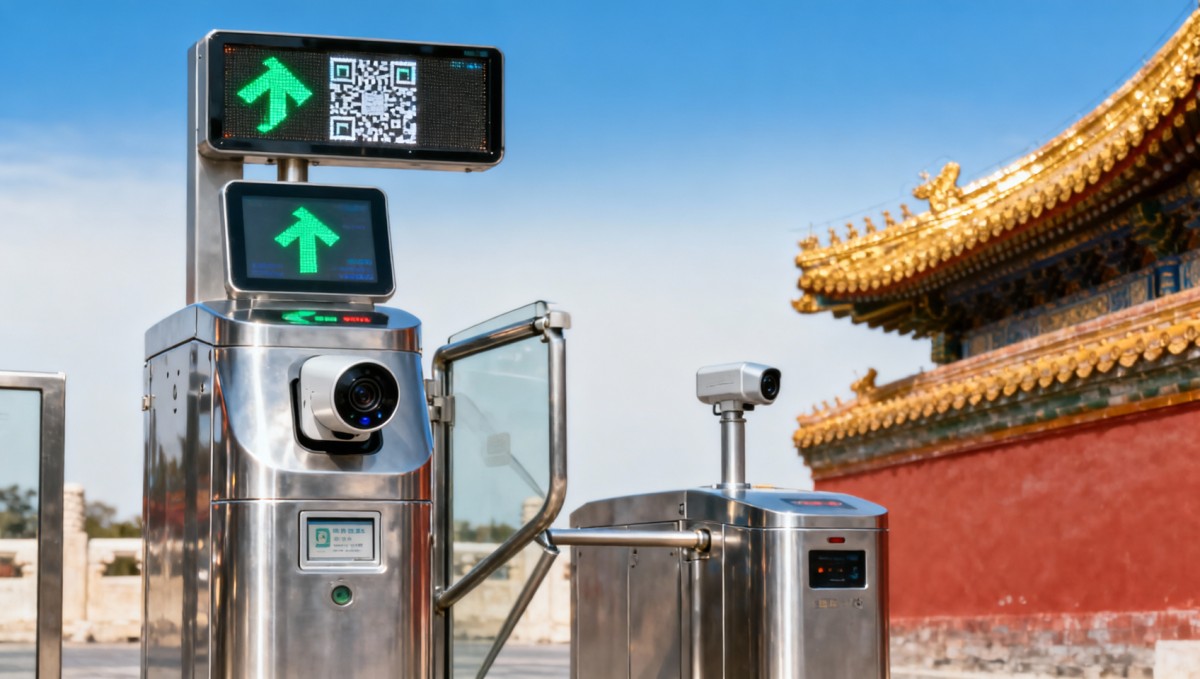
II. Facial recognition failure: lighting, angle, and database delay are the 3 main causes
The Palace Museum's Donghua Gate and Shenwu Gate are equipped with 227 sets of dual-mode gates (including infrared + visible-light cameras), and each device processes an average daily passenger flow of more than 1.2 million visits. However, statistics show that about 14.3% of visitors require secondary verification, of which 62% result from facial recognition failure. The core causes are not equipment malfunctions, but overlapping environmental and operational factors: strong backlighting (outside Donghua Gate from 9:00–11:30 in the morning), wearing masks/sunglasses, hairstyles covering the eyebrows and eyes, or the system not yet synchronized with the latest public security population photo (with an average delay of 3–7 working days).
For silver-haired tourist groups, our company found in the “Journey Through the Divine Capital Luoyang” program that the recognition pass rate for tourists aged 65 and above is only 79.5% due to changes in skin texture and glare on glasses, lower than the average of all age groups (88.2%). For this reason, we optimized the service flow—arranging dedicated guides to conduct pre-checks 3 meters before the gate, adjust standing position and lighting in advance, and activate a dual-safeguard mechanism of “manual channel + identity card + facial assisted comparison,” reducing admission time for elderly groups to an average of 2 minutes 18 seconds.
Special reminder: after facial recognition fails, the system retains the reservation qualification for 30 minutes by default. But if verification is not completed within the time limit, the order will be automatically released. Data from the summer peak season of 2023 show that the refund-and-rebooking rate caused by timeout reached 11.6%, of which Henan group tourists accounted for 34%.
4 practical suggestions to avoid facial recognition failure
- Upload a recent passport-style ID photo with white background taken within the past 6 months during reservation (pixels ≥800×1000), and avoid beautification/filters
- Before entering the park, remove masks, sunglasses, large-frame glasses, and hair accessories that cover the forehead/eyebrows
- Avoid the strong-light area at Donghua Gate before 10:00 in the morning, and give priority to the west-side passage at Shenwu Gate (backlight design)
- For group tourists, pass through in groups according to height, and have children led by adults to the optimal camera recognition height (1.2–1.5 meters)
III. Gate passage abnormalities: hardware response, network fluctuation, and process breakpoints
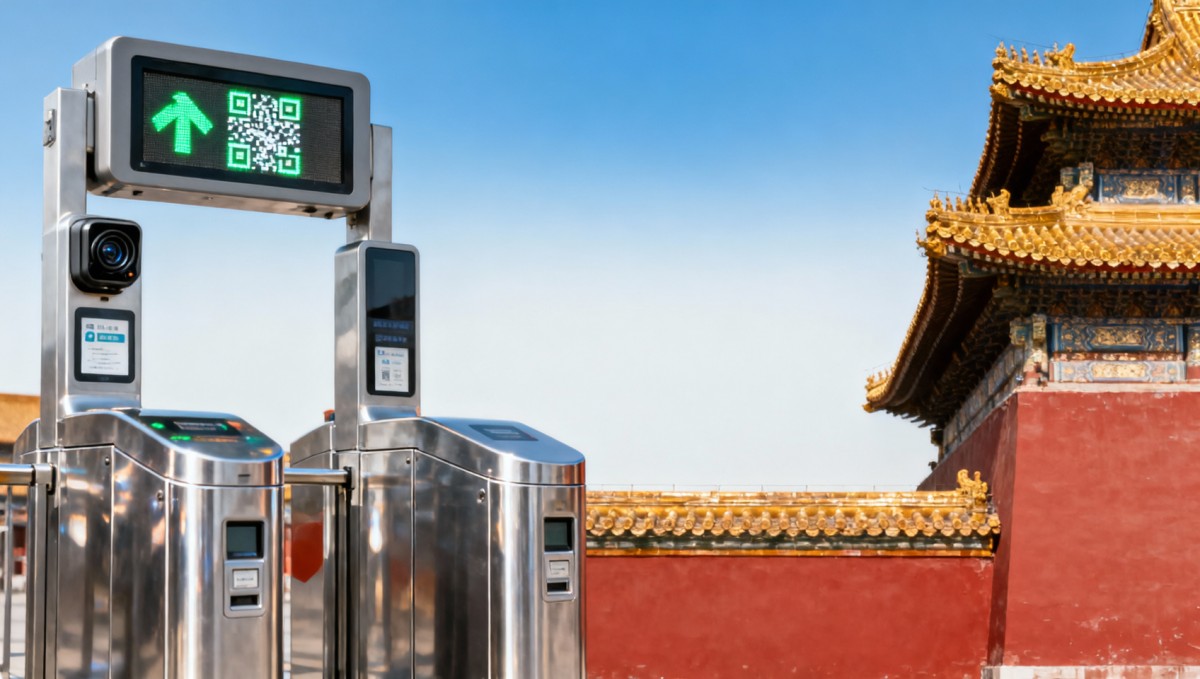
The Palace Museum's gates use the national cryptographic SM4 encrypted communication protocol and are directly connected to the Ministry of Culture and Tourism's national reservation platform. When prompts such as “please try again later” and “system busy” appear, in 83% of cases it is not a device crash, but network link jitter (average response delay >1.8 seconds) or backend concurrent requests exceeding the limit (peaking at 4200 times per second). During the Qingming Festival holiday in 2024, rate limiting was triggered up to 17 times in a single day, concentrated in the admission peak period from 8:30–9:15.
Based on 3 years of local receiving data modeling, Henan Leler Travel Agency found that the passage efficiency of group tourists is strongly correlated with the “granularity of reservation time slots.” For groups choosing on-the-hour reservations (such as 9:00, 10:00), the average queue time is 8 minutes 23 seconds; while for groups reserving non-on-the-hour slots such as 9:15 and 9:45, passage efficiency increases by 41%, and the false trigger rate of gates drops to below 2.1%.
In addition, some tourists mistakenly use screenshots of the “reservation success page” QR code for scanning, but the Palace Museum only supports dynamically refreshed QR codes (updated once every 30 seconds). After a static screenshot becomes invalid, the system judges it as an “illegal credential” and forcibly redirects the user to the manual channel. This issue occurs as high as 39% in parent-child study tour groups, mainly because the leading teachers did not clearly explain the dynamic code rules to students.
As a cultural tourism service provider rooted in Luoyang, Henan Leler Travel Agency has provided the Key Scenic Spots Smart Verification Risk Prevention and Control Manual to 217 travel agencies nationwide, covering 12 high-traffic destinations such as the Palace Museum, the Terracotta Warriors, and the Potala Palace. We recommend that B2B partners include a “gate passage assurance plan” in the contract appendix when purchasing local receiving services, clearly defining response time limits, standards for activating alternative channels, and delay compensation mechanisms.
IV. 3 practical recommendations for cultural and tourism practitioners
First, establish a “dual-track reservation verification” mechanism: for group orders, after making reservations on the official platform, simultaneously conduct document pre-review through our company's B2B system (supporting OCR recognition + public security database comparison) to intercept invalid documents in advance. Second, equip a “mobile emergency kit”: including a portable identity card reader (compliant with GB 15628.1-2008), an offline facial comparison Pad, and a dynamic code generation terminal, to ensure that basic verification can still be completed in an offline environment. Third, promote “staggered admission authentication”: negotiate with scenic spots to open flexible reservation time intervals (for example, a 9:00 reservation may enter from 8:50–9:10) to reduce instant concurrency pressure.
At present, our Zhengzhou—Kaifeng—Luoyang Golden Triangle route has achieved a 99.2% one-time passage success rate, 11.5 percentage points higher than the industry average. All customized services support API integration, electronic contract signing, and real-time data dashboards, helping partners improve delivery certainty and customer satisfaction.
Details determine the warmth of cultural travel, and professionalism ensures every reassuring arrival. Henan Leler Travel Agency sincerely invites cultural and tourism peers nationwide to jointly build a standardized, replicable, and highly resilient smart admission service system—contact us now to obtain the White Paper on Verification Risk Response for Key Scenic Spots and customized solutions.
Your 1:1 travel consultant will respond within 1 business day
How to plan your trip
- China Tourism Academy Releases Report on Autumn Trends in China's Domestic Customized Tour Market
- Visiting China for the First Time: How Many Cities Should You Include in a 15-Day Grand Tour?
- Is a geology exploration tour suitable for elementary school students?
- Is it worth hiring a guide for a visit to the Terracotta Army?
- Hebei Launches 5 “Trendy Hebei” Signature Tour Routes, Standardizing Inbound Tourism Services
Monthly travel guide
- Luoyang launches the “Autumn Charm of the Divine Capital” tourism promotion to build anticipation for winter travel
- Typhoon “White Dolphin” Forces Henan Scenic Areas to Close, Putting Summer Ground-Handling Services Under Pressure
- RCEP Implementing Rules for Indonesia Take Effect: Zero Tariffs for Cultural and Tourism Services Alongside Strict Customer Service Requirements
- Saudi Arabia’s New SASO Regulations Take Effect: Taqat Certification Required Before Chinese-Language Cultural Tourism Services Can Access Visit Saudi
- Zhengzhou Launches a Dedicated LCL Shipping Route for Cultural and Tourism Materials, Cutting Freight Costs by 18%
- Luoyang Cold Chain Intensification: Cultural and Creative Exports Delivered in 9 Days
- Expedited Pre-Approval for Group Visas to Three Southeast Asian Countries
- Tightening air freight capacity at Zhengzhou Airport delays the delivery of cultural and tourism materials
- Vietnam's New Regulations on Bus Monitoring Requirements for Group Tours
- Saudi SAMA New Regulations on Travel Liability Insurance Compliance Preparation
- Japanese tourists' new regulations for entering Henan local transport vehicles
- Wai Gao Qiao Wen Travel customs bonded warehouse summer group equipment fast lane
Popular destinations
- The Complete 2026 Guide to Inbound Tourism in Henan, China: 144-Hour Visa-Free Transit, the Latest Policies, and In-Depth Travel Tips
- Lhasa Conducts Standardization Training for the Travel Photography Industry, Strengthening Standards for Tourism Services
- Japan to Launch Credit Point System for Chinese-Speaking Tour Guides; Pilot Begins in August
- The EU Clarifies That Digital Tourism Platforms Fall Under GDPR
- Thailand upgrades its “China Ready” certification, adding AI voice compliance checks for Chinese-language commentary
Why choose us

High cost-performance and transparent experience
Offer astonishing low prices without hidden tourism traps, enabling travelers to explore at lower costs while avoiding unnecessary spending loopholes, ensuring transparent consumption.

Personalization and dedicated service
Support 100% free customization, paired with one-on-one expert service, crafting exclusive itineraries based on travelers' specific needs, while providing professional guidance to enhance the personalization and professionalism of the journey.

Premium itinerary planning
Compact yet rich itineraries allow travelers to experience more within limited time; simultaneously, carefully selected hotels in prime locations provide convenient lodging conditions, overall enhancing travel comfort and experience.