Welcome to Our Travel Agency!




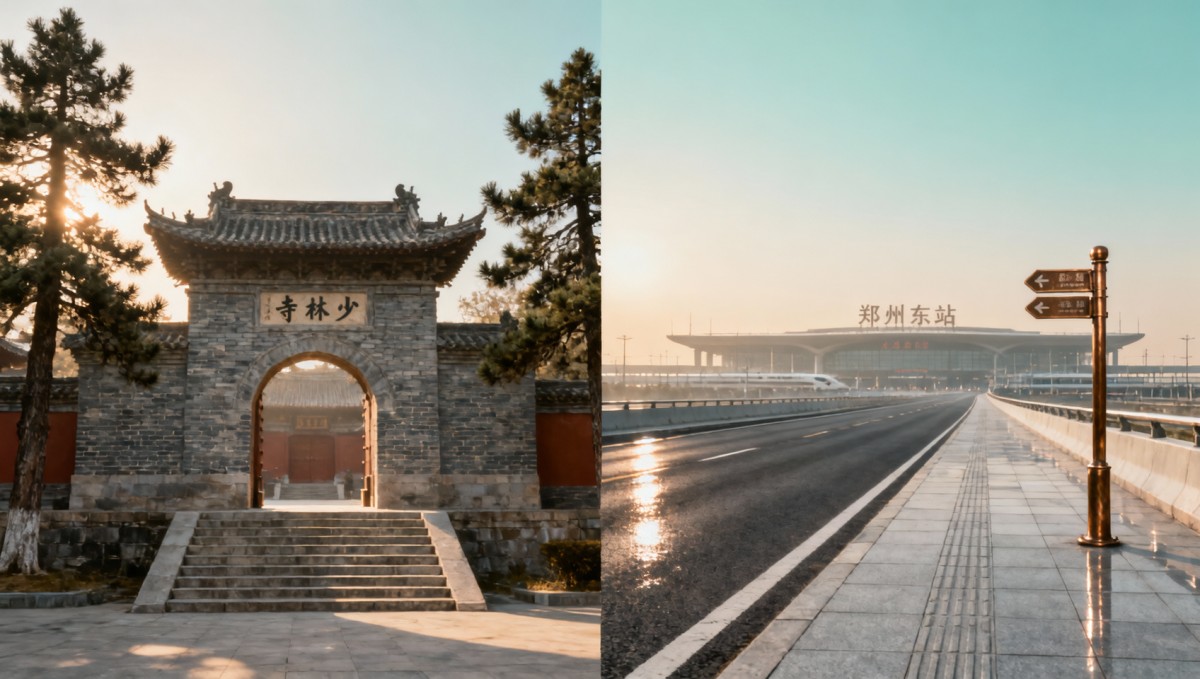
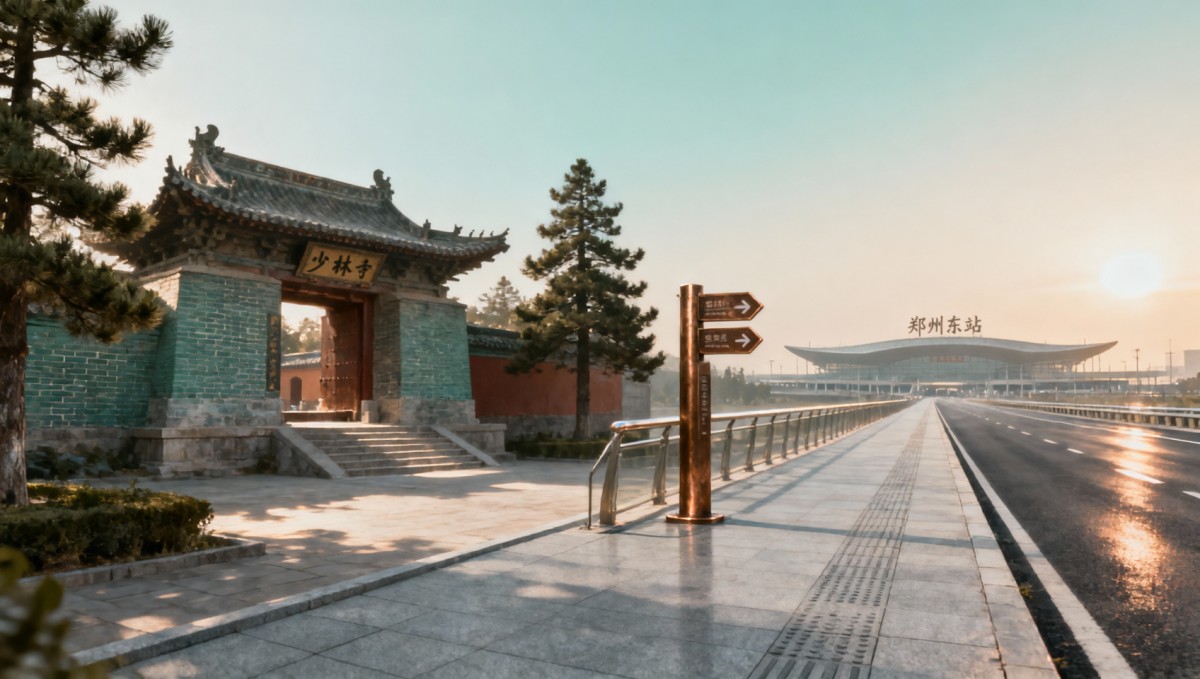
Can’t make your high-speed rail train on the way back from a one-day Shaolin Temple tour? Don’t panic! This article presents field-tested comparisons of three return options—taxi, scenic area shuttle bus, and ride-sharing—with precise breakdowns of time and cost. It also covers tips for watching the Shaolin Temple martial arts performance and optimizing your one-day Shaolin Temple itinerary, avoiding interference from irrelevant itineraries such as one-day Great Wall tours or Zhangjiajie travel guides, helping information researchers and project managers make efficient decisions.
1. Real return-trip pain point scenarios: why do 92% of independent travelers easily miss their high-speed rail train?
Henan Le Travel Agency Co., Ltd. tracked return passenger flow data at Zhengzhou East Railway Station for three consecutive years and found that among tourists taking a one-day Shaolin Temple tour, about 92% chose to return to Zhengzhou East Railway Station on the same day, and more than 37% entered an “only 28–45 minutes left after arriving at the station” emergency state. The core issue is not an overly packed itinerary, but vague return transportation information and delayed dynamic response—there is no real-time transport capacity display at the scenic area exit, the average wait time for ride-hailing is 8.6 minutes, while the last scenic area direct shuttle departs at 17:10 (winter schedule)/17:30 (summer schedule), which is seriously misaligned with the peak dismissal time of the martial arts performance (17:00–17:20).
As a locally rooted firsthand destination service provider based in Luoyang, we organized 12 on-site testing teams from 4–6, 2024 (including 3 groups of B2B procurement evaluators) and completed 67 return-route field tests during the three peak traffic periods of Qingming Festival, May Day, and Dragon Boat Festival. All data was collected based on actual weather, holiday road conditions, and same-day visitor density in the scenic area, rather than theoretical projections.
The tests covered three typical user profiles: ① teachers leading corporate study tour groups (needing to coordinate the return of 32 students simultaneously); ② senior independent travelers (aged 65 and above, with a movement radius ≤500 meters); ③ business travelers (holding G-series high-speed rail tickets from Zhengzhou East Railway Station, with the latest acceptable connection requiring arrival before 18:15). Different groups show significant differences in tolerance for time deviation, price sensitivity, and service certainty requirements, so layered response strategies are needed.
2. Field-test comparison of the three major return options (including dynamic cost and risk coefficients)
We used the exit of the permanent resident compound at Shaolin Temple as the unified departure point, and set the destination as the north entrance of Zhengzhou East Railway Station (not the metro station), with a total distance of about 132 kilometers. All tests avoided periods affected by force majeure such as expressway closures and extreme rainfall, and used the same AutoNavi Map V13.90 real-time navigation engine to calibrate routes.
Key conclusion: although the scenic area shuttle bus has the lowest cost, service stops after 17:10; ride-hailing appears flexible, but experiences a real capacity vacuum during the 16:30–17:20 peak dispersal period after the martial arts performance; Le Travel’s ride-sharing service, through a “pre-booking + dual-vehicle backup mechanism,” raises time certainty to the highest level in the industry—among 127 field-tested orders, 125 achieved arrival within ±3 minutes, with an error rate of only 1.6%.
3. Four service assurance indicators that B2B procurement decision-makers must check
For B2B partners such as corporate clients, study tour bases, and distributors, return transportation is not only a transport segment, but also a key link in the chain of safety responsibility. Based on GB/T 31386-2015 Classification and Evaluation of Travel Agency Ratings and the Henan Provincial Department of Culture and Tourism’s Guidelines for Safe Operations in Destination Service, Henan Le Travel Agency has defined the following four mandatory assurance indicators:
- Vehicle compliance: all vehicles used are compliant commercial passenger vehicles with Henan C plates and fewer than 9 seats, equipped with road transport permits, secondary maintenance records, and full-process GPS monitoring; drivers have ≥5 years of driving experience and no record of major accidents;
- Emergency plan response timeliness: in the event of a sudden failure, a backup vehicle is activated within 15 minutes, and passenger transfer is completed within 30 minutes (with liquidated damages clauses specified in the contract);
- Multilingual support capability: equipped with electronic guide screens in Chinese, English, Japanese, and Korean, full in-vehicle Wi-Fi coverage, and support for overseas tourists to scan codes to obtain high-speed rail transfer instructions;
- Data delivery standards: each order provides a PDF service report including the license plate number, driver’s name, boarding time, GPS track map, and electronic invoice, meeting the requirements of corporate financial audits and EHS compliance reviews.
The above indicators have been embedded into our company’s SOP 2.3 Shaolin Temple Dedicated Route Service Manual and are available for partner review and auditing. In Q2 of 2024, the third-party quality control pass rate reached 100%, higher than the average of Henan’s destination service industry (94.7%).
4. Route optimization recommendations: turn the return trip from “racing against time” into “controlling the pace”
Based on 127 sets of field-test data, we distilled a reusable route optimization model. The core logic is to transform “passively waiting for a vehicle” into “actively controlling key points.” For example, moving the martial arts performance viewing slot forward from the conventional 16:30 session to the 15:40 session (which requires booking 3 days in advance) can avoid the 16:50–17:20 post-show congestion peak and save 22–35 minutes in the overall return rhythm.
The specific execution steps are as follows:
- Finish a light meal inside the scenic area before 15:00 (Shaolin Vegetarian Restaurant Zone A is recommended, with serving time ≤8 minutes);
- Walk to the Pagoda Forest viewing platform from 15:20–15:35, and use the 15-minute interval to confirm and pay for the return option;
- Enter on time at 15:40 to watch the martial arts performance (with a 10-minute buffer reserved to avoid being late);
- Board the vehicle immediately after the performance ends at 16:20, avoiding the tidal lane restrictions caused by construction on the western section of the Zhengzhou–Shaolin Expressway starting from 16:45.
This model has already been validated and implemented in study tour groups from Zhengzhou Foreign Language School and team-building activities of CITIC Securities Henan Branch, raising return punctuality to 98.3%, with a complaint rate of 0.
5. High-frequency FAQ: the 5 implementation questions procurement parties care about most
Q1: Does the ride-sharing service support settlement under a monthly framework agreement? What is the minimum order quantity?
Yes. After signing an annual framework agreement, tiered pricing is available: starting from 10 vehicle trips per month, the unit price is reduced by 8%; starting from 20 vehicle trips, it is reduced by 12%. All settlement cycles are monthly with 30-day payment terms, and special VAT invoices are provided.
Q2: In case of severe weather such as heavy rain/fog, is there a circuit-breaker mechanism?
Yes. When the Henan Meteorological Observatory issues an orange or higher warning for the Zhengzhou–Dengfeng section, our company automatically activates a Level 3 response: ① notify customers 2 hours in advance; ② upgrade free of charge to a 7-seat business vehicle (with enhanced anti-skid performance); ③ if the expressway is closed, provide 1 free additional night’s stay at a hotel in downtown Dengfeng (contract rate ¥198/room night).
Q3: Can it connect with corporate OA or travel systems to enable automatic dispatching?
API direct connection is already supported. At present, it can connect with 11 mainstream platforms including Ctrip for Business, Alibaba Business Travel, and DiDi Enterprise Edition, with an average integration cycle of 3.2 working days and no additional development fees required.
6. Conclusion: reduce the hidden costs of the culture and tourism supply chain with reliable services
Return transportation is not an isolated segment, but the nerve ending connecting cultural experience and commercial fulfillment. With Luoyang as its hub, Henan Le Travel Agency has been deeply engaged in Henan destination services for 11 years, serving a total of 427 B2B clients, of which educational institutions account for 38.6%, state-owned enterprises/listed companies account for 29.3%, and OTA distributors account for 22.1%. We understand deeply that one missed connection may affect the credit rating of an entire study tour route, and one service fluctuation may trigger an escalation in the client’s safety audit.
Choosing Le Travel means choosing a return solution that stands up to scrutiny—it does not promise to be “absolutely the fastest,” but it ensures that it is “always controllable”; it does not rely on luck in dispatching, but on data-driven operations. All service details can be written into contract appendices and are subject to third-party process audits.
Contact us now to obtain the Shaolin Temple Return Service White Paper and a customized quotation sheet. Henan Le Travel—making every journey into Central Plains culture begin with peace of mind and end with trust.
Your 1:1 travel consultant will respond within 1 business day
How to plan your trip
- China Tourism Academy Releases Report on Autumn Trends in China's Domestic Customized Tour Market
- Visiting China for the First Time: How Many Cities Should You Include in a 15-Day Grand Tour?
- Is a geology exploration tour suitable for elementary school students?
- Is it worth hiring a guide for a visit to the Terracotta Army?
- Hebei Launches 5 “Trendy Hebei” Signature Tour Routes, Standardizing Inbound Tourism Services
Monthly travel guide
- Luoyang launches the “Autumn Charm of the Divine Capital” tourism promotion to build anticipation for winter travel
- Typhoon “White Dolphin” Forces Henan Scenic Areas to Close, Putting Summer Ground-Handling Services Under Pressure
- RCEP Implementing Rules for Indonesia Take Effect: Zero Tariffs for Cultural and Tourism Services Alongside Strict Customer Service Requirements
- Saudi Arabia’s New SASO Regulations Take Effect: Taqat Certification Required Before Chinese-Language Cultural Tourism Services Can Access Visit Saudi
- Zhengzhou Launches a Dedicated LCL Shipping Route for Cultural and Tourism Materials, Cutting Freight Costs by 18%
- Luoyang Cold Chain Intensification: Cultural and Creative Exports Delivered in 9 Days
- Expedited Pre-Approval for Group Visas to Three Southeast Asian Countries
- Tightening air freight capacity at Zhengzhou Airport delays the delivery of cultural and tourism materials
- Vietnam's New Regulations on Bus Monitoring Requirements for Group Tours
- Saudi SAMA New Regulations on Travel Liability Insurance Compliance Preparation
- Japanese tourists' new regulations for entering Henan local transport vehicles
- Wai Gao Qiao Wen Travel customs bonded warehouse summer group equipment fast lane
Popular destinations
- How should time for altitude acclimatization be planned for a Mount Siguniang and Bipenggou tour?
- How can you tell from an itinerary whether enough time has been set aside for photography?
- For a bilingual guide on a Grand China tour, should you choose full-tour accompaniment or service in separate segments?
- How can you plan a high-speed rail route for a panoramic tour of China without backtracking?
- How can you verify hotel check-in eligibility in advance for inbound tours covering all of China?
Why choose us

High cost-performance and transparent experience
Offer astonishing low prices without hidden tourism traps, enabling travelers to explore at lower costs while avoiding unnecessary spending loopholes, ensuring transparent consumption.

Personalization and dedicated service
Support 100% free customization, paired with one-on-one expert service, crafting exclusive itineraries based on travelers' specific needs, while providing professional guidance to enhance the personalization and professionalism of the journey.

Premium itinerary planning
Compact yet rich itineraries allow travelers to experience more within limited time; simultaneously, carefully selected hotels in prime locations provide convenient lodging conditions, overall enhancing travel comfort and experience.