Welcome to Our Travel Agency!




Travel Guide
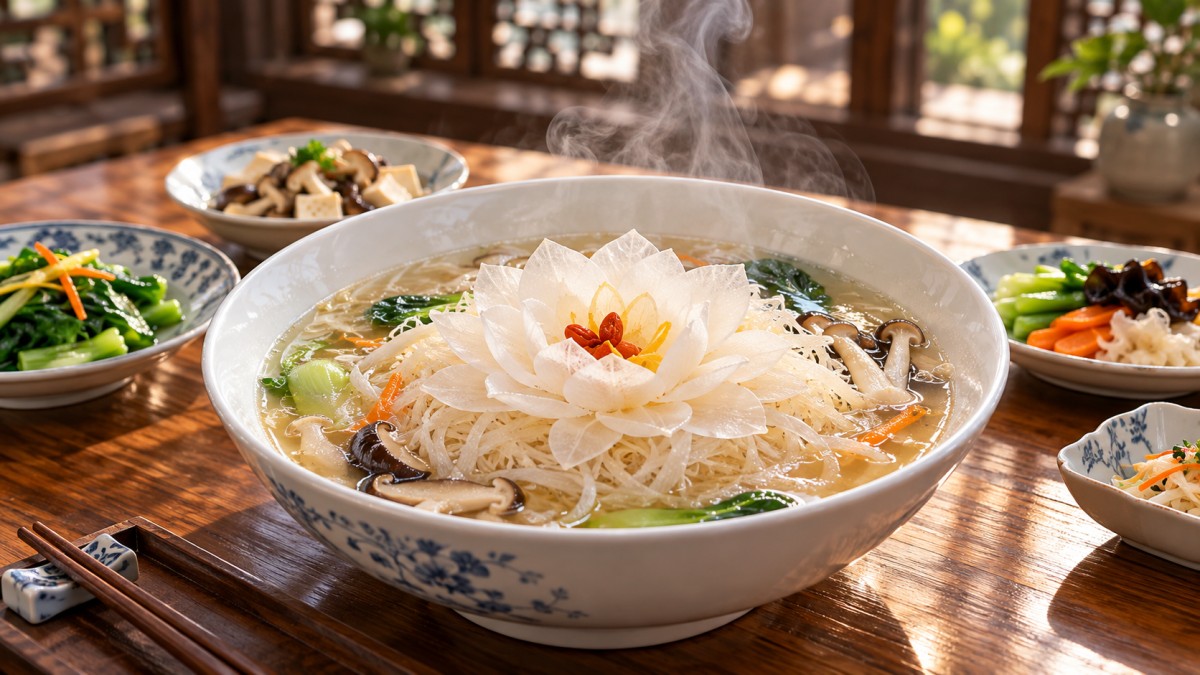
The soup arrives steaming, crowned with a flower-shaped garnish. Beneath it are delicate strands of radish, looking like an ideal vegetarian choice. Yet the broth may be chicken-based, and the decoration may include seafood. At a Luoyang water banquet, what you can see is only part of the ingredient list.
The best Luoyang water banquet dishes for vegetarians are vegetable, tofu, mushroom, and radish preparations made with confirmed meat-free broth, plant-based oil, and suitable seasonings. None should be treated as vegetarian simply because its name mentions vegetables. Some can be adapted; others depend on stocks or mixtures prepared before you arrive.
With a few specific questions and, ideally, an advance request, you can enjoy the banquet’s warmth and ceremony without guessing what is in your bowl.
Why a vegetable dish is not automatically vegetarian
Luoyang’s water banquet, often called Luoyang shuixi, is a traditional sequence of dishes known for its many soups and flowing service. A full traditional banquet is commonly described as having 24 dishes, although restaurant menus and smaller tasting arrangements vary. “Water” refers to the style of the feast—not to a vegetable-only cooking tradition.
Animal ingredients may appear in several layers: stock beneath the vegetables, lard used for frying, minced meat in a filling, or dried shrimp added for flavor. A server might reasonably describe a dish as a “vegetable dish” because vegetables are its main ingredient, even when it does not meet your dietary rules.
That distinction matters more than memorizing dish names. A familiar name is a starting point for a conversation, not proof that a dish is suitable. Recipes differ between restaurants, and even a restaurant that accommodates vegetarians may need notice to prepare a separate broth.
Which Luoyang water banquet dishes are worth asking about?
The options below are candidates to discuss, not guaranteed vegetarian menu items. Some are banquet specialties; others are practical additions that a restaurant may offer alongside a shortened or adapted water banquet.
Peony Yancai: the signature dish that needs the most careful question
If you want one recognizable Luoyang specialty, ask about Peony Yancai first. Its appeal lies partly in transformation: finely prepared radish takes on a delicate texture associated with the dish’s “swallow” name. That name does not, by itself, establish the ingredients in the version being served.
The radish component may be plant-based, but the finished dish can include animal stock and meat or seafood accompaniments. The decorative peony also deserves attention; do not assume every part of the flower is made from vegetables.
Ask whether the kitchen can prepare the radish in a separate vegetable or mushroom broth, omit all meat and seafood, and use a plant-based garnish. If the soup has already been assembled in animal stock, removing the topping will not make it vegetarian. A simplified presentation with a confirmed broth is a better choice than an impressive-looking dish with uncertain ingredients.
Tofu and mushrooms: useful alternatives, not automatic safe choices
Tofu and mushrooms are sensible ingredients to request when discussing vegetarian Luoyang water banquet dishes. They can help create a satisfying meal rather than leaving you with several bowls of lightly cooked vegetables.
However, tofu readily absorbs the liquid around it. Tofu simmered in pork broth remains unsuitable even if no meat pieces are visible. Mushroom dishes can likewise contain oyster sauce or animal-based stock powder.
A useful request is a freshly prepared tofu-and-mushroom dish using water or confirmed vegetable stock, vegetable oil, and checked seasonings. If the kitchen cannot verify a prepared sauce, ask whether a simpler seasoning is possible.
The ingredient checks that make the biggest difference
You do not need to interrogate staff about every spice. Concentrate on the ingredients most likely to change whether the meal fits your diet.
- Broth: Ask specifically about chicken, pork, beef, fish, and seafood stock. “Clear soup” describes appearance, not ingredients.
- Cooking fat: Confirm vegetable oil rather than lard or another animal fat, including in fried garnishes.
- Sauces and powders: Check oyster sauce, shrimp paste, fish sauce where used, and seasonings containing meat or seafood extracts. Mushroom seasoning is not necessarily animal-free; its ingredients still matter.
- Small additions: Mention minced meat, ham, dried shrimp, and seafood garnish. Small quantities still count.
- Eggs and dairy: State your own rules. Some vegetarians accept them; vegans do not. Egg may appear in coatings, garnishes, or soup.
Do not rely on “no meat” alone. Some people understand that request as excluding pork or beef while allowing chicken broth or seafood. Explaining what you avoid is usually more effective than debating a dietary label.
If you also avoid garlic, onions, or other alliums for religious reasons, say so separately. A vegetarian request does not automatically communicate those restrictions.
A clear request to send before your meal
A short written message gives the restaurant something concrete to pass to the kitchen. You can send the following in advance and ask your guide or hotel staff to translate it accurately:
“I am vegetarian. I do not eat meat, poultry, fish, seafood, meat stock, lard, oyster sauce, or seasonings containing animal extracts. Please use vegetable oil and a confirmed vegetable or mushroom broth. Please do not just remove meat from a dish cooked with meat. I [do/do not] eat eggs and dairy. Which dishes can your kitchen prepare separately?”
For a vegan meal, replace the final dietary sentence with: “I also do not eat eggs, dairy, honey, or other animal-derived ingredients.” Specify any additional requirements that matter to you.
The most useful reply is not simply “yes, vegetarian is possible.” Ask the restaurant to identify the dishes it can make, confirm the broth, and explain whether they will be cooked separately. A reply naming two or three suitable preparations is more actionable than a broad reassurance about the whole banquet.
When you are already at the table
Start with the stock question before ordering a soup. If communication is difficult, show your written request and ask staff to check with the cook rather than guess. Pointing at a photograph or using a translation app can help identify a dish, but neither verifies its recipe.
If the restaurant cannot make a separate broth, change the order. Freshly cooked vegetables, a checked tofu dish, suitable cold plates, and plain rice may be a better meal than a modified soup whose base remains uncertain.
Ordering a satisfying meal without committing to the full banquet
You do not have to order every traditional course to experience Luoyang’s food culture. Ask whether the restaurant offers individual dishes, a smaller selection, or a vegetarian adaptation arranged in advance. Availability will depend on the venue and its preparation schedule.
A practical order for a small party might include:
- A cold vegetable plate with a confirmed plant-based dressing.
- A separately prepared radish or mushroom soup.
- A tofu dish cooked without animal stock or sauces.
- Seasonal greens prepared in vegetable oil.
- Plain rice and, if available, a checked sweet finishing dish.
This is an ordering framework, not a promised restaurant menu. Aim for variety in texture and substance: something crisp, something warming, and enough tofu or another suitable protein source to make the meal filling.
Mixed-diet groups need one extra arrangement. Ask for vegetarian portions to be prepared and served separately, with their own serving utensils. A shared hot bowl can become unsuitable as soon as someone adds a meat-covered spoon or transfers food from another dish.
Vegetarian suitability and allergy safety are different questions
No dish name or general guide can guarantee safety for a food allergy. A restaurant may be able to omit animal ingredients without being able to prevent cross-contact in a shared kitchen.
If you have a severe allergy, explain the allergen and the required precautions separately from your vegetarian preference. Shared fryers, ladles, chopping boards, woks, and storage containers may all matter. Ask what the kitchen can actually control; if its answer is uncertain, choose another dining arrangement.
The same practical distinction applies to strict personal or religious requirements. Decide beforehand whether cleaned shared equipment is acceptable to you, then communicate that standard clearly. This avoids a stressful discussion after the food has arrived.
Build the dining request into your Luoyang itinerary
A water banquet is easier to enjoy when dietary questions are settled before a busy sightseeing day. If you are visiting the Longmen Grottoes or combining Luoyang with other Henan destinations, send your requirements while arranging the itinerary—not only when the group reaches the restaurant.
Henan Le Journey Travel Agency Co., Ltd., based in Luoyang, includes dining arrangements within its inbound travel services. When discussing a trip, ask the team to communicate your ingredient restrictions to prospective restaurants and seek confirmation of specific dishes. Local coordination can reduce misunderstandings, but the kitchen still needs to confirm what it can prepare.
For a wider China journey, carry the same written dietary instructions between destinations. Travelers also considering the Beijing Essence Customized 5-Day Pure Play Tour should discuss meal requirements separately for that itinerary rather than assume a Luoyang restaurant’s arrangements will apply elsewhere.
The simplest rule to remember
Order by confirmed preparation, not by the most reassuring dish name. Radish, tofu, mushrooms, and seasonal vegetables are the strongest starting points, but broth, fat, sauce, and garnishes determine whether the finished dish is vegetarian.
When a restaurant can explain those details and prepare suitable dishes separately, a vegetarian version of the Luoyang water banquet can still feel special: warm bowls arriving in sequence, delicate textures, and time to linger over a local tradition. When it cannot, choosing a simpler meal is a sensible decision—not a missed cultural experience.
Your 1:1 travel consultant will respond within 1 business day
How to plan your trip
- The Ice and Snow Industry Surpasses RMB 1 Trillion, with Direct High-Speed Rail Access and Upgraded Nighttime Offerings Driving Spending
- Autumn Breaks in Multiple Regions Boost Family Travel and Tourism
- Liaoning 2026–2027 Winter Culture Carnival Kicks Off
- Shenyang Cultural Tourism Promotion Delegation Visits Guangzhou to Promote Winter Tourism and Attract Investment
- 2026 Hebei Culture and Tourism Promotion Week in Beijing Kicks Off
Monthly travel guide
- October 2026 County-Level Tourism Communications Report Released: Top 100 Index Rebounds
- More Than 100 Cities Introduce Autumn Breaks, Creating a New Hotspot for Family and Educational Travel
- The 2026 China-Vietnam (Honghe) Border Economic, Trade and Tourism Fair Opens in Hekou
- The 2026 Guangxi Cultural Tourism Carnival Held in Hezhou
- Luoyang launches the “Autumn Charm of the Divine Capital” tourism promotion to build anticipation for winter travel
- Typhoon “White Dolphin” Forces Henan Scenic Areas to Close, Putting Summer Ground-Handling Services Under Pressure
- RCEP Implementing Rules for Indonesia Take Effect: Zero Tariffs for Cultural and Tourism Services Alongside Strict Customer Service Requirements
- Saudi Arabia’s New SASO Regulations Take Effect: Taqat Certification Required Before Chinese-Language Cultural Tourism Services Can Access Visit Saudi
- Zhengzhou Launches a Dedicated LCL Shipping Route for Cultural and Tourism Materials, Cutting Freight Costs by 18%
- Luoyang Cold Chain Intensification: Cultural and Creative Exports Delivered in 9 Days
- Expedited Pre-Approval for Group Visas to Three Southeast Asian Countries
- Tightening air freight capacity at Zhengzhou Airport delays the delivery of cultural and tourism materials
Popular destinations
- Should you travel from Wuzhen to Shanghai by bus or train?
- What can you do if Forbidden City tickets are sold out?
- Is the Summer Palace North Gate convenient for arriving by subway?
- How to walk from the Summer Palace East Palace Gate to Kunming Lake
- Can you buy Summer Palace admission tickets at the East Gate?
Why choose us

High cost-performance and transparent experience
Offer astonishing low prices without hidden tourism traps, enabling travelers to explore at lower costs while avoiding unnecessary spending loopholes, ensuring transparent consumption.

Personalization and dedicated service
Support 100% free customization, paired with one-on-one expert service, crafting exclusive itineraries based on travelers' specific needs, while providing professional guidance to enhance the personalization and professionalism of the journey.

Premium itinerary planning
Compact yet rich itineraries allow travelers to experience more within limited time; simultaneously, carefully selected hotels in prime locations provide convenient lodging conditions, overall enhancing travel comfort and experience.