Welcome to Our Travel Agency!




Travel Guide
Jinshanling vs Mutianyu Great Wall: Photo Spots, Light, and Access
Choosing between sweeping ridgeline photos and an easier day trip from Beijing? This Jinshanling vs Mutianyu Great Wall guide compares photo spots, changing light, and access so you can plan around your camera, fitness level, and available time. Jinshanling offers dramatic watchtower views and longer walks, while Mutianyu combines restored ramparts with convenient cable car access. Neither automatically delivers better photographs: the difference is how much time and effort you can give the visit.
Choose Jinshanling if photographing the wall is a main purpose of your trip. Choose Mutianyu if you want memorable Great Wall views without making the whole day revolve around them. That is the useful starting point—but access hours, weather, and the slowest walker in your group can change the answer.
What will actually look different in your photographs?
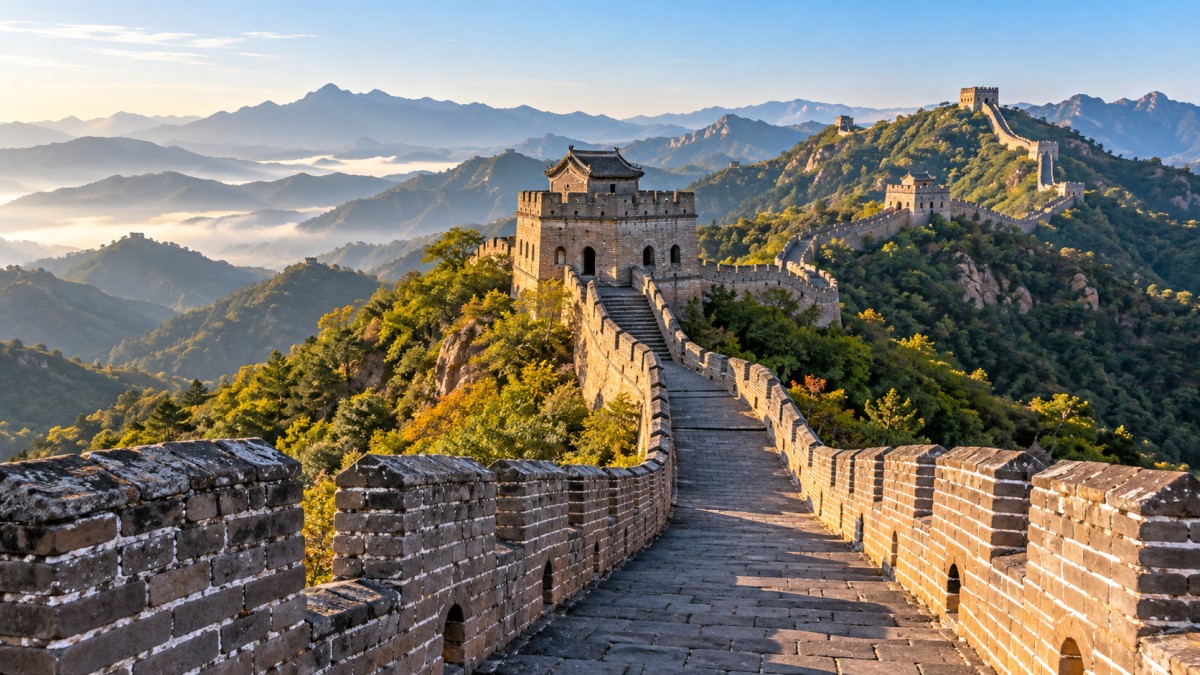
Jinshanling’s strength is the way its wall and watchtowers repeat across successive ridges. From a suitable elevated position, you can frame a nearby tower, a winding middle section, and distant mountains in one composition. The visual rhythm is especially appealing if you want the wall to feel like part of a much larger landscape rather than a single landmark.
Its accessible routes include sections with different degrees of restoration, giving you varied textures and profiles. Do not interpret that as permission to explore every deteriorated stretch visible in the distance. Stay within currently open visitor routes; a compelling photograph does not justify crossing a barrier or stepping onto unstable masonry.
Mutianyu offers a more consistently restored setting: substantial parapets, recognizable watchtowers, and wooded hillsides. It is particularly good for environmental portraits—someone walking along the ramparts, framed in a tower doorway, or looking across the mountains. There are still expansive landscape views, but reaching the quieter, higher viewpoints requires more walking than the phrase “cable car access” suggests.
For a family album, Mutianyu may produce the more satisfying results simply because everyone has more energy when the camera comes out. For a landscape photographer willing to wait through changing conditions, Jinshanling usually offers more scope for layered compositions.
Where to look once you are on the wall
At Jinshanling, the area around the Small Jinshan and Big Jinshan towers is worth discussing with your guide when planning an open-route walk. Rather than chasing a single famous viewpoint, look for a tower-to-tower stretch where the wall forms a strong curve. Stop periodically and turn around: a fairly ordinary forward view can become a much stronger composition in the opposite direction.
At Mutianyu, the cable car serves the area near Tower 14, making the central-to-western stretch a practical starting point for many visitors. Continuing toward the higher western towers can give a stronger sense of elevation, but the climb becomes demanding. You do not need to reach the highest accessible point to get a worthwhile image. Tower doorways, receding battlements, and a clear view across one neighboring ridge often work better than a distant panorama in haze.
Good light is an access question before it is a camera question
Low-angle light can bring out brick texture and separate overlapping ridges. However, “visit at sunrise” is incomplete advice for either section. The sun may rise before visitors can legally enter, while the last descent service may operate before sunset. Gate hours, ticket admission cutoffs, cable car schedules, and seasonal arrangements need checking separately.
Staying near Jinshanling reduces the morning drive; it does not guarantee sunrise access. Before booking a nearby hotel specifically for photography, confirm whether your intended viewpoint is reachable during permitted hours. The same applies to a sunset plan: establish when you must leave the wall, not just when the sun disappears.
Neither section has one universally “correct” shooting direction. The wall changes orientation along the ridges, and the sun’s position changes through the year. A useful plan combines a map-based sun-position check with the actual walking route. Leave room to change direction when a nearby ridge casts an unexpected shadow.
Clear midday conditions are not a wasted visit. Use watchtower interiors for contrasting light, emphasize the geometry of stairs and parapets, or photograph smaller architectural details. Overcast conditions can be excellent for portraits and brickwork, although distant mountains may lose definition. At Jinshanling especially, poor visibility can reduce the advantage of traveling farther for those layered views.
For foliage, target the season rather than a guaranteed date. Autumn color varies with elevation and weather; winter can bring beautifully spare scenery but also ice, wind, and service restrictions. A forecast for central Beijing is not enough for exposed mountain ramparts.
The journey from Beijing: compare door-to-wall time
Mutianyu is generally the easier day trip from Beijing. Jinshanling lies farther away, in Hebei, and gives a larger share of the day to road travel. Exact journey times depend heavily on your hotel location, traffic, and the entrance arrangements in use. A transfer estimate should therefore be treated as a planning range, not a promise.
More importantly, arriving at a scenic-area parking lot is not the same as standing on the wall. Ticket checks, internal transfers where required, walking to an uphill service, and queues can all intervene. Ask for a schedule that includes these steps rather than only the highway journey.
- Private transfer: useful for a photography-led day, provided the quote includes waiting time, the agreed pickup point, and any late-return charges.
- Organized sightseeing bus or excursion: potentially convenient, but check actual time on the wall, departure rules, and whether shopping stops are included.
- Public transport: investigate the current route and return connections before committing. Do not rely on an old account of a seasonal direct service.
At Mutianyu, the enclosed cable car and the chairlift/toboggan operation serve different access points and should not be treated as interchangeable tickets. Check what your booking covers and where you must return. Weather or operating conditions can affect services, so the toboggan should be a bonus rather than the only acceptable way down.
Jinshanling also has cable car access, subject to operation, but that does not remove the climbs between viewpoints. Whichever section you choose, confirm the last uphill and downhill service times directly before your visit.
How much walking should you commit to?
The relevant question is not simply whether you are “fit.” It is whether everyone can manage repeated steep steps, uneven footing, and a descent after several hours outside. Someone comfortable walking across a city may find the wall surprisingly tiring, especially with a heavy camera bag.
Mutianyu is usually the stronger choice for mixed-ability groups because you can build a shorter visit around an uphill service and a limited stretch of ramparts. It is not a step-free attraction. Travelers with mobility limitations should request a specific assessment of the transfer points, stairs, and intended route rather than accept a general assurance that it is “easy.”
At Jinshanling, decide whether the day is a walk with photographs or a photography session with some walking. Trying to cover a long route and wait patiently for light often creates tension. Set a turnaround time and preserve a reserve for the return; the final downhill section still demands concentration.
Wear grippy footwear and keep your hands available on steep sections. Carry water, sun protection, and a wind layer appropriate to the forecast. For photography, a phone or a compact two-lens setup is often more practical than a full kit. If using a tripod, check current rules and never block narrow stairs or tower doorways.
Which choice fits the rest of your China trip?
Choose Mutianyu when Beijing is one stop in a busy itinerary, when children or older relatives need flexibility, or when you want strong photographs without sacrificing the next day’s energy. Going early within permitted hours and avoiding major holiday peaks can help, but no section should be sold as reliably empty.
Choose Jinshanling when the wall itself deserves a full day, you enjoy sustained walking, and you can tolerate weather uncertainty. A nearby overnight stay may make the pace more comfortable. It is less compelling if you must return for a tightly timed train or flight: the extra distance leaves less margin when traffic or mountain conditions change.
There is also a wider itinerary trade-off. If you already plan to spend several days photographing mountain landscapes—for example, on a Zhangjiajie+Fenghuang Ancient Town 5-Day Tour—Mutianyu can provide a contrasting heritage day without adding another demanding landscape excursion. Travelers building their trip around the Great Wall may reasonably make the opposite choice.
For a customized itinerary, Henan Le Journey Travel Agency Co., Ltd., based in Luoyang, can help coordinate the broader journey through its domestic travel planning services, alongside its Henan inbound expertise. The useful brief is specific: your Beijing hotel, onward travel, walking tolerance, photographic priorities, and whether you need a private driver and guide. Ask for entrance arrangements and route details to be confirmed rather than assuming an agency’s local Henan resources extend to special Great Wall access.
Before paying, settle three things: which open stretch you will walk, how long you will actually have on the wall, and how you will return if an uphill service stops. With those answers in place, the choice becomes clearer: Jinshanling for a day shaped around the landscape; Mutianyu for an easier visit that still gives the Great Wall room to impress.
Your 1:1 travel consultant will respond within 1 business day
How to plan your trip
- The Ice and Snow Industry Surpasses RMB 1 Trillion, with Direct High-Speed Rail Access and Upgraded Nighttime Offerings Driving Spending
- Autumn Breaks in Multiple Regions Boost Family Travel and Tourism
- Liaoning 2026–2027 Winter Culture Carnival Kicks Off
- Shenyang Cultural Tourism Promotion Delegation Visits Guangzhou to Promote Winter Tourism and Attract Investment
- 2026 Hebei Culture and Tourism Promotion Week in Beijing Kicks Off
Monthly travel guide
- October 2026 County-Level Tourism Communications Report Released: Top 100 Index Rebounds
- More Than 100 Cities Introduce Autumn Breaks, Creating a New Hotspot for Family and Educational Travel
- The 2026 China-Vietnam (Honghe) Border Economic, Trade and Tourism Fair Opens in Hekou
- The 2026 Guangxi Cultural Tourism Carnival Held in Hezhou
- Luoyang launches the “Autumn Charm of the Divine Capital” tourism promotion to build anticipation for winter travel
- Typhoon “White Dolphin” Forces Henan Scenic Areas to Close, Putting Summer Ground-Handling Services Under Pressure
- RCEP Implementing Rules for Indonesia Take Effect: Zero Tariffs for Cultural and Tourism Services Alongside Strict Customer Service Requirements
- Saudi Arabia’s New SASO Regulations Take Effect: Taqat Certification Required Before Chinese-Language Cultural Tourism Services Can Access Visit Saudi
- Zhengzhou Launches a Dedicated LCL Shipping Route for Cultural and Tourism Materials, Cutting Freight Costs by 18%
- Luoyang Cold Chain Intensification: Cultural and Creative Exports Delivered in 9 Days
- Expedited Pre-Approval for Group Visas to Three Southeast Asian Countries
- Tightening air freight capacity at Zhengzhou Airport delays the delivery of cultural and tourism materials
Popular destinations
- Should you travel from Wuzhen to Shanghai by bus or train?
- What can you do if Forbidden City tickets are sold out?
- Is the Summer Palace North Gate convenient for arriving by subway?
- How to walk from the Summer Palace East Palace Gate to Kunming Lake
- Can you buy Summer Palace admission tickets at the East Gate?
Why choose us

High cost-performance and transparent experience
Offer astonishing low prices without hidden tourism traps, enabling travelers to explore at lower costs while avoiding unnecessary spending loopholes, ensuring transparent consumption.

Personalization and dedicated service
Support 100% free customization, paired with one-on-one expert service, crafting exclusive itineraries based on travelers' specific needs, while providing professional guidance to enhance the personalization and professionalism of the journey.

Premium itinerary planning
Compact yet rich itineraries allow travelers to experience more within limited time; simultaneously, carefully selected hotels in prime locations provide convenient lodging conditions, overall enhancing travel comfort and experience.