Welcome to Our Travel Agency!




Travel Guide
Mutianyu is the more practical choice for a half-day Great Wall trip from central Beijing. It offers a better balance of travel time, access, and time on the wall, especially if you arrange direct transport and keep the walking route modest. Jinshanling is more appealing for an extended walk through dramatic mountain scenery, but its longer road journey makes a short outing difficult to justify.
The answer depends on what “half a day” means in your itinerary. A flexible morning that can extend into early afternoon gives Mutianyu a workable window. Four hours between leaving your hotel and returning is much tighter. If you have a flight, train, or fixed appointment afterward, the return deadline matters more than which section looks better in photographs.
Start with the time you can actually spend away
For the Jinshanling Great Wall vs Mutianyu decision, compare the entire outing: hotel pickup, road travel, arrival procedures, movement through the scenic area, time on the wall, descent, and the drive back. A tour advertised as a half-day visit may use that label loosely, so ask for its expected hotel-to-hotel duration.
As broad planning estimates, allow roughly 1.5–2.5 hours each way between central Beijing and Mutianyu, and around 2.5–3.5 hours each way for Jinshanling. These are approximate driving allowances, not guaranteed journey times. Your hotel location, departure time, traffic, weather, and route can change them substantially.
That difference has a direct consequence: Jinshanling can consume most of a short outing before you have walked onto the wall. At Mutianyu, a well-organized visit has a better chance of leaving enough time to enjoy the scenery without constantly checking your watch.
- About four hours available: neither section makes a comfortable excursion from central Beijing. Mutianyu might fit under favorable conditions, but there is little room for delays or meaningful walking.
- About five to six hours: Mutianyu becomes a reasonable option with direct transport, an efficient arrival, and a short route. Your departure location still matters.
- A full day available: Jinshanling becomes a much stronger candidate, particularly if walking and photography are the main purposes of the trip.
Count backward from any firm commitment. If you must be somewhere at a particular time, include the journey from the hotel or drop-off point to that appointment. A nominal return to Beijing does not necessarily mean you have reached the part of the city you need.
What you gain—and give up—at each section
Mutianyu gives a short visit more room to work
Mutianyu combines restored wall, watchtowers, and mountain views with established visitor facilities. For a first Great Wall visit, it delivers much of what people hope to see without requiring a lengthy hike. You can reach the wall, explore a manageable stretch, stop for photographs, and turn back before the walk becomes tiring.
Mechanical access options can reduce the climb from the valley, which helps when time or stamina is limited. However, check which ascent and descent services are operating for your date and where each one connects to the wall. Different services can involve different boarding points and separate ticket arrangements.
The trade-off is the visitor infrastructure itself. Ticket checks, internal transport where required, queues, and the walk between facilities all take time. A cable car reduces physical effort; it does not make the journey from vehicle to battlements instantaneous.
Mutianyu also attracts travelers seeking the same convenient access. On busy dates, queues may reduce the advantage of a short itinerary. An early departure can help, provided you coordinate arrival with the attraction’s opening arrangements rather than simply leaving Beijing as early as possible.
Jinshanling rewards the time that a half-day visit removes
Jinshanling’s appeal lies in its mountain setting, successive watchtowers, and the changing views as the wall follows the ridges. It suits travelers who want walking to be a substantial part of the experience. Its combination of restored areas and more weathered stretches also gives the visit a different visual character.
Although Jinshanling is often chosen for a quieter experience, an empty wall is never assured. Holidays, organized groups, photography trips, and conditions around particular access points can affect how busy it feels. Traveling farther does not guarantee solitude.
On a compressed schedule, you may reach Jinshanling only to limit yourself to a brief walk near an access point. That can still be enjoyable, but it weakens the reason for spending extra hours on the road. The section makes more sense when you have time to follow the terrain, pause at viewpoints, and adjust your pace.
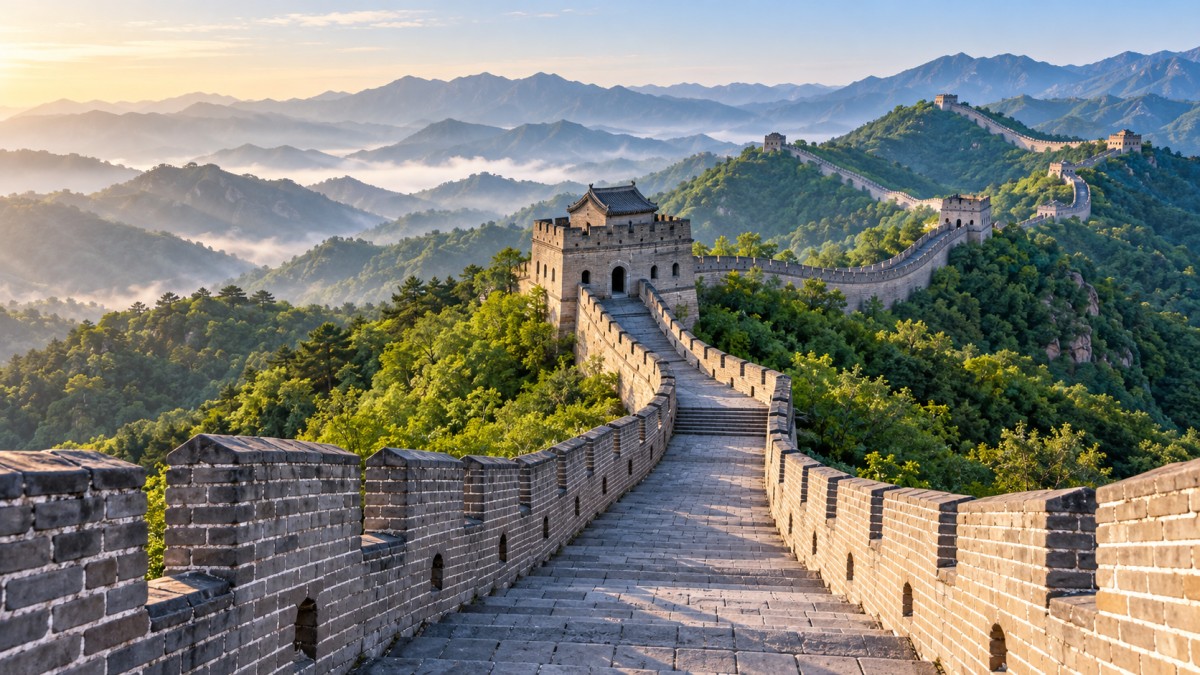
Photographs can make both destinations look like a simple choice between two views. In practice, the more useful comparison is how much of that view you can experience within your available time. A relaxed stretch at Mutianyu may be more satisfying than a hurried stop at Jinshanling, even if the latter better matches your ideal photograph.
Choose the walking route before choosing the transport package
Neither section should be treated as an effortless stroll. Great Wall walking involves uneven surfaces, steep steps, and repeated changes in elevation. Even when a lift handles the initial ascent, the route along the wall can still demand balance and stamina.
At Mutianyu, a short out-and-back walk is usually easier to fit into a limited schedule. Choose a turnaround point based on the slowest person in your party, the conditions, and the time needed to descend. A target tower should remain optional if reaching it would put pressure on the return journey.
For families and groups with mixed fitness levels, this flexibility matters. Some travelers may be content with a short walk and several viewpoints, while others want to continue farther. Agree on a meeting place and time before separating, and make sure everyone understands the descent arrangements.
Jinshanling needs closer attention to the intended route. Ask whether the walk returns to the same entrance or finishes elsewhere, how much ascent it includes, and where the driver will meet you. A route that sounds manageable in distance may take longer than expected because of steep sections and frequent stops.
A cable car does not make either destination step-free. Travelers with significant mobility limitations should discuss the full access route in advance, including boarding arrangements, steps, walking surfaces, and access to facilities. “Suitable for older travelers” is too vague to establish whether a particular itinerary will work.
Weather can change the decision as much as fitness. Heat increases the effort of exposed walking; rain can make surfaces slippery; cold, wind, or ice can affect comfort and access. Check the forecast and attraction notices close to departure, and leave room to shorten the walk. A tight itinerary becomes less useful if it depends on everyone maintaining an optimistic pace.
Transport can make or break the half-day plan
For a short Mutianyu outing, a prearranged direct vehicle generally gives you the most control over departure and return times. It also makes it easier to shorten the visit if traffic, weather, or fatigue changes the plan. That flexibility is particularly useful for families or anyone with a firm afternoon commitment.
Public transport can be a sensible budget choice when your day is flexible, but transfers, waiting, and the final connection to the attraction can consume a large share of a half-day window. Compare the whole journey rather than only the main bus or rail segment. A cheaper fare may come with a substantial time cost.
Group excursions require a different check. A listed sightseeing duration may exclude hotel collection, additional pickups, or time spent assembling the group. Ask when you are expected to leave your accommodation and when you are likely to return. Also establish whether meals or other stops are included in the schedule.
Jinshanling benefits even more from clear return arrangements. If you plan to leave from a different access point, the driver needs to know that before you begin. Do not build a remote pickup around the assumption that a suitable vehicle will be immediately available when you finish walking.
Before booking either section, get clear answers to a few practical questions:
- What is the expected total duration from your specific pickup address?
- How much time is allocated to walking on the wall after access and descent?
- Which entrance tickets, internal transfers, and ascent or descent services are included?
- Will the vehicle remain available, and what happens if the visit runs longer?
- Can the route be shortened if someone becomes tired or conditions change?
Compare total trip costs on the same basis. A transport-only quote and a package that includes admission, access services, and guiding are not directly comparable. For a small party, sharing a private vehicle may make the added flexibility worthwhile; solo travelers may place more weight on the lower price of a group departure.
Which choice fits your actual Beijing itinerary?
Choose Mutianyu if this is your first Great Wall visit and you have one free morning. It gives you a credible chance to enjoy the wall while preserving part of the day for something else. Keep the second activity flexible: crossing Beijing for a timed reservation immediately afterward can undo the benefit of choosing the closer section.
Mutianyu is also the stronger starting point for families, mixed-ability groups, and travelers who want scenery without committing to an extended hike. Its access options help, but the day still needs a realistic allowance for queues, walking, and rest.
Choose Jinshanling if the wall is a priority and you can give it a full day. It becomes more compelling when you value a longer walk, changing ridge views, and time to compose photographs. If those are your main goals, rearranging the itinerary is more sensible than squeezing Jinshanling into a half-day slot.
For a longer Beijing stay, look at where the Great Wall visit sits within the whole schedule. When evaluating a customizable itinerary such as the Beijing Essence Customized 5-Day Pure Play Tour, ask which section is planned, how much time it receives, and whether another activity can move to create a full day for Jinshanling. The itinerary’s flexibility matters more than its name.
If your half-day is an airport layover, calculate the window from the airport rather than central Beijing. Immigration, baggage arrangements, terminal transfers, and the required return buffer all reduce usable sightseeing time. A long connection on paper may leave too little time for either section, especially if entering China depends on your individual eligibility.
For most travelers with a genuine half-day limit, Mutianyu is the sounder choice. Reserve direct transport, agree on a modest walking route, and protect the return buffer. If Jinshanling is the experience you most want, give it the space it needs in the itinerary; the extra time is what allows its scenery and walking to justify the longer journey.
Your 1:1 travel consultant will respond within 1 business day
How to plan your trip
- The Ice and Snow Industry Surpasses RMB 1 Trillion, with Direct High-Speed Rail Access and Upgraded Nighttime Offerings Driving Spending
- Autumn Breaks in Multiple Regions Boost Family Travel and Tourism
- Liaoning 2026–2027 Winter Culture Carnival Kicks Off
- Shenyang Cultural Tourism Promotion Delegation Visits Guangzhou to Promote Winter Tourism and Attract Investment
- 2026 Hebei Culture and Tourism Promotion Week in Beijing Kicks Off
Monthly travel guide
- October 2026 County-Level Tourism Communications Report Released: Top 100 Index Rebounds
- More Than 100 Cities Introduce Autumn Breaks, Creating a New Hotspot for Family and Educational Travel
- The 2026 China-Vietnam (Honghe) Border Economic, Trade and Tourism Fair Opens in Hekou
- The 2026 Guangxi Cultural Tourism Carnival Held in Hezhou
- Luoyang launches the “Autumn Charm of the Divine Capital” tourism promotion to build anticipation for winter travel
- Typhoon “White Dolphin” Forces Henan Scenic Areas to Close, Putting Summer Ground-Handling Services Under Pressure
- RCEP Implementing Rules for Indonesia Take Effect: Zero Tariffs for Cultural and Tourism Services Alongside Strict Customer Service Requirements
- Saudi Arabia’s New SASO Regulations Take Effect: Taqat Certification Required Before Chinese-Language Cultural Tourism Services Can Access Visit Saudi
- Zhengzhou Launches a Dedicated LCL Shipping Route for Cultural and Tourism Materials, Cutting Freight Costs by 18%
- Luoyang Cold Chain Intensification: Cultural and Creative Exports Delivered in 9 Days
- Expedited Pre-Approval for Group Visas to Three Southeast Asian Countries
- Tightening air freight capacity at Zhengzhou Airport delays the delivery of cultural and tourism materials
Popular destinations
- Should you travel from Wuzhen to Shanghai by bus or train?
- What can you do if Forbidden City tickets are sold out?
- Is the Summer Palace North Gate convenient for arriving by subway?
- How to walk from the Summer Palace East Palace Gate to Kunming Lake
- Can you buy Summer Palace admission tickets at the East Gate?
Why choose us

High cost-performance and transparent experience
Offer astonishing low prices without hidden tourism traps, enabling travelers to explore at lower costs while avoiding unnecessary spending loopholes, ensuring transparent consumption.

Personalization and dedicated service
Support 100% free customization, paired with one-on-one expert service, crafting exclusive itineraries based on travelers' specific needs, while providing professional guidance to enhance the personalization and professionalism of the journey.

Premium itinerary planning
Compact yet rich itineraries allow travelers to experience more within limited time; simultaneously, carefully selected hotels in prime locations provide convenient lodging conditions, overall enhancing travel comfort and experience.