Welcome to Our Travel Agency!




Travel Guide
A five-day Chongqing itinerary works well from one hotel if you choose a central base and group each day’s sights by area. The main planning mistake is not staying in the “wrong” district; it is repeatedly crossing the city for individual attractions. Stay near useful metro connections, keep most days within one geographic cluster, and reserve no more than one day for a distant excursion.
For a first visit, the Jiefangbei–Jiaochangkou area offers the most straightforward balance of sightseeing, food, and evening access. Five calendar days can mean four nights if you arrive on Day 1 and leave on Day 5. Keep those two days flexible rather than treating them as full sightseeing days.
Choose the hotel by its entrance, not just its map location
Chongqing’s hills, elevated roads, and multilevel buildings make a short distance on a map misleading. A hotel described as “near Hongya Cave” may still involve steep stairs, a circuitous road approach, or an awkward walk with luggage. Before booking, check the actual street entrance, the nearest usable metro exit, and whether a taxi can stop outside.
These three areas offer different advantages for a stay without hotel changes:
For this itinerary, a hotel within a comfortable walk of Jiaochangkou or Xiaoshizi is a practical starting point. Jiaochangkou connects Lines 1 and 2; Xiaoshizi connects Lines 1 and 6. Neither removes all walking, but both help limit unnecessary transfers.
Do not pay a large premium for a river view unless you expect to spend time enjoying it. A quiet room, reliable lift, accessible entrance, and flexible cancellation terms can contribute more to a five-day stay. Light sleepers should check recent reviews for construction and nightlife noise rather than relying on the hotel’s star category.
Day 1: Settle in, then explore Jiefangbei and the riverfront
After arrival, go directly to the hotel and leave your luggage. Allow for the entire airport or railway-station transfer, including queues, walking through the terminal, and finding the hotel entrance. Chongqing’s railway stations are not interchangeable: confirm whether your ticket uses Chongqing North, Chongqing West, or another station before arranging transport.
Keep the first afternoon within the central peninsula. Explore Jiefangbei, eat an uncomplicated meal nearby, and continue toward Chaotianmen if your arrival time and energy allow. This introduces the city’s commercial centre and the meeting point of the Yangtze and Jialing rivers without committing to a timed attraction.
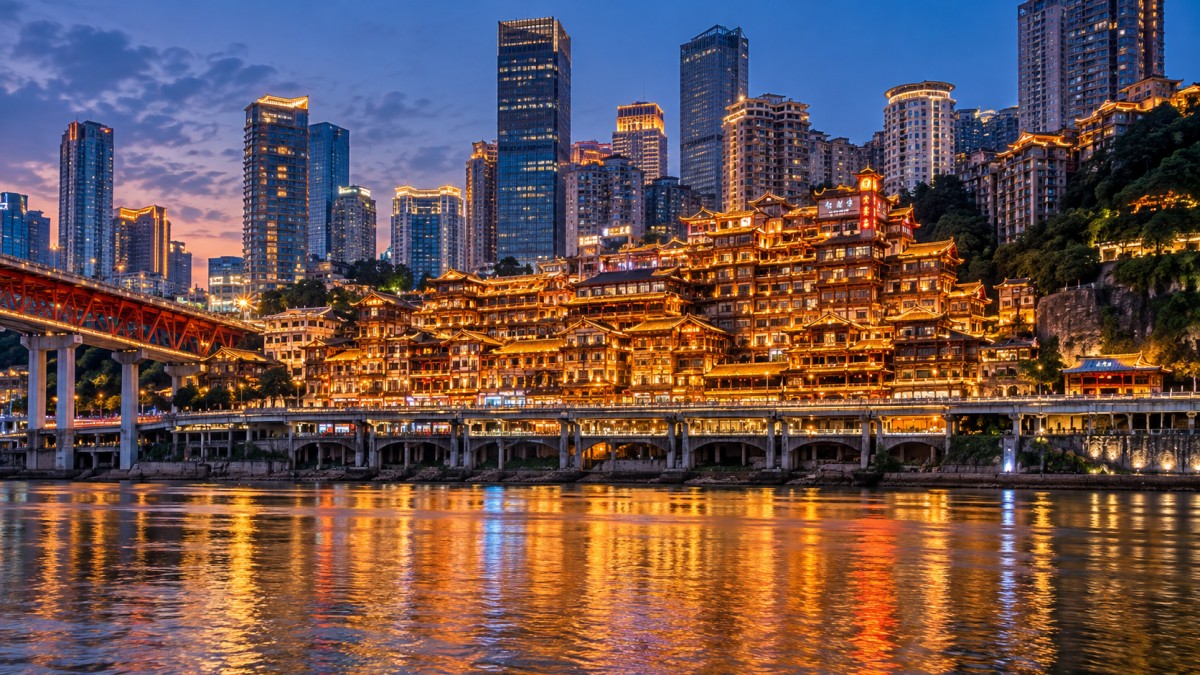
Visit Hongya Cave around dusk or after dark for its illuminated exterior. Treat it primarily as a waterfront architectural sight and busy commercial complex, not as a quiet historic village. Its different levels connect to different street elevations, so choosing the wrong exit can create an unexpected climb.
Photograph the buildings from a public viewing area where access is permitted, rather than assuming you must explore every interior level. Crowds and temporary pedestrian controls can affect the route. If you arrive late, have dinner near the hotel and move Hongya Cave to Day 2; there is no reason to sacrifice sleep to complete an arrival-day checklist.
Day 2: Follow Chongqing’s hillside streets, then cross the Yangtze
Use the morning for the older streets and stepped neighbourhoods of Yuzhong. Shibati and the Shancheng Trail can form the core of the day, with a short taxi or metro journey where the walking connection is inconvenient. These areas make the city’s changing elevation easier to understand than a sequence of observation decks does.
Allow time for pauses rather than estimating the route by distance alone. Steps, humidity, photo stops, and finding the right entrance all slow progress. Wear shoes with grip, particularly after rain, and avoid filling the morning with additional attractions simply because they look nearby on a map.
Have lunch before moving toward the Yangtze River Cableway. The cableway is a transport experience with river views, but queues can take longer than the crossing itself. Check current ticket arrangements and operating conditions, and decide how much waiting time it deserves. A one-way ride is sufficient if it fits your route; a return ticket is not essential.
On the south bank, choose either Longmenhao Old Street or the nearby Xiahaoli area for a slower afternoon. Both offer opportunities to sit down, explore hillside lanes, and look back toward Yuzhong. Return by metro or taxi rather than queuing for another cableway crossing just to retrace your journey.
This is a reasonable evening for Chongqing hotpot. Request a mild broth or divided pot if needed, but clarify whether the mild side is genuinely non-spicy. Tell the restaurant about allergies separately from spice preferences. With a full day still ahead, an early dinner may be more comfortable than a late, heavy meal.
Day 3: Combine a museum morning with Liziba
Start around People’s Square and the Three Gorges Museum. The museum provides context for the Yangtze region and the changes associated with the Three Gorges project, balancing the city’s highly photographed streets with a more substantial cultural visit. Check current opening days, reservation requirements, and accepted identification before setting out; do not assume admission arrangements remain unchanged.
The exterior of the Great Hall of the People is nearby, making this a coherent morning without another cross-city journey. If the museum is closed on your planned day, swap this day with the old-town visit rather than trying to replace it with several distant attractions.
Continue toward Liziba on Metro Line 2. The appeal is the relationship between the railway, the building, and the hillside city. Watching a train from the designated viewing area and riding the line provide different perspectives, but neither requires a lengthy stop.
Choose only one extra neighbourhood afterward. Eling Park suits a quieter outing with elevated views; TESTBED 2 suits cafés and converted industrial spaces. Both involve terrain that can be tiring, so taking a short vehicle transfer may make more sense than insisting on walking every connection.
Leave the evening open. A river cruise is optional, not a necessary addition to the waterfront views already included. If you book one, confirm the boarding pier, check-in deadline, sailing duration, and cancellation conditions. Do not assume every departure uses the same terminal or follows an identical route.
Day 4: Decide whether a distant excursion is worth the travel
A single hotel does not prevent a day trip, but it makes the return journey part of the decision. Choose an excursion because you want the destination itself, not because five days seems too long to spend in the city.
Dazu Rock Carvings for a cultural day
Dazu is the stronger choice if religious art and carved stone sculpture are priorities. For a manageable day, focus on Baodingshan rather than assuming you can comfortably visit every major carving site. Adding Beishan increases both sightseeing and local transfer requirements.
Expect several hours of road travel across the day. A prearranged car or clearly specified excursion can simplify the journey, especially when navigating public transport connections would consume much of the visit. Confirm the exact sites included, guide language, admission arrangements, meal stops, and return location. “Dazu tour” alone does not describe the full service.
Wulong for scenery, with a longer and more demanding schedule
Wulong’s karst scenery is an alternative for travellers who prioritise landscapes and can manage a long day. The Three Natural Bridges visit involves transport beyond simply reaching Wulong, plus walking and internal visitor logistics. A train journey that looks convenient does not necessarily produce a short hotel-to-attraction trip.
Check the complete route and expected hotel return time before booking. Avoid combining several Wulong attractions merely because a package lists them together. Wet surfaces, steps, queues, and weather can change the pace considerably. For a relaxed holiday, an overnight stay near Wulong may suit the destination better—but that would mean changing the one-hotel plan.
Stay in Chongqing if the excursion feels like an obligation
Use this day for the museum if schedules required a swap, a longer south-bank visit, or a food-focused afternoon with proper breaks. Keeping one uncommitted day also protects the itinerary against rain or fatigue.
Chengdu is better treated as a separate leg rather than squeezed into this excursion slot. If extending the holiday, consider a dedicated Chengdu Route after the Chongqing stay, with its own accommodation and transport plan.
Day 5: Visit Ciqikou only if departure timing allows
Ciqikou Ancient Town fits a final morning when departure is late enough to leave a comfortable transfer buffer. Go earlier in the day, explore beyond the busiest shopping street, and allow time for tea or a snack rather than treating the visit as a rapid photo stop. Expect a commercial visitor destination, not an untouched historic settlement.
Metro Line 1 makes Ciqikou accessible from the central base, but the station-to-street walk and return journey still count. Leave luggage at the hotel only if collecting it will not create substantial backtracking. Otherwise, arrange suitable storage in advance and confirm opening hours and baggage restrictions.
For a morning or early-afternoon departure, skip Ciqikou. Breakfast near the hotel and a calm transfer are preferable to starting the journey home with a rushed cross-city detour. If Ciqikou is a priority, place it on Day 4 instead of a distant excursion.
Keep the plan workable on the ground
Use metro journeys for predictable cross-city movement and taxis or ride-hailing for awkward hills, late returns, or tired legs. A car is not automatically faster: bridges, road layouts, and congestion can make a seemingly short ride slow. Check the live route before choosing.
Save your hotel’s Chinese name, address, and entrance photograph offline. Set up a usable payment method before arrival, carry a backup, and keep your passport accessible for reservations that require identification. Check attraction booking channels and transport schedules close to the travel date rather than relying on old screenshots.
In hot weather, move exposed walking to the morning and use the afternoon for museums, meals, or a hotel break. In rain, reduce stepped routes and keep the excursion day flexible. The advantage of returning to the same room is precisely this freedom: you can rest, change clothes, and adjust the day without moving luggage or protecting a hotel-transfer deadline.
The most comfortable five-day plan is not the one with the most stops. It is the one that gives central Chongqing enough time, treats distant sights as deliberate choices, and leaves arrival and departure days light enough to absorb real travel conditions.
Your 1:1 travel consultant will respond within 1 business day
How to plan your trip
- The Ice and Snow Industry Surpasses RMB 1 Trillion, with Direct High-Speed Rail Access and Upgraded Nighttime Offerings Driving Spending
- Autumn Breaks in Multiple Regions Boost Family Travel and Tourism
- Liaoning 2026–2027 Winter Culture Carnival Kicks Off
- Shenyang Cultural Tourism Promotion Delegation Visits Guangzhou to Promote Winter Tourism and Attract Investment
- 2026 Hebei Culture and Tourism Promotion Week in Beijing Kicks Off
Monthly travel guide
- October 2026 County-Level Tourism Communications Report Released: Top 100 Index Rebounds
- More Than 100 Cities Introduce Autumn Breaks, Creating a New Hotspot for Family and Educational Travel
- The 2026 China-Vietnam (Honghe) Border Economic, Trade and Tourism Fair Opens in Hekou
- The 2026 Guangxi Cultural Tourism Carnival Held in Hezhou
- Luoyang launches the “Autumn Charm of the Divine Capital” tourism promotion to build anticipation for winter travel
- Typhoon “White Dolphin” Forces Henan Scenic Areas to Close, Putting Summer Ground-Handling Services Under Pressure
- RCEP Implementing Rules for Indonesia Take Effect: Zero Tariffs for Cultural and Tourism Services Alongside Strict Customer Service Requirements
- Saudi Arabia’s New SASO Regulations Take Effect: Taqat Certification Required Before Chinese-Language Cultural Tourism Services Can Access Visit Saudi
- Zhengzhou Launches a Dedicated LCL Shipping Route for Cultural and Tourism Materials, Cutting Freight Costs by 18%
- Luoyang Cold Chain Intensification: Cultural and Creative Exports Delivered in 9 Days
- Expedited Pre-Approval for Group Visas to Three Southeast Asian Countries
- Tightening air freight capacity at Zhengzhou Airport delays the delivery of cultural and tourism materials
Popular destinations
- Should you travel from Wuzhen to Shanghai by bus or train?
- What can you do if Forbidden City tickets are sold out?
- Is the Summer Palace North Gate convenient for arriving by subway?
- How to walk from the Summer Palace East Palace Gate to Kunming Lake
- Can you buy Summer Palace admission tickets at the East Gate?
Why choose us

High cost-performance and transparent experience
Offer astonishing low prices without hidden tourism traps, enabling travelers to explore at lower costs while avoiding unnecessary spending loopholes, ensuring transparent consumption.

Personalization and dedicated service
Support 100% free customization, paired with one-on-one expert service, crafting exclusive itineraries based on travelers' specific needs, while providing professional guidance to enhance the personalization and professionalism of the journey.

Premium itinerary planning
Compact yet rich itineraries allow travelers to experience more within limited time; simultaneously, carefully selected hotels in prime locations provide convenient lodging conditions, overall enhancing travel comfort and experience.