Welcome to Our Travel Agency!




Travel Guide
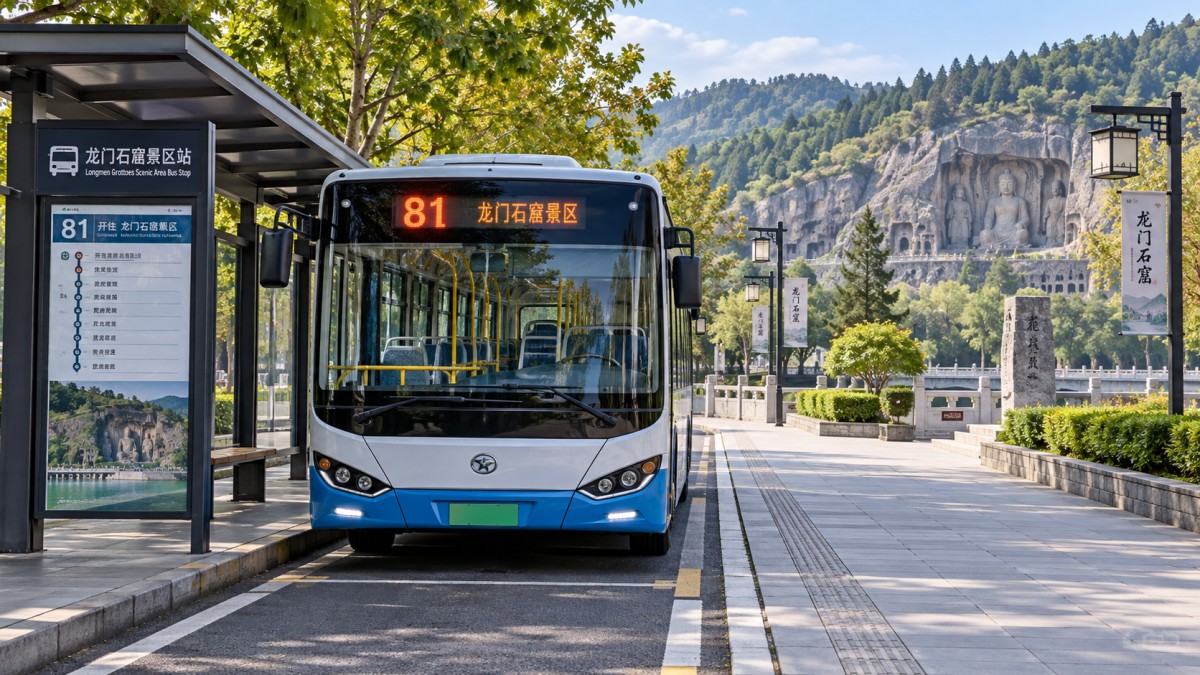
The simplest public-transport route from Luoyang to Longmen Grottoes depends on where you start. From Luoyang Railway Station, bus 81 is the established direct-bus option to look for. From Luoyang Longmen Railway Station, the high-speed rail station, check the local bus connection to the grottoes rather than traveling back into central Luoyang. From a hotel near the metro, Line 2 can cover much of the journey south, but you still need a surface connection.
The important distinction is that Luoyang Longmen Railway Station is not the entrance to Longmen Grottoes. Neither arriving by high-speed train nor taking the metro completes the journey. Allow time for the connecting bus, the approach from the drop-off point, and the admission process—not just the ride shown on a map.
Check which Luoyang station you are starting from
Luoyang’s two main railway stations lead to different transport decisions. Confusing them can send you across the city unnecessarily.
Check the full station name on your train ticket or booking confirmation. In a mapping app, select the exact railway station rather than searching only for “Luoyang station.” For the destination, select Longmen Grottoes scenic area, not Luoyang Longmen Railway Station or a nearby hotel with “Longmen” in its name.
From Luoyang Railway Station: check bus 81 first
Bus 81 is a useful starting point for planning a direct trip from the conventional railway station to Longmen Grottoes. Its main advantage is avoiding a transfer: once you have found the correct departure stop and direction, you can remain on the bus for the journey south.
After leaving the railway station, follow signs to the city-bus boarding area. Check the stop display or a live transit app for route 81 and confirm that the service is heading toward Longmen Grottoes. Station-area bus bays can be spread out, so a bus icon beside the railway station on your map does not necessarily identify the exact boarding position.
Before boarding, confirm:
- The direction: the displayed destination or stop sequence should lead toward the grottoes.
- The arrival stop: check its position relative to the visitor entrance, not just its English translation.
- The current service: roadworks, temporary diversions, and holiday traffic arrangements can affect the route.
For scheduling, allow roughly 60–90 minutes for the bus journey from the railway-station area, with additional time for waiting and walking. This is a planning allowance, not a published timetable. Traffic conditions and the service operating on your travel date determine the actual journey.
The direct bus is a sensible choice when you have a flexible morning and want fewer transfers. It is less predictable when you are trying to fit the grottoes between a late arrival and a fixed afternoon train departure.
From Luoyang Longmen Railway Station: find the onward bus connection
The high-speed station is much closer to the grottoes than the conventional railway station, but the remaining journey is not a short walk between neighboring entrances. Treat it as a separate transport leg.
Follow signs from the arrivals area to the local bus facilities, then check the current connection to Longmen Grottoes. Route 71 appears in commonly published travel directions for this connection, but confirm its current route, boarding bay, and destination before relying on it. A route number copied from an older guide is not enough to establish that the service still operates from the same stop.
A practical check is to enter your exact starting position at the station and the grottoes’ visitor entrance into a live mapping app. If its recommendation differs from a static travel guide, compare the actual stop sequence and departure information. Station signs and local transport information are particularly useful for confirming temporary changes.
For an initial itinerary, allow approximately 45–75 minutes from leaving the railway station to reaching the scenic-area arrival zone. This allowance includes finding the bus and waiting; it is not a claim that the ride itself always takes that long. Keep a separate margin for the final approach and admission.
If you arrive with a large suitcase, check luggage-storage arrangements before joining the bus queue. Taking luggage onto a local bus may be awkward, and carrying it through a sightseeing route with steps makes the visit considerably harder.
Using the metro from central Luoyang
Metro Line 2 is useful for traveling south through Luoyang without depending entirely on road traffic. However, it does not deliver you directly to the grotto entrances. A metro-based journey still requires a connecting bus or another surface transfer.
Balitang, the southern terminus of Line 2, is a connection point to investigate. Before setting out, search for the complete journey from your hotel to the scenic-area entrance. Check which bus the app recommends from Balitang, where its stop is, and how far you must walk after leaving the metro.
Do not assume that every bus passing near the station serves the entrance you need. If route 81 appears in the current journey planner as the onward connection, check the boarding location and direction rather than relying on the number alone.
The metro-and-bus combination is most useful when your accommodation is close to Line 2, or when a short Line 1 journey gives you an easy interchange. It may offer little benefit if reaching the metro already requires a long walk and a direct bus stops near your hotel.
Compare door-to-entrance time, not just the metro ride. A journey involving station access, security checks, an interchange, an exit walk, and a bus wait can take longer than a direct bus even when the train portion is fast.
The last part of the journey needs its own time allowance
A bus stop labeled “Longmen Grottoes” does not mean you step directly into the cave area. The site has visitor facilities, approach routes, and separate admission arrangements. Your arrival point may still require walking or an authorized scenic-area shuttle before you reach the ticket-checking entrance.
Check the current visitor instructions when booking admission. The northwestern approach is a common arrival route for visiting the West Hill grottoes, where the best-known monumental carvings are located. Nevertheless, the entrance and approach operating on your visit date should take priority over an old map or travel account.
Keep these stages separate when estimating your arrival:
- The bus reaches its designated stop.
- You reach the visitor-service or entrance approach area.
- You complete any ticket collection, document check, or admission procedure required.
- You pass the ticket checkpoint and begin sightseeing.
A scenic-area shuttle, where available, is a separate service from the city bus. Do not assume that a local bus fare includes it, or that admission automatically covers every internal transport service. Check the posted route and price before purchasing.
Leave additional time in hot weather, during public holidays, or when traveling with someone who walks slowly. Public transport can bring you close to the attraction, but it does not remove the walking and steps involved in the visit.
Checking routes and paying without unnecessary confusion
Amap and Baidu Maps are useful for local stop locations and public-transport routing in China. English-language map results can help identify the attraction, but may provide less detail about bus bays, stop names, or temporary changes. Search using the attraction’s full name and compare the destination pin with the scenic-area entrance information.
Save screenshots of the outward route, the boarding stop, and your return destination. Romanized place names can vary between services, so the stop’s location and route sequence may be more useful than an exact English spelling.
For payment, carry a backup rather than assuming one method will work everywhere. Metro ticket machines, metro travel codes, bus travel codes, and ordinary mobile-payment QR codes are not necessarily interchangeable. Setting up a payment app does not automatically activate its local transport function.
If you intend to pay cash on a bus, carry small-denomination notes or coins and check the fare displayed on the vehicle. Do not expect change from an onboard fare box. If using a transport code, activate the correct city and service before boarding, and keep your phone charged for the return journey.
Exact fares, first departures, and last departures should be checked through current operator information, station notices, or the relevant transport app. They are operational details that can change; a low fare is of little help if you have planned around a service that has already finished.
Plan the return before entering the grottoes
Your sightseeing exit may not place you beside the stop where you arrived. A visit that includes both sides of the river can finish in a different part of the scenic area, so save the return boarding location before beginning your walk.
If you have a train to catch, work backward from its departure time. Include the walk from the final sightseeing point, any scenic-area transfer, the bus wait, the road journey, railway-station security, and the boarding deadline. Avoid treating a map’s driving estimate as a public-transport estimate: waiting and walking can make the difference substantial.
Check the last useful bus connection, not merely the last metro train. A late-running metro is irrelevant if the bus linking the scenic area to the metro has stopped. Where the schedule is tight, shorten the sightseeing route rather than depending on a perfect sequence of connections.
For a straightforward visit, choose the route with the fewest uncertain links: a direct bus from Luoyang Railway Station, a confirmed local connection from Luoyang Longmen Railway Station, or Metro Line 2 plus a checked onward bus from the south of the city. The most reliable plan ends at the correct visitor entrance—and leaves enough time to get back.
Your 1:1 travel consultant will respond within 1 business day
How to plan your trip
- The Ice and Snow Industry Surpasses RMB 1 Trillion, with Direct High-Speed Rail Access and Upgraded Nighttime Offerings Driving Spending
- Autumn Breaks in Multiple Regions Boost Family Travel and Tourism
- Liaoning 2026–2027 Winter Culture Carnival Kicks Off
- Shenyang Cultural Tourism Promotion Delegation Visits Guangzhou to Promote Winter Tourism and Attract Investment
- 2026 Hebei Culture and Tourism Promotion Week in Beijing Kicks Off
Monthly travel guide
- October 2026 County-Level Tourism Communications Report Released: Top 100 Index Rebounds
- More Than 100 Cities Introduce Autumn Breaks, Creating a New Hotspot for Family and Educational Travel
- The 2026 China-Vietnam (Honghe) Border Economic, Trade and Tourism Fair Opens in Hekou
- The 2026 Guangxi Cultural Tourism Carnival Held in Hezhou
- Luoyang launches the “Autumn Charm of the Divine Capital” tourism promotion to build anticipation for winter travel
- Typhoon “White Dolphin” Forces Henan Scenic Areas to Close, Putting Summer Ground-Handling Services Under Pressure
- RCEP Implementing Rules for Indonesia Take Effect: Zero Tariffs for Cultural and Tourism Services Alongside Strict Customer Service Requirements
- Saudi Arabia’s New SASO Regulations Take Effect: Taqat Certification Required Before Chinese-Language Cultural Tourism Services Can Access Visit Saudi
- Zhengzhou Launches a Dedicated LCL Shipping Route for Cultural and Tourism Materials, Cutting Freight Costs by 18%
- Luoyang Cold Chain Intensification: Cultural and Creative Exports Delivered in 9 Days
- Expedited Pre-Approval for Group Visas to Three Southeast Asian Countries
- Tightening air freight capacity at Zhengzhou Airport delays the delivery of cultural and tourism materials
Popular destinations
- Should you travel from Wuzhen to Shanghai by bus or train?
- What can you do if Forbidden City tickets are sold out?
- Is the Summer Palace North Gate convenient for arriving by subway?
- How to walk from the Summer Palace East Palace Gate to Kunming Lake
- Can you buy Summer Palace admission tickets at the East Gate?
Why choose us

High cost-performance and transparent experience
Offer astonishing low prices without hidden tourism traps, enabling travelers to explore at lower costs while avoiding unnecessary spending loopholes, ensuring transparent consumption.

Personalization and dedicated service
Support 100% free customization, paired with one-on-one expert service, crafting exclusive itineraries based on travelers' specific needs, while providing professional guidance to enhance the personalization and professionalism of the journey.

Premium itinerary planning
Compact yet rich itineraries allow travelers to experience more within limited time; simultaneously, carefully selected hotels in prime locations provide convenient lodging conditions, overall enhancing travel comfort and experience.