Welcome to Our Travel Agency!




Travel Guide
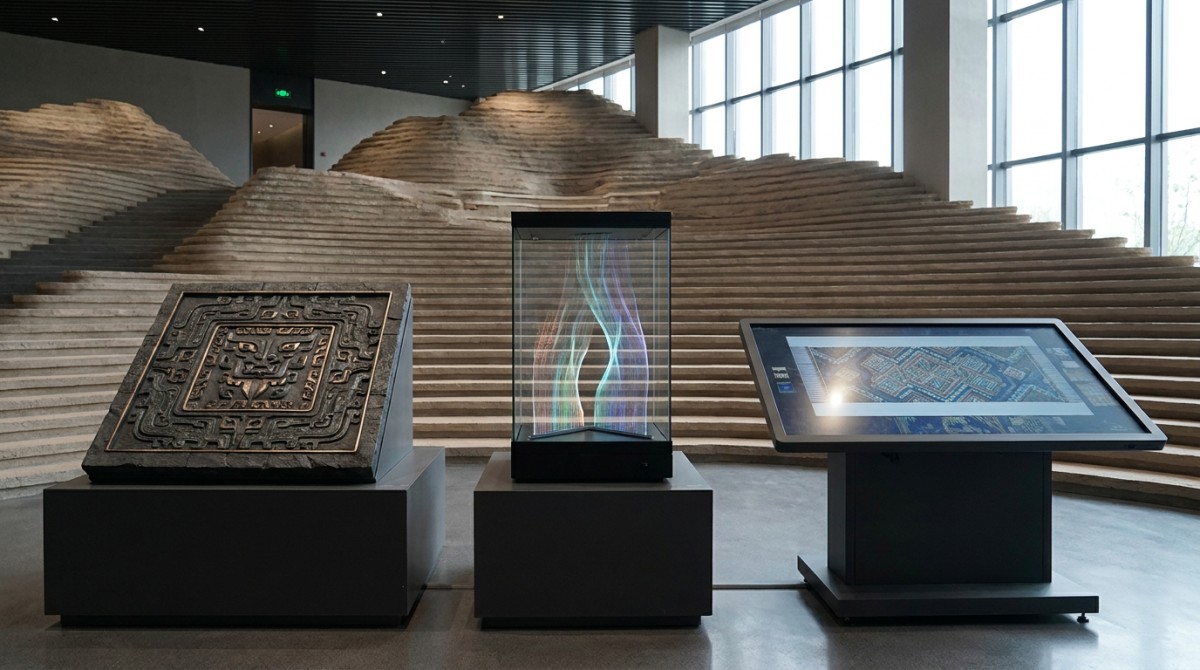
On May 18, 2026, the exhibition of the results of Chongqing's fourth national cultural relics census opened at Datianwan in Yuzhong District. Centered on the systematic transformation of Bayu cultural IP resources, this exhibition marks the accelerating extension of cultural relics census results from academic inventory to industrial application, generating substantial policy transmission effects for sub-sectors such as cultural creativity, culture-tourism integration, and digital content development.
Event Overview
On May 18, 2026, the exhibition of the results of Chongqing's fourth national cultural relics census opened at Datianwan in Yuzhong District, showcasing 53 newly discovered immovable cultural relics and digital restoration achievements, covering IP resources such as Bayu totems, Chuanjiang boatmen's work chants, and intangible heritage weaving. At the exhibition site, institutions such as the UK's V&A Museum and Singapore's Asian Civilisations Museum have already conducted preliminary discussions on the joint development of cultural and creative derivatives and study-tour courses.
Which Sub-sectors Will Be Affected
Direct Trade Enterprises
Cultural relic IP licensing falls within the category of cross-border trade in cultural services. This exhibition has attracted on-site discussions with international cultural and museum institutions such as the UK's V&A Museum and Singapore's Asian Civilisations Museum, meaning that domestic licensing agencies and cultural export enterprises with IP operation capabilities will face clearer windows for overseas cooperation. The impact is reflected in expanded licensed categories (such as pattern licensing and audio asset licensing), the front-loading of contract cycles (joint development of study-tour courses requires locking in content usage rights in advance), and upgraded compliance requirements (involving legal adaptation for the overseas use of cultural resources).
Raw Material Procurement Enterprises
The embodiment of IPs such as Bayu totems and intangible heritage weaving relies on specific material carriers (such as Shu brocade base fabrics, bamboo-wire lacquerware substrates, and audio pattern recording equipment for Chuanjiang boatmen's work chants). Their scaled development will in turn drive demand for regional specialty raw materials. The impact is reflected in more refined procurement standards (which must match the degree of visual/audio restoration of the IP), a rising share of small-batch, multi-lot orders, and new requirements for certification of the cultural suitability of raw materials (such as consistency between the color fastness of plant dyes and the color spectrum of traditional patterns).
Processing and Manufacturing Enterprises
The manufacturing of IP derivatives must simultaneously carry cultural accuracy and mass-production feasibility. For example, Chuanjiang boatmen's work chant audio needs to be embedded into wearable devices while meeting intangible heritage rhythm sampling specifications, and Bayu totem patterns must be compatible with 3D printing precision and weaving warp-and-weft density. The impact is reflected in the recalibration of process parameters (for example, intangible heritage weaving enterprises need to integrate digital pattern engines), greater pressure for flexible transformation of production lines, and the explicitization of collaborative costs for cultural consultants.
Supply Chain Service Enterprises
Cross-border IP cooperation involves complex scenarios such as cross-border transmission of cultural relic data, copyright deposit for digital models, and delivery of multilingual study-tour courses, creating structural demand for supply chain service providers with capabilities in cultural asset rights confirmation, international compliance consulting, and lightweight AR content distribution. The impact is reflected in service modules extending from single logistics/warehousing to the full chain of “rights confirmation-transformation-delivery”, while also requiring rapid responses to adaptation requirements in different jurisdictions (such as the UK's "Guidelines for the Digital Use of Cultural Heritage" and Singapore's "Asian Cultural Resource Licensing Framework").
Key Points of Attention and Response Measures for Relevant Enterprises or Practitioners
Prioritize the Clarification of Ownership and Tiered Labeling of IP Associated with Census Results
Among the 53 newly discovered cultural relics, some are still in the census registration stage and have not yet completed the determination of statutory protection levels or confirmation of the responsible management entity. Before conducting licensing negotiations, enterprises must work with local cultural relic authorities to clarify the boundaries of IP use (for example, limited to digital interpretation only, commercial deformation prohibited), so as to avoid subsequent termination of cooperation due to ambiguous ownership.
Establish a Cross-modal IP Asset Package Management Mechanism
The IPs displayed in this exhibition cover three categories of media: images (totems), sound (work chants), and craftsmanship (weaving). Enterprises need to build a unified tagging system in accordance with the "Metadata Specification for the Digitization of Cultural Relic Assets" to ensure that the core elements of the same IP remain consistent across cultural and creative products, study-tour courseware, and AR guides, thereby reducing redundant costs in multi-terminal development.
Launch Cooperation Adaptation Plans for International Museum Institutions
Institutions such as the UK's V&A Museum have clear ethical review procedures for IP use (for example, prohibiting totem elements from being used on food packaging). Enterprises need to conduct compliance pre-checks in advance against the "ICOM Guidelines for Cultural Relic Licensing Operations" and reserve at least 6 weeks for cultural sensitivity review and plan iteration.
Editorial Viewpoint / Industry Observation
Observably, this exhibition is not merely a showcase of archaeological findings but a policy-enabled inflection point where cultural inventory becomes tradable infrastructure. Analysis shows that the 53 newly documented sites are selected for their high “IP translation quotient” — i.e., demonstrable visual/audio distinctiveness, existing craft transmission chains, and low legal ambiguity in digital reuse. This signals a shift from broad-spectrum census to targeted cultural asset mapping, which better aligns with export-oriented IP development. However, the current absence of unified national guidelines on cross-border authorization of newly surveyed immovable heritage means regional pilots like Chongqing will de facto shape operational norms — making local compliance agility more decisive than scale alone.
Conclusion
This results exhibition marks that cultural relic census work is moving from “figuring out the full picture” to “activating existing assets”. Its true industry significance lies not in the addition of 53 newly registered objects, but in verifying a feasible path: using digital restoration as a bridge, IP development as the interface, and international cooperation as the testing ground to drive immovable cultural relics from static protected objects into dynamic industrial factors. What deserves more attention at present is whether such regional practices can in turn force the formation of national standards for tiered licensing of cultural relic IP and a whitelist mechanism for cross-border data flows.
Source Information
Announcement on the official website of the Chongqing Municipal Cultural Heritage Administration (published on May 17, 2026), the "Technical Procedures for the Fourth National Cultural Relics Census (Trial)", and the International Council of Museums (ICOM) 2025 "Trend Report on Digital Licensing of Cultural Heritage". Note: The specific cooperation terms, licensed categories, and signing progress involving the UK's V&A Museum and Singapore's Asian Civilisations Museum are pending subsequent joint statements from both parties, and this publication will continue to follow up.
Your 1:1 travel consultant will respond within 1 business day
How to plan your trip
- Multiple regions announce autumn break dates for primary and secondary schools; attractions offer benefits such as discounted admission
- China’s Civil Aviation Industry to Implement the 2026/2027 Winter-Spring Flight Schedule from October 25
- Autumn Breaks in Multiple Regions Boost November Travel, Offering Hope for the Traditional Low Season
- China Tourism Academy Releases Report on Autumn Trends in China's Domestic Customized Tour Market
- What should I wear for a winter trip to Harbin and Mohe to cope with the extreme outdoor cold?
Monthly travel guide
- Luoyang launches the “Autumn Charm of the Divine Capital” tourism promotion to build anticipation for winter travel
- Typhoon “White Dolphin” Forces Henan Scenic Areas to Close, Putting Summer Ground-Handling Services Under Pressure
- RCEP Implementing Rules for Indonesia Take Effect: Zero Tariffs for Cultural and Tourism Services Alongside Strict Customer Service Requirements
- Saudi Arabia’s New SASO Regulations Take Effect: Taqat Certification Required Before Chinese-Language Cultural Tourism Services Can Access Visit Saudi
- Zhengzhou Launches a Dedicated LCL Shipping Route for Cultural and Tourism Materials, Cutting Freight Costs by 18%
- Luoyang Cold Chain Intensification: Cultural and Creative Exports Delivered in 9 Days
- Expedited Pre-Approval for Group Visas to Three Southeast Asian Countries
- Tightening air freight capacity at Zhengzhou Airport delays the delivery of cultural and tourism materials
- Vietnam's New Regulations on Bus Monitoring Requirements for Group Tours
- Saudi SAMA New Regulations on Travel Liability Insurance Compliance Preparation
- Japanese tourists' new regulations for entering Henan local transport vehicles
- Wai Gao Qiao Wen Travel customs bonded warehouse summer group equipment fast lane
Popular destinations
- The 17th China Yangtze Three Gorges International Tourism Festival Sees 17 Cultural and Tourism Projects Signed
- Henan Cultural Tourism Explores the Shift from Traffic to Immersive Experiences
- Liaoning Launches Inbound Tourism Promotion Event for Global Travel Trade, Releases Service Guide
- Shandong Hosts Cultural and Creative Industry Networking Event, Releases Annual Plan for Province-Wide Renewal
- Hong Kong Travel Industry Council Visits Henan, Aiming to Jointly Develop Distinctive Tourism Products
Why choose us

High cost-performance and transparent experience
Offer astonishing low prices without hidden tourism traps, enabling travelers to explore at lower costs while avoiding unnecessary spending loopholes, ensuring transparent consumption.

Personalization and dedicated service
Support 100% free customization, paired with one-on-one expert service, crafting exclusive itineraries based on travelers' specific needs, while providing professional guidance to enhance the personalization and professionalism of the journey.

Premium itinerary planning
Compact yet rich itineraries allow travelers to experience more within limited time; simultaneously, carefully selected hotels in prime locations provide convenient lodging conditions, overall enhancing travel comfort and experience.