Welcome to Our Travel Agency!




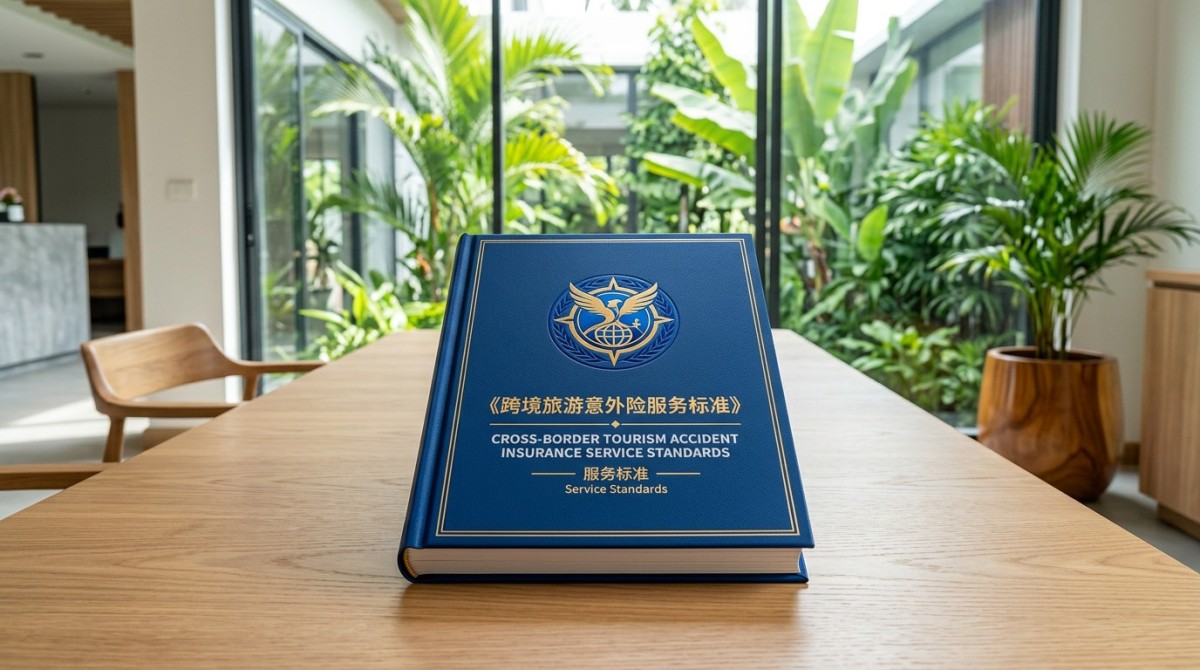
On 2026年4月21日, the Department of Industry Development of the Ministry of Culture and Tourism, together with China Banking and Insurance Information Technology Management Co., Ltd., released the Cross-border Travel Accident Insurance Service Standards (Chinese-English Version), which has been certified by the ASEAN Tourism Association (ASEANTA). This marks the first time that supporting service standards for China’s outbound tourism have been formally recognized by a regional international organization in a bilingual format, with direct business implications for outbound tourism product suppliers, insurance service integrators, destination management companies, and regional channel distributors.
Event Overview
On 2026年4月21日, the Department of Industry Development of the Ministry of Culture and Tourism and China Banking and Insurance Information Technology Management Co., Ltd. (China Banking and Insurance Information) jointly released the Cross-border Travel Accident Insurance Service Standards (Chinese-English Version). The standard specifies 12 key service indicators, including medical evacuation response time, multilingual service levels, and a simplified list of claim materials. At present, the standard has been certified by the ASEAN Tourism Association (ASEANTA) and has been listed as a recommended supporting service benchmark for Southeast Asian countries when procuring China’s outbound tourism products.
Which industry segments will be affected
Outbound tourism product suppliers (including tour operators and platform-based OTAs)
As the ASEAN market will use this standard as a procurement reference benchmark, product lines that have not adapted to these insurance service terms may face higher channel entry thresholds. The impact is mainly reflected in stricter compliance reviews of product portfolios, updates to overseas partner service agreements, and higher standardization requirements for sales scripts and materials.
Insurance service integrators and reinsurance partners
The 12 indicators specified in the standard (such as medical evacuation response time and language service levels) constitute rigid service performance requirements, which will drive upgrades in insurance solution design, service provider selection, and backend system integration capabilities. The impact is concentrated on clarifying underwriting liability boundaries, verifying localized service capabilities, and implementing bilingual claims processes.
Destination ground service companies (such as local tour operators in Henan and other regions)
The information clearly points out that “Henan ground-service routes equipped with this insurance solution” will benefit from entering mainstream regional channels, indicating that destination management companies need to proactively embed insurance service modules that meet the standard; otherwise, they may be excluded from certified channel procurement lists. The impact is reflected in changes to route pricing structures, adjustments to profit-sharing mechanisms with insurers, and the establishment of coordinated emergency response mechanisms.
Cross-border tourism supply chain service providers (including translation, rescue, and IT system providers)
The standard puts forward quantified requirements for language service levels, simplification of claim materials, and response timeliness, which will extend to translation quality control, rescue network coverage capabilities, and direct system API development. The impact is mainly reflected in the addition of compliance clauses to service contracts, refinement of SLAs (Service Level Agreements), and increased demand for building bilingual data interaction capabilities.
What should relevant enterprises or practitioners focus on, and how should they respond at present
Pay attention to follow-up official ASEANTA implementation guidelines and adoption details
At present, it is only confirmed that the standard has obtained certification, but its specific implementation methods in various countries have not yet been disclosed (for example, whether it will be included in government procurement scoring items or whether it will be mandatory for product listings on B2B platforms). Enterprises should continue to track subsequent operating guidelines or whitelist mechanisms issued by ASEANTA and tourism authorities in member countries.
Prioritize checking the compatibility between existing outbound travel insurance solutions and the 12 indicators
Focus on comparing medical evacuation response time (for example, whether activation within 72 hours is promised), the languages covered by language services and response levels (for example, whether real-time human support in Thai/Vietnamese is provided), and whether claim materials have been compressed to the list specified in the standard. Any gaps should be addressed through service supplementation or alternative solution backup plans before the next quarterly product update cycle.
Differentiate between policy signals and the pace of actual business implementation
This certification is a recommended benchmark, not a mandatory regulation. In the short term, it will not cause existing routes to be removed, but in the medium to long term it will affect channel bargaining power and new product launch qualifications. Enterprises are advised to incorporate adaptation work into Q3-Q4 product planning to avoid rushed rectifications affecting peak-season launches.
Align standard requirements in advance with insurance partners and destination management companies, and initiate joint testing
It is recommended to use key Southeast Asian routes (such as Thailand, Vietnam, and Malaysia) as pilots, and jointly conduct full-process stress tests covering bilingual case reporting—response—claims settlement with insurance companies and local rescue agencies, so as to verify the availability of language services, consistency of material submission, and interoperability of system data, and form internal SOP documentation.
Editorial Viewpoint / Industry Observation
From an industry perspective, this standard’s move overseas is better understood as “a regional institutional interface attempt for service capability building” rather than an immediately effective market access barrier. Its core value lies in providing China’s outbound tourism service supply with a verifiable, comparable, and communicable technical expression framework; from an observational perspective, it currently mainly serves as a signaling function—indicating that channel partners are beginning to incorporate insurance service quality into the comprehensive evaluation dimensions of products; analytically speaking, for it to truly become binding still requires internal conversion within ASEANTA member states (such as inclusion in tender documents and platform rules), and this process is expected to take 6–12 months. What the industry needs to pay attention to is not whether the standard itself is “mandatory,” but who will be the first to complete adaptation and enter the first batch of partnership rosters in certified channels.
Conclusion: This standard’s certification by ASEAN is a practical step forward in moving China’s cultural and tourism service standard system toward regional coordination. It does not change the basic business model of outbound tourism, but it is reshaping the granularity and credibility requirements of service delivery. At present, it is more appropriately understood as a capability calibration signal for channel-side stakeholders, rather than a price or experience revolution for end tourists. The key to a rational response lies in translating the standard clauses into executable, verifiable, and reusable service actions, rather than treating them merely as a compliance formality.
Source note:
Main sources: official notice from the Department of Industry Development of the Ministry of Culture and Tourism, publicly released information from China Banking and Insurance Information, and the certification announcement from the ASEAN Tourism Association (ASEANTA).
Areas for continued observation: the specific adoption methods, implementation details, and supporting incentive measures for this standard among ASEANTA member countries.
Your 1:1 travel consultant will respond within 1 business day
How to plan your trip
- Hebei Launches Five “Trendy Hebei” Premium Tourism Routes for Inbound Travelers, Moving Toward Standardized Offerings
- The 12th Qionghai Tanmen Coastal Foraging Festival Opens on August 16
- Guangxi’s Digital Silk Road Accelerates: Orah Mandarin Juice Secures an Italian Order, Drawing Attention to Export Standards for Souvenirs
- New Inquiry Triggered by Coastal Cultural Tourism Space Standards
- Zhuanghe’s agro-cultural tourism model draws ASEAN attention, highlighting the compliance requirements for the internationalization of camping and intangible cultural heritage handicrafts
Monthly travel guide
- Typhoon “White Dolphin” Forces Henan Scenic Areas to Close, Putting Summer Ground-Handling Services Under Pressure
- RCEP Implementing Rules for Indonesia Take Effect: Zero Tariffs for Cultural and Tourism Services Alongside Strict Customer Service Requirements
- Saudi Arabia’s New SASO Regulations Take Effect: Taqat Certification Required Before Chinese-Language Cultural Tourism Services Can Access Visit Saudi
- Zhengzhou Launches a Dedicated LCL Shipping Route for Cultural and Tourism Materials, Cutting Freight Costs by 18%
- Luoyang Cold Chain Intensification: Cultural and Creative Exports Delivered in 9 Days
- Expedited Pre-Approval for Group Visas to Three Southeast Asian Countries
- Tightening air freight capacity at Zhengzhou Airport delays the delivery of cultural and tourism materials
- Vietnam's New Regulations on Bus Monitoring Requirements for Group Tours
- Saudi SAMA New Regulations on Travel Liability Insurance Compliance Preparation
- Japanese tourists' new regulations for entering Henan local transport vehicles
- Wai Gao Qiao Wen Travel customs bonded warehouse summer group equipment fast lane
- JTB Warning: Risks in Henan’s September Red Leaf Family Tour Purchases
Popular destinations
- The China-Europe Railway Express (Zhengzhou) Launches a Dedicated Train for Culture and Tourism Equipment, Cutting Customs Clearance Time to 48 Hours
- RCEP Cultural and Tourism Services Commitment Upgrade: Faster Market Access for Chinese Outbound Tourism Service Providers in Vietnam and Malaysia
- Tourism Authority of Thailand Launches “China Ready” Certification Program, with Henan Inbound Travel Service Providers Included in the First Batch of Recommended Providers
- Thailand Tourism Authority Promotes “China Ready” Certification, with a Henan Local Tour Operator Included in the First Recommended List
- Overseas Chinese Fair Opens in Shenzhen: Smart Culture and Tourism Equipment and Culinary Tourism Services Go Global on Two Fronts
Why choose us

High cost-performance and transparent experience
Offer astonishing low prices without hidden tourism traps, enabling travelers to explore at lower costs while avoiding unnecessary spending loopholes, ensuring transparent consumption.

Personalization and dedicated service
Support 100% free customization, paired with one-on-one expert service, crafting exclusive itineraries based on travelers' specific needs, while providing professional guidance to enhance the personalization and professionalism of the journey.

Premium itinerary planning
Compact yet rich itineraries allow travelers to experience more within limited time; simultaneously, carefully selected hotels in prime locations provide convenient lodging conditions, overall enhancing travel comfort and experience.