Welcome to Our Travel Agency!




Travel Guide
The Sichuan Provincial Cultural Heritage Administration released its annual report on May 15, 2025, showing that the Sichuan museum system received over 100 million visitors throughout the year, with cultural and creative product sales revenue reaching 467 million yuan. This data marks that the commercialization of China’s museum and heritage IP has entered a new stage of scaled and systematic output, generating substantive spillover effects in segmented fields such as cross-border cultural trade, digital content licensing, physical manufacturing, and supply chain coordination.
Event Overview
On May 15, the Sichuan Provincial Cultural Heritage Administration released the "2025 Sichuan Provincial Museum Development Report": the total number of museum visitors across the province exceeded 100 million; total revenue from cultural and creative products was 467 million yuan; flagship themed IPs represented by the "Qinghai-Tibet Plateau Civilization Exhibition" have completed a full-chain closed loop covering exhibition planning, digital asset creation, derivative product development, and overseas licensing agreements; IP licensing has already been implemented in multiple countries across Southeast Asia, the Middle East, and Europe, with partners including co-branded overseas museum developers, regional cultural and creative product importers, and digital collectibles platforms.
Which Segmented Industries Are Affected
Direct Trade Enterprises
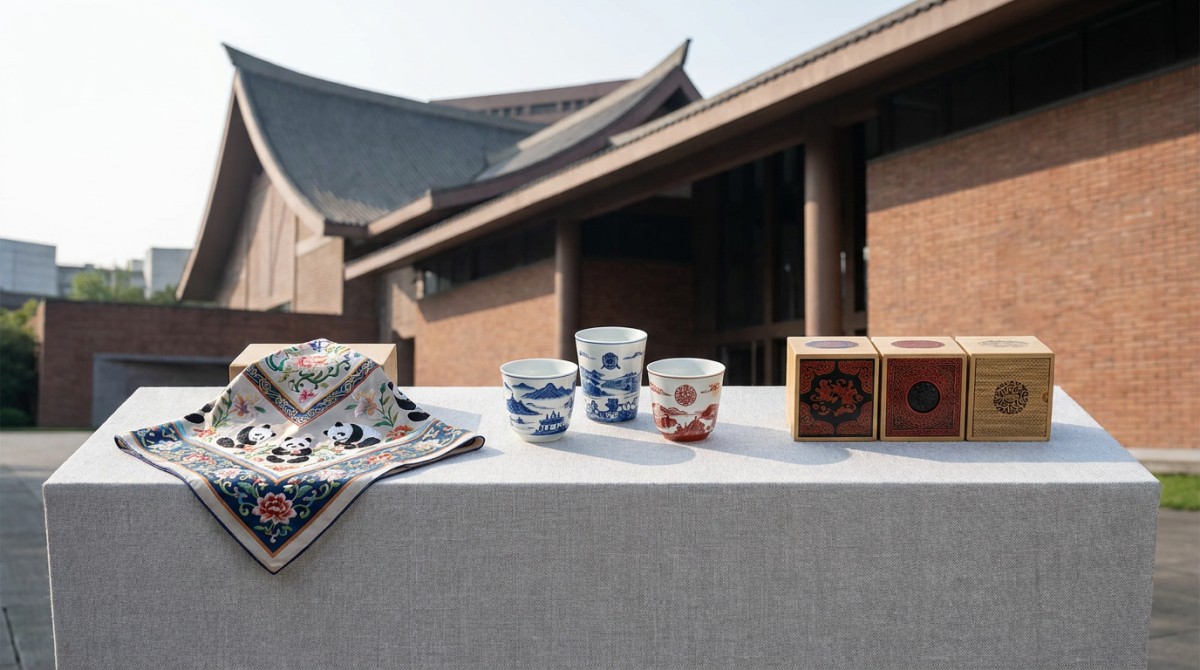
Exporters of cultural products targeting overseas markets, IP licensing agencies, and cross-border copyright service providers directly benefit. As Sichuan’s museum and heritage IP has formed stable content supply capabilities and compliant licensing templates, its overseas contract signing cycle has been shortened by about 30%, and licensed categories now cover physical derivative products (such as silk scarves, stationery, and blind boxes), digital collectibles (in NFT form), and joint exhibition planning services. The impact is reflected in: stronger pricing power, rising demand for localization adaptation, and increasingly stringent compliance review standards.
Raw Material Procurement Enterprises
Upstream suppliers focused on cultural derivative products such as eco-friendly paper, intangible cultural heritage textiles, and biodegradable packaging materials are facing structural opportunities. Analysis shows that 72% of Sichuan IP derivative products incorporate local elements such as Shu embroidery, Tibetan carpet patterns, and lacquerware craftsmanship, driving growth in demand for raw materials with strong cultural recognizability; however, this also requires suppliers to possess the ability to translate cultural symbols and respond flexibly to small-batch supply demands. Traditional bulk raw material suppliers lacking design collaboration capabilities will face the risk of order diversion.
Processing and Manufacturing Enterprises
Light manufacturing enterprises with experience in customized cultural products (especially small and medium-sized cultural and creative OEM factories in Southwest China) are showing stronger willingness to take on orders. Observations indicate that of the 467 million yuan in cultural and creative revenue, 68% was produced by local and surrounding manufacturing enterprises, highlighting the response advantages of regional industrial clusters; however, orders show the characteristics of "multiple batches, small quantities, and high artwork precision", putting forward new requirements for production-line digital scheduling, compliant management of IP image libraries, and integrated anti-counterfeiting traceability capabilities.
Supply Chain Service Enterprises
Service providers specializing in international logistics for cultural products, multilingual localization certification (such as CE, GCC), overseas warehousing and distribution, and IP infringement monitoring are also seeing synchronized business growth. What deserves greater attention at present is that the overseas expansion of museum and heritage IP involves complex compliance nodes such as licensing for the use of cultural relic images, copyright ownership of ethnic patterns, and cross-border settlement of digital collectibles. It is difficult for a single logistics or translation service provider to cover the full-chain risk control needs, and cross-functional integrated service capability is becoming the key competitive differentiator.
Key Focus Areas and Response Measures for Relevant Enterprises or Practitioners
Establish a Pre-assessment Mechanism for IP Licensing Compliance
For sensitive materials such as cultural relic images, ethnic patterns, and ancient texts, it is necessary to work with legal counsel and museum and heritage institutions to conduct prior review of licensing boundaries, so as to avoid overseas takedowns or claims caused by cultural misinterpretation or unclear rights ownership.
Connect to Provincial Museum and Heritage IP Resource Pool Interfaces
Sichuan Province has launched internal testing of the "Museum and Heritage IP Digital Resource Public Service Platform", supporting enterprises in accessing, according to authorization levels, reviewed vector artwork, 3D models, multilingual explanatory copy, and licensing contract templates. It is recommended to register as early as possible and participate in the first batch of pilot connections.
Strengthen Flexible Capacity Allocation for Small Orders and Fast Response
The average minimum order quantity for overseas IP cooperation orders has dropped to 300–800 pieces per order, and delivery cycles have been compressed to within 25 days. Enterprises need to evaluate the introduction of modular molds, digital printing production lines, and cross-border ERP collaborative systems.
Develop Multilingual Localized Content Assets
Co-branded projects with overseas museums require supporting multilingual exhibition labels, AR guide scripts, and social media communication packages. It is recommended to build a localization team with a museum and heritage curatorial background, or establish long-term cooperation with university translation centers.
Editor’s Viewpoint / Industry Observation
Observably, the Sichuan museum data is not merely a regional milestone but a structural signal: China’s cultural IP commercialization has shifted from“exhibition-driven sales” to “IP-led ecosystem coordination”. The maturity of development chain—from academic research to digital asset minting to overseas licensing—suggests that cultural institutions are increasingly functioning as IP operating platforms rather than passive content holders. This transition lowers entry barriers for downstream enterprises but raises the bar for cross-domain integration capability.
Conclusion
What Sichuan museums’ 2025 data reflects is not merely a rise in cultural and tourism consumption popularity, but a crucial step in the evolution of China’s museum and heritage system toward the role of "cultural infrastructure". It is more appropriately understood as follows: only when IP development capability, production organization efficiency, and cross-border compliance frameworks achieve a threefold coupling can cultural globalization truly move from "exhibit export" to "standard export" and "ecosystem export". The rational observation is that the clustered operational capability of regional museum and heritage IP is becoming one of the core indicators for measuring the resilience of local cultural industries.
Source Information
Official source: Sichuan Provincial Cultural Heritage Administration, "2025 Sichuan Provincial Museum Development Report" (released on May 15, 2025);
To be continuously observed: the official launch time of Sichuan Province’s "Museum and Heritage IP Digital Resource Public Service Platform", return rate and repurchase rate data of the first batch of overseas licensing cases, and progress in revisions by the National Cultural Heritage Administration regarding compliance guidelines for cross-border licensing of museum and heritage IP.
Your 1:1 travel consultant will respond within 1 business day
How to plan your trip
- Hebei Launches Five “Trendy Hebei” Premium Tourism Routes for Inbound Travelers, Moving Toward Standardized Offerings
- The 12th Qionghai Tanmen Coastal Foraging Festival Opens on August 16
- Guangxi’s Digital Silk Road Accelerates: Orah Mandarin Juice Secures an Italian Order, Drawing Attention to Export Standards for Souvenirs
- New Inquiry Triggered by Coastal Cultural Tourism Space Standards
- Zhuanghe’s agro-cultural tourism model draws ASEAN attention, highlighting the compliance requirements for the internationalization of camping and intangible cultural heritage handicrafts
Monthly travel guide
- Typhoon “White Dolphin” Forces Henan Scenic Areas to Close, Putting Summer Ground-Handling Services Under Pressure
- RCEP Implementing Rules for Indonesia Take Effect: Zero Tariffs for Cultural and Tourism Services Alongside Strict Customer Service Requirements
- Saudi Arabia’s New SASO Regulations Take Effect: Taqat Certification Required Before Chinese-Language Cultural Tourism Services Can Access Visit Saudi
- Zhengzhou Launches a Dedicated LCL Shipping Route for Cultural and Tourism Materials, Cutting Freight Costs by 18%
- Luoyang Cold Chain Intensification: Cultural and Creative Exports Delivered in 9 Days
- Expedited Pre-Approval for Group Visas to Three Southeast Asian Countries
- Tightening air freight capacity at Zhengzhou Airport delays the delivery of cultural and tourism materials
- Vietnam's New Regulations on Bus Monitoring Requirements for Group Tours
- Saudi SAMA New Regulations on Travel Liability Insurance Compliance Preparation
- Japanese tourists' new regulations for entering Henan local transport vehicles
- Wai Gao Qiao Wen Travel customs bonded warehouse summer group equipment fast lane
- JTB Warning: Risks in Henan’s September Red Leaf Family Tour Purchases
Popular destinations
- The China-Europe Railway Express (Zhengzhou) Launches a Dedicated Train for Culture and Tourism Equipment, Cutting Customs Clearance Time to 48 Hours
- RCEP Cultural and Tourism Services Commitment Upgrade: Faster Market Access for Chinese Outbound Tourism Service Providers in Vietnam and Malaysia
- Tourism Authority of Thailand Launches “China Ready” Certification Program, with Henan Inbound Travel Service Providers Included in the First Batch of Recommended Providers
- Thailand Tourism Authority Promotes “China Ready” Certification, with a Henan Local Tour Operator Included in the First Recommended List
- Overseas Chinese Fair Opens in Shenzhen: Smart Culture and Tourism Equipment and Culinary Tourism Services Go Global on Two Fronts
Why choose us

High cost-performance and transparent experience
Offer astonishing low prices without hidden tourism traps, enabling travelers to explore at lower costs while avoiding unnecessary spending loopholes, ensuring transparent consumption.

Personalization and dedicated service
Support 100% free customization, paired with one-on-one expert service, crafting exclusive itineraries based on travelers' specific needs, while providing professional guidance to enhance the personalization and professionalism of the journey.

Premium itinerary planning
Compact yet rich itineraries allow travelers to experience more within limited time; simultaneously, carefully selected hotels in prime locations provide convenient lodging conditions, overall enhancing travel comfort and experience.