Welcome to Our Travel Agency!




Travel Guide
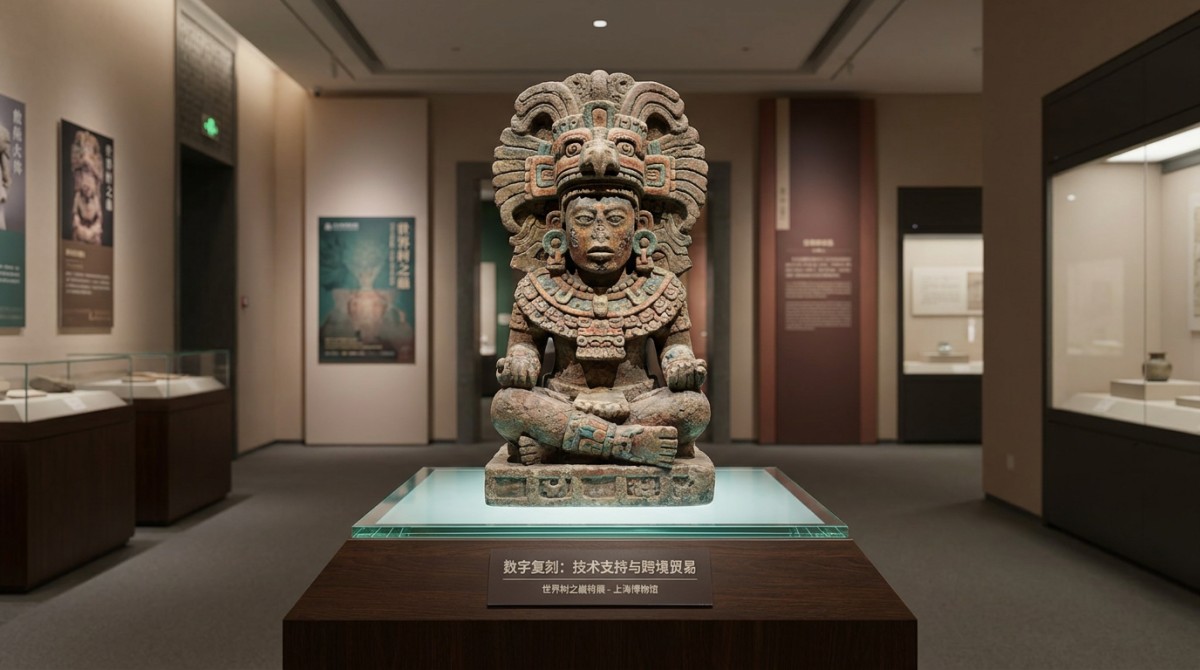
On May 9, 2026, the Shanghai Museum held a global promotion event for the ‘Pinnacle of the World Tree: Major Exhibition of Ancient American Civilizations’, while simultaneously launching the ISO standardization process for technical solutions covering 3D scanning and color restoration of cultural relics. This move marks the first time a Chinese museum institution has taken the lead in advancing the core technical standards for the cross-border circulation of digital replicas of cultural relics into the stage of international rule-making, which will directly affect the development logic and compliance pathways of related industries such as cultural heritage technology services, digital asset trading, and cross-border cultural trade.
Event Overview
On May 9, 2026, the Shanghai Museum held a global promotion event for the ‘Pinnacle of the World Tree: Major Exhibition of Ancient American Civilizations’, and simultaneously announced that its technical solution for 3D scanning and color restoration of cultural relics has been formally submitted to ISO/TC 43/SC 1 (Museum Technology Subcommittee) for new work item proposal review. The proposal focuses on data acquisition accuracy, color fidelity thresholds, metadata structure, and verifiability requirements for digital replicas of cultural relics, with the goal of establishing a unified technical benchmark applicable to cross-border transactions, insurance valuation, and customs classification.
Which Segmented Industries Will Be Affected
Direct trading enterprises: Digital replicas of cultural relics are gradually becoming a new form of cultural export, especially in areas such as museum-licensed derivatives, NFT-based digital collectibles, and immersive exhibition content output. If the standard is approved, it will directly determine whether such products can be accepted by the customs authorities of importing countries as ‘valuable cultural assets’ rather than ordinary digital files, affecting customs clearance efficiency, applicable tariff categories, and the determination of insurance liability. The current lack of unified standards has led many countries to adopt case-by-case assessments, increasing compliance uncertainty and operating costs.
Raw material procurement enterprises: The selection and procurement of core hardware such as high-precision 3D scanning equipment, multispectral imaging sensors, and specialized color-calibration light sources will become more closely tied to the technical parameters specified in the ISO proposal (such as point cloud density ≥0.1mm@1m, Delta E<1.5 CIEDE2000). Procurement decisions will no longer rely solely on vendors’ claimed performance, but will require verification of compliance with the testing methods and tolerance system set out in the draft standard.
Processing and manufacturing enterprises: For service providers engaged in cultural relic digital modeling, texture mapping, dynamic lighting reconstruction, and related processes, the acceptance criteria for deliverables will shift from subjective client confirmation to constraints based on standard clauses. For example, whether color restoration meets ‘error ≤ threshold after conversion in the CIE 1931 XYZ space under D50 light source’ will become a key contractual KPI, driving the standardization of process workflows and enhancement of process traceability capabilities.
Supply chain service enterprises: This includes digital asset certification platforms, cultural trade compliance consulting institutions, and cross-border intellectual property agencies, all of which will need to adapt to the certification chain under the new standard. For example, customs classification may add a new HS code subitem ‘9706.00.90—ISO-certified digital replicas of cultural relics’, and the corresponding specifications for inspection report templates, digital signature mechanisms, and traceability blockchain node access will reshape the logic of service product design.
Key Focus Areas and Response Measures for Relevant Enterprises or Practitioners
Track the progress of the ISO/TC 43/SC 1 new work item review and the open consultation window for draft comments
It is currently at the new work item proposal (NP) stage, and no committee draft (CD) has yet been formed. Enterprises are advised to register on the ISO official website as observers in order to receive timely notifications of draft releases; particular attention should be paid to revisions involving controversial clauses such as color restoration verification methods, allowable loss rates for point cloud data compression, and mandatory metadata fields.
Carry out internal technical benchmarking and gap analysis
Against the technical framework disclosed in the proposal, evaluate whether existing scanning equipment calibration procedures, modeling software output formats, and color management white balance settings meet the preset thresholds in the draft. It is recommended to prioritize selecting 1–2 representative artifacts to complete full-process simulation verification and prepare an internal “Standard Adaptation Baseline Report.”
Participate in preliminary research on supporting domestic standards and co-building of industry alliances
The National Cultural Heritage Administration has already launched preliminary research on the “Guidelines for Quality Evaluation of Digital Replicas of Cultural Relics.” Enterprises may jointly apply for research projects with universities and testing institutions, transforming testing scenarios not yet clearly defined in the ISO proposal (such as suppression of reflected interference from curved glazed surfaces) into domestic standard test methods, thereby strengthening their voice and improving conversion efficiency when international standards are implemented locally.
Prudently plan digital asset ownership confirmation and cross-border transmission architecture
If the standard is approved, it will strengthen the legal status of digital replicas as ‘independent cultural assets’. Enterprises will need to reassess cloud storage location selection, encryption key management systems, and the mapping relationship between blockchain certification chains and ISO metadata fields, so as to avoid insufficient judicial recognition overseas caused by a disconnect between technical implementation and standard semantics.
Editorial Viewpoint / Industry Observation
显然,这项ISO提案不仅仅是在编纂技术参数——它还在跨国法律和经济语境中重新定义‘数字替代品’与‘文化资产’之间的边界。分析表明,其最大的影响可能不在于扫描硬件的销售,而在于将估值权力从保险公司和拍卖行转移到经过计量认证的服务提供商。从行业角度看,该提案的成功与其说取决于技术新颖性,不如说取决于其能否弥合博物馆保护伦理与商业互操作性需求之间的认知鸿沟——而这种张力在当前草案文本中仍未得到解决。
Conclusion
The Shanghai Museum’s push to internationalize standards for digital replication of cultural relics is, in essence, an attempt to elevate the rules of cultural infrastructure. It does not replace the intrinsic value of physical cultural relics, but it lays a verifiable, traceable, and tradable technical foundation for civilizational exchange and mutual learning in the digital age. What deserves more attention at present is whether the standard can remain academically rigorous while also accommodating the technological realities of museum institutions in developing countries? This point of balance may determine the boundary of its real potential to become a global public good.
Information Sources
Announcement on the official website of the Shanghai Museum (2026-05-09), ISO/TC 43 official website new work item database (project number: ISO/NP 27843), and the mid-term evaluation brief (April 2026) of the National Cultural Heritage Administration’s “14th Five-Year Plan” Special Plan for Archaeology and Cultural Heritage Protection Technology Innovation. To be continuously observed: ISO/TC 43/SC 1 will hold its first draft discussion meeting in Q3 2026, and the meeting minutes together with feedback from member countries will be publicly released.
Your 1:1 travel consultant will respond within 1 business day
How to plan your trip
- Hebei Launches Five “Trendy Hebei” Premium Tourism Routes for Inbound Travelers, Moving Toward Standardized Offerings
- The 12th Qionghai Tanmen Coastal Foraging Festival Opens on August 16
- Guangxi’s Digital Silk Road Accelerates: Orah Mandarin Juice Secures an Italian Order, Drawing Attention to Export Standards for Souvenirs
- New Inquiry Triggered by Coastal Cultural Tourism Space Standards
- Zhuanghe’s agro-cultural tourism model draws ASEAN attention, highlighting the compliance requirements for the internationalization of camping and intangible cultural heritage handicrafts
Monthly travel guide
- Typhoon “White Dolphin” Forces Henan Scenic Areas to Close, Putting Summer Ground-Handling Services Under Pressure
- RCEP Implementing Rules for Indonesia Take Effect: Zero Tariffs for Cultural and Tourism Services Alongside Strict Customer Service Requirements
- Saudi Arabia’s New SASO Regulations Take Effect: Taqat Certification Required Before Chinese-Language Cultural Tourism Services Can Access Visit Saudi
- Zhengzhou Launches a Dedicated LCL Shipping Route for Cultural and Tourism Materials, Cutting Freight Costs by 18%
- Luoyang Cold Chain Intensification: Cultural and Creative Exports Delivered in 9 Days
- Expedited Pre-Approval for Group Visas to Three Southeast Asian Countries
- Tightening air freight capacity at Zhengzhou Airport delays the delivery of cultural and tourism materials
- Vietnam's New Regulations on Bus Monitoring Requirements for Group Tours
- Saudi SAMA New Regulations on Travel Liability Insurance Compliance Preparation
- Japanese tourists' new regulations for entering Henan local transport vehicles
- Wai Gao Qiao Wen Travel customs bonded warehouse summer group equipment fast lane
- JTB Warning: Risks in Henan’s September Red Leaf Family Tour Purchases
Popular destinations
- The China-Europe Railway Express (Zhengzhou) Launches a Dedicated Train for Culture and Tourism Equipment, Cutting Customs Clearance Time to 48 Hours
- RCEP Cultural and Tourism Services Commitment Upgrade: Faster Market Access for Chinese Outbound Tourism Service Providers in Vietnam and Malaysia
- Tourism Authority of Thailand Launches “China Ready” Certification Program, with Henan Inbound Travel Service Providers Included in the First Batch of Recommended Providers
- Thailand Tourism Authority Promotes “China Ready” Certification, with a Henan Local Tour Operator Included in the First Recommended List
- Overseas Chinese Fair Opens in Shenzhen: Smart Culture and Tourism Equipment and Culinary Tourism Services Go Global on Two Fronts
Why choose us

High cost-performance and transparent experience
Offer astonishing low prices without hidden tourism traps, enabling travelers to explore at lower costs while avoiding unnecessary spending loopholes, ensuring transparent consumption.

Personalization and dedicated service
Support 100% free customization, paired with one-on-one expert service, crafting exclusive itineraries based on travelers' specific needs, while providing professional guidance to enhance the personalization and professionalism of the journey.

Premium itinerary planning
Compact yet rich itineraries allow travelers to experience more within limited time; simultaneously, carefully selected hotels in prime locations provide convenient lodging conditions, overall enhancing travel comfort and experience.